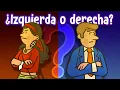
According to the saying, it is not convenient to talk about religion or politics at the table. And of course, in these polarized times, tempers flare and a pleasant chat can end in a pitched battle! But in CuriosaMente we believe that, precisely in order not to get caught up in the blows, it is convenient to talk about these issues: understand them in order to dialogue and discuss.
Take a position based on information and understanding. That is why today we present an explanation for you to ask yourself . .
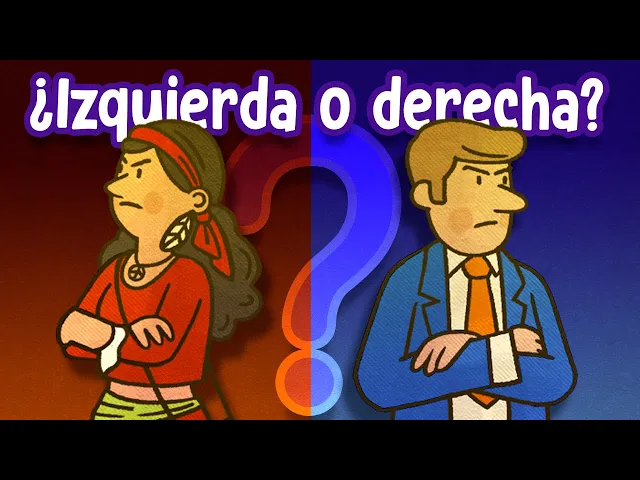
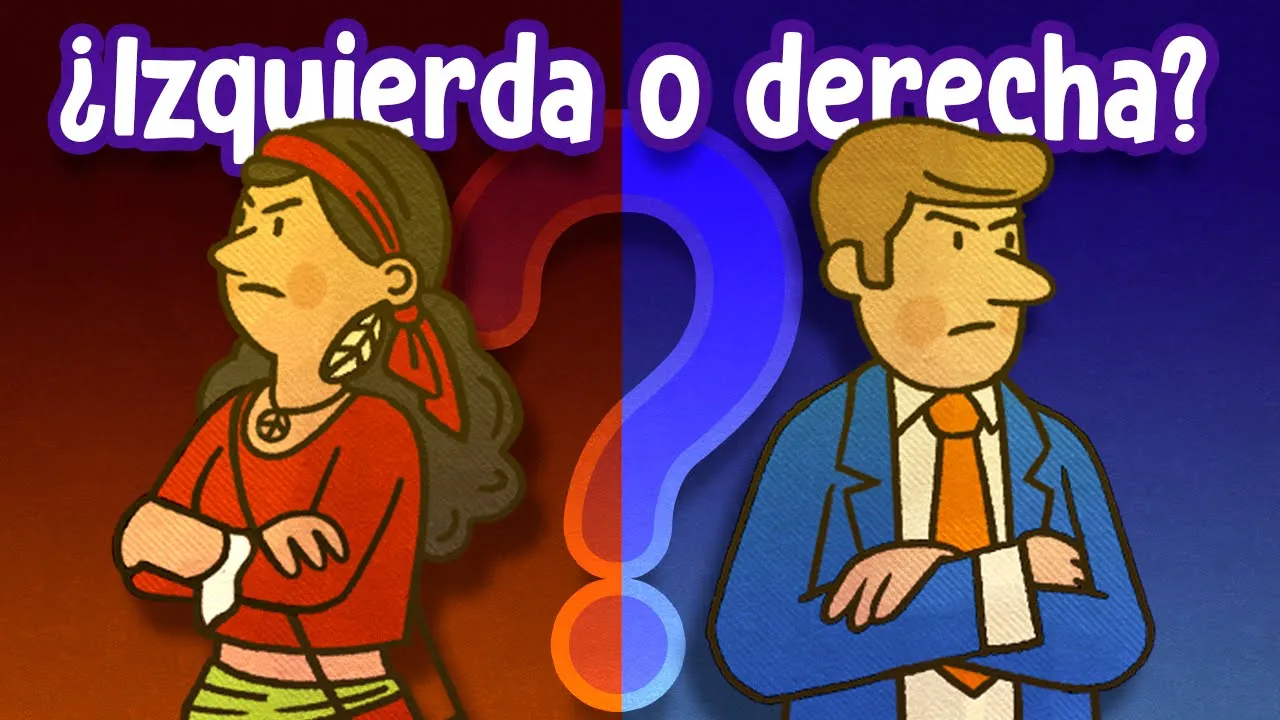
. Are you from the left or from the right? We are in France.
The year is 1789 and there is a horrible economic crisis under the reign of Louis XVI. The peasants, artisans and merchants, who no longer even have enough to eat, pay taxes while the aristocrats and the clergy do not, who feel that it is their right not to contribute. Many still think that the power of the king is given to him by God, but the philosophers doubt it.
To solve the problem, a National Assembly is called . The king sits in the middle. Those who support him sit on his right.
Those who oppose sit on the left. The issue led to the French Revolution, with a lot of complex and interesting consequences worldwide, that is why the idea of classifying political positions into "left" and "right" jumped to other European countries and from there to Latin America and others. parts of the world.
But what does it mean today to be on the right or on the left? In general terms, it is considered that the right-wing position seeks the permanence of order: a gradual progress within an inherited social order. Values such as hierarchy, duty, tradition, free market and nationalism are important to the right .
Meanwhile, the left generally seeks the transformation of social structures and is associated with values such as equality, rebellion, questioning, economic regulation, and internationalism. Both positions coincide in defending freedom and justice, but their concept of them may be very different. For both positions, freedom of expression and thought are important, but while the right places more emphasis on freedom of commerce and other individual rights, the left thinks that these freedoms are illusory if people in practice do not have the resources to exercise them.
. For Isaiah Berlin, economically, the freedom that the right seeks is the so-called "negative freedom", that is, the "freedom of". Be free of obstacles: "Remove the restrictions so that the individual or the company can do the business they want.
" While the left seeks positive freedom :, that is to say "freedom for": "That possibilities open up to do things in a better way. " While the left would like to restrict the freedom of business to avoid exploitation or contamination, the right would like to restrict the freedom of conduct that it considers to be against nature or morals. And on justice, the right emphasizes that the transgressors receive their deserved punishment, while for the left, justice means that everyone can meet their needs and everyone contributes according to their abilities.
It could be said that the right takes its inspiration from past: things, as they are now, must be preserved because they are the fruit of what happened before. The most extreme even think that everything was better before and that they should go back to that glorious past. The left tends to take its inspiration in the future: the important thing is not how we are, but how we could be.
It's funny is that both the past and the future are usually imagined. And of course, on the negative side, in its nationalist zeal the right wing asks that the entry of immigrants be prevented; In order to maintain order and hierarchy, they fight to deny rights to groups that have been excluded; In order to defend private property and free trade, it allows a few to accumulate resources while millions go hungry. And, defending tradition, the extreme right can fall into the single thought: only religion and own culture are valid, while the values of others are considered harmful.
For its part, the left can fall into an unrealistic idealism, described as utopian and impossible. Or, as there are so many possible futures, in endless internal conflicts. When the left achieves power, it is not unusual for it to fall into authoritarianism, seeking by force to maintain the achievements so longed for, even if that means committing atrocities.
The left accuses the right of selfishness: it refuses to share what it has. The right accuses the left of envy: it wants what does not belong to it. So far we have painted a picture of oppositions: as if we could simply divide people into two political positions.
But not. Some experts say that it is more of a spectrum: it can be more loaded to one side than the other. But the reality is even more complex: each group or individual can take a position of the left towards certain aspects and of the right towards other aspects.
Someone may be in favor of minority rights, a left-wing position , but against seeking the redistribution of capital. A group can defend religious values, a position considered to be on the right, and at the same time advocate for the poor and seek to end exploitation. And we are not going to delve into hypocrisies here: characters, groups and parties that claim to be from the left and only seek their own enrichment, or those who publicly claim to defend traditional values but privately behave like what they criticize.
Also, the definition of left and right has been transformed over time. For example: in the nineteenth century the right wing, the conservatives, were in favor of economic protectionism and the liberals, considered leftists, in favor of free trade. At present the positions have been reversed.
But what makes your opinions load more to one side or the other? On the one hand, there is the family formation and the values that they instilled in you, but also the interests that affect your life. In addition, there seems to be a biological correlate: some studies show that the more conservative positions are related to a larger amygdala size, which would indicate a greater presence of emotions such as fear and caution.
What is not clear is whether the enlarged amygdala causes one to be conservative, or the other way around… On the other hand, there are those who affirm that the left-right opposition is too simplistic and fails to reflect the complexity of political positions. A site in the United Kingdom proposes to use the “political compass”, divided into four quadrants and which places your position between the extremes of two axes: on the horizontal you place your opinion about how the economy should be: further to the left if you think that It should be from collective agreements, more to the right if you think that it should be left to the competition of individuals and companies. The vertical axis measures how much you think the state should intervene in society: at the bottom end, the state practically does not exist, at the top end, the state controls everything.
The psychologist Robin Skynner proposes the idea of associating the left with the maternal archetype: he wants to ensure that everyone has equal shares, protect the most disadvantaged and that everyone gets along; and associates the right with the paternal archetype: fostering competition and promoting that each person fends for themselves. Both have their value. For him, what is not healthy are authoritarian models, with representatives like Hitler on the right and Stalin on the left, with regimes characterized by authoritarianism and paranoia.
Skynner warns that when someone identifies more with their political position than with the well-being of the people, it is easy to fall into confrontation and even violence. That doesn't mean you have to be lukewarm, or refrain from participating in politics. The healthiest thing is that there is discussion of ideas, dialogue and that dissent leads to making better decisions.
Diversity of points of view is needed. For Hegel, history advances precisely thanks to oppositions: their interaction is what causes change. It is possible that we will never reach the utopias of the left or the fantasies imagined by the right will be achieved , but the truth is that today's societies are not like a thousand years ago, not five hundred or one hundred ago .
. . society evolves, perhaps slowly, but relentlessly.
Few politicians today call themselves right-wing: they don't want to be classified as reactionaries. And those on the left do not want to be seen as radicals either because they do not scare their constituents. Now they all say "go forward" and "represent the people" or the citizens.
What we recommend is not to get carried away by advertising that says generalities, or in which it only attacks opponents: look at the programs, actions, proposals and results. And if you had to complete the sentence: "The world would be better if . .
. " What would you answer? What we are sure of is that the world is better with more knowledge.
Get to know Platzi! He has more than 700 courses on programming, marketing, design, production and entrepreneurship. Learn with experts from each industry and make your idea come true or dedicate yourself to what you are most passionate about.
Enter platzi. com/curiosamente and receive a free month so you never stop learning.