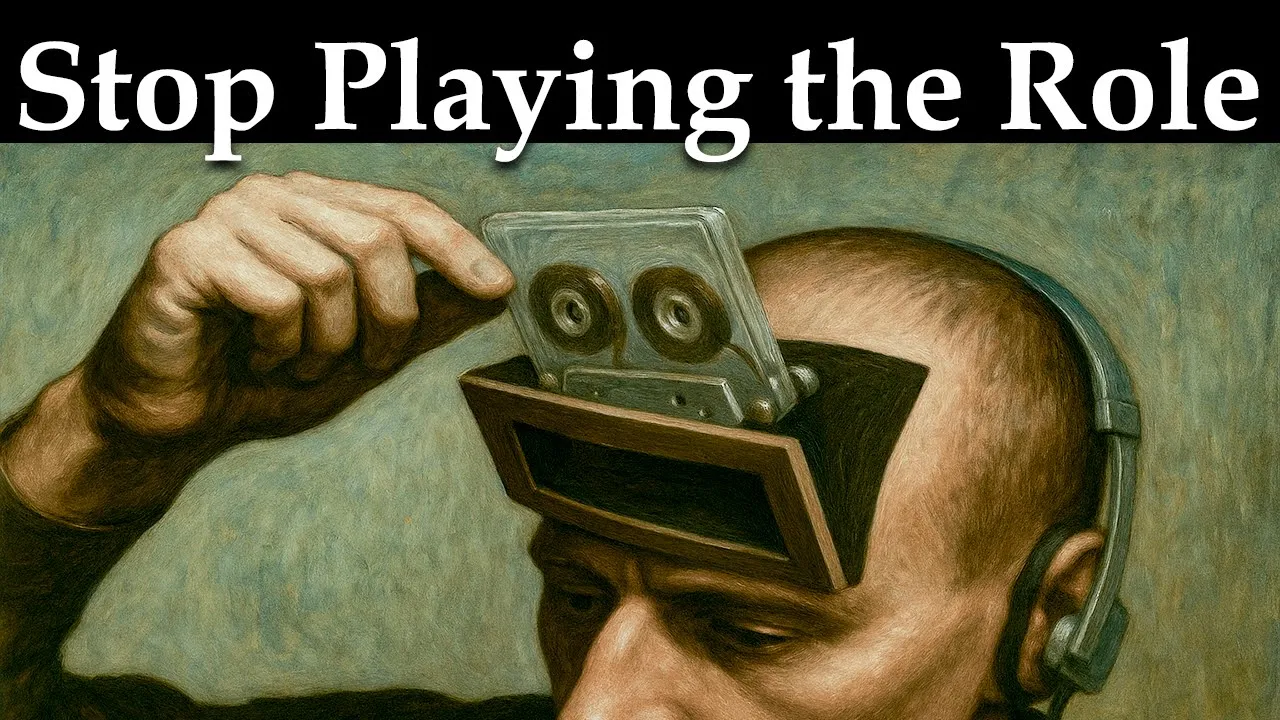
You think you know who you are. You have a name, a personality, a set of preferences, maybe a job title or a degree or a list of things you're proud of. You've formed a sense of self through repetition.
what people expect from you, what you've been praised for, what you've survived. But if Carl Jung were here, he'd quietly shake his head. Because what you call you isn't you.
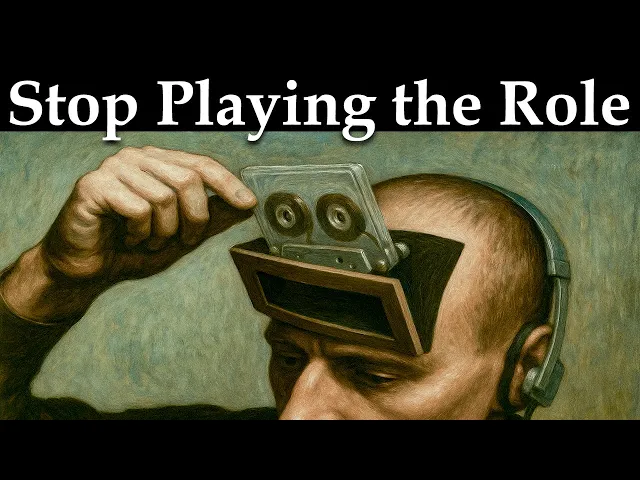
It's a mask, a persona, a performance that became permanent. And until you're brave enough to strip it off, to face what lives behind it, you will never never become your true self. Young didn't believe self-discovery was comfortable.
He believed it was war. Not with others, but with the image you've been protecting your entire life. The image you created to stay loved, accepted, validated, unthreatening.
And the truth is, most people would rather be liked than real. They'd rather be consistent than free. They'd rather maintain the fiction of a clean identity than risk the chaos of becoming whole.
But you, you're still listening. That means something in you is ready. Something in you is tired of the mask.
Something in you is hungry. Not for motivation, not for more information, but for yourself. The one you lost, the one you exiled, the one you buried beneath.
What will they think? And what if I'm wrong? And what if I'm too much?
This is not a conversation. This is a confrontation. You're about to meet the parts of you that you've been running from.
You're about to dig up the bones you buried as a child. The patterns you learned to keep others comfortable. The quiet rebellion that lives in your chest every time you pretend.
This is individuation. This is becoming. Let's begin.
Carl Jung didn't see the self as something you stumble upon. He saw it as something you integrate, something you become only after facing the fragments. You don't seem to upon yourself by taking personality quizzes or chasing your passion or writing goals on a whiteboard.
You find yourself by turning inward into the dark, into the chaos, into the shadow. And that word shadow is everything. Young defined the shadow as everything you've repressed, everything you've deemed unacceptable, the anger you swallowed, the selfishness you denied, the desires you buried, the thoughts you weren't allowed to think, the versions of you that didn't win approval.
Over time, that pile grew. And to survive, you split. You created a persona, the version of you that was allowed to exist, polite, agreeable, predictable, safe.
That persona helped you fit in. It helped you get praised. It helped you stay loved.
But it came at a cost because the longer you wore it, the more you forgot what you were hiding. And now you don't even know you're split. You've confused the mask with your face.
And the people around you only know the edited version of who you are. But here's the thing. You can't become whole by perfecting the persona.
You can only become whole by integrating the shadow. Young said, "Until you make the unconscious conscious, it will direct your life and you will call it fate. " Read that again.
You're not in control. Your persona is reacting. Your shadow is driving.
And until you face it, you will be a puppet to your own avoidance. So, let's stop here. Let's ask the question, what have you repressed?
Not what you dislike, what you fear others would dislike. What parts of you did your parents, teachers, society say were too much? What were you punished for, mocked for?
What did you learn to silence just to keep the peace? Maybe you were too loud, too quiet, too sensitive, too ambitious, too intense, too sexual, too angry, too withdrawn, too emotional, too honest. So you edited yourself.
And each time you edited, you moved further from your true self. You didn't just lose traits. You lost instincts.
You lost edge. You lost truth. And the result, you became consistent, predictable, stable, palatable, but never free.
And now you're stuck, achieving, performing, maintaining, but empty. Not because you're broken, but because you've been living as half a person. Young saw this everywhere.
He saw people who called themselves good, but were secretly resentful. People who were calm on the outside, but boiling underneath. People who gave and gave and gave but always felt invisible.
People who had followers but no identity. people who succeeded but didn't know why they still felt hollow. Because if you build a life from the persona, you lose access to the soul.
Let that sink in. This is why self-help never works because it's usually personabased. Improve yourself.
Polish the mask. Upgrade your image. But what you need isn't improvement.
It's integration. You need to go down into the shadow, into the basement, into the pain. Not to get lost in it, but to retrieve what's yours.
Your fire, your instincts, your clarity, your rage, your desire, your hunger, yourself. And that's the step most people will never take because it doesn't feel safe. It feels like death.
And in a way it is. Because the persona must die. Not all at once, but layer by layer.
It has to be challenged, questioned, dismantled. You have to catch yourself in real time. Every time you say yes when you mean no.
Every time you smile to make someone else comfortable. Every time you apologize for being clear. Every time you censor your voice just to be liked.
That's not kindness. That's self eraser. And the only way to stop it is to become so aware of your shadow, so in touch with your inner opposites that you can choose your wholeness over your habit.
That's individuation. It's not becoming better. It's becoming complete.
Let me be clear. This will cost you. You will lose relationships.
You will disappoint people who loved your mask. You will break habits that used to numb you. You will feel guilt for finally choosing yourself.
But you will also breathe deeply freely for the first time in years because no amount of acceptance is worth the price of selfabandonment. And Jung knew this. He knew the price of truth was loneliness.
But the reward, freedom. When you stop living for external validation, your clarity becomes dangerous. People don't like it because they can't control you anymore.
You no longer need approval. You no longer chase attention. You no longer bend to keep the peace.
You choose peace within even if it causes war without. That's the shift. You stop asking how do I look and start asking does this align?
You stop asking will they like me and start asking is this real? You stop asking am I good and start asking am I true? And truth is not always nice.
Truth is sharp. Truth is silent. Truth is messy.
But truth is is you. And here's the secret. The more truth you integrate, the less control the world has over you.
You no longer fold under pressure. You no longer collapse under judgment. You no longer pretend to be smaller, sweeter, simpler than you are.
You walk with all of you, shadow included. And people feel it. They may not understand it, but they feel it.
You become someone they can't figure out, can't manipulate, can't label. You become someone who mirrors their own avoidance. And that's your power.
Not to be loved, but to be whole. That's what this is all about. Not optimization, not perfection, wholeness.
You're not here to be liked. You're here to be undeniably you. And now we'll go deeper into the specific behaviors that keep you split.
Why you attract what wounds you how emotional obedience is mistaken for maturity and the exact process Young laid out to begin the path toward real individuation. You saw what you've been living as, not yourself, but a fraction. A version of you that was sculpted for survival.
A well practiced mask built from approval, applause, and the quiet terror of being too much. And now you've begun to feel what Jung called the pull of the shadow. That internal tension, the emotional friction between who you are and who you're pretending to be, the tugofwar between truth and image.
If that tension has started to burn, good. That's the first proof you're alive again. Because the moment you see your persona as a costume, you start to notice how tight it fits, how tired you are of holding the pose, how exhausted you feel after every yes that wasn't real.
But before you can become your true self, you have to understand the system that keeps the false one alive. Because your behavior isn't random. Your patterns aren't personal quirks.
They are reflexes of a fragmented psyche. And Jung taught that unless you learn to identify the traps keeping you split, you will forever live as a puppet performing peace while quietly self-destructing. Let's expose those traps.
The first is emotional obedience. This is the belief that being good means being agreeable. That kindness equals compliance, that maturity means softness, patience, and tolerance even when your boundary is being crossed.
You've been told that reacting is immature, that anger is toxic, that saying no is confrontational, that wanting space is rude. So you do the adult thing. You shrink.
You nod. You soothe. You please.
But Young would ask, "At what cost? " Because this emotional obedience isn't maturity. It's submission.
It's the shadow of fear, wearing the mask of virtue. And if you never learn to differentiate kindness from compliance, you will live a life of permanent apology. Jung called this the overidentification with the persona.
It's when you become so afraid of your darker instincts, your sharpness, your honesty, your anger that you exile them. And once they're exiled, they don't disappear. They leak through passive aggression, through people pleasing, through exhaustion, through identity crisis.
So how do you break this? You stop confusing emotional comfort with integrity. You stop calling your silence wisdom.
You start letting people feel disappointed, uncomfortable, even threatened, not because you're cruel, but because you're clear. This is where individuation begins to get real. You stop dressing up your boundaries as kindness.
You stop softening your truth to protect their ego. You stop negotiating your worth for temporary peace. And yes, people will push back because they've grown addicted to your obedience.
They've built a version of you that exists to serve them. And when you break character, they won't know how to love the real you. But that's the price of liberation.
You either live as a fantasy or you risk being fully known. Most won't choose that risk. But you will because the longer you stay in emotional obedience, the more resentful you become.
You become bitter at the people who use you, not realizing you taught them to. You become exhausted by the roles you've outgrown. But keep repeating.
You become invisible even to yourself. So stop. Stop explaining your no.
Stop translating your truth. Stop apologizing for existing. That's trap one.
Emotional obedience. Now, let's move to the second trap. And it's far more deceptive.
Attraction to the familiar wound. Young believed that until the shadow is integrated, it doesn't just distort your behavior, it distorts your relationships. You don't attract what you want.
You attract what you haven't healed. That's why you keep ending up with people who mirror your past. people who reinforce your early wounds.
People who don't see you, respect you, or truly choose you, but feel magnetic. Anyway, that magnetism, that's not chemistry. That's the subconscious seeking resolution.
It's the wounded inner child trying to recreate the pain that shaped them so they can finally fix it. You call it love. Young calls it projection.
You say, "I'm just drawn to them. " He'd say, "You're trying to finish an old story. You chase the unavailable, the critical, the emotionally inconsistent, not because you're broken, but because your psyche is trying to complete the script you couldn't complete in childhood.
" But here's the problem. You don't heal in the same environment that wounded you. You just repeat it.
And every time you do, your shadow grows deeper. You feel more unlovable, more confused, more unsure of who you are when no one is watching. That's why individuation demands withdrawal.
Not forever, but long enough to break the cycle. Long enough to stop chasing connection through the wound. long enough to realize that your wholeness doesn't live in someone else's arms.
It lives in your willingness to stand alone. That's when you begin to rewire attraction. You stop chasing intensity.
You start choosing safety. You stop craving approval. You start respecting your own standards.
You stop asking, "Will they stay? " You start asking, "Do I stay with myself when they enter the room? " That's the new frame.
Now, let's go deeper. Trap three, the addiction to certainty. Young believed that the ego's primary job is to maintain order, predictability, consistency.
So, when you start to change, when you start to shed the persona, the ego panics. It screams. It fills your mind with doubt, fear, stories of failure.
Not because the shadow is dangerous, but because it's unknown. And the ego would rather stay in misery that it understands than freedom that it doesn't. So what do you do?
You sabotage. You procrastinate. You delay your truth.
You wait until you feel ready. But here's the thing. You'll never feel ready.
You don't need more time. You need more decisions. You need to move without permission.
To speak without overpreparing, to act without overjustifying. Because individuation doesn't wait for perfect timing. It demands leaps into the awkward, into the uncertain, into the what will they think?
And that leap, that's the birthplace of identity. That's where you start becoming. Not when it's safe, but when it's real.
Let's name trap 4. This one hides in plain sight. The addiction to self-improvement.
This is the cycle of endless fixing, endless healing, endless searching for the next level. You read, you journal, you reflect, you optimize, and yet nothing truly changes. Why?
Because self-improvement has become your new persona. It feels deep, but it's just another mask. You're still trying to earn your worth, just in a more spiritual costume.
You're still trying to escape your shadow by analyzing it instead of integrating it. Jung would say, "Stop studying yourself. Start facing yourself.
" That means less reading, more revealing, less talking, more doing. You don't need more clarity. You need more confrontation.
Start doing the thing you've been avoiding. That's your real growth. Because the true self doesn't emerge through planning.
It emerges through pressure. One real no spoken aloud. One real boundary enforced.
One real silence kept instead of performing. That's where the mask cracks. That's when the shadow softens.
That's when you meet you. And now we arrive at the final trap. And it's the most seductive, the myth of the good person.
You were taught to be good, to be nice, to be agreeable, to be liked, and you built your entire self around that identity. But Jung would say being good isn't the goal. Being whole is because your obsession with being good is just fear of rejection in disguise.
You don't want to hurt people. That's noble. But sometimes the truth hurts.
Sometimes the truth disappoints. Sometimes your boundary breaks their illusion. And if your identity can't survive that, it's not real.
So now you choose good or whole, nice or true, obedient or you. And when you choose wholeness, here's what happens. You stop negotiating with yourself.
You stop waiting for permission. You stop bending for approval. And in that space, that uncomfortable raw space, the real self starts to emerge.
It's quiet at first. Then it gets louder. It starts choosing differently, speaking more clearly, feeling less guilt.
And one day, you'll look around and realize you're no longer pretending. You're no longer performing. You're no longer seeking.
You're being. That's the work. That's individuation.
Not a transformation into someone new, but a return to someone ancient. You unfiltered, unfolding, undeniable. If you've come this far, you've already done what most never will.
You've stared into the mask you wear, the shadow you carry, and the lies you built your identity on. You've walked through the discomfort of realizing that the person you've been wasn't truly you. Just a compromise, a survival instinct wrapped in praise, silence, and emotional obedience.
You've begun the process Young called individuation. So, here's how this ends. You no longer chase clarity.
You embody it. You no longer ask for permission. You exist anyway.
You no longer perform for acceptance. You define it. You no longer fear your darkness.
You integrate it. From this moment on, your job is simple. Protect your peace like it's holy.
Speak your truth like it's oxygen. Move through the world like it's already yours. Let the mask burn.
Let the shadow breathe and let the real you, the one who doesn't flinch, doesn't beg, doesn't explain, walk through the fire untouched. That is who you've always been. Welcome back.