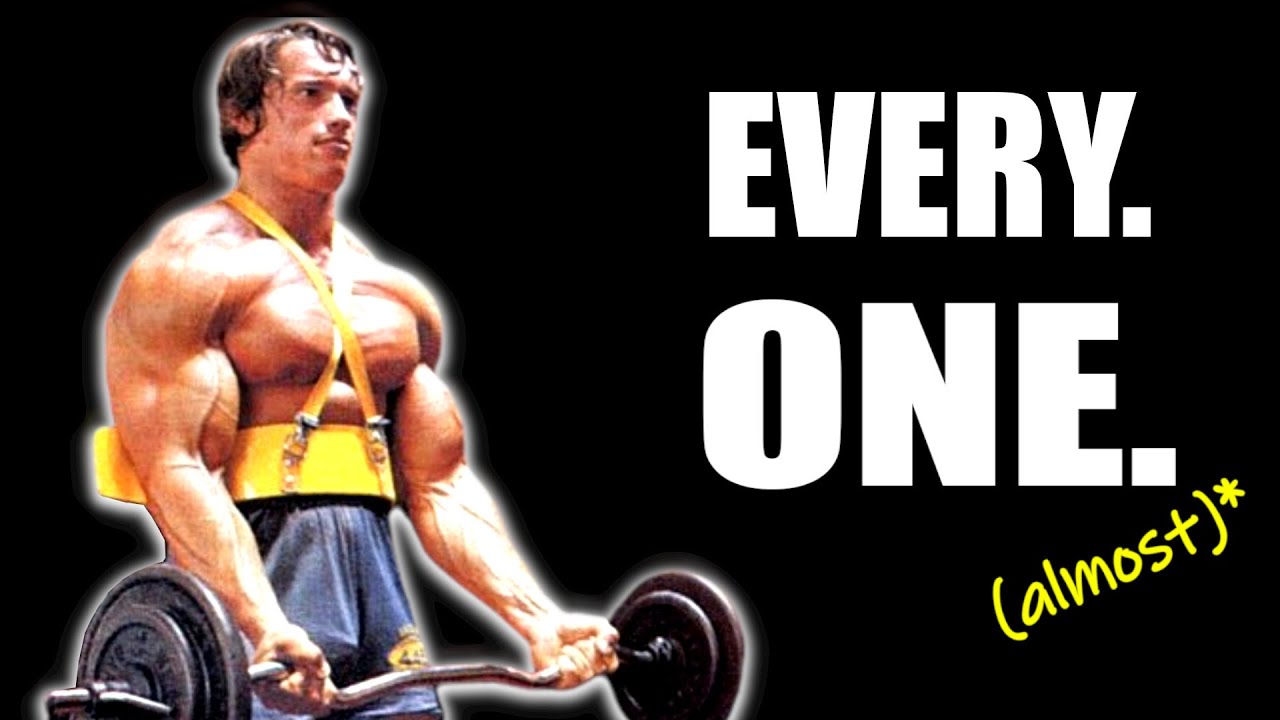
Welcome to the house of hypertrophy as described by Mike Mensa the arms of all body parts seem to be the most universally admired whenever a bodybuilder is asked by the public to show them his muscle it is usually the biceps they're referring to even if I type in muscle icon into Google virtually all images show the biceps in fact the house of hypertri icon itself depicts the biceps in this video we're Diving deep into the scientific literature behind building the biceps covering virtually everything you need to know about biceps are perch for you all for
free from underappreciated facts about the biceps Anatomy its fiber type composition and function what exercises May best develop this muscle whether the biceps experiences Regional hypertrophy if you can truly bias the long or short head of the biceps with certain exercises and the effectiveness of only Compound exercises for biceps hypertrophy in recent times some people across the internet have you surface electrodes strapped up to the biceps to compare different exercises with the belief this may tell us about what the best biceps exercises could be so we'll examine whether this surface electrode data is actually useful
too the timestamps to the parts of the video can be found in the comments and description let's first Explore the biceps Anatomy since as mentioned there are some underappreciated facts [Music] anatomical textbooks tell us the biceps consist of a long and short head the biceps like every single muscle in the body create movement thanks to it being attached to bones when a muscle produces movement the attachments on the bone that do not move are termed origin whereas the attachments that move are Called the insertion the shorts head originates from an area called the coracoid process
whereas the long head originates from an area called the supraglinoid tubercle the long and short head merge together to form a single muscle mass and inserts on the radius having said this a truly underappreciated fact is biceps Anatomy can substantially differ between people as described in this paper the biceps Appears to be one of the most morphologically variable muscles in the Upper Limb not everyone has the exact same Origins and insertions of the biceps heads for example this paper established some people aligned with what we just described having a single tendon insertion on the radius
yet some had two tendon insertions on the radius and others had three tendon insertions on the radius even more interestingly some people have more than just a long And short biceps head there are people with a third fourth and even fifth biceps head text dating back as early as the 1800s seems have noted the existence of these supernumerary heads however one of the best analyzes of the supernumerally biceps heads come from a 2022 study from Poland 101 upper limbs were analyzed and the researchers figured they could classify the morphology of the biceps into four different
types 64 of the upper limbs fell into type 1 which was the traditional view of the biceps consisting of a long and short head however there were two subtypes differing in how the long and short biceps heads fuse together 26 of the upper limbs fell into type 2 which was categorized by having three biceps heads there were four subtypes differing in the origin of that third head fascinatingly one of the subtypes was categorized by having the third head Originate from the pectoralis major six percent of the upper limbs fell into type 3 which was categorized
by having four biceps heads there were two subtypes differing in the origin of the third and fourth heads four percent of the upper limbs fell into Type 4 which was categorized by having five biceps heads no subtypes for this were established but the fifth head in these four percent of upper limbs originated from the pectoralis major Based on this analysis we can speculate that quite a few watching this will have more than two biceps heads the type you fall under seems to influence the length width and thickness of your biceps heads in various ways we'll
detail the function of the biceps shortly but most of you know one main function is elbow flexion but the biceps are just one of three muscles contributing to Elbow flexion the two others being the brachialis which is Found beneath the biceps and the brachioradialis found mainly across the forearm we won't be properly exploring the research and training the brachialis and break your radialis in this video this will be done thoroughly in a video soon to be released but an interesting question is how do the sizes of these elbow flexor muscles compare to one another most
people just look at the sizes of a muscle from the outside but remember muscles are three-dimensional And take up space within the body therefore exploring research that has measured the volume of these muscles with special equipment such as MRI provides a more accurate insight into the sizes of these muscles I came across Six studies that have done this and the results from each are shown on screen if we average out all Six studies we find the biceps makes up 46 of the elbow flexors the brachialis 37 and the brachial radial is 17 percent Focusing on
the biceps there have been two studies comparing how much the lung and short head contribute to its size these two studies did not measure volume rather they compared the physiological cross-sectional area and both studies found the Longhead had a greater physiological cross-sectional area of course we mentioned moments ago there are people with more than two biceps heads but unfortunately no research to my knowledge provides an insight into How the volumes of these supernumerary heads may compare as a fun fact before progressing onto the next section we know that muscles contain muscle fibers and there is
likely wide variation between people in the number of muscle fibers they have this study estimates for the biceps the number of muscle fibers within it may vary between 172 000 to 419 000. now not all muscle fibers are the same and we can very generally categorize muscle Fibers as either slow twitch or fast twitch slow twitch fibers are generally low Force producing highly fatigue resistant and smaller in size fast fibers are generally High Force producing very fatigable and larger in size when averaging out of the research it appears the biceps contain slightly more fast switch
muscle fibers than slow switch muscle fibers bear in mind this is the average the percentage of fast switch fibers and slow twitch fibers and Muscle contains can vary between people we know that elbow flexion is carried out by the biceps but the other predominant function is supination of the forearm expectedly supinating the forearm while simultaneously performing elbow flexion powerfully activates the biceps a 1998 paper from Japan nicely illustrates this these researchers had subjects hold a contraction at 30 60 and 90 degrees of elbow flexion in each position they had subjects transition Their grip from a
pronator to a supinated one all while fine wire electrodes recorded activity of the biceps lung and short heads as well as the brachialis and brachioradiolis we can see that all three elbow flexion angles biceps long and short head activity were greatest when in supination and lowest in pronation while the opposite was true for the brachiolis and brachial radiolis they had the highest activity in pronation compared To supination these findings are supported by other analyzes an interesting fact is the brachioradialis appears to have nerve cells that essentially link it to the biceps and a few papers
found that during elbow flexion with a pronated grip the brachioradiolis sends signals to the biceps to reduce its activity from this we can infer that to optimize the development of the biceps we're going to want to train an exercise that Involves elbow flexion with supination of the forearm [Music] there are an endless number of curling exercises that involve both elbow flexion and supination and the scientific literature tends to show that numerous curling exercises are great for building the biceps a 2020 study out of Canada recruited 36 trained individuals and assigned them into a free weight
or machine group focusing on the exercises Used to train the biceps directly the machine group trained machine curls and machine preacher curls while the free weight group trained easy barcodes and preacher curls after eight weeks of training growth of the elbow flexors measured at around 65 of the upper arm length increased comparably between both groups now I say elbow flexor here and not biceps since this measurement actually includes both the biceps and brachiolis As we progress through this video you'll see many studies measured elbow flexor growth at regions of the upper arm so just be
mindful although it certainly includes the biceps some of it also reflects the brachiolis another 2020 study from Brazil compared cable to barbell preacher curls and found after 10 weeks of training growth of the elbow flexors at around 50 of the upper arm length increased comparably between both exercises Some of you might be tempted to compare the percentage increases between the studies but bear in mind the subjects regions measured and training variables used were different also in some of the upcoming studies slightly different hypertrophy measurements were taken further meaning we can't really compare the precise percentage
increases between different studies nevertheless a few other studies which haven't directly compared different biceps exercises Still demonstrate a range of curling exercises are great for building the biceps this 2013 study from Japan had subjects trained only the dumbbell curl with these variables and found a 13.3 increase in elbow Flex or cross-sectional area this 2016 stereato Brazil had subjects shown only a cable preacher curl and found a 16 to 20 percent increase in elbow Flex or cross-sectional area across an upper middle and lower region finally a 2011 Study from Brazil had subjects trained with a whole
program but the barbell biceps core was the only only direct biceps exercise and the elbow flexes at three regions grew well it's very logical that all these curling exercises are going to be powerful for biceps hypertrophy because at the end of the day they all load elbow flexion with supination so for those who prefer a really simplified recommendation you can absolutely develop your biceps well with Whichever curling exercises you like the house of hypertrophy is partnered up with an alpha progression app this app has a database of over 550 exercises and if we filter it
to show only the biceps exercises we can see there are 71 of them with each of them there are great simple video and text tutorials on their form and execution so I'm hoping this can be helpful for individuals wondering about exercise execution this app has a free and premium version and I'm happy To say this exercise database is in the completely free version the link in the comments and description can take you to the app or you can just search up Alpha progression in the place you download apps I will say that if you're willing
to support the house of hypertrophy and help sustain these in-depth three videos consider checking out the premium features of the app such as their great custom workout generator and aesthetic graph that visually display your Long-term progression the link in the comments and description gives you two weeks free of the app's premium features we don't just partner up with anybody at the house of hypertrophy so you can rest assured the app is sincerely high quality let's get back to the video so numerous curling exercises can be great for building the biceps for the simple fact they
can all involve elbow flexion and supination but let's say you wanted to push me could a certain type Of coal be slightly more effective than the wrist maybe I'm wondering if a curling exercise while the shoulders are extended such as drawing an incline curl or face away cable curl might be the single most favorable biceps exercise why am I wondering this due to the origins of the biceps placing the shoulder into extension stretches the biceps particularly the long head since this passes directly over the shoulder joints in recent years the power of Achieving a stretch
of a muscle during an exercise is becoming apparent though it's worth knowing that the scientific origins of stretch playing a role in hypertrophy stretches back to the 1970s a range of studies conducted on animals found that when having them stretch various muscles with extreme intensity for a long duration muscle hypertrophy occurred even Elite bodybuilders seemingly recognized the importance of stretch Arnold mentions in his book that Inca and Dumbo curse are a great exercise alluding to the stretch of being an important factor today we have three areas of the scientific literature in humans showing the power
of achieving a stretch during an exercise the isometric training research is the first for those unaware isometric training is where you hold a muscle in a static position and we have three studies that demonstrate isometric training as a stretch to muscle position produces more Hypertrophy than isometric training at a shortened muscle position an important consideration with the state is all three of the studies looked at the quadriceps muscle so we can't be certain the same applies to the biceps however the second area of the scientific research comparing different range of motions potentially indicates the biceps
do respond to stretch two studies one by Sato and the other by Pedrosa have compared performing a Preacher code with a partial range of motion at the initial position to a partial range of motion at the final position you can lift heavier loads with a partial range of motion in the final position and this was adjusted for in both studies now preacher curls don't optimally stretch the biceps since this exercise is performed in shoulder flexion even so the subjects in both studies that trained with a partial range of motion at the initial position Would have
been stretching the biceps more than the subjects training with a partial range of motion at the final position if the biceps do not benefit from being exposed to a stretch we'd expect similar hypertrophy between both groups but the Salto study found elbow flexor growth across three regions tended to be superior for the partial range of motion at the initial position when we average growth across the three regions it's evident elbow flexor growth Was Superior with the partial at the initial position as for the Pedrosa study elbow flexor growth was measured at the 50 and 70
upper arm regions and at the 50 region thickness gains were actually similar between both groups but at the 70 region gains were Superior for the partial at the initial position if we add both regions we can see growth favored the partial at the initial position an interesting consideration is that Both studies found considerably more gains at the 70 region for the partial at the initial position this phenomenon of stretched exercises growing this region of a muscle substantially have also been found with the quadriceps muscle group we do actually have another study comparing different range of
motions with a biceps exercise that further suggests that biceps May grow more when exposed to stretch this is a 2011 study By Pinto which also had subjects train a preacher coal one group of subjects trained with a full range of motion while another group of subjects trained with a partial range of motion in the middle position increases in elbow flexor growth at around the 60 upper arm length favored the full range of motion group considering the findings of the Sato and Pedrosa studies I think these results are probably in large part since the full range
of motion group achieved Greatest stretch of the biceps an important consideration with all this range of motion data is although it indicates the stretch the part of a preacher curl is great for building muscle it of course cannot prove an even greater stretch achieved for the curls and shoulder extension would be even better for biceps hypertrophy nonetheless the third area of scientific literature comes from data on the triceps the triceps generally consist of The long medial and lateral heads all three heads pass over their elbow joints but the long head specifically passes over the shoulder
joint as well and when you place the shoulder into flexion the long head of the triceps is going to be stretched this is quite similar to the biceps Long Head we know this passes over the shoulder joint too and will be stretched during shoulder extension an overhead extension is a triceps exercise that will train the long head Of the triceps in a stretched position since this exercise is performed with the shoulders flexed and here's the key point a great Study last year by Mao compared overhead extensions to push downs and found that overhead extensions produced
greater long triceps head volume increases fascinatingly the overhead extensions also produced greater combined medial and lateral head volume increases as well a finding that was unexpected but nicely demonstrates a Point many people tend to forget that there are likely still things we do not fully know about muscle hypertrophy of course will dissect this study by Mal plus other relevant research in our Ultimate Guide to developing the triceps that should be released in the upcoming weeks in total these three areas of the scientific literature collectively aren't Crystal Clear proofs curls would show the extension are the
single most Hypertrophic exercise but I think they're sufficient for us to hypothesize it could be despite these three areas of the scientific literature there's a chance you may have come across people suggesting the biceps should not grow more when exposed to stretch their belief seems to stem from research looking at the length tension relationship of the biceps sarcomas I don't believe this research is strong Enough to Warrant a full explanation of it in this video so for those interested in the full dissection of it my views can be found at the link on screen essentially
I simply do not believe we can look at one area of the scientific literature that has an array of potential limitations and make definitive conclusions about whether the biceps grow more in response to stretch or not especially considering when other areas of the scientific literature as we Analyzed provide solid grounds to speculate the biceps May indeed grow more in response to stretch I will point out for the same reasons people speculated the triceps should not grow more in response to stretch that is they believe the length tension relationship studies on the triceps sarcomas meant the
triceps shouldn't grow more when exposed to stretch but as we saw with a mouse study released last year the triceps Longhead grew more in response To stretch nevertheless you can be sure that if any future research emerges about how the biceps May respond to stretching based exercises we'll have a video on the house of hypertrophy to update you all as an additional part to this section we know incline curls and cable face away curves are two ways you could train the biceps in a great stretched position but are there any differences between either of them
that makes one better than the Other some suggest cable faceware costs are better as they provide more consistent biceps Force production throughout the range of motion versus incline curls however I'm skeptical this matters that much for hypertrophy if training a muscle with consistent Force production throughout a range of motion was crucial for muscle hypertrophy variable resistance should build more muscle for those unaware variable resistance is typically achieved with Machines that vary the resistance throughout the range of motion resulting in the muscle being challenged in there equally throughout it four Studies have examined the effectiveness of
training with variable resistance compared to using normal resistance and all of them find similar muscle hypertrophy between the two two of these involved biceps training one of them was this 2018 paper which compared variable to normal resistance Gene preacher curse and found Similar arm circumference gains between the two the second one was this 1995 study which again compared variable to normal resistance Preacher machine curls and observe similar biceps cross-sectional area gains between the two since these two studies only use the preacher curl it's not a guarantee that these findings apply to curling with a shoulder
extended but I do think it could be the case that regardless of the Resistance profile of an exercise taking your repetitions to or at least near failure sufficiently stimulates the biceps therefore I'm currently not sold on the idea that cable face away curls would truly be superior to inclined dumbbell curls so for now I'd say an individual should select whichever they prefer now I just mentioned about taking your repetitions to or narrative failure to sufficiently stimulate the biceps and I Believe this is a point worth expanding on to understand what I consider to be one
of the most important biceps training tips we first need a brief understanding of how muscle hypertrophy occurs that is when you lift weights what happens inside of the muscle that ultimately causes it to get bigger one of the most frequent explanations is that the muscle experiences microtest when lifting and the body repairs these while growing the Muscle others might suggest that the Burning Sensations and the pump are what Drive the muscle to grow however most people are unfortunately unaware that the overall scientific literature fails to support these as strong drivers of muscle hypertrophy we've thoroughly
dissected this scientific literature in a previous video so feel free to check out that video afterwards if you're interested as we detailed in that video the scientific literature in instead Indicates that mechanical tension is likely the primary stimulus behind muscle hypertrophy what on Earth is mechanical tension your muscles produce tension in other words Force there are two kinds of tension your muscles can produce passive tension and active tension it turns out that throughout your muscles our mechanosensors that can detect these two kinds of tension and convert this tension into a signal that produces Hypertrophy but
what precisely are passive and active tension passive tension is produced when the muscle is stretched a rubber band may help you understand passive tension when you stretch a rubber band it produces passive tension to try and resist the stretch when you let go of the rubber band that passive tension will snap it back into its original position various structures throughout the muscle such as a Particular protein within muscle fibers as well as the connective tissue surrounding muscle fibers a what generate passive tension as for active tension this is the contractile Force generated by the muscles
fibers interestingly your muscles can generate greater passive tension while the muscle is also generating active tension perhaps this is why passive tension alone such as done during static stretching isn't the most effective for Building muscle but passive tension with active tension such as during an exercise that achieves a stretch is powerful for building muscle so this might be one of the reasons is behind why achieving a stretch during an exercise is great for building muscle but there certainly could be other reasons stretched during an exercise is beneficial remember we still don't know everything about muscle
hypertrophy nevertheless focusing on active tension It is clear to see that during an exercise we're going to want to ensure we recruit as many muscle fibers as possible and have those fibers Produce High respective active tension this should enable the mechanosensors within and around the muscle fibers to detect the active tension leading to a hypertrophy signal that makes many of these various fibers increase in size leading to a more developed muscle overall taking your repositions to or at Least near failure is one of the most critical things for ensuring you achieve High muscle fiber Recruitment
and respective tension from the fibers this is simply because as you net failure your central nervous system tends to recruit additional muscle fibers in attempt to sustain your repetition performance various fibers may also technically increase their tension production throughout this as well therefore regardless of whatever biceps Curling exercise you're performing taking your repetitions to or at least near failure should not be underestimated for creating a powerful biceps hypertrophy stimulus a 2017 paper by martorelli nicely demonstrates this point 89 previously untrained women were recruited and assigned into one or three groups a failure non-failure equal sets
and non-failure plus one group all three group trained the barbell biceps curl twice a week for 10 weeks the failure Group e-session performed three sets of repetitions to failure with a 70 One Rate Max load the non-failure equal set group each session performed three sets of seven reps with a 70 One Rate Max low now with a 70 One Rate Max load on the barbell biceps curl the data in this study suggests subjects could perform a maximum of 12 to 13 repetitions therefore this non-failure group will stop five to six reps from failure on the
first set and in their second and Third set due to cumulative fatigue they probably got slightly closer to failure the non-failure plus one group performed four sets of seven reps with a 70 One Rate Max load so they would have had a similar proximity to failure to the other non-failure group the only difference being this group performs an extra set all groups rested two minutes between their sets in a session and one rep max was retested on the fifth week to readjust the seventy percent of one Right Max training loads by the end of the
study elbow flexor growth measured at around 60 of the upper arm length was Superior for the failure group we can see that the average differences between the non-failure and failure group was large the non-failure plus one group saw slightly better games than a non-failure equal set group but even still average gains for this group were fairly far off the failure group this study perfectly demonstrates with The exact same exercise biceps hypertrophy is seriously impacted by how close you get to failure granted this study was conducted on previously untrained women but you'd presume these findings should
extend to other demographics for the simple reasons we previously outlined that is getting to or at the very least near failure optimizes mechanical tension do you have to train to complete failure on every sets you'd have noticed I've Been saying to or at the very least near failure the reason for this is we do have other research looking at different exercises and muscle groups finding that stopping shy or failure perhaps around three to one reps from failure can produce similar hypertrophy to training to failure therefore I do think stopping just shy of failure is largely
perfectly fine too although one potential problem with this is some people might underestimate their proximity to failure You may think you stopped two reps from failure but in reality you were five reps from failure because of this I think it's worthwhile for an individual so long as they are healthy and able to do so to gain some good experience with training to failure in order to best help the accuracy when or if they do go about stopping a certain number of reps from failure [Music] here's a graph demonstrating the Cross-sectional area of the biceps across
its regions we can see its largest in the middle to lower regions with decreasing size as you get near the upper and very lowest portions of the muscle bear in mind this is just the average of the subject's assist so this precise shape won't identically apply to all nevertheless when training the biceps it may be common for people to assume it grows equally in all its regions but this largely doesn't happen Many of you might have recognized this since quite a few studies already outlined in this video demonstrated this recall the Sato and pedrosis studies
finding partial range of motion preacher codes in the initial position considerably develop the 70 region of the muscle moreover we mentioned this 2011 study from Brazil which involves subjects training the biceps directly with a barbell biceps curl an elbow flexor thickness gains occurred in three Regions but the gains were largest at the 50 region with slightly less growth at the 60 and 70 regions why do the biceps not grow evenly across its regions there are a few possibilities we have some interesting analyzes showing during elbow flexion not all regions of the bicep shorten equally this
might play a role in why some regions of the biceps grow more than others we also mentioned that on average the biceps tends to contain more fast twitch than Slow twitch muscle fibers however different regions of the biceps can contain different proportions of slow and fast twitch muscle fibers this matters because fast twitch muscle fibers actually possess greater hypertrophy potential versus slow twitch fibers therefore the regions that grow more may just be areas that have a higher proportion of fast twitch muscle fibers it is also possible that within the Biceps there are subgroups of muscle
fibers that have slightly different functions to one another therefore a certain biceps exercise May more so Target particular subgroups of muscle fibers and less so other subgroups will return to this point more soon [Music] so the biceps do not grow equally across its regions but another fascinating point is different people even if they're training the same biceps Exercise do not see the same growth across the biceps regions demonstrating this a 2017 study by dank Hill and colleagues had five trained men perform dumbbell biceps curls for 21 days and evaluated elbow flexor growth at the 50
60 and 70 upper arm regions here are the results showing how each subject grew the three regions and individual differences are clear subject 1 tended to grow the 50 region the most subject two grew the 60 and 70 regions equally With less growth at the 50 region subject 3 only really experienced growth at the 60 region subject force or the best growth at the 70 region but still saw great growth at the 50 and 60 regions while subjects 5 saw increasingly more growth up to the 70 region why does this happen remember we've detailed how
not everyone has the same biceps morphology people can have different Origins and insertions of Their biceps heads and there are individuals out there with more than two biceps Heads This is potentially a strong basis as to why people do not grow the same regions of the biceps equally the regions of the biceps that may contain a higher proportion of fast which muscle fibers probably drastically differ between people and if the biceps do contain subgroups of muscle fibers with different functions the location of these subgroups might also differ Between people I think it's important to mention
that this Regional hypertrophy isn't super crazy we're only talking about a slight difference in growth at certain regions most people are still growing all regions well so it's not like this data means your biceps are going to end up looking weird or oddly shaped like a bimodal distribution nevertheless we've so far seen the biceps do not grow equally across its Regions and different people even if they're training the same biceps exercise do not even see the same growth across the regions of the biceps but an interesting question is for a single person do different biceps
exercises produce different growth across their regions of the biceps potentially various lines of the scientific literature indicate that different biceps exercises potentially Target different regions meaning that training With a few different biceps exercises could be favorable for development of the biceps across its regions firstly we've touched on the idea that a few papers suggest within the biceps there are subgroups of muscle fibers that have slightly different functions to one another more precisely some papers indicate various subgroups of muscle fibers are only involved in elbow flexion while other subgroups are involved in a combination of elbow
Flexion and supination of the forearm another study suggests that when applying isometric elbow flexion forces in different directions not all the muscle fibers within the biceps operate identically thus though these papers can't prove this since they didn't strictly look at different biceps exercises it's possible the subgroups of muscle fibers within the biceps are targeted differently with different biceps exercises secondly we have this 2021 study by Costa and colleagues the researchers recruited men and assigned them into a varied group or non-varied group the non-varied group performed this program and we can see they performed the same
workouts on Monday Wednesday and Friday for the biceps they only trained the barbell biceps curl though technically lap pull Downs can also be considered to train the biceps the varied group performed this program and we can see they perform different Workouts on Monday Wednesday and Friday for the biceps we can see they trained the barber biceps color Monday like the non-varied group did but on Wednesday they trained cable preacher course and on Friday they trained incline dumbbell curves it's worth just noticing the lap pull-down variations also differed across these three days after eight weeks of
training the varied group tended to experience better growth across the three elbow flexor regions Particularly at the 50 and 60 regions and total growth of the elbow flexors were slightly more with a varied group a potential explanation for these results is what we mentioned that different biceps exercises May preferentially Target different regions meaning training with a few different biceps exercises more favorably develop the biceps across its regions though there certainly are caveats to this conclusion it's difficult to know how the inclusion Of lap pools and variations impacted outcomes we also established that different people do
not always grow the same regions identically and given the two groups involved to different people it's possible this may have influenced the outcomes lastly I think the fact that varied group performed the incline curl which we established to potentially be one of the best biceps exercises due to its great stretch of the muscle could be the primary reason for the greater Overall elbow flexor growth with a varied group nonetheless moving forward the third area of scientific research that potentially suggests different biceps exercises could Target different regions is a 2019 study from the USA in one
session trained men perform the nine sets of cable curves with the shoulders neutrally positioned we can call this the non-varied training session in a different session the trained men perform three sets of cable cars for the Shoulders neutrally positioned three sets of cable curls with the shoulders extended and three sets of cable curls with the shoulders flexed we can call this the varied training session it was found immediately after the training sessions Echo intensity of the middle biceps region increased similarly between the non-varied and varied training sessions however Echo intensity at the lower portion of
the biceps increase more with the very training Session Echo intensity may be considered an indicator of the strain experienced by a muscle region therefore these results May imply the varied session cause more strain at the lower region versus the non-varied session supporting the idea that different biceps exercises May Target different regions now this is not an actual measure of muscle hypertrophy after training period and there is some ambiguity about what Echo intensity truly measures so this isn't High quality evidence lastly as we'll see in The Ultimate Guide to developing the triceps to be released over
the coming weeks we have evidence that if you get a person to train one arm with a certain triceps exercise and their other arm with a different triceps exercise the two arms see different growth across the regions of the long head of the triceps perhaps this logic similarly extends the biceps all in all if we combine these four areas of the Scientific evidence outlined although each of them have their limitations they all potentially Point towards the idea of different biceps exercises targeting different regions it's interesting to know that Arnold himself seems to allude to the
idea that different biceps exercises grow different regions in his book at the end of the day there's not really a catastrophic downside to performing a few different biceps exercises in your Program some people may enjoy the variation and of course if what's being speculated here is correct you may end up better developing the biceps across its regions to clarify and make sure no one is confused I still believe that curls with the shoulders extended may be the single most hypertrophic biceps exercise that is this exercise might generate the greatest net to magnitude of biceps hypertrophy
however it's just that it might not optimally grow every Single region of the biceps meaning that other different exercises may be helpful like the costs and the paper of the USA study did in addition to the curl with the shoulders extended you may perform a curl with the shoulders neutrally positioned and occur with the shoulders flexed before moving on to the next section it's worthwhile to shout out the alpha progression app here again for the reason it includes a custom workout Generator and this gives you the option to focus on the biceps muscle and you'll
see selecting this will generate a program in line with the recommendations presented here a few biomechanically different biceps exercises are programmed so for those who want guidance or ideas about programming for hypertrophy I'm hoping this can be really useful the training variables deployed are grounded in various areas of the scientific literature plus the Generator has great flexibility you can factor in what equipment you have available so if you only have a pair of dumbbells this is not a problem how long do you want your workouts to be and how often you want to train furthermore
the workouts generated are still editable to your liking allowing you to individualize things as you see fit again the link in the comments and description gives you two weeks free of the app's premium features including the Workout generator if you do like it and end up subscribing to the app This truly helps supports the house of hypertrophes to continue making videos like this remember not everyone just has a long and short head there are people out there with more heads and at this time it's not clear if certain exercises could preferentially Target the supernumerary heads
nevertheless with the long and short heads since both of Them are highly involved in elbow flexion and supination we know it's going to be impossible to completely isolate either head but do certain biceps exercises preferentially Target either let's imagine for a second they did some believe that targeting the long head specifically can change the shape of the biceps to look something like what Arnold had but this is most likely not true through comparing Arnold to Sergio Oliver it becomes apparent Although they both unquestionably have impressive biceps the shape is vastly different indicating that the appearance
of your biceps Peak is genetically determined in Arnold's book he notes himself his outstanding biceps development is largely hereditary like Tom Platt's dies going on to further mention how people have biceps that aren't shaped identically so even though the particular shape of your biceps is largely determined by genetics is it Possible for us to preferentially train either the long or short heads I think you might be able to but at the same time I do have some skepticism let me first detail the most widely suggested way to preferentially Target the long and short heads and
then I'll provide some thoughts earlier we mentioned that a curl with the shoulder extended might be the best single biceps exercise due to its great stretch but it is widely speculated These types of curls preferentially develop the long head over the short head why is this both the lung and short head originate from the scapular but only the long head directly travels through the shoulder joints meaning the long head would presumably be stretched to a greater degree during curls with the shoulder extended therefore the logic is that this means the long head will experience a
greater stimulus above that of the short head As for preferentially targeting the short head it is believed curls with the shoulder flexed achieve this again if the long hair travels directly through the shoulder joints but when it's placed in flexion it will be shortened somewhat therefore the logic is that this means the long head cannot contribute as much force to curls during shoulder flexion leaving the short head to be biased I think these ideas sound convincing and they certainly could be true but the Reason I remain skeptical is simply because we don't have research actually
measuring short and long head hypertrophy that can confirm this now let's say what's being speculated is correct that curls with a shoulder extended May bias the long head and curls with the shoulders flexed May bias to short head I think it's worth mentioning I don't believe this means the non-biased heads experience little hypertrophy in the exercises other areas Of the literature lead me to speculate this let me explain let's take the curls with the shoulders extended first many might have the Assumption since the long head is nicely stretched and should receive a great stimulus this
automatically means the short head should see a diminished stimulus perhaps they may think of it like a seesaw as a particular muscle is stimulated more the other muscle or muscles in the exercise see a much lower Stimulus I do think this logic can be true under some circumstances but I'm unsure if it applies to this particular circumstance take the example of the hamstrings the hamstrings in addition to the semitendinosis and semimembranosis include the biceps femoral short head and Long Head I'll refer to these two as the BF Longhead and bf short head the BF Longhead
crosses both the hip and knee joints while the BF short head crosses only the knee joint due to this the BF Long head will be stretched in hip flexion this means that seated Legos due to it involving hip flexion will stretch out of the BF long head more compared to an exercise like the lylico which involves loves no hip flexion on the other hand the BF short head would be trained at a similar length during both the seated and Langley curls I.E it isn't stretched anymore during seated versus lying Legos we have this study by
Mao finding the BF Longhead grew more With seated Legos versus langleykos which is what we'd expect since the BF Longhead is stretched more with seated Legos but how did BF short head growth compare between the two exercises if you're thinking of the Seesaw analogy since the BF Longhead grew more with seated Lego's you may be tempted to think the BF shorthead would have received the less of a stimulus and therefore should have grown more with langler curls but this did not happen BF Short head growth was similar between both the seated and lying Legos applying
this back to curls with the shoulders extended just because the long head May indeed see great hypertrophy due to the stretch I don't believe this means the short head will experience any compromised gains it could grow very well additionally it's one worth pointing out with a short head still originates from the coracoid process so it is likely still somewhat stretched During curls with the shoulder extended turning our attention to curls with the shoulders flexed although it's possible the short head will be biased here as the long head is somewhat shortened I think it's plausible the
long head still grows very well take the example of the rexins femoris which is one of the muscle heads of the quadriceps this muscle crosses both the hip and knee joints and it will actually be partly shortened during hip flexion much in the Same way the biceps long head will be partly shortened during shoulder flexion however leg extensions which are commonly performed with around 90 degrees of hip flexion produce substantial rectus femoris hypertrophy in the same way the long head may still experience significant hypertrophy with curls in shoulder flexion despite it being partly shortened in
my attempt to make this video as detailed as possible it's worth noting There exist other suggestions as how someone may preferentially Target either the long or short biceps heads some suggest performing curls with the shoulders rotated outwards external rotation better align the fibers of the long head to carry out elbow flexion over the short head's fibers conversely performing curls with the shoulders rotated inwards internal rotation better align the fibers of the short head to carry out elbow flexion over the long Head this is a possibility however I again have some skepticism as to whether this
slight better alignment of fibers in either case is enough to measurably make a difference in actual mechanical tension experienced by the heads and subsequent hypertrophy others have suggested the grip width used on a bar during a curl impacts whether the long or short biceps head are biased there are actually conflicting views with some suggesting narrower grips bias the long Head While others suggest wider grips bias the long head unfortunately I'm unaware of any high quality evidence that can verify either of these claims [Music] there are various surface electromyography abbreviated to semg analyzes comparing different biceps
exercises for those unaware semg involves strapping electrodes to a muscle and recording the signals you receive with the belief this provides an Insight into the muscles activation in fact you may be aware that various content creators online may have used their own personal semg equipment to compare different biceps exercises but how useful is this firstly here's a table summarizing the results of all the published official and unofficial semg studies comparing different biceps exercises you can see the analyzes were quite different and there are some conflicting findings for example this Study found slightly higher semg recordings
during a straight barbell curl versus a easy bar curl yet another study observes similar semg recordings between the easy bar curl and straight bar curl if you've followed this channel for a while you likely know that I'm highly critical of using semg to specifically compare different exercises for the reasons nicely presented by two papers by vygotsky and colleagues semg is simply not a validated way to predict Muscle hypertrophy and it has numerous potential pitfalls semg doesn't truly measure muscle activation it's an estimate of the electrical signal sent to the muscle and there exists multiple pitfalls
that mean semg can inaccurately record the electrical signal sent to a muscle we have instances where semg data conflicts with a research that actually measures muscle hypertrophy for example we have some semg data finding during a squat there's High semg recordings from Directors for more as part of the quadriceps yes research measuring rectus femoris hypertrophy after training with a back squat fail to observe any significant rectus femoris hypertrophy as another example this semg analysis observed higher semg recordings from the quadriceps during leg extension isometric contractions at a short versus long length yet research finds greater
quadriceps hypertrophy after training with leg extension isometric Contractions at a long versus short length due to these reasons I simply don't believe it's Justified to use semg data to recommend what may be the most favorable biceps exercises it's worth noting there are certainly other valid uses of semg that aren't directly related to muscle hypertrophy so I'm not saying surface electromyography is a useless piece of equipment rather it just doesn't appear to be useful for comparing different exercises for muscle Hypertrophy interestingly some of the early uses of semg were seemingly for various disorders [Music] throughout this
video we've only been talking about isolation exercises which involve movement at only one joint but compound exercises which involve movement at two or more joints are highly used in most training programs vertical pulling compound exercises such as lap pull Downs or pull-ups as well as Horizontal pulling exercises such as cable rows or barbell rows are commonly performed in a program mainly to Target the back muscles however since these two types of compound exercises involve elbow flexion the biceps will be recruited how effective are these types of compound exercises for producing biceps hypertrophy firstly we do
have studies that involve only training the biceps with vertical and horizontal pulling exercises and measurable biceps Hypertrophy certainly occurs for example this 2016 study out of the USA recruited trained men and had them trained these exercises each session for three sets of 8-12 reps to failure with 2 minutes of rest between sets Through Time a week for eight weeks we can see the lap pull down and cable rows were the only exercises that technically trained the biceps elbow flexor growth measured at around 60 of the upper arm length increased by five percent but does this
Mean you can maximize biceps hypertrophy with purely compound exercises probably not we have this 2018 study by manorino that directly compared dumbbell rows to dumbbell curls with these training variables used and found elbow flexor growth averaged out from a 25 50 and 75 region were Superior with the dumbbell curls in fact dumbbell rows produce just under 50 percent less growth versus the dumbbell curls a worthwhile point about this study is both the dumbbell rows and Dumbbell curls were performed with a supinated grip Rose specifically are not commonly performed with a supinated grip rather a pronated
or neutral grip is commonly used we know that the biceps are highly involved in supination and so if this study had subjects trained dumbbell rules with pronated or neutral grip it's likely growth would have been even lower than 50 of the dumbbell cocaines this study did only examine a dumbbell Row and some people may be wondering if using a different horizontal pulling exercise such as a barbell row or seated row changes the amount of biceps hypertrophy there are differences between these different horizontal pulling exercises that could technically change the amount of biceps hypertrophy for example
horizontal pulling exercises with narrower grips likely involve higher biceps activation but still given the back is frequently going to be the Limiting factor in horizontal pulling exercises and the fact that frequently performed with a pronated or neutral grip I think it's Justified to speculate none of them will be on the same level as isolation biceps exercises for biceps hypertrophy on top of this I think there's solid reason to believe that horizontal pulls involve motion that is sub-optimal for building the long head of the biceps particularly let me explain horizontal pulling exercises of Course involve motion
at both the shoulder and elbow joints during the lowering phase of the exercise the shoulders Flex while the elbow extends during the lifting phase of the exercise the shoulders extend while the elbows flicks this particular lowering and lifting movement might actually be unfavorable for the long head of the biceps specifically remember the long biceps head passes directly over the shoulder Joints as the lowering phase of a horizontal pull involves shoulder flexion with elbow extension this means the long biceps head will be shortening at the area of the shoulder joint but be lengthening as the elbow
joint during the lifting phase of a horizontal pull the reverse of this happens the long biceps head will be lengthening at the shoulder joint and shortening at the elbow joints this particular motion going from shortened at the first joint Lengthen at the second joint to lengthened at the first joint shortened at the second joint seems to be bad for muscle hypertrophy research on the rectus femoris and triceps long had further demonstrate this we know the rectus femoris crosses both the hip and knee joints a squat during the lowering phase involves hip flexion and knee flexion
and during this lowering phase the rectus femoris will be shortening at the hip joint and lengthening and the Knee joints during the lifting phase of the squat the the reverse happens we have data demonstrating the rectus femoris experiences minimal hypertrophy from squat training with the triceps Long Head we know this crosses the shoulder and elbow joints a bench press during the lowering phase involves shoulder extension and elbow flexion the triceps long head will be shortening at the shoulder joint and lengthening at the elbow joint during the lifting phase Of the bench press the reverse happens
we have data demonstrating the triceps long head experiences minimal hypertrophy from bench press training all these data may suggest that horizontal pools minimally grow the biceps long head what about vertical pulling compound exercises are these any better for biceps hypertrophy two studies suggest lat pulldowns are highly effective for biceps hypertrophy one of them compared Let pull Downs to barbell curls and found similar elpoflexor thickness gains between the two exercises the second one found performing the lap pull down alone was as good for helper flexor thickness gains compared to performing lap pull Downs plus barbell curls
in other words the addition of biceps curl select pull down training did not enhance elbow flexor thickness gains however there are some very important limitations with these two studies firstly the author of The two papers was Paulo gentle unfortunately this researcher has previously been involved with sports science studies that are most likely fraudulent as far as I know there aren't any signs these two particular studies are fraudulent by personally remain cautious secondly both studies were conducted on untrained individuals it's very possible that entrained individuals we get different results thirdly elbow flexor thickness was only measured
at a Single region in both studies we know that biceps do not grow evenly across its regions recall the manorino study compound rose the curls averages out the 25 50 and 75 regions and I think it's possible if these two gentle papers included other regions perhaps there could be a difference on top of these limitations I think the other indirect scientific research would question the ability of vertical pools to produce similar biceps hypertrophy to isolation Biceps Curves in both the gentle papers the lap pulldowns were performed with a pronated grip we know supination is one
of the predominant functions of the biceps recall much earlier in this video we analyzed the 1998 study from Japan demonstrating how when the elbows are flexed the biceps long and short had have greater activity with a supinated grip as opposed to a pronated grip while the opposite was true for the brachialis and brachioradialis You could actually use this information to speculate that in the one gentle study which directly compared let pull Downs to curls and found similar elbow flexor thickness gains since the elbow flexor measurement included both the biceps and brachialis perhaps more of the
elbow flexor thickness gains for their lap pull Downs reflects brachialis growth whereas more of the elbow flexor thickness gains for the curls reflect biceps growth Also remember that an interesting fact is to break your radiolis appears to have nerve cells that essentially link it to the biceps and a few papers found that during elbow flexion with a pronated grip the brachioradialis sends signals to the biceps to reduce its activity all this information would imply that any exercise with a pronated grip which is commonly used with vertical pulling exercises wooden optimize biceps tension of course it's
Actually possible to perform vertical pulling exercises with a supinated grip and chin-ups are one of the most famous examples of this unfortunately there isn't any research directly measuring biceps hypertrophy after training with chin ups but I do think it's reasonable to speculate simply because it involves elbow flexion with supination that it will be a tremendous exercise for developing the biceps although a potential Pitfall with chin UPS is the Back muscles can still be the limiting factor and this may slightly compromise the stimulus to the biceps compared to isolation biceps exercises [Music] this is actually just
part one of The Ultimate Guide to biceps hypertrophy in part 2 which will be released in the next two weeks we'll dissect what rep ranges volume and training frequency may be ideal for biceps hypertrophy in addition to dissecting some other Fascinating science surrounding biceps hypertrophy the reason I'll do this is there have been multiple speculations about what the best training variables might be to develop the biceps more precisely some individuals believe since the biceps tend to contain more fast twitch than slow twitch muscle fibers they should be trained with heavier loads some people also believe
the biceps experiences a lot of muscle damage from training and therefore Should be trained less frequently we'll examine if the scientific literature supports these ideas nonetheless let us now summarize everything in this video and then provide some exercise selection recommendations the standard textbook details are the biceps contain a long and short head with these Origins and insertions indeed this absolutely applies to many people but as detailed in this paper the biceps are one of the most morphologically Variable muscles in the Upper Limb different people can have different Origins and insertions of the heads and there
are even people with a third fourth or even Fifth bicep's Head the biceps are highly involved in both elbow flexion and supination of the forearm vertical and horizontal pulling exercises alone are certainly able to produce measurable biceps hypertrophy but for a variety of reasons these exercises are likely not sufficient to Optimize biceps development although vertical pulls with a supinated grip like chin UPS likely are very good for biceps development the data shows numerous types of isolation biceps exercises are capable of powerfully increasing bicep size this is very logical at the end of the day numerous
biceps isolation exercises involve outperfection with supination with no real motion at other joints but if you pushed me to speculate on what the Single most effective biceps exercise could be I would speculate that a curl with a shoulder extended such as done during an incline curl or cable face away curl would be it this is because with the shoulder extended the biceps are placed in a position of stretch and we have research suggesting achieving a stretch during an exercise is great for building muscle having said all this there could potentially be a benefit to training
with a few different biceps Isolation exercises the biceps do not grow evenly at its regions and different people even if they train the same exercise can experience different growth across their biceps regions but it is probable for a given person different biceps exercises Target different regions of the muscle meaning training with a few different biceps exercises produces better growth across the regions of the muscle to make sure this doesn't confuse anyone I still believe a curl with the shoulder extended is the single biceps exercise that generates the largest bicep volume increases but it just might
not optimally develop all the biceps regions making it beneficial to train with additional biceps movements regardless of what exercises you use to train the biceps with making sure you perform your repetitions too or at least very near to failure is crucial for optimizing mechanical tension which has been Identified to likely be the primary hypertrophy stimulus indeed we have research shown with the same biceps exercise there's a large difference in biceps hypertrophy between training to failure and stopping multiple reps from failure for those wondering if certain biceps exercises can bias either the long or short head
I think it certainly could be possible and there have been numerous speculations on how you may go about doing this however the problem is We just don't currently have sufficient research to prove you can meaningfully bias either head so what's the recommendations it's going to depend on your goals for those who aren't trying to optimize biceps hypertrophy and are trying to train with the least amount of work training with just compound exercises can be great since multiple muscle groups are trained at the same time although vertical and horizontal pulling exercises may not be Optimal for
biceps hypertrophy for various reasons they certainly can produce measurable biceps hypertrophy recall we previously noted a study at the USA and trained to men that found training the seated row and lap pulled and produced a five percent increase in elbow flexor thickness after eight weeks of training for those who want to go a little further simply training with one isolation biceps exercise in your program can likely deliver great gains We detailed an array of studies demonstrating that numerous isolation biceps exercises are capable of powerfully increasing bicep size so feel free to select whatever you like
if you want to go along with my hypothesis feel free to train with a curl and shoulder extension since this might be the single most hypertrophic biceps movement thanks to the stretch for those wanting to take things even further it's possible different biceps exercises Target Different regions so you may want to perform a few biomechanically different biceps exercises in your overall program for example you may choose to perform three biceps exercises that differ in the shoulder angle being used of course these aren't the only options you could be somewhere in between these areas just described
for example you may choose to perform two isolation biceps exercises in your program and you may base the selection on the simple fact you really Like these two biceps isolation exercises as mentioned the second part will be released in the next two weeks which will analyze the data on what rep ranges volume and frequency might be ideal for biceps hypertrophy in addition to other interesting scientific research on the biceps finally you might be interested in a free eBook The Ultimate bench press strength and hypertrophy guide with over 100 scientific references whether your aim is strength
And or hypertrophy we discuss technical factors like grip width and bar pass training factors rip ranges volume and frequency comparisons between the bench press and other similar exercises and other fascinating science related to the bench press you can gain access to this free ebook through the link in the comments and description foreign foreign










![Drogues : Les Camés et les Cramés de la Ripoublik ? Philippe Pujol [EN DIRECT]](https://img.youtube.com/vi/XR3FjJrUZrw/maxresdefault.jpg)