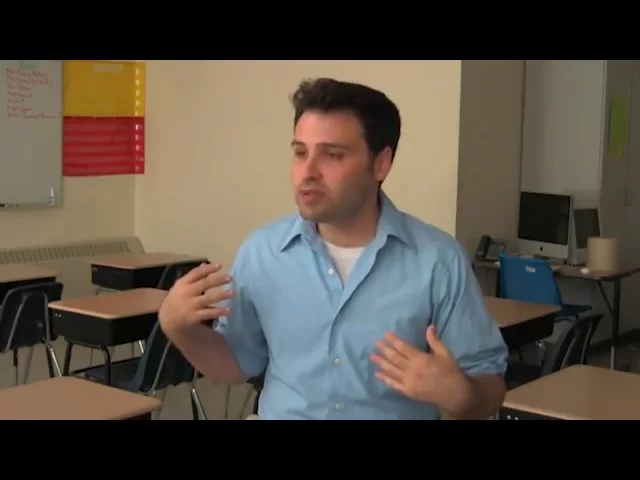
[Music] so in an average siiz classroom of 20 to 24 kids just statistically you must have a handful of kids every year that have issues with attention and hyperactivity um so I'd like to talk with you a little bit about some strategies used in the classroom to deal with that um to begin with why don't you tell me a little bit about some strategies you use to deal with distractability great um in a classroom of anywhere between 20 to 24 kids there's bound to be a lot of sound a lot of noise a lot of
just action going on um and for some kids that could be really distracting um the most basic thing that I do to help this is simply preferential seating um having putting a lot of extra thought into where that child is sitting uh and who they're sitting with uh in the beginning in the front of the classroom helps a lot of kids because I'm right there almost the whole time and if they get a little bit distracted I can just kind of knock on their desk kind of remind them where what they should be focusing on
um but if that for some kids that's too much um so I like to sit them in the back of the class where there's less sound um and less action going on so they have less things to distract them with so fidgeting and hyperactivity is another core symptom of ADHD so tell me how you manage that in a classroom environment excellent well one of my favorite things actually is that I have a um a box of fidget tools on my desk all year and there's actually two of them on my desk um and kids are
welcome to at any point uh get up and and grab one if they need one um and we do a lot of talk about good choices my favorite choice is is the Rubik's Cube because I find that you can um move the pieces around without having to look at it and it kind of gets some of the energy that kids are feeling out without while allowing them to pay attention um for some kids they might like a ball to squeeze um or they might uh need to use a seat cushion um this is a bumpy
seat cushion it has bumps on it to kind of give it some texture for kids and um in order to sit still they have to use a lot of energy but it it keeps them still because it does want them to move around on it so by using this it gets them to fidget but it actually the fidgeting is keeping them still so I imagine with these sorts of things there's kind of a Tipping Point where it could become more of a distraction than a than a help how do you how do you manage that
how do you monitor that that's a great question I actually can't use these because they distract me they don't help me um and for a lot of kids um this won't help them they want they think it might and then they end up bouncing on it like I do and it doesn't help them um another example would be a kid who would take the ball as a fidget tool and then throw it and catch it while I'm teaching math that's not a that's not a good Focus tool because they're not paying attention to me they're
paying attention to this in that case we do a lot of talk in within the whole class about making good choices and if they need to look at it to use it then it's not a good choice for them because uh they're drawing Focus away from the lesson and putting the focus onto the tool um a lot I have some smaller tools for kids to use as well that might help them that just have little pieces that move so that they can get some energy out there and again tools that they don't have to look
at are the ones that I I want them to be using so difficulties with organization is another issue that a lot of kids with ADHD have tell me how you deal with that in a classroom absolutely um I use um I use checklists for kids who have a really hard time bringing all their assignments home at the end of the day um so it has like did you bring your math homework your science homework your reading homework and they have to check off every day um with a a a dry erase marker and I laminate
the checklist so that every day they just use the same one and and monitor themselves um a lot of kids they need help with that they need some support in class and at home using these checklists but usually after uh some time using this it's becomes an independent activity um in addition to help with organization another piece that becomes difficult for a lot of kids is writing um especially if you um if you have when when you have ADHD uh writing is challenging because you have a lot of ideas in your head that you have
to manage and organize in your head to write I use graphic organizers a lot for kids um because I find that even if you get distracted while you're working you have it all laid out for you so there's not as much um question of what was I talking about before what what did I want to say you have it all planned out for themselves um in addition uh every student in the class uses a homework organizer where every day there's a section for them to write each subject's assignments every single day so it becomes a
routine to help them stay organized so another thing that can be challenging for uh many kids is following directions particularly directions that include many steps tell me about how you manage that uh in a classroom setting one of the first things that I do to deal with um Direction following especially Complex directions is I I write them on the board absolutely that's the first thing that I do um if it's written on the board it's permanent for the kids so that they can see it and see what is expected of them in addition what I
do once I have it on the board is I chunk the directions and say this is the first part that you need to worry about don't worry about the last part just do this first part and then we move on to the we move move on and get through all the directions um I find that if you give them all the directions at once even if they're written on the board kids can get a little overwhelmed because it seems like a lot to do so by chunking it it um breaks into manageable pieces John thanks
very much I mean it sounds like those are some wonderful strategies that you use and uh probably are a great benefit to the kids that you work with thanks [Music]