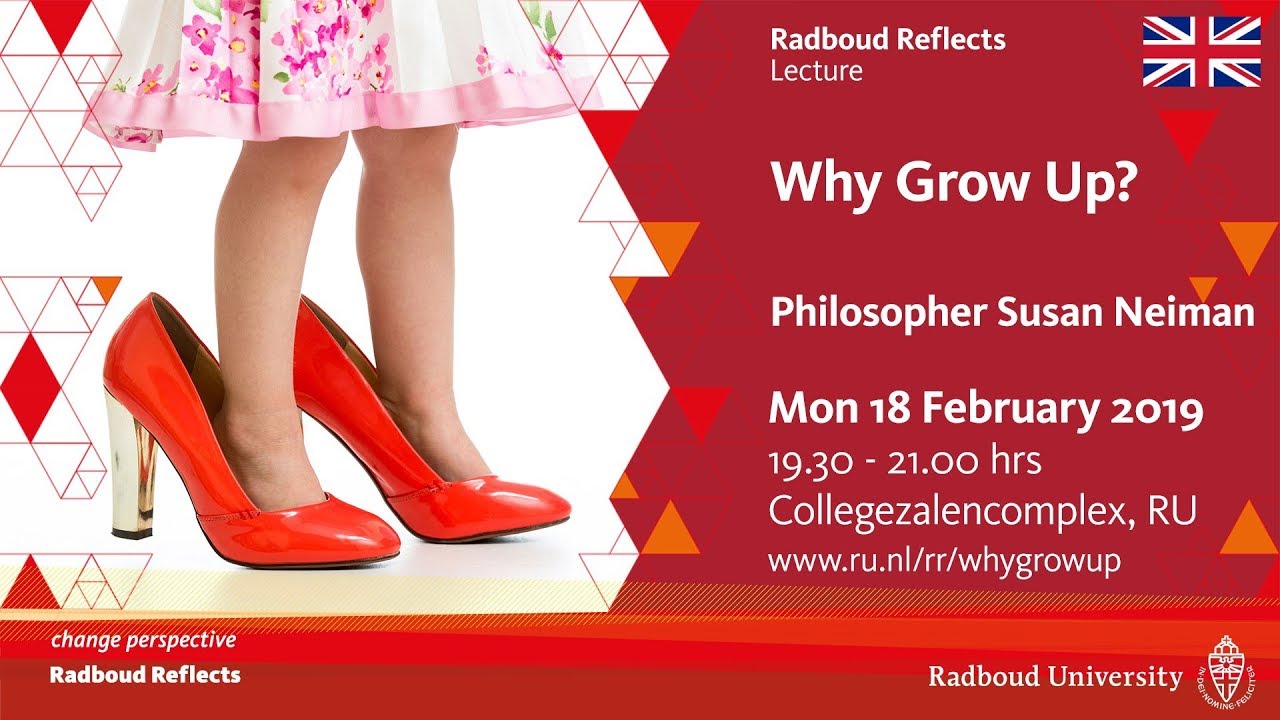
[Music] that book was intended to do a number of things one was to undermine the myth that the best time of one's life is the time between about eighteen and twenty eight which is a myth it's empirically wrong I hope you're enjoying your lives right now I do sometimes meet people in their twenties who do and that's great most people I know once they're out of them would never choose to repeat them again they're terribly difficult times of our lives we're trying to figure out who we are and what we can do what we want
to do and all of that and added to that comes the voice of people their 40s and 50s and 60s who say you know this is the best time of your life enjoy it now and then you think oh my god not only am i miserable about you know my love story or figuring out what job I want but this is the best time of my life and I'm not enjoying it you know and they've done social psychologists have done studies there's a so called you curve that people start getting they get unhappier and unhappier
up to a point and then it goes up again and it's different at a rate for different in different cultures but the one thing that we know empirically is this is not the happiest time of one's life so why are we being sold this myth once again we're being told be realistic which means accept the world as it is the world is extremely limited your choices within it are going to be more limited still and you'd better you know face up to it you'd better resigned and you know we're resigning means buying into a culture
that equates growth with having more stuff I mean best for the economy but also for you know people as individuals and the goal in that book was to try to provide a view of growing up which I see as rooted incant the most important difference that Kant drew actually it wasn't just gone come but there's a way in which he took it from David Hume David Hume said there if there's a complete difference between the is and the ought so statements about what is are completely different from statements about what ought to be now what
Hume concluded from that is basically there is no ought alright because it has no basis in empirical fact alright it's just you know comes from even put in those terms but you can call wish thinking or somebody's trying to assert their power over you or something like that and what content was to say yeah these are two completely different things and they both have force and they both have a claim on us and my argument in that little book is being grown up involves keeping one eye on the way the world is and one eye
on the way the world ought to be and not confusing the two but not giving up on either one so yeah it is connected with some water and then you can you identify who creates the myth is it sort of a capitalist myth or a woods man if that we get from know so much other than that actually I mean well look it's interesting because it's it's very Western and as I said in starting my knowledge of other cultural philosophical traditions is small but I've read enough anthropology and seen enough of the world to know
that traditionally and still in other cultures that are not European it's quite different they're not as child focused you know growing up his is something to aspire to and the really interesting thing is no child wants to stay a child it's children want to grow up because they create they equate being adult with being able to create things having freedom being autonomous making choices so how is it created look it's also partly self created I mean it's it's I wouldn't say like many important ideologies that you know wicked people sat around in a back room
and said this is how we're gonna screw people over no ideology gets created that way and what I find so interesting is that its self supporting that it's a myth that people buy into themselves it was really funny when I was writing that book you know if you're a writer and you see friends you haven't seen in a while probably the first thing they'll ask you is so what are you working on these days and in three different cases the reaction when I said I'm writing a book called why grow up he said ooh is
it what an awful subject and one of them said to me my hero was always Peter Pan well the funny thing is that all three of these grownups they're quite different it's also three different countries but all of them [Music] fulfill my ideals of being a grown-up they're all I guess now in their early 70s they're all working incredibly actively in their chosen because there are once an artist - I guess intellectuals they're all politically active one of them you know literally physically outlines they're all multilingual they're all I mean none of them has not
only has none of them stopped being in the world they continue to learn and they continue to give back to the world and that sense of being absolutely alive is what those people equated with being childlike oh I'm childlike no no now you're a really successful grown-up although one of them is completely unsuccessful in conventional terms as the other two are rather successful conventionally but so it's a self-perpetuating ideology and I'm doing what I can to work against it for more debates talks and interviews subscribe today to the Institute of Arts and ideas her III
TV you