okay in this short talk we're going to look at some tools practices institutions and applications of reflexivity for accountability we'll start off with a couple practices and institutions that are meant to enhance reflexivity and or ensure accountability and then we'll end with a way to think about the magnitude and multiple uh sense of tools there are out there that pretty much are designed to do the same thing so here is a actually a short list of forms of accountability and I've added to the public interest since not all forms of corporate or even governmental responsibility
necessarily adhere or rather accountability necessarily Advance what we might think of as the public interest we won't necessarily get into that but we'll just sort of remind ourselves that we're not interested in accountability per se but but ultimately in advancing the public interest and when accountability to sell for to others can advance that then it becomes relevant to what we're studying so professional practices are largely at the micro level although they can be at the Meso Level if they're adopted as best practices and promulgated throughout an association or a sector and we can divide them
into reflexivity practices that are basically designed to promote Personal Mastery where one is aware of one's emotions and values and behaviors and cognitions or reflection and action an idea that Donald shern developed out of John Dewey's work where practitioners when they encounter a problem they they can choose to either reflect stop acting and reflect on it that's reflection on action and it usually comes at the end or if they stay in action they can somehow incorporate reflection into what they're doing these don't always lead us to the public interest or reinforce the public interest Now
product practices that are designed to get a more efficient or a more effective product men any of these exist you're familiar with with a lot of them we'll look at a list of of them in a minute these don't necessarily ensure accountability to the public interest but many of them do heighten reflexivity and some of them are tied directly to the public interest or indirectly supported depending on how they're used and finally there are various practices that are meant to enhance accountability to either a specific policy or more generally to policy values such as common
interests and public interests and you'll read about both of these policy orientation from a policy Sciences framework and Roger poker Junior's notion of the honest broker then we can move up to the Meso Level and look at a number of Institutions there and most of these show up as codes of conduct codes of Ethics or codes of responsibility we'll look at two of these in a moment and then we can move to sort of down a level uh to sort of mid-mesa level where we're dealing with the actual firms organizations companies associations that are involved
in technology development or public problem solving and we can look at their mission statements their Charters and practices such as Corporate social responsibility which is largely a form of reporting and then of course there are numerous public and Civil Society organization uh uh governmental organizations and institutions and practices that are in play as well uh the technology developers and those people solving problems in the public domain will or may have to be accountable to or through and you know short list of these consist of everything from International courts of justice and organizations that formulate principles
for human rights down to National governments whether it's in the form of congressional oversights uh where uh we saw in the summer of 2020 Congress called the CEOs of four of the major Tech firms to account to give testimony on whether they are operating as monopolies or not judicial findings of course can hand down judgments that that technology developers will have to abide by if they've been found to break the law for instance if they're violating Anti-Trust agreements and then agencies often require reporting in exchange for uh perhaps funds that they're giving or or lending
to technology developers now journalists can do a great deal to call into accounts What firms or technology developers or service providers may be doing or not doing and if you're familiar with the case of theranos a multi-billion dollar biomedical firm that that turned out to be there's a court case going on so we don't know for sure legally but we know from the journalistic reporting The Wall Street Journal did that the technology they were developing was actually far bar from the quality and the nature of what they were claiming it to be and even the
products that they were providing were were apparently deceptive and fraudulent non-governmental organizations can engage in all sorts of activities that are meant to call attention to what firms or organizations are are doing that may violate either laws or norms and standards or the public interest and finally whistleblowers from within firms within organizations can reveal information that would otherwise not be known and they couldn't do their duty of whistleblowing if they didn't have whistleblower protections from Congress so some examples here is a statement on scientific freedom and responsibility by the aaas the American Association for the
advancement of science I believe it's the oldest professional organization in the modern world but even if it's not we do have uh we can rest assure that Abraham Lincoln created it and the uh gosh 1860s during the Civil War I believe and it's interesting that scientific responsibility uh is formulated in connection to Scientific Freedom now it's not too surprising if you've studied how science operates Freedom as is sort of seen to be a core value of science so you can't really have responsibility without Freedom so one message to sends is that scientific responsibility is really
something that is voluntary and we can enforce egregious violations of that but really we have to trust the scientists to be responsible because we're giving them all this freedom and so the responsibility is only going to come out of the freedom and so we've got pretty General statements such as scientific responsibility as the duty to conduct and apply science with Integrity okay in the interest of humanity wow that's even bigger than the public interest so um you know these are General statements and we find General statements also in codes of conduct codes of Ethics avoid
harm be honest be fair okay um so you know statements like these are important because you need need to draw a line in the sand you need to have something to invoke when you're at the Meso Level when you're at the micro level when you're doing your job when you're managing others doing their jobs when you're hiring somebody when you're assessing somebody when you're calling somebody into account you can use these General statements to say you know I don't think that this technology adheres to these standards for instance but to actually enforce these standards is
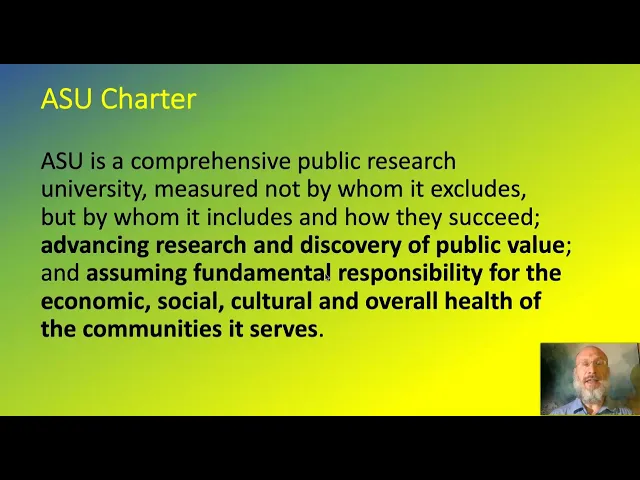
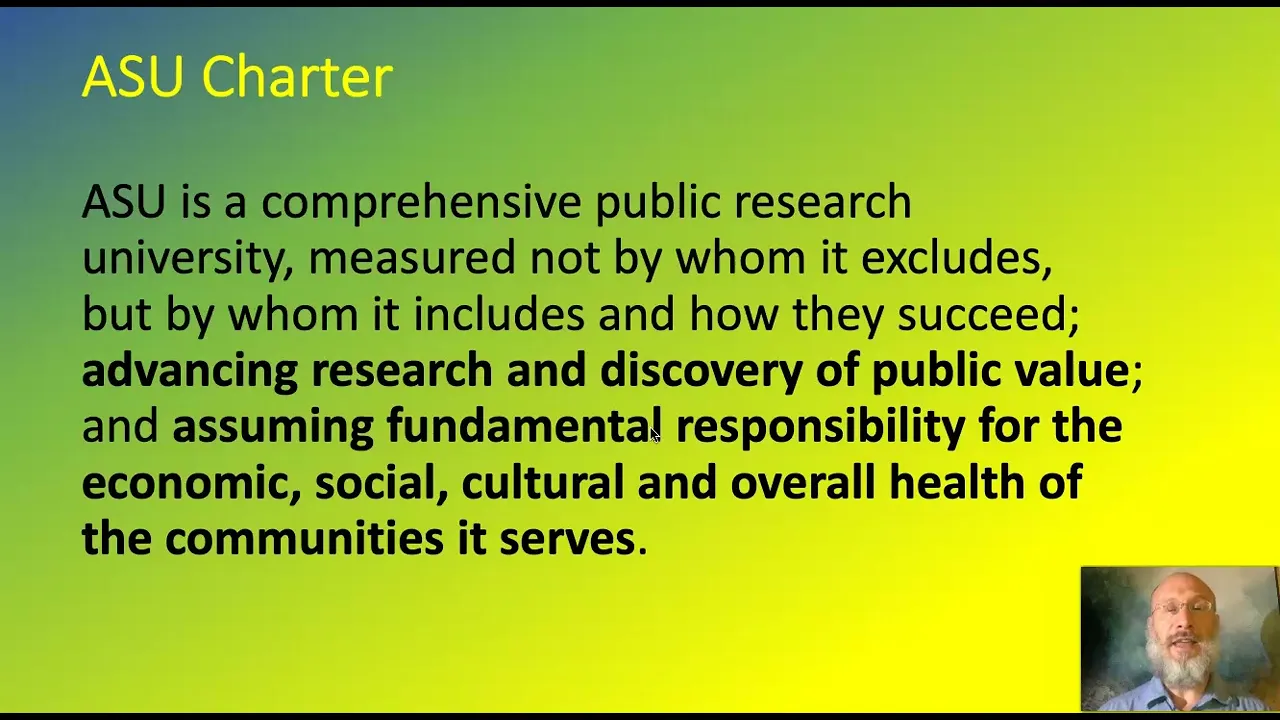
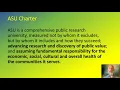
very different is very difficult if you're doing it in a future oriented mode or in a Midstream mode if you're doing it after the fact it's it's also difficult but it's also not necessarily pointless but it doesn't really help us with technology development okay so actually how to put these statements and codes into practice in the Midstream is difficult here's an example of a university Charter and uh it's it's asu's Charter and it's quite radical quite uh original no other university has something quite like it in my experience and I've looked um and you find
very interesting statements such as advancing research and discovery of public value that's so that almost invites accountability that says yes go ahead and ask us we'll be able to demonstrate that and assuming fundamental responsibility for the economic social cultural and overall health of the communities that surge so really putting something out there saying we serve communities the university should serve its communities and we know that the research and Discovery and education we do is supposed to and has an actual uh effect on those communities economically socially culturally Etc and that we want to assume responsibility
for that assuming fundamental responsibility so a massive statement of responsibility as you know accountability is a a means to try to ensure or enforce responsibilities so here we have front and center but again how do you advance any of these things now here's one at the macro level but it's it's not so much um a it's more of a practice right it's an institution as well but it's basically a way that firms can participate in Social responsibilities CSR corporate social responsibility it's been around for a while and when it started it was really a voluntary
uh set of practices now it's actually required some aspects of CSR excuse me are enforced by governments and corporations are supposed to report their CSR activities to their shareholders but let's step back and say this isn't a definition but a description of CSR namely to contribute to societal goals of a philanthropic activist or charitable Nature by engaging in or supporting volunteering or ethically oriented practices now one of the things that you might notice is that it says nothing about the core operations of the firm The Profit making activities of the firm the product producing or
service providing activities of the firm so it's a technology firm this says nothing about how they develop their technology so it basically says nothing about pit so that's maybe the first criticism of CSR that as good as it may be it doesn't really get at you know it doesn't you doesn't uh tap the capabilities of the firm to solve public problems but CSR has been criticized in other ways industrialized industrialists have criticized it as uh really interfering with the profit motive excuse me whereas uh people on the other side ethicists Civil Society members uh will
con criticize it as not going far enough it doesn't do enough it's not it's just window dressing and this idea of window dressing unfortunately um picks up some credibility when you consider that CSR is largely a reporting practice it's largely a regime of reporting your CSR activities to your shareholders and now of course reporting is an important activity and if you're reporting to standards to um requirements to statements to codes of conduct codes of Ethics codes of responsibility then this is a way of calling being called into account giving an account of yourself this is
my report for what I've done but as we'll see both the people that are being reported to shareholders not stakeholders and the the sort of flexibility and how you report can leave a lot to be desired so in brief uh the the reporting is very Broad in terms of the different things that are required and things that could be included that don't have to be and the way in which you can develop your reporting sometimes CSR reporting is called sustainability reporting and there are numerous standards for how you should conduct a high quality sustainability report
and one organization that that can have that formulates these standards and trains people in adhering to them is the gri and gri will provide some very high quality uh standards and and expectations and criteria for how to put about put together a sustainability report and one of the things that they recommend is to First conduct something called a materiality assessment assessing what is of material value to your organization this is a very important exercise they've done well because it will require stakeholder engagements and you can also hire other firms to do that stakeholder engagement for
you that will then feed into your materiality assessment so you know what is of material value to you as a firm your internal stakeholders your external stakeholders and where you're sort of you know where your core values are being operationalized where your aspirational values are um and and then you know all this can go into a report and then every year every five years when the report is done there can be progress or not but uh the simple fact remains that you don't have to do a materiality assessment and your sustainability reporting doesn't necessarily have
to entail stakeholder engagement and it therefore doesn't have to be very robust so a lot of critics will say it's just a recording practice and the reporting practice is really just a PR activity others one of my graduate students did do a study and he found a correlation between the quality of sustainability reporting and the amount of alternative energy that public utilities and private Utilities in the Western United States invested in so he claims that's because of the stakeholder engagement okay you will read about Roger Pilkey Jr's notion of the honest broker and I just
will give you a quick overview here uh and that is that there are four different idealized roles of scientists in policy and politics scientists in public decision making and excuse me these roles do not necessarily map on super easily to every uh form of civic-minded technologist activities but I think these are helpful I think they often can map on so the science Arbiter is somebody who basically says okay tell me what the goal is and I'll use my signs to help you get there so you can imagine that's most most employees in a technology firm
what am I paid to do okay I'll do it all right and if it's something egregious that person then should consider resigning or if it's something illegal they should consider blowing the whistle then there's the pure scientists there aren't very many pure technologists out there but you can imagine somebody working in an r d Shopper there they have a lot of rains to be creative and they don't even have to advance the company Mission they don't have to come up with something that's a product for Salvage to improve their worth and develop something that shows
how creative and smart they are so that might be a pure technologist somebody who just is not thinking about how it's connected to policy because it's not connected to policy in their mind an issue Advocate is someone who has a particular issue they advocate for and this could be a scientist or a technologist the issue could be gender it could be the environment it could be Equity it could be cost it could be any number of issues and values that this person is going to sort of personally take on and they may also have a
formal role such as a sustainability officer or an Ethics officer in a firm and this is their also their job to advocate for ethics or for a particular stakeholder group but whether it's formal or informal the key is that they need to be transparent about this to themselves and to others because there's something Pilkey warns us against and that is the stealth issue Advocate somebody who's got an issue that they advocate for but they're not being transparent about that to their clients to their Partners to their collaborators to their teammates and sometimes they won't even
know it themselves and of course this is because of a lack of reflexive awareness and then there's the honest broker this is somebody who attempts to position him or herself above uh political squabbles and political allegiances even if she has an allegiance she would like to see a more environmentally friendly policy here or a technology she's going to say okay I'm working for this decision maker and this decision maker has multiple constituents or customers or competing clients or pressures that they're trying to address and what I'm going to do is not advocate for one issue
or another one interest or another nor am I going to advocate for one solution or another I'm going to try to clarify what are the interests and the values at stake here looking for common ground so the notion of the common interest is very much at play here Roger Pilkey uh junior is a policy scientist like my self a lot of his work comes out of the psf just as a lot of stir comes out of psf but the honest broker is trying to clarify values okay and we're we're possible and we're allowable expand options
expand Solutions expand Alternatives these could be policy Alternatives they could be technology alternatives and you'll see that there's a lot of similarity between the honest broker and what I call stir 1.0 okay uh to end with and speaking of stir uh stir is just one of numerous tools interventions approaches now you've already seen a couple of these CTA we've mentioned value sensitive design before I believe you may be familiar with that many of you are ux experts so I'm not going to go into these per se I'm just sort of throwing them up there so
that you see that there are numerous and this is just a handful many more that we could we could put we could populate here they all play some role in either enhancing reflexivity or advancing accountability serving some accountability interest or both but they do so in different ways and remember we sort of said that some of these are really just product oriented or product focused some are actually policy focused um and then some are just simply reflectivity focused but what I want to do instead of going into these is to give you a scheme aim
for thinking about them and for thinking about their orientation so let me take a minute to explain the scheme and then we'll go through each of the four quadrants or categories so if you look at the vertical axis this is values and we've got a spectrum here it says from native to Alternative and the word native just means born or originated so the idea here is that we're talking about the people who are sort of living in The Firm or the organization or the team that the tool or the invention intervention is meant to interact
with so these we'll just call them the internal instead of native values we can say internal values internal to the team internal to the firm internal to the organization and then alternative values these are um the values that others who are not of the organization they have these could be stakeholders they could be citizens they could be Regulators they could be principles and so we can think of these as external values and they could be super broad such as Global human rights they could be you know National laws and policies they could be the public
interest they could be ethical values well we're going to be a little bit sort of broad here and then so there's the values right but we can do the same thing with capacities now capacities are we're going to include skills knowledge capabilities anything that the um that the people the experts the technology developers the policy developers the problem solvers anything that they know how to do or they can do or they do it with okay so we're going to call those capacities and again we've got a spectrum from native to Alternative native would just be
internal to the organization internal to the team alternative capacities would be skills expertise knowledge information that comes from outside of the team outside of the organization so with that orientation let's go through all four of the categories let's start with the upper left this is a situation where um let's say that there is a technology organization and I've got a tool that I want to use with them that introduces alternative capacities my own expertise that they don't have and it serves it's oriented towards alternative values human rights values public interest values that they may not
be oriented to and so if I'm working with that type of tool or I'm using a tool for that type of purpose I'm really a reform-minded agent I'm attempting to bring about reform and so an example of a tool that very much operates in this space is human practices excuse me human practices demands that technology developers and those who care about ethics in this case anthropologists sort of have equal power they they they code they make decision maker making they make decisions together um they each read each other's work they have joint meetings they might
even teach classes together and and um everyone gets to work on the issue that they care about but somehow nobody's excluded and somehow this is meant to serve the greater good unfortunately the one main attempt to implement this failed very dramatically and I think that is in part because it's very difficult to reform an organization or to reform a practice as we've talked about in discussion uh boards um it may be that the best way to reform an organization is slowly over time uh thinking about not just policies for uh performance uh and practice but
also policies for hiring right who do you hire and are you are you bringing in a diverse Workforce okay so reform seems to be something that um that is most difficult and it's difficult to come up with a tool that's going to deliver reform uh if we come down to the lower left here we have again external capabilities capacities knowledge expertise coming in to help this organization do something but now we're helping them do what they already want to do their native values their internal values their existing commitments are what this tool is going to
help them uh advance and I've chosen vsd value sensitive Design This is a form of human computer interaction and value sensitive design is very explicitly normative so a good vsd team or practitioner will probably only choose to work with a company or a group whose native values correspond to their own values or their own commitments to Alternative values okay or they may function as a way to try to open up and get more alternative values onto the table that weren't there because the firm said we want you to do that okay because then there will
be an issue Advocate to use Pilkey's idea there and I think of this as augmenting the capabilities of the firm or the organization of the team then the lower right here we have again native values these are what this is what the team or the organization cares about they're trying to get this stuff done but it's the team's own value abilities knowledge and skill that is going to be what gets it done so what does this type of intervention do well it basically facilitates the team uh to do what they're already doing better okay and
in the case that I've chosen here something called the toolbox project which is a form of Team science um in the end this type of tool is really going to help facilitate communication among different members of the team or different members of the organization who may not think or speak the same way so all of these can advance the public interest they can all help Advance public interest technology but you know one has to to think about you know whether reform is worth undertaking and or maybe you know it'll be counterproductive when it blows up
in your face and whether you're augmenting the right or the wrong values and also whether you're facilitating a team to work on something that you may or may not believe is in the public interest and then finally we have the upper right and that is problematization this is where we have native capacities again we're working with a team and their skills their knowledge their capacities we're not going to add knowledge we're not going to add expertise we're not going to add capacity but we are going to enhance that capacity but we're going to do it
with an orientation towards external values towards the public interest and that's called problematization and our example is Stir which you will learn about and actually start conducting uh during this module and the reason I call it problematizing is for a couple reasons one is it actually takes the goals and the values and the practices of the team and and sort of says okay how are you going to do that right let's let's let's unpack this a little bit right instead of saying okay how you can try to try to do this okay how can we
get a flow of communication working it's more like wait a minute explain this to me how does that work and it doesn't necessarily have to be in a highly skeptical manner um it might be in a very compassionate and and and supportive manner but it still requires the team members to give an account of what they're doing so we're kind of problematizing what they're doing they have to they have to sort of think through it in a way that maybe they hadn't and it's also problematization because it ends up creating problems okay we basically create
problems for these people and I don't mean that in a negative way I mean that we identify problems earlier okay and we identify problems that might otherwise go undetected so that is the uh integrative field map of how you can take these tools that are often collaborative that are meant to integrate technology development and some version of normative goals which in our case is the public interest and it's probably true that any given tool and any given agent who administers that tool could operate in more than one of these quadrants so part of your job
is to figure out which Pro which quadrant is most appropriate for which project and given the native capacities and the alternative values that are at stake the alternative capacities that are available and the native values that are going to have to be negotiated how do you best work with this team to accomplish pit goals what tools do you use and how do you uh apply those tools in which of these four moments okay guys until next time stay pit