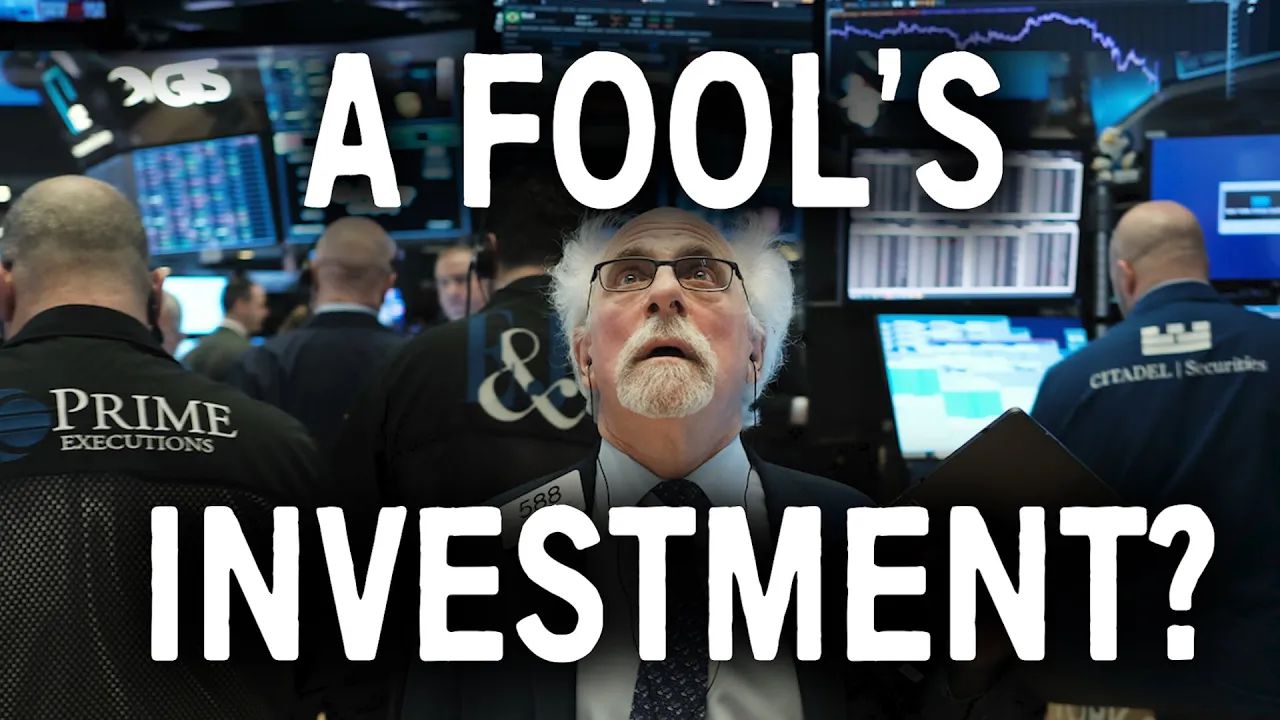
In 2008 Warren Buffett made a bet for 1 million dollars that a hand selected group of hedge funds could not outperform the S&P 500 Index over a ten year period. In 2018, Buffett won the bet, and went home an extra million dollars richer (which I am sure was a very big deal for him) This exposed a big flaw in the investment industry which is that actively managed funds and in particular hedge funds struggle to outperform the general market. When fees are considered there is only a handful of funds that have returned money to their investors in excess of what they would have received had those investors just taken a more traditional investment approach.
Hedge funds are also not open to the public, to invest with one of these institutions you need to be what is called an accredited investor. What qualifies as an accredited investor varies between different countries but here in the states it is a person with an income of two hundred thousand dollars per year or more, or a couple with a combined income of three hundred thousand dollars a year or more, this income must also be sustained over the most recent two year period. A person or couple can also be accredited if they have a net worth exceeding one million dollars excluding their primary residence.
Finally, you can be an accredited investor if they are a director, executive or general partner in the unregistered business they are investing in. This is simply to make it possible for people to invest in their own start-ups. You need to be an accredited investor to invest in risky assets because the SEC wants to make sure than unsophisticated investors are not preyed upon by dubious financiers pushing complicated financial products with high fees and poor returns.
Now even if you are an accredited investor you will still find it difficult to invest with most hedge funds. Most hedge funds will require a minimum investment of anywhere from one hundred thousand to one million dollars. Ray Dalio’s Bridge Water has an investment minimum of seven point five million dollars and charges up to 4 million dollars a year in fees alone, on top of this you have to be invited to invest in the fund, an honor which is typically given to people with an investable net worth of seven point five billion dollars or more.
But people this rich are generally not stupid, so why would they invest in hedge funds when these funds have typically failed to outperform a more basic investment strategy? To find out it’s time to learn how money works, which was made possible today by Trends which is very appropriate considering their platform is built around understanding the business decisions of very successful people. Trends is a platform that feeds you idea’s and the provides you access to a community and opportunities to turn those ideas into something successful.
One trends member took a report posted by trends on the indoor plant business. Trends had uncovered signals that the indoor plant market was set to take off as people were spending more time inside. The trends member decided to start a small business around this idea and leveraged the experience of business owners and investors in the Trends community.
He used this feedback to fine tune his business plan and forty days later he was able to raise one point five million dollars in funding to get his business started. Even if you are like me and you don’t have ambitions of being a big-time entrepreneur Trends can give you access to events where you will hear from industry leaders who have had all kinds of different yet successful careers. Trends is like joining the most prestigious golf club in the world without the headaches of needing to play golf.
It’s also much easier to get started with, that’s because trends has made it possible for viewers of this channel to gain trial access to their community for seven days for just one dollar. To take advantage of this offer use the link trends. co/howmoneyworks Now let’s say you do start a million-dollar company and start earning more money than you know what to do with, investing is probably a good option.
No businesses last forever and investing wisely can set you and your children and your children’s children up for a life where they only work if they want to. You have plenty of options available to you, if you want to play it safe then bonds have historically been your go to, although with interest rates where they are right now that isn’t a very attractive option. Crypto is risky and unproven, it’s hard to build generational wealth on a foundation which has only been around for a decade.
Finally there is real estate and the stock market, the two most generic investment options. They are popular for a reason, they offer great returns and have been doing it for as long as capitalism has been a thing. Today it is easier than ever to get into especially when you have millions if not billions of dollars in the bank.
But then there are hedge funds. On the surface they just look like a middleman between you investing your money directly into the stock market yourself. A middleman that will take a very significant cut of any future earnings.
So where is the value here? Well, the first mistake is thinking this is a problem. Warren buffets famous million dollar bet may have made hedge funds look bad but it didn’t reveal anything that sophisticated investors didn’t already know.
Okay the market outperformed these funds, so what? The market also outperformed bonds and real estate over the same period, does that make bonds bad investments? No of course not, they are just different.
The second mistake is assuming that all hedge funds do is invest in the stock market. Some of them do, but not all of them. They also don’t invest in the way that a regular individual would.
When you and I buy a stock we are usually planning to hold that stock because we think it is going to increase in value. If we want to get technical, we might even short a stock if we think it is overvalued and likely to fall in price. Some of us will even play with stock derivatives like options, but we all know at that point it’s little more than legalized gambling.
Regardless of what we do as individual investors we are just placing bets on a stock going up or down in price. Historically the bet that most companies will become more valuable over time has been a good one, so that has become the traditional financial wisdom, buy low-cost index funds and never sell them! There will be some years that are better than others but so long as you hold a broad enough portfolio over a long enough time horizon you are pretty much guaranteed to make money.
This is very solid advice for ninety-nine-point nine percent of people. When combined with some real estate holdings and a little dip into crypto and alternative investments it can be a very powerful wealth building tool. But the zero-point one percent need something more, they need wealth that is constantly accumulating no matter what the market is doing.
Good hedge funds should not be exposed to what investors call market risk. This is the risk inherent in an investment caused by widespread downturns in the market. Almost every public stock apart from a select few are subject to market risk, if the market crashes the stocks that make up the market crash with it, even if the underlying companies are doing just fine.
There are two ways to get rid of this risk, the easiest way is just to wait it out, that’s why people always say to invest for the long term. The other way is to hedge against market risk. Doing this is very complicated but lets take a simple example.
A hedge fund predicts steam will corner the video game market on PC and consoles. With this knowledge they will buy shares in steam and short and equal value of shares in a collection of other companies like Game Stop. This means if the market crashes then the losses from their position in steam will be counteracted by their short positions in the other companies.
They will have hedged their bet, hence the name. If steam then announces that they will be partnering with Sony, Microsoft and Nintendo to be the exclusive release platform for all video games then the stock price will rally relative to these other companies and they will make a profit off that news while not being exposed to market risk. This can still go horribly wrong.
If meme lords on the internet decide that they like Game Stop, then the hedge fund will lose money on that short. But that doesn’t matter because that’s just regular speculative risk, which doesn’t matter so long as it’s not market risk. So why is it so important to get rid of market risk?
Because rich people are already exposed to that risk with their own businesses and all of their other investments. It’s very hard to diversify away from market risk because most traditional investments are still correlated with the stock market. A stock market crash would likely dampen real estate prices and visa versa.
Rich people are looking for uncorrelated return streams. If their hedge fund is having a bad year then hopefully the market is doing better, if the market is down then their hedge fund might be up. Investing in a group of uncorrelated investments is surprisingly more powerful than simply investing in whatever has the highest average returns over time.
The math behind this principle is complicated, but it all has to do with a theory called dollar cost averaging. Dollar cost averaging assumes that an investor contributes a set amount of money at regular intervals into their portfolio regardless of market conditions. When the market is up, they will invest the same as when the market is down.
This means the investor naturally buys more assets when the market is down then when the market is up which automatically takes care of the “buy low” part of investings golden rule. Having uncorrelated assets means that something will always be doing well while something else is doing poorly which means dollar cost averaging can be fully utilized. Normal people usually invest for a singular goal like retirement, so the broadness of their investments doesn’t matter as much as the broadness of their time horizon.
Rich people like to be able to access their money quickly to take advantage of opportunities as they present themselves. If a billionaire is presented an investment opportunity in the next Facebook they don’t want to pass it up because they are afraid of liquidating their portfolio while the market is down thirty percent. There is another reason that hedge funds are still around today and that’s because rich people like to think that they can pick a winner.
Investing in a hedge fund is not like investing into the stock market, it is more like investing into a private business. Most businesses fail, just like most hedge funds under-perform the market, but if you were lucky enough to invest into the medallion fund back when it was getting started then you would almost certainly be a multi-millionaire today. For many wealthy people that’s enough of an incentive to write a few checks to promising new hedge fund managers with a decent investing thesis.
Today hedge funds are not nearly as popular as they were in the eighties and nineties, the fashion amongst billionaires is now private equity. But there is still a reason these businesses exists, they offer a very specific type of solution to a very specific type of individual. If you would like to learn more about the ins and outs of hedge funds then you should check out Patrick Boyle here on YouTube, he is a hedge fund manager and financial author who makes criminally underrated videos here on YouTube, his videos helped me a lot when making this one so make sure to go and check him out.
Thanks again also to today’s sponsor trends for making it possible for everybody to keep on learning How Money Works.