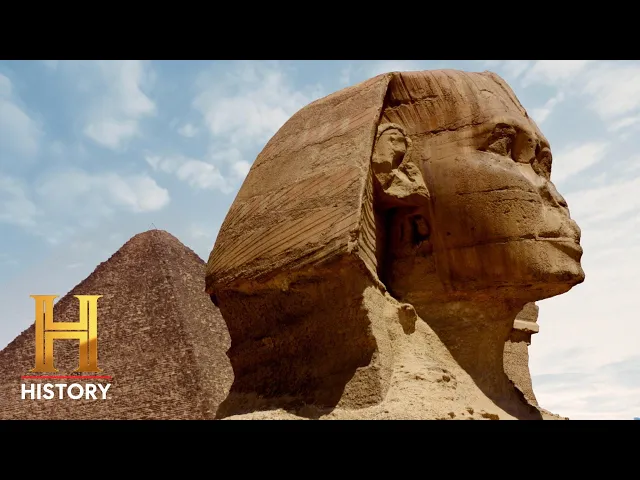
[music playing] NARRATOR: Aswan, Southern Egypt, March 1813. Swiss explorer Johann Burckhardt is traveling north along the Nile River when he comes across three massive stone heads protruding from the sand. Four years later, a thorough excavation reveals a 3,200-year-old temple complex.
The Abu Simbel Temple, as it is now known, contains some of the largest stone statues ever constructed in the ancient world. WILLIAM HENRY: In 1244 BC, the Egyptians built in a mountain an incredible temple complex devoted to Ramses the Great. [music playing] These statues are colossal.
They're 64 feet tall. And the Egyptians would visit Abu Simbel, and they would see their king, their pharaoh, as this great, godlike being in his perfection. And people would understand that their king, their pharaoh, was, in fact, a god incarnate.
[music playing] NARRATOR: In the 1960s, the temple was carefully dismantled and moved to higher ground to make way for the Aswan Dam. Engineers overseeing the relocation efforts paid particular attention to assure that both the geographical and astronomical alignments of the original site remained intact. Twice a year, on February 22 and October 22, the dawning rays of the sun pass through the temple entry.
The light travels 185 feet through a great hall of stone giants, and for 20 minutes shines directly upon the carved statues of the Egyptian gods Amun, Ra-Horakhty, and the pharaoh Ramses II, located at the end of the temple. WILLIAM HENRY: These colossal stone statues serve more than just an artistic purpose, more than a political purpose. That purpose, we're told, centers around the idea that these colossal statues are transmitters.
They're utilized as a mechanism of drawing down cosmic energies, cosmic forces, that then can be emitted into the surrounding area. The question arises, are these cosmic vibrations used in just a religious sense, or is this more of a technological purpose? [music playing] NARRATOR: While the Egyptians' notion of stone statues possessing energy is regarded by mainstream scholars as purely symbolic, ancient astronaut theorists believe that it was meant to be taken literally.
And they suggest evidence can be found by examining similar ideas held by other civilizations throughout the ancient world. DAVID CHILDRESS: In a number of ancient societies, people associated these statues as having an energy, and those statues were alive. They had even a consciousness.
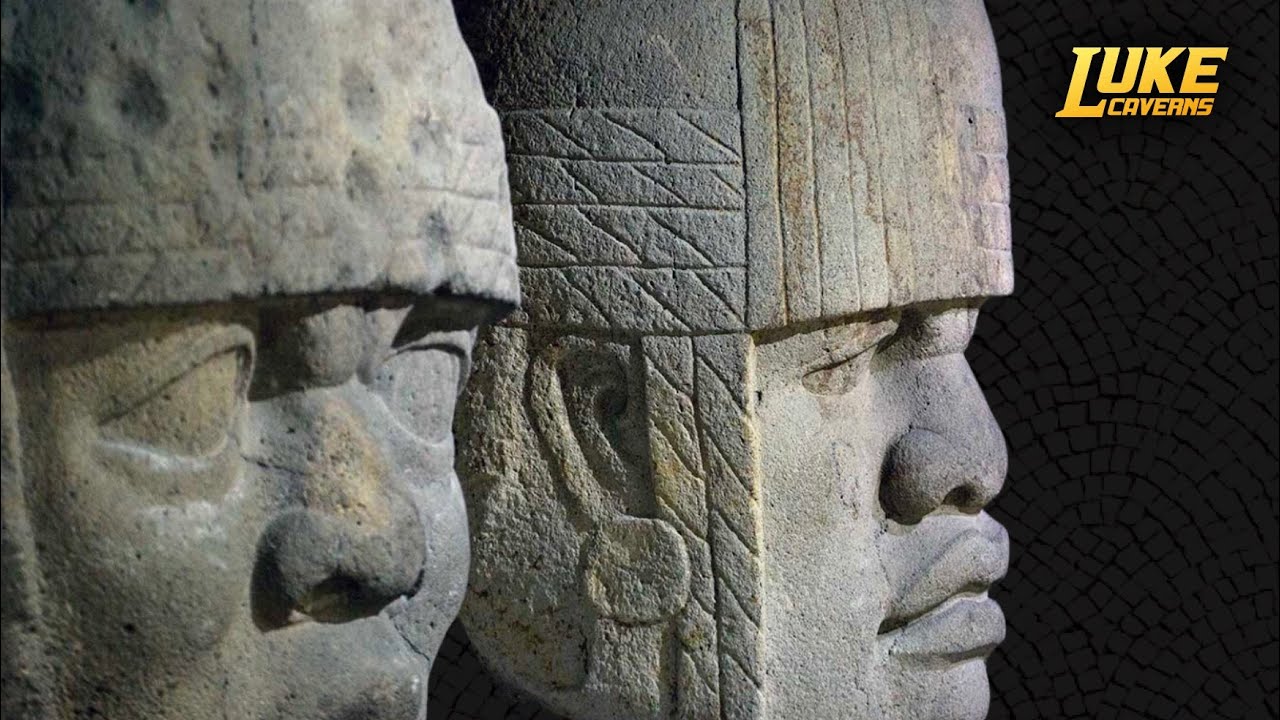
They had power in them. [music playing] WILLIAM HENRY: Some of the best-known giant statues in the world are the moai heads that we find on Easter Island that were actually utilized by the Easter Islanders as a conductive mechanism for drawing down manna, spiritual power. We found that in Copan.
Probably Gobekli Tepe is the same idea, that these colossal stone statues are more than just statues. NARRATOR: Is it possible that ancient stone statues found throughout the world were built to serve a technological purpose? While the idea may sound far-fetched, geologists point out that stone is not as lifeless as it might appear.
Rocks and us are made of the same exact thing-- matter. And all matter vibrates. It all has a frequency.
It all has energy. When you look at a rock, it's not just a plain, inanimate object. It actually has tons and tons of different types of minerals in it.
And these minerals are like a recipe and a cake mix. They can be all different types of things. Mother Nature has her own cookbook, so to speak.
ROGER HOPKINS: Stones give you a different feeling. I mean, some stones will feel warm. Some will feel cold.
Others will have a drama about them. Stonework has a very primordial feeling. I mean, the ancients were drawn to it.