prior to the 20th century the most widely accepted view of the atom was based upon John Dalton's model proposed in 1803 which stated that all atoms are fundamental indivisible particles that make up all matter in the universe there were different kinds of these atoms that interact with each other to form compounds according to this model which explained the differing materials we see in our everyday lives as simplistic and as rational of an idea as this seem there were some concerns arising that caused some questioning of this idea by the late 19th century and by 18
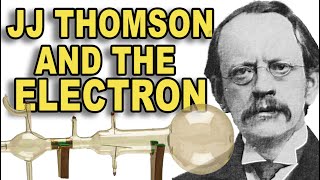
1997 a key discovery made by one experimental physicist led to the ultimate collapse of this early model of the atom and ushered in a new era dominated by some atomic particles JJ Thompson first developed his passion for physics when he enrolled in Owens College in Manchester when he was only 14 years old Owens was a rare University in that it provided experimental physics courses which Thompson partook in his mathematics professor recognized his Brilliance during his time there and encouraged him to apply for scholarship at Trinity College which he ended up getting once at Trinity he
stayed there for the rest of his life receiving his bachelor's degree in mathematics in 1880 from that point he would spend his time providing lectures and conducting research on electromagnetism following in the footsteps of James Clark Maxwell in 1895 he turned his attention towards a Hot Topic at the time cathode rays Thompson's interest in cathode rays much like other physicists at the time was in settling a debate about these rays and their nature on one hand many scientists believe that the Rays were a result of an ether an invisible weightless substance that exists in all
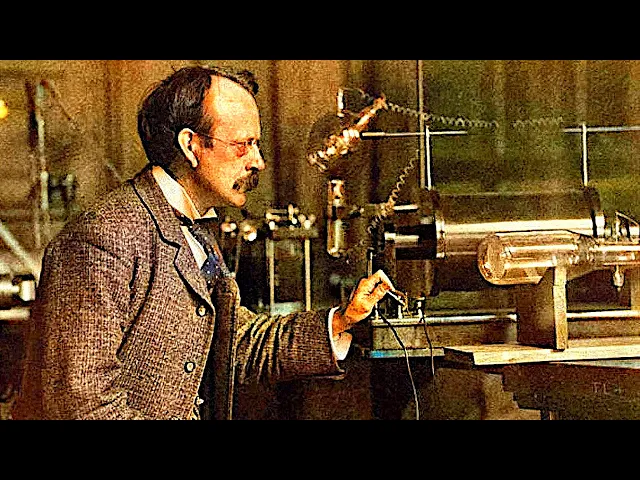
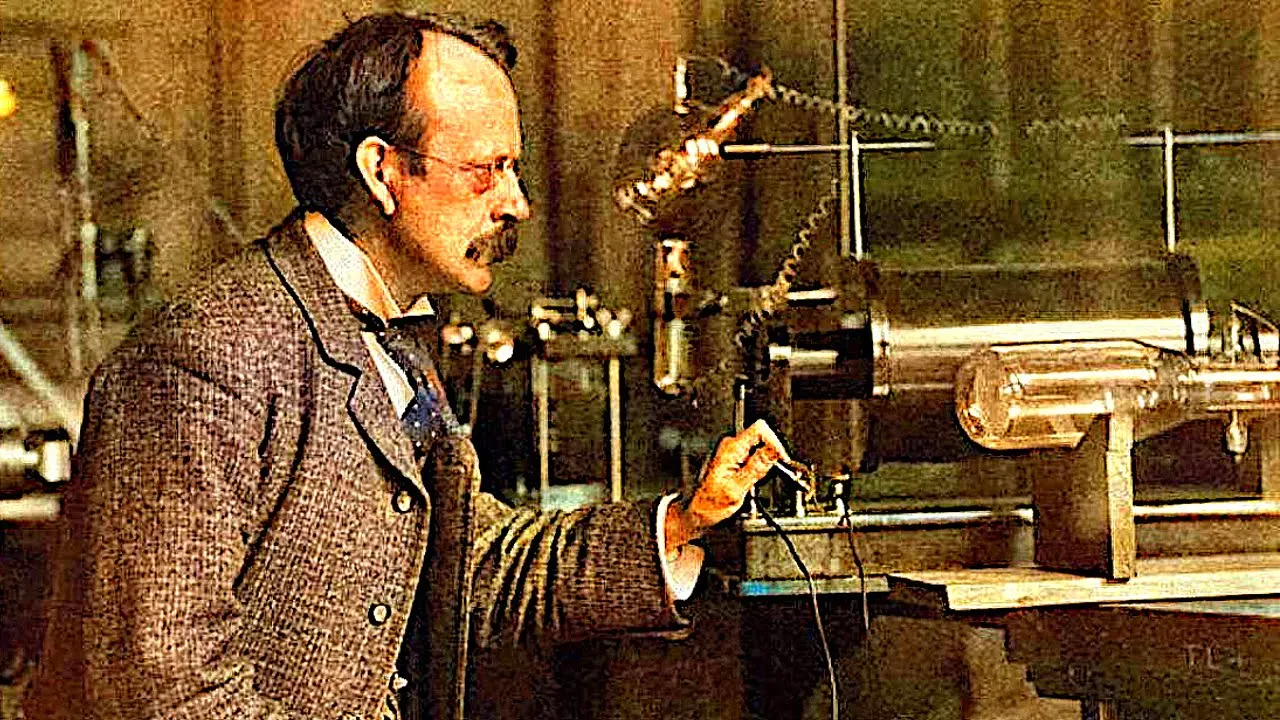
of space sort of like a universal field on the other hand many scientists believe that the Rays consisted of electrified particles Thompson's mission was to uncover the nature of these Rays determine their cause and in this debate once and for all to conduct experiments for these Rays Thompson set up a Crooks tube with the following components a cathode and anode were placed at the starting end of the tube close to the other end of the tube were two oppositely charged electric plates at opposite ends of each other a phosphor coating covered the far end of
the tube so that it would light up upon the Ray's contact with the glass after testing different orientations with the electric plates Thompson discovered that when the Rays were fired they would always bend towards the positively charged plate when it passed by it Thompson repeated this test multiple times using different Metals for the cathodes and anodes as well as using different gases inside the tube to rule out those variables as contributing factors to the Ray's behavior they did show no effect on the Rays tendency to bend towards the positively charged plate so Thompson concluded that
the Rays must have consisted of negatively charged particles that he called core puzzles while this was a significant Discovery Thompson didn't stop there for his work was not complete he continued to repeat his experiments but replaced the electric plates with a large electromagnet in such a way that the Rays would pass between the two magnetic poles on their way through the tube the Rays bent with this setup as well and after measuring the angles at which they bent from both electric plates and magnetic poles Thompson was able to calculate the mass to charge ratio of
these negatively charged particles this ratio turned out to be extremely small and through the math he found that the size of these core pusles were 1 2,000th the size of a hydrogen atom Thompson then shared his findings with the world proposing cor pusles as incredibly small negatively charged subatomic particles that were found in all atoms more experiments were done in later years to further confirm this proposition specifically spefically by Philip Leonard whose experiments I covered in another video ironically Leonard won the Nobel Prize a year before Thompson did a highly controversial result but nevertheless Thompson
did end up winning the Nobel Prize in physics in 1906 in recognition of the great merits of his theoretical and experimental investigations on the conduction of electricity by gases after the discovery of the electron Thompson proposed his Plumping model of the atom in which negatively charged particles would float through a hypothetical positively charged cloud in his experiments Thompson made a giant step towards successfully modeling the structure of the atom and also confirmed the existence of subatomic particles opening an entire new field of study in what seemed to be at the time a dying branch of
science if you enjoyed this video please consider liking and subscribing click here if you want to see similar content about scientific progress in this time period thank you for watching and I will see you in the next video