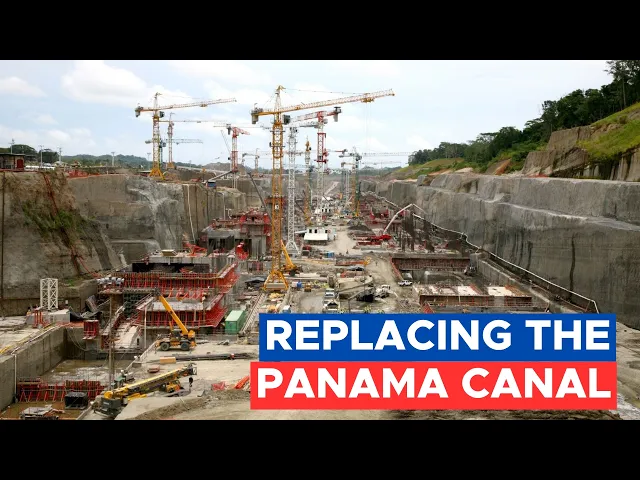
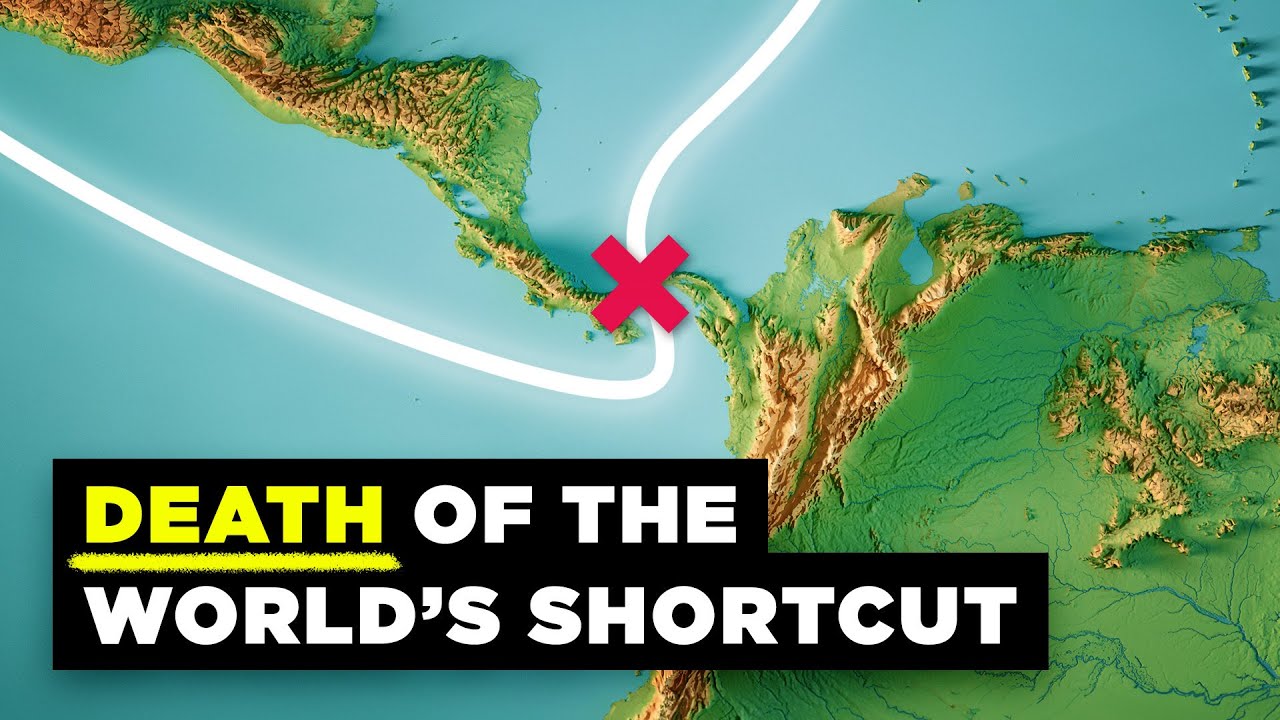
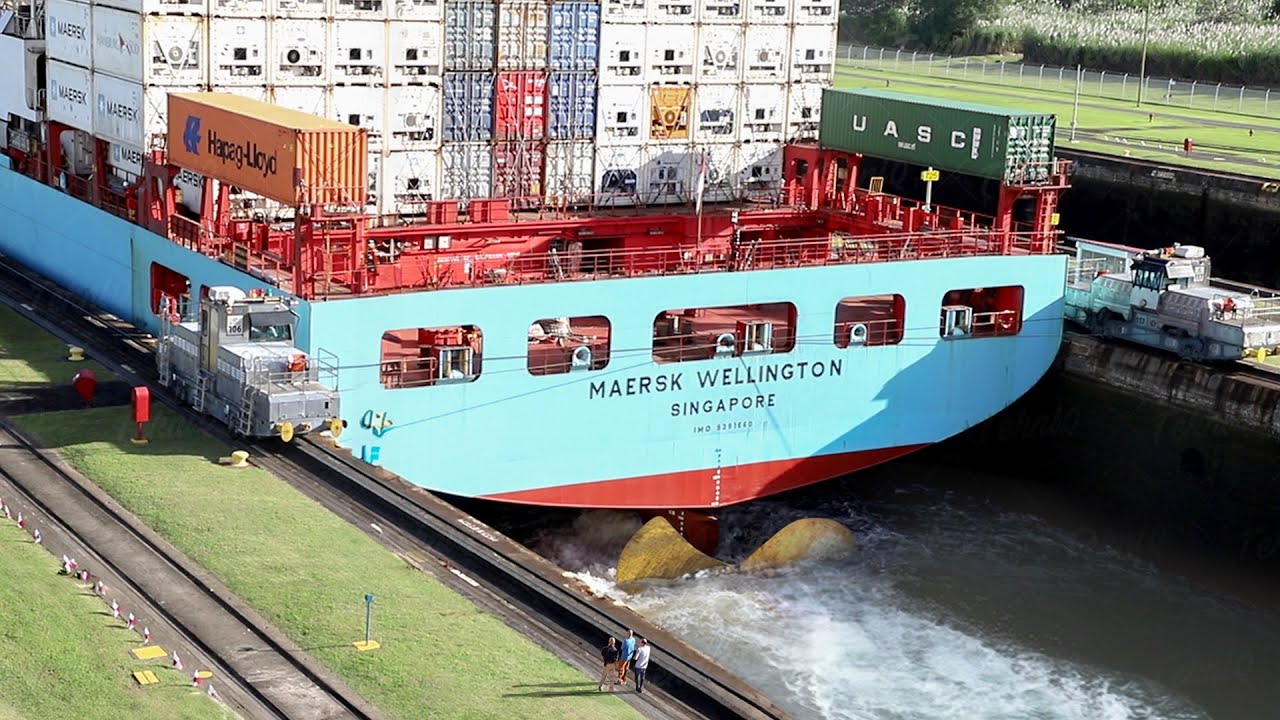
you probably know by now the Panama Canal is dying you've seen the headlines watch the videos the canal is facing a crisis like never before its Lifeline water is drying ships are piling up in Long cues waiting for days freight cost are skyrocketing and the Ripple effects are being felt across global trade and while Panama fights to stay afloat other countries see an opportunity they're racing to capture a piece of the $270 billion worth of cargo that passes through the canal annually and it's impressive $4. 99 billion yearly Revenue by creating their own Mega projects this is the race to replace the Panama Canal which Mega project will take the Ultimate Prize and become the next trade route one thing is certain it won't go down without a fight the Panama Canal is one of the greatest engineering achievements in history opened in 1914 it connects the Atlantic and Pacific Oceans cutting weeks of Maritime travel and handling about 5% of the World's Trade before the Panama Canal was built cargo ships had to take a much longer more perilous route for example a ship from Europe wanting to reach California would have to sail all the way around the southern tip of South America through the stormy straight of mellin and and then head north this journey could take months the only other option was the Northwest Passage at the top of the Americas which was blocked by ice for most of the year making it impossible in 1902 the United States decided to do something about it they proposed building a canal in Central America that would slash the journey by approximately 12,000 km saving ships weeks of travel however construct in the canal wasn't easy laborers used Dynamite drills and steam powerered shovels to move over 200 million cubic M of Earth tragically nearly 6,000 workers lost their lives due to heat stroke Rock slides and tropical diseases one of the major engineering challenges was the nearly 30 m difference in elevation between the highest and lowest points of the proposed Canal to solve this Engineers designed locks and Gates that allowed ships to climb and descend through the canal the total cost of building the canal was around $375 million at that time in 1904 it is equivalent to$ 122 billion as of today but despite these challenges the canal opened in August 1914 and by the end of its first year around 1,000 ships had already passed through over time the number of ships using the canal has steadily increased and it has become one of the most crucial arteries for global trade but today the canal is facing a serious challenge it's running out of water this Water Crisis is threatening the Canal's ability to operate and creating Ripple effects throughout global trade right now daily transits have been slashed normally around 36 to 38 ships pass through but that number is now down to 24 to make matters worse larger ships are forced to carry less cargo due to to draft restrictions and shipping costs have skyrocketed some routes have seen increases of up to 400% gatun Lake the Canal's main water source is at its lowest level in nearly 60 years and experts are worried that this might not be a one-time problem climate change is making droughts more frequent and severe but what happens if the Panama Canal can't keep up the impact would be huge a major hit to global trade and Supply chains everywhere but the crisis isn't just about water ships are getting bigger and there are more of them than ever can the canal handle the growing number and size of the vessels many countries and companies aren't waiting to find out across the Americas new projects are popping up can one step up to the task let's find out the first alternative is Mexico's inter Oceanic corridor it's one of the most advanced options being developed and connects the Atlantic and Pacific Oceans using a 308 km Railway across southern Mexico starting at the Port of katak kalkus on the Gulf Coast the rail line stretches to Selena Cruz on the Pacific coast instead of ships sailing directly between oceans this Corridor relies on cargo being unloaded at one port transported across the ismos by train and reloaded at the other this set up bypasses the long and dangerous Journey around South America offering a faster route especially during Panama Canal bottleneck the project isn't just about a railway it also includes upgrades to both ports making it a comprehensive solution the estimated cost is $7. 5 billion and by 2033 the corridor aims to handle up to 1.
4 million teus annually while promising this Corridor won't entire High replace the Panama Canal it works differently and its success will depend on how efficiently it can handle the transfer between ships and trains still with Lion Zed already operational and proving faster than the canal in some cases would you say Mexico's interoceanic Corridor is ahead in the race another Contender is Colombia although is Being Framed as a complement not a replacement the South American country is working on an ambitious project project to connect its Atlantic and Pacific coasts with a 240 km about 149 Mi Railway the route will link the ports of Kapa gerado and aandi cutting across Northern Columbia near the Panama border the railway comes with an estimated cost of7 to13 billion and is currently in the feasibility phase it's also part of a broader National strategy to revive rail infrastructure with over 1,800 kilometers of railway lines planned for reactivation however the challenges are substantial the route cuts through environmentally sensitive areas requiring careful consultation with indigenous and AFR Colombian communities critics have pointed to potential Financial topographical and environmental hurdles with some experts suggesting that the government focus on upgrading existing Railway infrastructure instead even so others see the project as feasible with studies indicating that the construction requirements are not overly complex with so many challenges do you think it will at least finish the race finally let's get into Nicaragua's Mega Canal this is by far the most ambitious and controversial project being proposed as an alternative to the Panama Canal this massive plan involves building a 278 km Canal connecting blue fields on the Caribbean coast to Porto Cor on the Pacific Crossing Lake zlan along the way if completed it would be over three times the length of the Panama Canal and designed to handle the largest ships in the world the numbers here are staggering the canal would cost an estimated $ 64. 5 billion by far the most expensive project of its kind its locks are plans to be 510 M long 77 M wide and 27 M deep making them much larger than those in the Panama Canal these Dimensions would allow the mega Canal to accommodate enormous containerships and bolt carriers that the Panama Canal can't handle today but building this canal is no easy task funding has been a major hurdle a Chinese company hknd was once a keyb backer but has since abandoned the project and no new major investors have stepped forward without solid Financial support the canal remains stuck in planning then there's the environmental cost the canal would pass through some of Central America's most sensitive ecosystems including Lake Nicaragua the largest freshwater lake in the region experts warned that this could disrupt local biodiversity harm wildlife and even impact Water Supplies on top of that tens of thousands of people could be displaced raising serious concerns about land rights and fair compensation despite these challenges the Nicaraguan government is still pushing for the project a new route has been proposed but experts remain skeptical they point to the unresolved environmental financial and logistical issues and question whether this canal is even viable right now the mega Canal is more of a bold idea than a reality if it ever gets built it could challenge the Panama Canal's dominance and re shape global trade but with so many obstacles in the way its future is anything but certain is Nicaragua like those racing teams watching from the sidelines full of potential but not ready to get its car on the track while these are the main Alternatives in Place several others are emerging as potential contenders panar itself is working on a landbased alternative with its proposed Rail and truck Corridor known as the landbridge this project aims to connect the Atlantic and Pacific coasts without relying on gatun Lakes water reserves with the capacity to handle up to 5 million containers annually by 2045 the land bridge is designed to reduce strain on the canal during Peak demand and droughts serving as a backup option for shippers in Honduras plans for an interoceanic Railway are taking shape this Railway would link amapala on the Pacific coast to Porto Castilla on the Caribbean with a sub Branch connecting to El Salvador's Port of Le Union supported by trade agreements with China this project highlights the growing interest in rail infrastructure to move Goods efficiently across Central America Maritime alternators also remain in play the Northwest Passage once blocked by Arctic Ice is becoming more viable due to climate change offering the shortest route between the North Pacific and North Atlantic do you think these are serious contenders in the race to replace the Panama Canal but the Panama Canal Authority ACP isn't ready to let go of its Golden Goose just yet they're rolling out a mix of short-term fixes and long-term upgrades to keep the canal running smoothly and secure its place in global trade at the heart of their long-term strategy is the Indio River Dam project a $1. 6 billion investment to build a new Reservoir this project is designed to secure enough water to support a minimum of 36 daily transits even during severe droughts expected to be completed by 2030 to 2031 the ACP is currently working on relocating affected communities and addressing their rights to move the project forward in the short term operational changes are already in motion the ACP has also introduced a new booking system limiting each customer to one slot per day to improve efficiency to conserve water the Canal's new locks now use 7% less water per Transit and additional conservation measures are already showing positive results financially the Panama Canal remains strong despite the challenges in 2024 Revenue reached $4.
99 billion with net profits climbing by 8% to 3.