If you’re an affluent citizen in a mafia state, when would you think it’s time to pack your mob boss off to a comfortable exile, preferably in the middle of nowhere? For Russia’s oligarchs, the time to act against their don might be coming soon. But why?
When the war in Ukraine began, Western experts hoped that military defeat and pressure from economic sanctions would inspire action against Putin on the part of Russia’s affluent elite. Russia might be a dictatorship, but even dictators need to keep their supporters happy. In the initial days after sanctions were put in place, such as on the SWIFT financial system, Russia’s currency, the Ruble, cratered, and the Russian economy shrank by about 1.
2% in 2022. It rebounded in 2023, though, as Russia exploited new energy trading relationships with countries like China, India, and Turkey, which wanted to take advantage of bargain prices for Russian oil and gas. Growth in 2023 was about 3.
6%. Russia also experienced 4. 7% growth in the first two quarters of 2024.
The Ruble, meanwhile, rebounded from its low of a 142. 6 to 1 exchange ratio with the US Dollar on March 7th, 2022. Although it never sustainably recovered to pre-war levels, it was generally trending toward them through 2024.
Russia’s economic growth and incremental gains on the battlefield were enough for Putin to be “reelected” as the President of Russia early this year, with a “totally legitimate” 88% of the vote, conveniently the highest he had ever received in the five times he contested the office. At this point it’s best to remember that Putin’s new best friend, Kim Jong Un of North Korea, holds ceremonial elections, too. Russia’s electoral ceremony came at the time when Ukraine’s morale and foreign aid were at a low point and its ammunition shortages were at a high point.
But things have changed significantly since then. The West has ramped up its military aid and loosened some of the restrictions on Ukraine’s use of long range weapons such as the Storm Shadow and ATACMS missiles against targets in Russian territory. There’s more.
Russian casualties ballooned during the summer as Ukraine’s new weapons and ammunition made its meat grinder tactics even costlier. As the Russian military ground its way forward in eastern Ukraine, it suffered enormously. Ukraine inflicted 70,000 Russian casualties between May and July, a rate of about 1,000 per day and roughly a tenth of the total number of dead and wounded Russia had suffered through the entire war.
Despite these casualties, Putin did not issue another mobilization order, even though he is in desperate need of more manpower. Why? Because he likely understands that it would be a bridge too far even for him.
Most of the soldiers on the front come from Russia’s poorer, minority, and outlying populations. However, these areas have already suffered heavy casualties and are under stress since many of the military-aged men have already been drafted. An additional mobilization order would need to be broader in its scope.
It would likely need to include men from Moscow and Saint Petersburg, since they are Russia’s largest cities. Russia’s elites might be able to overlook the destruction of the military-aged populations outside of their country’s European heartland, but they are not willing to shoulder the costs of the war themselves. Putin understands this and has taken great care to avoid shifting the costs of the war onto the affluent populations of Moscow and Saint Petersburg.
That policy has forced him to be creative when it comes to getting manpower. Such methods have included the recruitment of foreign troops from Africa, coercing foreign students studying in Russia to sign up for military service, lest they face deportation or imprisonment, and even human trafficking, where Russian agents trick men from India and other southern Asian countries into taking fake jobs that then require military service. Russia’s elites were fine with all of this.
But something changed in August, something which caused the Ruble’s value to start collapsing again, something which exposed them to the consequences of the war. On August 6th, Ukraine began its incursion into Russia’s Kursk region. Poorly-trained conscripts guarding the border areas were completely unprepared and surrendered.
Fortifications that were supposed to have impeded the movement of hostile troops proved useless. The uselessness of fortifications supposedly similar to the ones that had successfully stopped Ukraine’s offensive into Zaporizhzhia in 2023 likely came because the work was done improperly. This time around, corrupt Russian officers took the allocated money for themselves instead.
The result was sloppy construction. The unpreparedness of the border guards and fortifications was seemingly a result of arrogance. There was a lesson that Russia should have learned from last year.
In May 2023, a small force of pro-Ukraine Russian fighters held territory in the border Belgorod region for several days before withdrawing. This Belgorod Raid signaled the weakness of Russia’s border defenses and caused significant chaos on the Russian home front. Despite this, Russia appears to have waved it off, believing it could never happen again.
Ukraine took advantage of this belief and decided to launch a much bigger raid now. The offensive into the Kursk and Belgorod regions has seen Ukraine occupy much more territory in Russia. Seizing territory in Russia has also given Ukraine’s weapons longer reach.
It may not be able to use Storm Shadows and ATACMS, but moving forward has given Ukraine’s shorter range weapons an ability to reach new targets. It also gives Ukraine territory from which to launch further drone attacks, sometimes at long ranges. Ukraine has now accumulated a lot of experience in launching drone attacks against important targets in Russia.
A recent example occurred in June, when a drone attack damaged one of Russia’s precious Su-57 fighter jets. Ukraine has also launched attacks on Moscow. Now that Ukraine occupies territory in Russia, those attacks are hitting higher value targets.
Long the victim of Russia’s attacks on its civilian energy infrastructure, Ukraine gave Russia a taste of its own medicine on September 1st 2024. Ukrainian drones hit a power plant near Moscow on that night. Ukraine has also captured or targeted oil depots and refineries.
These energy sources are not only important for Russian civilian life, they are the backbone of Russia’s economy. Oil and gas accounted for 22. 4% of Russian exports in 2021 and 30 to 50% of its federal budget over the past decade before the war.
The damage to these facilities is a reason why the Ruble tumbled following Ukraine’s incursion. The attacks also came at a bad time for Russia. It’s about to get cold there and Putin will need to ensure the power stays on to heat homes.
A harsh winter in Moscow because of Ukrainian attacks on Russia’s energy infrastructure is a sure way to create more discontent at home. Putin may be willing to lose over a million men to achieve his objectives in Ukraine, but as we know by now, he is not willing to subject the residents of Moscow and Saint Petersburg to the war’s harsh effects, whether directly or indirectly. That’s why exposing elite Muscovites to the costs of the war is one of Ukraine’s goals.
President Zelensky has requested clearance to use long range missiles against military targets near the Russian capital as part of “demonstration attacks. ” To make matters even better for Ukraine, the Russian territory it now holds can be used as a relatively secure base to launch these attacks. This area is relatively secure because Putin cannot easily bomb it.
Doing so means attacking his country’s civilian population. He might not care about deliberately attacking civilians in other countries like Ukraine and Syria, but when his own power is threatened, it’s not a move he’s keen on making. Putin may have something else to worry about, too.
On July 28th, he attended a naval parade in Saint Petersburg. Ukraine allegedly had the knowledge and means to assassinate him that day, and Zelensky mentioned last November that if the chance arose, his country’s military had every right to take it. The Ukrainians would, however, need American weapons to do the job.
Washington refused this, allegedly on a call from Russia’s new Defense Minister, Andrei Belousov, to the United States Secretary of Defense, Lloyd Austin. However, Ukraine also let this information leak, demonstrating that they had the ability to act against him. In response to the incursion into Russia, Putin has had to reshuffle troops from the occupied territories in Eastern Ukraine.
He has also moved air defense systems from areas near the front line toward Moscow and the Kremlin. Tellingly, he has also moved them to Sochi, which he conveniently has a vacation home in. Russia might be suffering from its largest invasion since World War II, but at least he feels safe.
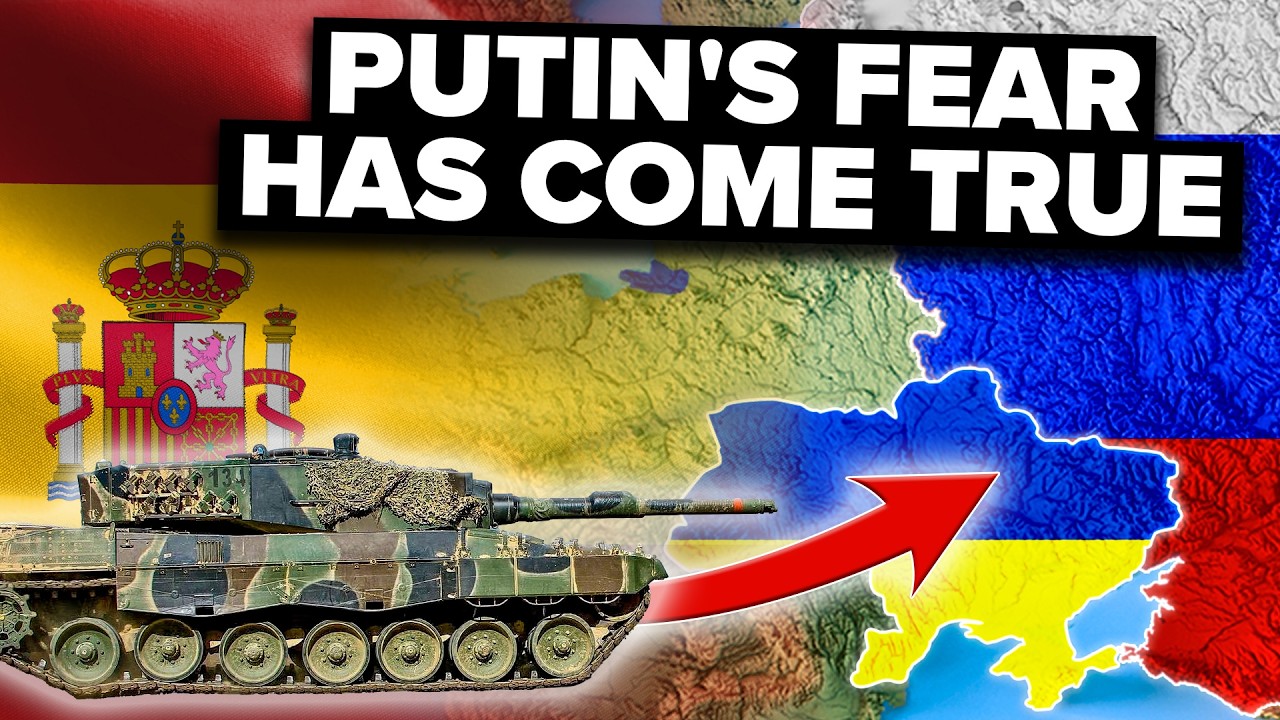
To make matters still worse for Russia, the incursion into Kursk and Belgorod was done with Western tanks at the forefront. Far from discouraging their use in this way, the Western powers are confirming that they will continue to supply Ukraine with weapons even to conduct the offensive. Not using Western weapons against targets in Russia was one of the last remaining conditions that French President Emmanuel Macron called a “taboo” early this year.
This taboo, too, might now be starting to break. The West has invested significant diplomatic, military, and financial resources into Ukraine. Abandoning it now that it moved into Russian territory would not be an easy move to make without losing a lot of face and emboldening other authoritarian powers, like China, Iran, and North Korea.
Ukraine’s offensive into Russia is not only about humiliating Putin, but also a way to get its Western partners to loosen restrictions on the use of long range weapons. So far, these requests have not been granted, and the idea to use long range missiles against targets in the Moscow area remains a Ukrainian dream. However, now that Ukraine is conducting operations in Russia, these taboos might find a way of breaking on their own accord, a fact it is undoubtedly aware of.
The offensive into Russian territory has deteriorated Moscow’s standing on the international stage, too. Later in August, on the day before Ukraine’s Independence Day, President Zelensky hosted Indian Prime Minister Narendra Modi. This was a very important meeting, because in July, Modi decided to visit Moscow instead of Washington during the NATO summit, a move which drew sharp international criticism.
Modi was even seen hugging Putin. However, the Ukrainian attack into Russia might have begun to change his calculations. In Ukraine, Modi expressed his desire to play a personal role in negotiating a peace deal.
He told Zelensky that in Moscow a month earlier, he had said to Putin that the conflict could not be solved on the battlefield. At the end of the summit, Zelensky tanked Modi for “supporting the sovereignty and territorial integrity” of Ukraine. Modi repeated a similar sentiment shortly thereafter.
This was a significant development, because in June, India took part in a multilateral peace summit in Switzerland. At that summit, India did not sign on to a joint communique that emphasized the right to territorial integrity of Ukraine and all other states. As August ended, Zelensky hoped to take advantage of the strengthened ties.
He proposed a summit in India to take place before the American presidential election on November 5th. Thus far, India has been reluctant to engage Ukraine in a systematic way while excluding Russia, but a spokesman for Modi’s government did not rule the idea of another bilateral summit out. Modi has continued to insist that he personally wants to play a “constructive role” in the peace process.
The strengthening of Ukraine’s relationship with India would be significantly to Russia’s disadvantage. Indian purchases of Russian energy have been crucial in preventing the latter’s economy and currency from collapsing. In July 2024 at least, India overtook China as the largest purchaser of Russian energy.
This is not a relationship that Russia can afford to see deteriorate. It likely isn’t a coincidence that the Ruble tumbled as Modi expressed his support for the territorial integrity of Ukraine. Responding too aggressively against the Ukrainian incursion also risks another critical relationship for Russia – the strategic partnership with China.
Putin’s potential resort to nuclear weapons, which has scared some policymakers in the West from providing Ukraine all the equipment it wants, will be increasingly revealed to be a hollow threat the longer Ukrainian troops occupy territory in Russia. China has insisted that no nuclear weapons should ever be used in the conflict. Ukraine and the West have long been upset with China for its passive attitude in regards to the war, but this is the one consistent policy it has maintained since the invasion began.
Because Russia is dependent on Chinese energy purchases and parts for its military equipment, it cannot afford to alienate Beijing. Ukraine’s continual demonstration that it can hold territory in Russia, gain more of it, and strike at Russia’s two most precious population centers, does more every day to erase the supposed red lines Putin drew. Ukraine knows it can do this because Russia cannot afford to issue nuclear threats too much and risk its relationship with China.
The West may have underestimated Putin’s ability to hold on to power. He held on early in the war, when Russia’s economy appeared to be on the brink of collapse. He continued to hold on in the second half of 2022, when Russian forces were being driven from much of the territory they had taken earlier in the year.
But in the face of these recent developments and signals of weakness, Russia’s elite might be starting to question their loyalty to their dictator. The deceased Yevgeny Prigozhin, the former leader of the Wagner Group, caused quite the stir in June 2023 when he rose in revolt against Putin and the then-Russian Defense Minister, Sergei Shoigu. Wagner took control of the important supply hub of Rostov-on-Don before coming close to Moscow and backing off thanks to a deal brokered by Belarusian dictator Alexander Lukashenko.
Prigozhin conveniently died in a plane accident a few months later. The swift end of the mutiny reinforced Putin’s power in the short term, but he was strangely absent during the crisis. This absence and the seeming need for Lukashenko to end the revolt might have planted a seed of Putin’s weakness in the minds of Russia’s ruling elites.
Those seeds were dormant when Russia appeared to be succeeding, but things are different now thanks to Ukraine’s continued holding of Russian territory. There will be significant military, economic, and geopolitical consequences that come with this new reality. The inability to quickly expel Ukrainian troops from the Kursk and Belgorod Oblasts has signaled much greater weakness on Putin’s part than was the case a year ago when Ukraine’s counteroffensives in Zaporizhzhia and Donbas were stalling.
Now with Ukraine in Russian territory and the Ruble in trouble again, there are more signs of trouble at home. The first sign has already materialized. A man named George Zakrevsky made news on August 14th.
Zakrevsky is the leader of another Russian private military company called Paladin. Before that, he served in the KGB and the Soviet army. During that time, he was involved in activities that are still classified.
Paladin might not be as famous as the Wagner Group, but the unit has similar experiences. It’s seen action in Africa, where it protects “strategic objects. ” As a loyal instrument of Russian foreign policy and a fellow KGB man, Zakrevsky does not appear to be the type to turn on Putin, but he did just that in a call to action last month: “Our country is not just on the brink of disaster or already right next to it; our country is already in trouble.
In big trouble. Drnes are flying all over central Russia, right up to Moscow and St. Petersburg.
They even attacked the Kremlin. Our Black Sea fleet is being pushed out. It’s being pushed out as if we were not a great power with a great fleet, but some third-rate country.
“Our air force is practically not working because it is also being pushed out. We are standing in the same positions that we took more than two years ago, and partly in those to which we retreated. The population is dying out, becoming impoverished, drinking itself to death: no one cares.
All they have time to do is bring in migrants. “And all this was done by the so-called ‘president. ’ The ‘Great’ Putin.
After a lengthy denunciation of corrupt and incompetent officers in the Russian army, Zakrevsky concluded: “To those who are in the trenches. You know very well what kind of indecency is happening there now…. You know very well the faces that are mocking you and your relatives….
We call on everyone to join our union to save our country. ” Zakrevsky took a big risk in denouncing Putin and even more so for issuing a call to action against him. His words were supposedly spread widely to Russia’s elites and likely came only because he knew that some of his peers in the military and civilian spheres at least privately shared his feelings.
Russia is a country with a history of regime changes in the wake of wars not going well. The loss in the Russo-Japanese War nearly toppled Czar Nicholas II. The Russian front collapsed in World War I and resulted in two revolutions that ultimately led to the Bolshevik takeover of the country.
Putin faces a dilemma that wielders of tyrannical power have faced through history. They used cutthroat methods to acquire and maintain power, often requiring the assistance of cutthroat allies who have an interest in seeing the regime’s continuation. However, the man at the head of this regime can only ensure his own survival by catering to these interests.
If they feel that their interests are no longer being served, the mobsters will turn on their boss, who will be left hoping that comfortable retirement will be the worst thing that happens to him. The longer Ukraine continues to hold territory in Russia, the more likely it will be for things to go wrong for Putin far beyond the front lines. More military reverses mean more casualties and a demand for manpower in Russia, which can only be answered through more conscription, by taking troops off the lines in Ukraine, or both.
Ukrainian successes and Russian failures on its own soil also increase the likelihood that Ukraine will be able to use Western weapons against military targets near Moscow and Saint Petersburg, as Western leaders increasingly realize Putin’s threats are bluffs. Meanwhile, more Ukrainian and Russian shows of weakness mean a higher likelihood of states that had once been amenable to Russia, like India and China begin to reassess their interests in light of their trading partner’s shows of weakness. The more all of these things go wrong at once, the weaker Putin becomes internally.
At some point, the machinery keeping him in power will decide that it is losing more than it is gaining. It is unlikely that Ukraine will be able to defeat Russia outright on the battlefields of eastern Ukraine (and vice versa), but all wars are political affairs first and foremost. If Putin loses political power, Ukraine wins.
It seems that the Ukrainians have calculated that this is their best strategy and have taken action accordingly. If it only took weeks of having boots on the ground in Russia to topple one of the regime’s dominoes, Kyiv might have good reason to be optimistic about broader gains for every inch of ground it takes on Russian soil. What do you think is coming next in Russia as Ukraine continues its operations in Kursk and Belgorod?
What military, political, economic, and diplomatic consequences its continual presence there bring? Don’t forget to let us know in the comments. Also make sure to hit the like button and subscribe for more military analysis from military experts!
Now go check out The Collapse of the Russian Army or click this other video instead!