It’s late May. The rainy season has just ended. Yet dampness blankets the early morning and the world looks ethereal and timeless.
The wind blows hard and the sun is slow to cast its warmth. In fact, it’s cold high in the mountains. The fog lifts slowly, revealing everything around us.
After a damp night, some creatures have to shake out their feathers. On this expedition, we visited an extraordinary place between the forest-covered hills of the coast and the plateaus of central Brazil. We saw typical Atlantic Forest species in the middle of the Cerrado- the Brazilian savannah.
Landscapes of monumental proportions, home to rare and mysterious beings and the birthplace of an iconic Brazilian river. BRAZIL’S PARKS Heading to São Roque de Minas, we saw how man has changed everything. We saw nothing but cropland, silos, and farm houses.
As we neared our destination, low mountains rose on the horizon, looming like a nature-made fortress. In southwest Minas Gerais, not far from the border with São Paulo, lies Serra da Canastra National Park. This immense plateau is home to a famous spring.
After the park was founded in 1972, it came to symbolize one of Brazil’s most important rivers. The São Francisco begins its long journey as a brook teeming with life. A flock of chalk-browed mockingbirds is waiting for something.
An insect perhaps? Some fruit? Maybe something else?
Headwaters of the São Francisco River After running under a bridge, the São Francisco flows into the arid plateau land known as the chapadão. Despite the rocky ground, we saw gorgeous, richly diverse plant life. Stony fields stretch across the higher elevations and edges of the plateaus, creating the perfect environment for the white-rumped monjita, a quiet bird.
The sparse trees attract a wide variety of birds. A flock of yellow-rumped marshbirds flits from bush to bush in search of fruit. Rufous-fronted thornbirds are skilled nest builders and seldom leave their construction sites when protecting their young.
Moving into the chapadão, the terrain gives way to gentle grasslands. Open Cerrado grassland covers much of the plateau. These termite mounds provide a strategic setting, where various species spend their daily lives.
A pair of southern-crested caracaras sound out their name in this musical performance. Burrowing owls spend their days in search of prey, always alert for danger. A high perch is the best place for keeping an eye on your offspring.
The peach-fronted parakeet has adapted so well here that it digs its nest in the top of these rock-hard mounds. After the rainy season, the grass is tall and it’s hard to see any animals. Even a large bird like a rhea can easily disappear.
Standing still at this distance, it looked like a bush. When it spotted us, it ran away. We nearly mistook it for a low termite mound.
Its antlers looked like dry branches. We needed a good eye and luck to find it. A young pampas deer was enjoying itself on a grassy slope.
It seemed to feel safe amid the grass, even alone. We followed it cautiously on foot. It exhibited no fear.
It glanced at us occasionally, but soon went back to looking for food, like flowers, evidently its favorite repast. After a while, we let it go on its way until it vanished in the grass. Gazing into the distance, we saw a sea of low mounds, like some forgotten graveyard.
These are the remains of termite mounds eroded by wind and rain. During this expedition, our eyes searched every inch of the immense plateau, hoping to spy an illustrious resident. The maned wolf is Brazil’s largest wild dog.
It eats a bit of everything and even has a plant named after it: the wolf apple. Sad to say, we only found its tracks. Many other animals pass through at different times of day.
On the road, we came across a slow worm, which is only a worm in name. It’s actually a legless lizard. It was catching a little sun before nightfall.
The view overlooking the tablelands is simply breathtaking. Steep cliffs mark the edge of Chapadão da Babilônia. This map shows both sets of plateaus.
Chapadão da Canastra is a long plateau subdivided into Diamante and Zagaia. Chapadão da Babilônia comprises low mountains and long valleys. Neither the map nor the view from afar satisfied our curiosity.
After a steep climb, we hiked mountain ridges alongside deep valleys as the wind blew strong. The landscape was unusual and magnificent. When we reached the central hollow, what lay before us came as a complete surprise.
All native vegetation has vanished from the floor of this impressive valley. It has been replaced by field after field of corn and pastures for grazing cattle. Land conflicts date to the creation of the park.
Because of delays in land reform, there is little control over land use or the environment, and pesticides are still used. There is occasional talk about reducing the size of the park, which would seriously endanger its biodiversity. On our way back, we noticed odd marks on the ground.
Jeep and motorcycle rallies are held on the plateau. They tear up the ground, destroying vegetation. The resulting erosion is hard to reverse.
Adding insult to injury, illegal quartzite mining has ripped craters into the land and silted up streams farther south. These threats underscore the importance of protecting and conserving the park, as a place that must continue to belong to all Brazilians. Serra da Canastra National Park protects nearly 800 square miles of spectacular valleys and plateaus.
The first Europeans who arrived here thought that these square-shaped stone walls resembled giant canastras, or large trunks or baskets used to carry things. Surrounded by cropland on all sides, this area plays a fundamental role in the conservation of species and in protecting essential resources, like water. It rains only six months of the year here, and this vital precipitation feeds rivers and aquifers.
The plateaus and Cerrado form a huge water collection system. The São Francisco is fed largely by water from the Cerrado— Brazil’s water reservoir. Six of the country’s eight main watersheds are born here.
The park straddles two of these: the São Francisco and the Paraná. Within its borders lie over 1,000 headwaters, streams, and rivers. We visited Rolinho Stream in Chapadão da Canastra.
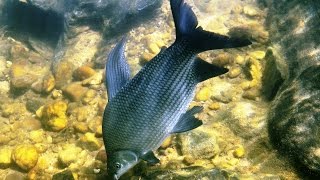
Its clear, oxygen-rich waters teem with small fish. Rolinho Stream is a main feeder of the Santo Antônio River, a branch of the São Francisco. We saw various types of Cerrado along the way, like this one, called cerradinho— little Cerrado.
Isolated stands of woods were scattered across the plateau. Different varieties of trees and bushes grow in these clusters, where the soil is fertile and moist. We spotted a mother and father caracara with their offspring.
The baby was probably born last spring. Despite its size, it still needs its parents for everything. The recent rainy season no doubt ensured the reproductive success of various park species.
In a lovely valley, we saw an animal seldom seen elsewhere— a creature that once astonished the scientific community. Its bizarre shape and huge claws inspired fanciful descriptions. The chapadão is the perfect place for the giant anteater to find food.
So many anthills and termite mounds… But nothing is ever that easy. When he finds a nest, the anteater must capture as many termites or worker ants as he can. They’re nutritional and tasty.
But when attacked, they flee. They’re soon replaced by soldiers, which taste bad and bite hard. So anteaters never stay more than a minute in one place.
They’re always on the move, looking for a new anthill or termite mound. Like this mother, with her piggyback baby. She paid us no heed and barely even stopped.
But her baby was a bundle of curiosity. We saw other anteaters there as well. Two males: an adult and a youngster.
It’s exciting to find so many animals in one place in broad daylight. Their eyesight isn’t the best, but their sense of smell is excellent. When they noticed us approaching… After this fascinating encounter, we met up with the São Francisco again.
As the river crosses the plateau, it receives water from over 100 springs, growing in volume and flowing amid riparian forests. These woods play a critical role, protecting the river like a huge filter and sheltering myriad animals. Numerous species large and small travel this giant corridor through the Cerrado.
We saw a large variety of birds near the river. The rare cinnamon tanager is found on low bushes in pairs or alone. The crested black tyrant has a clear territory along the river.
The saffron finch zips to the ground in search of grass seeds. A clear transparent river is the ideal environment for one species of very rare bird. We saw this bird various times, but it always darted away.
We returned to the upper São Francisco on our last day. We saw no signs of the bird. Then we spied a duck coming downstream.
It was alone and soon dove out of sight. We thought it had vanished again, but then it swam by. It was the Brazilian merganser, one of the planet’s rarest, most endangered animals.
About 250 individuals live in the wild, many of them here. It dips into the water, searching for minnows and other fish. It can dive deep to catch them.
The river serves as its runway as it pedals its way to flight. When it tires of the water, it climbs on a rock to preen. It gets rid of excess water and oils its feathers.
It pauses to drink a little too. After this cleanup, off it goes again. Since it depends solely on vision to catch fish, transparent water is vital to its survival.
This merganser soon tired of the deep pool and went on its way. After these calm waters and natural pool, the river grows mighty, traveling over rapids and through deep crevices until plunging more than 600 feet. Powerful Tapir Falls creates its own micro-climate.
A constant dampness hangs over the deep pool furrowed by the force of the water. A steady cold wind blows and a heavy mist dances in the air. What we saw today was described by a French naturalist in 1819: “The water doesn’t rush by, but forms a lovely curtain, white and foamy, slowly spilling over.
It looks like it’s made of giant snowflakes. ” After the falls, the river carves out a passageway of Atlantic Forest species right in the Cerrado. One species is the juçara.
Many kinds of birds and mammals feed on its small meaty fruit. Another is a prehistoric giant that can stand over 16 feet tall: the samambaiaçu. The presence of these species clearly demonstrates how the Cerrado is linked to other biomes.
We also saw large numbers of big, beautiful butterflies fluttering all over at this time of year. The São Francisco then heads out of the park and enters a man-made world, where it flows through states, cities, farms, reservoirs, and canyons until reaching the Atlantic Ocean, 1,700 miles later.