Can you reduce your cholesterol in just seven days? Well, I don't want to over promise, but there is research that shows that using food, you can reduce your LDL cholesterol in just a few weeks. There is something called the portfolio Diet that we've talked about before on the YouTube channel and the podcast that shows and has shown in clinical research, you can reduce your LDL cholesterol by 17% in just a few weeks and up to 30% in some cases as well.
Just to put this into context, that's comparable to a starting dose of stat and medication, which typically lowers cholesterol by anywhere between 18 and 28%. And this doesn't just lower cholesterol. When I'm talking about food.
We're not just talking about lowering cholesterol, which is obviously a nice to have. This also reduces your overall heart disease risk by around 11 to 14%, according to recent studies. Imagine that just changing your diet can lead to a significant reduction in your risk of heart attack and stroke.
Think about changing what's on your plate as a means of not just lowering your cholesterol, but lowering overall heart disease risk, because that is the aim of the game. It isn't just to play the numbers. It isn't just to blow the cholesterol for the sake of lowering cholesterol.
We want to improve our health and well-being, and we want to ultimately improve the functioning of the heart and the functioning of our brain as well, which is very much intertwined with cardiovascular risk. So here are my top food hacks, if you like. I don't like the word, but these are my food strategies or food ingredients that I'm a really big fan of that I think are evidence based and can help lower cholesterol, as shown by the studies that we have available to us.
I'm going to pull up this lovely little schematic that we have here, which, has underpinned a lot of the research that we've looked at for, lowering cholesterol, in your as measured in your blood. And there are a lot of common things that we have come across. So things like high fibre grains, high fibre nuts and seeds.
Let's talk through them now. So the first thing, the first strategy that I would say is to swap refined grains for whole grains is a very simple swap. I know grains in general get a lot of light, give a bit of a bad rap these days, for still being quite high in carbohydrates and not high enough in fibre.
But there is evidence to show that eating whole grains and the collection of not just the fibre, but also this phytonutrients, these plant chemicals that have unique properties when consumed in the human body, having these in the diet actually improves your cholesterol. Multiple human trials show that eating whole grains as opposed to white refined grains and things like white rice, pasta, bread improves total cholesterol and low density lipoprotein cholesterol in people with all without cardiovascular disease risk factors. So we want to be leaning into things like buckwheat, barley, oats.
But oats of the sort of royal oak, whole variety. So we're talking about pin head or steel cut oats, spelt rye, wild rice, brown rice, quinoa. These are all things that are whole grain.
Just because something is labelled whole grain on a packet with that is a, a flapjack, a bar, a cereal doesn't necessarily mean that you're actually getting a true whole grain. I just want to make that caveat. When we're looking at these studies, we're actually looking at the whole grains and their proper whole grain for why does this appear to have a beneficial impact on cholesterol and overall cardiovascular risk?
Well, white rice or refined grains have the germ and the bran removed from them during the milling process. And within this bran and within this germ, some incredible, all nutrients, incredible features that we ultimately miss out on during this sort of refining process. These bran, the bran and the endosperm, they're great source of fibre.
They have B vitamins as well. They have trace minerals, things like iron and magnesium and zinc, not things that we typically associate with these kind of products and what makes them really stand out for cholesterol is this type of fibre called soluble fibre. And soluble fibre is this sort of magical substance?
I don't want to get to Disney like here, but it is an incredibly blue substance that forms a gel like, barrier on the inside of your intestines that binds cholesterol, that you consume in the small intestine, and it prevents that from being absorbed into the bloodstream, which means that it's excreted from the body instead. And this swap can lead to this moderate reduction in cholesterol that we see in blood results. So this is a really interesting part of this whole whole grain versus refined grain.
Story. So whenever you're thinking about, okay, what kind of grain do I want to pair with my pokeball or my diversity bowl, or to have with my stew or curry? Always go for whole grain where possible, and think about those different beautiful grains that we have available to us barley, rye, wild rice.
These are all great ingredients. We don't want to overconsume them. Obviously, we have way too many carbohydrates in our diet in general, but we don't want to skip out on them as well.
And certainly that little swap is a lovely little strategy for improving your cholesterol ratios. Number two, I would say add nuts and seeds to your meals daily. Flaxseed, almonds, hazelnuts.
If you're remember you go back to that little graph. These are some of the most powerful ingredients in terms of reducing your cholesterol as measured in your blood. They provide, again, those beautiful, beneficial nutrients that could help keep our lipid levels as a fancy word for our, cholesterol levels.
Are fats in our blood in check? They have unsaturated fats that have vitamins like vitamin E, vitamin B6, folic acid, another type of B vitamins, minerals like magnesium and potassium and copper. They have that beautiful dietary fibre and all those different types of subtypes of, fibre as well.
Plant protein, phyto sterols that we know are unique in their ability to reduce cholesterol. These are incredible ingredients that we don't lean into enough of. And I would say if you're going to be having flax in, almonds and hazelnuts, go for a handful every day.
That's around 30g. Small cup town full of nuts every single day. As long as you don't have any allergies.
These are wonderful ingredients for you. There is another top tip that we've talked about before with, Karen O'Donohue, who is a baker, an expert Miller, regenerative farming advocate, and that is to soak your oats and grains. So what happens when you have a raw, nut or raw seed is you get it packaged with all the natural insecticides, and chemicals that these ingredients produce as a means of surviving in the wild.
So because these plants can't run away from predators and things trying to eat them, they secrete these natural chemicals, like saponins and, these phytonutrients, essentially the act as a natural insecticide that are toxic and small amounts to insects and other things, trying to eat them. They are beneficial to us when consumed in small amounts. It has something called the home effect.
So and now the analogy is a little bit of bad is actually quite good for you. It's kind of like going to the gym. When you go to the gym, you stretch your muscles, you cause micro tears and inflammation that might be looked at as something that's quite bad.
Ultimately, it leads your muscles to be more resilient, to grow, to become better in terms of their in terms of their health status and how they are, beneficial for you as you age and how they're beneficial for your metabolism and your brain health. These phytonutrients, these different chemicals that you find in nuts, how are having this same hermetic effect? So a little bit of bad tissue, a lot of good.
But soaking your nuts overnight. So simply putting a handful of nut or like let's say you've got like 200g of almonds, put that in water overnight, drain it the next day, allow it to dry in the counter on a very, very low, heated oven or a dehydrator if you got one of those fancy dehydrator at home, what that does is gently germinate them and it reduces some of those anti nutrients, and it makes those proteins and vitamins and minerals a lot more bioavailable. It is a small step meal for some people.
It's a big step, but it is in the grand scheme of things, a very small step to get you activated nuts or activated seeds. And that's why when you look in the supermarkets, particularly the fancy ones, if you're nearing urban or a Whole Foods or a Trader Joe's or a Plant organic, you'll see these be marketed as activated nuts. That's the process that they've undergone, which somehow qualifies for a massive price hike.
But this is something that you can do very easily and very cheaply at next to no cost at home. And is a simple strategy of just getting more bang from your, your nuts and seeds. So more bang for your buck.
So try that. Some people who struck go to digest nuts and seeds may benefit from doing that one little step. And of course, it's going to be great for your cholesterol.
Either way, whether you eat them raw or you eat them in the activated form. But if you want to get the most out of your nutrients, particularly, you're spending a lot of money on these products, then try that extra step of soaking and, drying. The next day, the third thing, the third strategy, the third hack, whatever you want to call it.
Rule of thumb. Legumes, legumes, legumes or beans? Beans, beans.
You want to swap or, pair your animal based proteins like, red meat, fish, chicken with beans, lentils, anything from the legume family. There is a ton of evidence around how heart healthy beans and pulses in general, all the meta analysis of randomised control trials show that eating pulses at around 130g per day lowered LDL cholesterol, and these reductions are consistent with the findings from two previous metro analyses and are at a level that would be considered clinically meaningful. So this is all to say that the evidence is pointing in the general direction.
The more beans in your diet, the better it is for your heart health as well. Again, why is this the case? Well, there are another great source of fibre.
Microbes absolutely love these products. They are soluble fibres as well as prebiotic. They may lower cholesterol, but again, blocking that reabsorption of the bile acid, which leads to the excretion of cholesterol from circulation out through the other end.
They can be fermented in the gut bacteria, by the gut bacteria in the colon, creating these short chain fatty acids like propionate and butyrate, both of which have been shown to have cholesterol lowering activity as well. These are generally going to be anti-inflammatory. They're generally going to improve your blood sugar regulation as well.
So there's a whole plethora of different mechanisms by which beans and legumes in general are keeping same beans and lentils interchangeably. But you know what I mean to black beans, Azuki beans, Bellotti beans, Cannellini beans. There should be a rap about beans.
I'm not a rapper, so I'm not going to try, but these are the kind of products that you want to get into your diet as often as possible because they have this cholesterol lowering effect. And it has been shown in multiple studies. So the way I would think about it is try to get 130g of cooked beans every single day.
That's about two servings. Or like, servings, about 80g. Harmful to have was great, but at least a handful every single day.
Of all those different beans that I mentioned and lentils and pulse is my favourite, I would say a puy lentils, pu y, lentils and, I mean, it's got so many different types of beans, but the one that I'm favouring right now are ability beans. Because my wife, who's Italian, her mother, her mother is down to my husband was always cooking with, these kind of beans. Cannellini beans and Belotti beans.
Beautiful, beautiful beans. And if you can make them from scratch, the texture is, phenomenal. And it's unparalleled by even the fancy beans that you get in jars.
So if you get your Bellotti beans, water and water allowed to soak overnight with some sodium bicarb as well, it speeds up that soaking process, drain that water, cook it in and boiling water for around an hour or so. You can use a little bit of bay or anything to infuse those beans and then, drain those beans that should be cooked. It should be slightly al dente to to the bite that is, such a phenomenal texture, so much better than jarred.
And if you wanted to reduce some of those sugars, that can be troublesome for people who are not used to having beans, a I would say reduce the dose. So don't have as many as 130g per day. If you're new to eating beans or you're sensitive to them for whatever reason.
So just go very slow and sort of like increase the dose, every other day or every other week. So you get to that 130 gram level if that's what you're looking for. But you can also cook them if you're cooking them from scratch, cook them for longer and remove the cooking water, before eating because that's where you're going to get some of those sugars that can be troublesome for for folks who haven't adjusted to having beans in their diet.
So, just a couple of tips there to get the most out of your beans. And it's far cheaper to, to make it from scratch as well. Some of my favourite ways to swap out the meat or pare the meat, I would say with, beans is to, make a traditional stew like a lamb stew or beef stew.
I tend not to eat that much red meat myself anymore, like a chicken stew. And instead of having just chicken thighs, add a couple of cans of. I can lean beets to that, bulk it up.
It gets more fibre. You're not just going to be having high amounts of protein, you're going to have high protein and high amounts of, fibre as well. Or you can even add tofu.
I know people are a bit squeamish about using tofu or tempeh. I grate tofu into stews, add a ton of spices, you know, passata. And we've got a whole bunch of recipes on the docs kitchen that that you can find in the YouTube captions down below.
So definitely try those strategies at Reducing meat. And a lot of people have been trained to think a meal isn't complete without having meat on your plate, and I understand where that has come from, but we need to sort of reframe our thinking about meat and where pulses actually fit into our diets strategies, particularly as it pertains to reducing your cardiovascular risk, which is going up and up and up, the older we get as well, and we have more information as we, as we get older, and we also have a degradation in our gut microbe diversity and population as we get older. So beans, which are phenomenal for your gut microbes are something that we definitely need to be consuming a lot more of, particularly in later ages.
Over the age of 50 in particular as well. So that's the third strategy. The fourth one, and this is a bit controversial, is to give soy foods a try, Just a quick one if you want to learn the five ingredients that I think are fantastic for inflammation that you should be getting to your diet every week, then download this PDF right now it's in the link down there and I'll send you my five ingredients for inflammation.
give soy foods a chance of organic, non-GMO, and my favourites are tofu, tempeh and edamame. Why? Well, there are a number of analyses that show consuming just 25g of soy protein every single day can actually lead to moderate, but significant reductions in LDL cholesterol.
They also can contain these plant compounds, called isoflavones, that may further lower cholesterol and improve your heart health as well. So these isoflavones, the way in which they work, can be directly blocking these cholesterol receptors, which means that the actual cholesterol is removed and excreted again through the digestive tract. It is a really interesting, observation and potential mechanism.
And I this is one of the reasons why I tend to have, not a lot of soy food, but definitely regular amounts of soy food in my weekly diet. And I try and change up my protein sources and soy foods, particularly tempeh, which has had gone through the fermentation process to release a lot of the amino acids that make it a lot more digestible and a lot more bioavailable for you. These are things that I always have my diet.
They are wonderful ingredients and they take on flavour brilliantly, and you do need to inject flavour into them because they can be quite bland on their own. Try them in stir fries, add really heavily spiced ingredients to them. Things like curry pastes and powders.
Snack on edamame a one of my favourite snacks right now is to get cooked edamame, a little bit of olive oil. Put that in the oven or air fry it until the go crispy, and then drizzle a little bit of chilli oil on that as a snack. Or have that as part of, the side of a, pokéball or a diversity bowl.
You'll find a whole bunch of these in the doctor's Kitchen app as well. So check out the link down below to check out some of the recipes. And we have tons of recipes for free as well.
So if you don't want to, pay for a subscription, you still got free recipes. If you're not a fan of tempeh, one of my favourite things to do is to actually to grate tempeh into a saucer. A stew is sort of like blends into the mixture, and you can't really tell that there is some soy food in there.
And actually it takes on a lot of that flavour as well. Like I said, I think most people can't tell that I've actually use tofu. As long as, you know, you've cleared that.
People don't have an allergy to soy based foods, which is a very common allergy. So I just want to make that caveat here. As long as you you've made sure that no one's, allergic to soy, grate it into, stews and curries, cook it into the base as well.
It's a great way of bulking your meal. Very, very cheap products as well. So that's the fourth thing.
The fifth thing to reduce cholesterol. Maybe not in seven days, but in a couple of weeks. If you're to introduce the strategy to get more berries and colourful fruits into your diet, blueberry.
Blackberries. Raspberries. Apples.
Citrus fruits y well, they are a wonderful and top source of polyphenols that reduce oxidative stress. They reduce inflammation. They, Both of which, by the way, contribute to high cholesterol and heart disease.
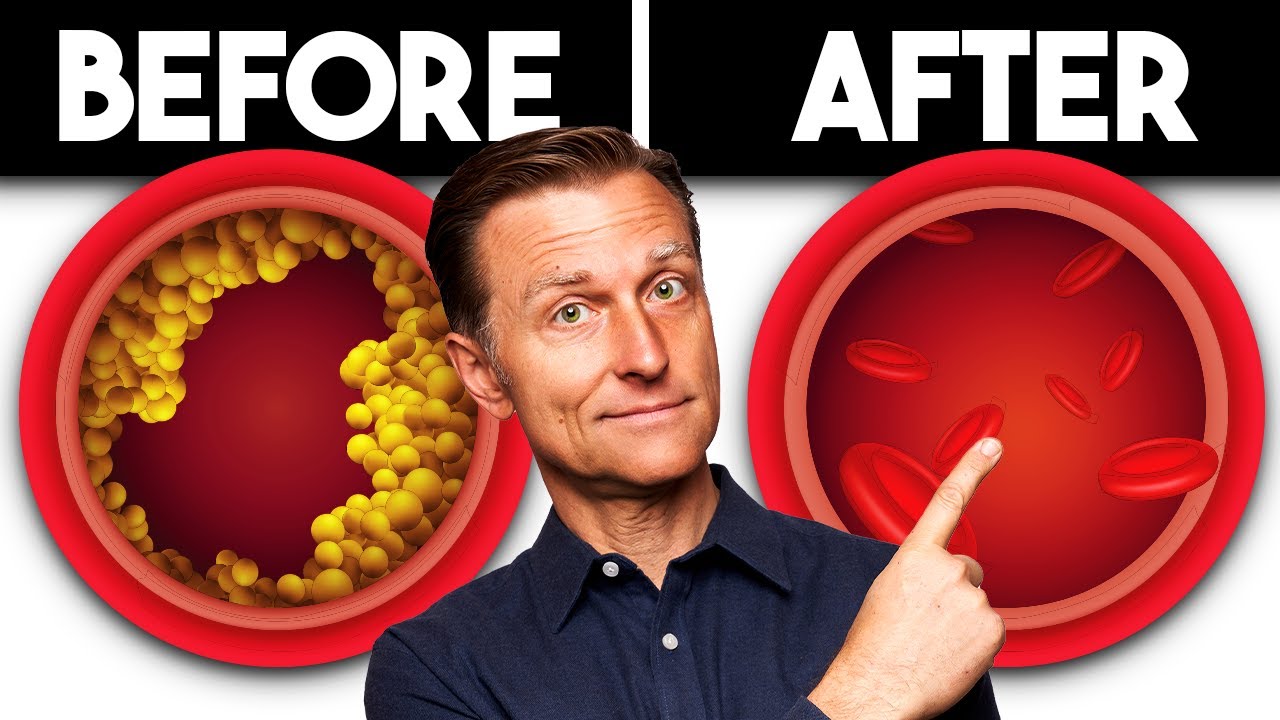
So if you're reducing inflammation, which is sort of like your internal campfire, you are reducing the likelihood of the atherosclerosis. Atherosclerosis, a process which is scar ING of your arteries. That leads to that narrowing.
We used to think that was clogging up the arteries into the into the, arteries. And it's not, like a plumbing problem. It's more an issue with the wall and the inflammation that occurs within the wall that leads to the narrowing of the vessel.
And so if you reduce inflammation, you're taking away one of the contributing factors to that increased, the reduction in the diameter of the vessel and the increase inflammation in the, in the vessel itself. So you want to make sure that you are thinking about this holistically, rather than just through the perspective of lowering cholesterol. That's why berries and other colourful fruits are a great strategy to, to introduce into this as well.
They also have been shown to improve endothelial function. That's fun. Funky word for the, that the the lining of the wall.
And this keeps your arteries nice and flexible. You want flexible arteries, particularly as you age. And they also, will improve the, the or lessen the likelihood of that, atherosclerosis process is more if you're improving the health of your endothelium.
They provide soluble fibre and a particular type of soluble fibre called pectin. This has also been shown to lower LDL cholesterol as well. So make sure you're not scared of fruits.
It's not fearmongering around fruits berries, citrus fruits, raspberries. Try to eat local if you can. If you're out of season, eat frozen berries.
They still have a lot of the phytonutrients that are protected by the flash freezing process. They are great to add to sort of a meal. Have with dark chocolate.
Definitely delicious. And and certainly something that I highly recommend people try and get, more into the diet. I got some extra ones for you as well.
You want to try and increase your protein coming from plant based foods, so soy and pulses try and get at least 100g from of these kind of products. Every single day I get, I get around 150 to 1g at least. But that's because of the size of my weight.
And actually what I'm optimising for, which is high amounts of protein, unsaturated fats. So again, handful of nuts every single day you're going to be getting good amounts of unsaturated fats. Your mono unsaturated fatty acids as well as polys, polyunsaturated fatty acids, soluble fibre.
You want to get over 20g a day of of this fibre. So swap those refined, products for whole grains, the, the rye, the barley and get more polyphenols from your fruits and vegetables, particularly berries and citrus fruits as well. But it's not about just about food.
Physical activity is super important. That can also improve your cholesterol levels and overall cardiovascular health. Aim for at least 30 minutes of moderate exercise every single day, and that can include brisk walking, cycling.
Just get your body. We are designed to move everything all day. We, have, evolved to walk, walk and walk on the plains just exactly how we've, our mechanics are designed to always be in our feet and sedentary positions, which is exactly what I'm doing right now, is not something that is intuitive or natural to us to try and get moving as much as possible, because these are things that ultimately reduce inflammation, that can support heart health.
So you might be thinking, what does this actually look like? If I was to zoom in in a day in the life of doctor RuPay trying to reduce cholesterol overall, like I said, the strategy is to get more plants and more fibre at your door and this is how you could do it. So for breakfast, try an overnight oats recipe.
Now, most overnight oats recipe go way to high notes, and they use refined instant oats, which tends to sugar straight away in your bloodstream. And they don't pair it with high fibre items. And other high protein items.
Are overnight oats recipe that you find linked down below that you find on the app in the docs. Kitchen or com has got 11g of fibre per serving. It's got 30g of oats and it's got half the mixed nuts.
You would get your nuts in those five to stars at lower cholesterol. It's got mixed berries in which again, as more fibre and also can lower cholesterol. It's got half a grated apple which gives the sweetness.
But it also provides that pectin again that soluble fibre that can lower cholesterol. And it's also got chia seeds in and pumpkin seeds and hemp seeds is also providing protein as well as good amounts of fibre too. If you want to increase the protein amount, you can serve that on the side with a, you know, protein smoothie, whatever.
We've got tons of those on the app. But that is a great way of introducing that fibre. Right at the start of the day, you got 11g of fibre per serving for lunch.
Have a diversity bowl. You might have made one the night before or the day before. Have a leftover diversity bowl, rocket leaves, sliced fennel, halves of chopped walnuts, cooked beluga lentils that I use a lot, and the, protein can come from like salmon.
It could come from canned tuna. It comes from eggs. It could come from tempeh.
This has got 15g of fibre per serving. That's just one meal with 15g of fibre per serving. And if dinner what?
Something that I'm actually going to be eating tonight is the salmon and lentil one pot. This has got 12g of fibre per serving, plus a ton of protein as well. Everything goes into one pan.
You've got delicious spices. These are all going to be providing those extra benefits not only to inflammation, but spices are also uniquely beneficial for your gut microbes that can lower cholesterol as well. You're also getting good amounts of protein that is going to be important for holistic health, and ensuring that your active and your muscles are supported, etc.
. So this is what a day in the life could look like of getting over 30g of fibre. This is 38g of fibre.
Just look at those ingredients. Look at those recipes that we've got. Link down below in the caption.
And it's something that you can start right away from today. So check it out. Every little counts.
Whether you're starting to add more whole grains to your diet with you just eating more legumes, try one thing, try one recipe. Try one of the recipes down below. I'm sure you'll love them.
And it's it can be possible to lower cholesterol. Maybe not in seven days, but certainly have arrived after a few weeks and there are comparable benefits to statins as well. Let me know if I've missed anything about lowering cholesterol in the comments.
I'd love to see them and I'll see you next time. If you want to improve your heart health and lower cholesterol, then check out this video right here, where I do a deep dive into ingredients that can lower your cholesterol and potentially unclog your arteries.