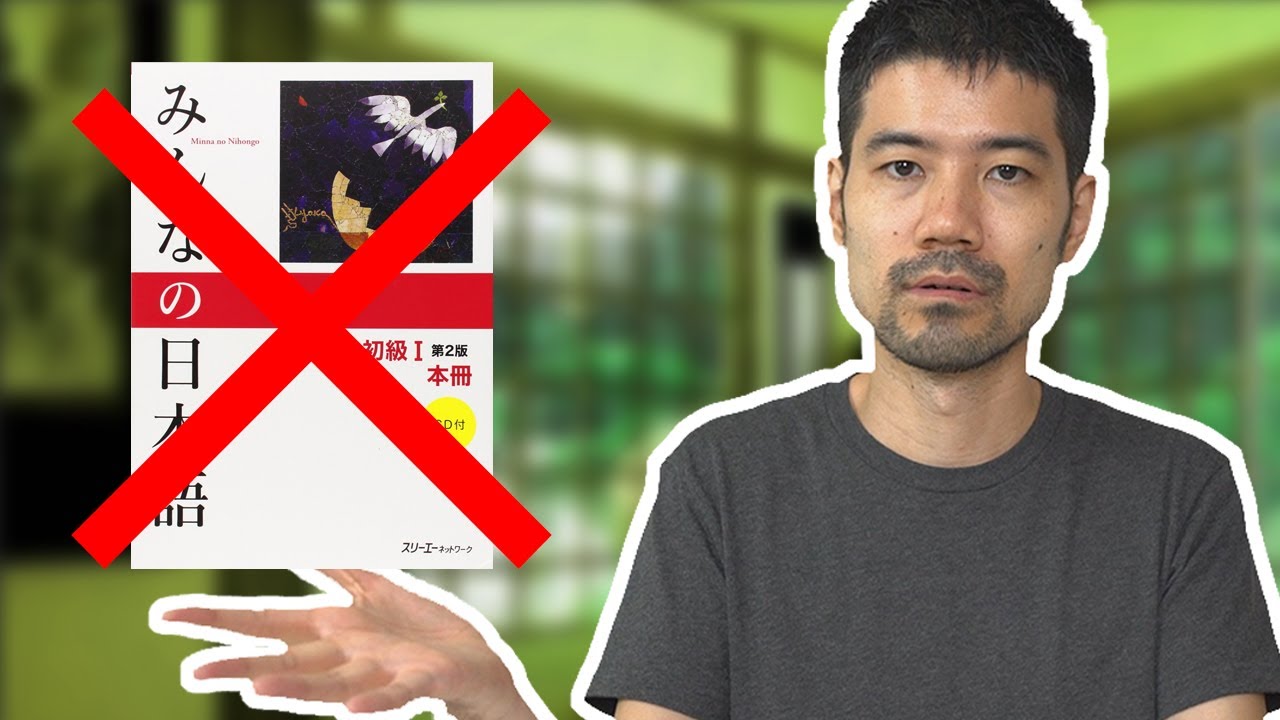
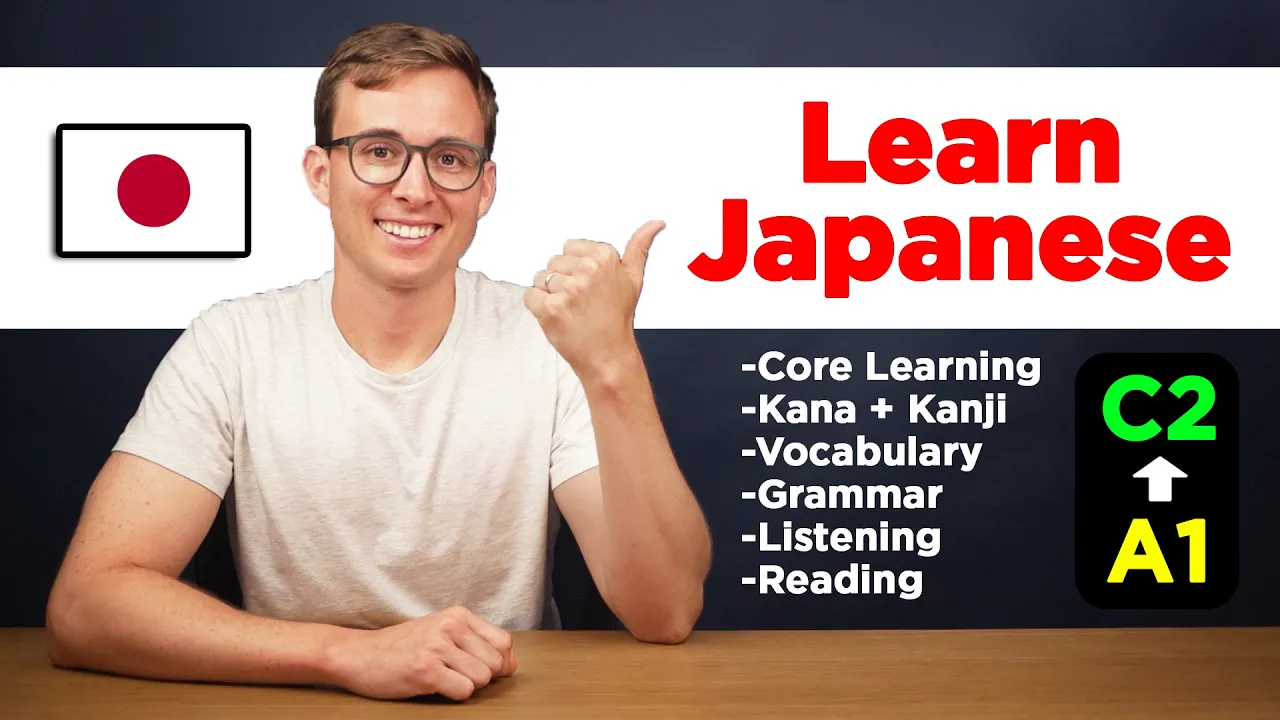
in this video I'm going to show you the best way to learn Japanese on your own we're going to cover each of these major topics so that you can build a learning plan that meets your goals and needs core learning Japanese differs from English in almost every way so when you first start learning you'll want to build a strong foundation in the basics everyday vocab how to use verbs basic sentence structure things like that and the best way to build that understanding is by using the gky textbooks there are dozens of Japanese textbooks out there
but in my opinion these two are the best for absolute beginners they're well structured they're practical and most Library systems in the US carry at least a handful of copies so you can save some of that hard-earned dough but there's yet another good reason to use the gkey series and it's this free video playlist from tokini Andy Andy is a fantastic Japanese teacher and he's created extensive video guides for each chapter in genkei he explains every grammar point in detail and offers lots of helpful examples and by the way I'll put links to everything I'm
talking about in the description box below so I would recommend that you get the gany books and then follow along as you watch the videos by the time you finish the series you'll basically have completed two years of college level Japanese Su once you finish the Ganky curriculum I would personally recommend that you stop using textbooks altogether and instead focus on the listening speaking and reading resources that I'll talk about later in this video however if you're the type of person who likes using textbooks great for you I would recommend the Moto series starting with
level A2 B1 this book again there are tons of options to choose from but I like mototo because at the lower levels every textbook comes with a free video guide and it's a good mix of reading listening vocab and grammar now before we move on I want to share with you guys my secret weapon for learning Japanese the Jarvis translator 2 it's a dedicated language translator and it's awesome here's how it works you fire up the device select your native language and your translation language I use the Jarvis and translator for Japanese Mandarin and Arabic
but there are actually 108 different languages and dialects to choose from and it's super easy to use you tap here say a phrase in English and within a half second the jt2 will translate that phrase into your target language where is the nearest pharmacy translations are 96% accurate which is very high and unlike Siri or Google translate the jt2 is designed to replicate spoken language the way people really talk to one another and I like to use this device in two ways if I'm listening to a podcast or watching a show and I hear a
phrase that I don't understand I hit this red button repeat the phrase juki artificial snow and there it is I get an instant translation and number two if I'm speaking with someone in Japanese either in person person or online and I'm doing that thing like H how do I say uh I'm allergic to cats and obviously there are tons of other uses if you're traveling if you're doing business if you're making new friends from around the world the Jarvis translator 2 makes communication much easier and it comes pre-loaded with 2 years of free mobile data
worldwide so you don't need Wi-Fi you don't need a cell connection you just turn it on it connects automatically and you're good to go the battery lasts around 10 days on standby and works for 6 hours of continuous use so you'll have plenty of time to translate anything you need to On The Go the Jarvis and translator 2 is currently available on Amazon and I'll link to the page in the description box below if you want to boost your Japanese speaking skills or your skills in any language it's a fantastic tool learning Kan and kanji
as you might be aware Japanese has three writing systems hiragana Katakana and kanji let's start with hiragana and Katakana because they're both phonetic syllabaries kakik Co and as you'll see it's helpful to learn them as quickly as possible fortunately these free PDFs from tofugu will help you memorize both these forms in a matter of days and if you want some extra practice I'll link below to this free Ani deck as well kanji on the other hand are based on traditional Chinese characters they are most definitely not ftic and most kanji have at least two different
readings for instance this character can be pronounced ni he or be depending on the word now don't be scared off by that because the gy series does a very good job of gradually introducing useful kanji in context and if you use the vocab and reading resources that I'll talk about in just a moment you'll learn all the kanji you need over time that said if you want to focus on kanji from the get-go I would suggest using the website Wan coni it's a very well-designed platform and it's pretty comprehensive but if your ultimate goal is
to speak Japanese and not just read it I personally don't think it's worth the effort building vocab if you've seen some of my other videos you'll know that I'm a big fan of using Anki to build vocabulary it's free on your laptop or mobile browser and the Ani Community has created some phenomenal flashcard decks for Japanese learners for beginners my favorites are the Japanese core 2000 deck and the jlab beginner deck but as you can see they're very different the Japanese core deck is pretty traditional and leans into more formal speech similar to what you'd
find in a classroom setting but if you plan on taking the jlpt exams which we'll talk about a little later in this video using this deck is a great way to prepare for the first two levels jlpt 5 and four the jlab deck on the other hand is completely different it uses Snippets of real anime audio to teach more casual and sometimes very slanging Japanese whether or not you love anime it's a fantastic resource and if your ultimate goal is to use Japanese for everyday conversation I think this is the better deck for most beginners
just don't go to Tokyo and start saying things like that's not going to be a good look once you've got a handle on common vocabulary you can also move on to the Japanese core 6000 deck or the jlab intermediate decks but in my opinion the better option at this level is to use the Satori reader app which is a terrific resource for both intermediate and advanced Japanese students basically it's a collection of short stories and dialogues each with their own style and tone but there are three elements that makes sat Tor reader genius in my
opinion one every segment is voiced by Japanese actors so you can listen to and then model native pronunciation two you can tap on individual words or complete sentences to get an exact explanation of what you're reading or hearing and three it has a built-in flashcard system so you can quickly add new words that you come across to your long-term review list now look sat Tory reader is for absolute beginners but once you finish say all of Yankey level one I highly recommend it for boosting your reading skills and expanding your vocabulary listening resources Japanese has
excellent listening resources for Learners at every level and once you reach chapter five or so in gkey you should absolutely check out the nihongo cone podcast this is an immersive Japanese podcast there's basically no English but the host speaks very slowly and repeats himself regularly so that even beginners can start to make sense of the language nongo cone has hundreds of episodes but once you're at a high beginner level you can also move on to Japanese with Shun which is ever so slightly faster shunan also reviews Advanced words at the end of each episode which
is very helpful for building your vocabulary at the intermediate level you should absolutely be listening to yuu Noni hongo which is one of the best podcasts for language Learners that I've ever come across it's free the topics are wide ranging and most importantly Yu usan is a very entertaining host with a great sense of humor which makes it fun to listen to long term for advanced Learners your options are practically Limitless so seek out content that appeals to you and make a habit of looking up words and phrases that you don't recognize look them up
where you ask well my favorite Japanese dictionaries are g.org which is a free website or shirish show which is a free app they're both high quality and comprehensive and they give plenty of useful example sentences if however you want to scan a Define kanji with your phone's camera you can use Yoma which is also excellent but costs around $30 the jlpt test system as I mentioned earlier there's a series of standardized tests for Japanese Learners called the jlpt the tests range from Level N5 which requires that you know about 800 words and 100 Kani all
the way up to N1 for which you'll need to know about 10,000 words and 2,000 kanji in order to pass and if that sounds like a lot it is is so should you take the jpts are they worth it yes eventually because at some point you'll probably find that your Japanese starts to plateau and that for whatever reason you're not really motivated to keep learning and that's when the JL pts are really useful in my opinion because they give you clear goals and lay out the specific things you need to learn in order to reach
those goals so why not follow jlpt from the beginning because in my opinion there's so much more rich and interesting material out there look you don't want to learn Japanese just to pass a test you want to learn it for the culture the people shingin whatever it is let your interest guide you and take the tests when the time is right mastering grammar Japanese grammar is notoriously difficult for English speakers for a number of reasons syntax particles honorific speech etc etc and you'll probably have all kinds of questions about grammar especially early on and when
that happens I would recommend using take Kim's guide to Japanese grammar this is basically a comprehensive free guide that breaks down all the essentials of Japanese grammar it's simple and straightforward and it will probably answer about 90% of your questions as a beginner and you can also check out the YouTube channel Miku real Japanese the host has tons of useful videos that cover specific particles and word endings in Japanese so if you're struggling with say the te form or how to use neit versus Deb this is a great resource at a more advanced level you
can also use imabi which is a free grammar database or these free playlists from nongo tootabi that cover jpt N3 N2 and N1 level grammar but FYI tabian teaches exclusively in Japanese so be ready now look as you continue to listen and speak and read you'll develop an intuitive sense for Japanese grammar over time so I want to be clear that explicitly studying grammar rules does not need to be a part of your learning routine but of course if you're feeling lost it can be helpful to seek out explanations writing contrary to what some hardcore
students of Japanese might tell you learning to write kanji by hand is not an essential part of becoming fluent in Japanese reading kanji yes but you could absolutely build that muscle without learning to write by hand and in fact you can use a phonetic keyboard on your phone or laptop to type kanji pretty easily that said if you're set on learning to write by hand I would suggest investing in a Fuda pen again ooshi notebook and this textbook remembering the kanji which will teach you proper stroke order and offers helpful pneumonics for remembering the various
forms and there you have it everything you need to learn Japanese on your own it's a demanding language for learners but well worth your time and effort if you have any questions or comments please let me know and as always thanks for watching