There's a quiet revolution happening in physics. One that's aiming directly at the heart of one of the most iconic experiments in science. The double slit experiment.
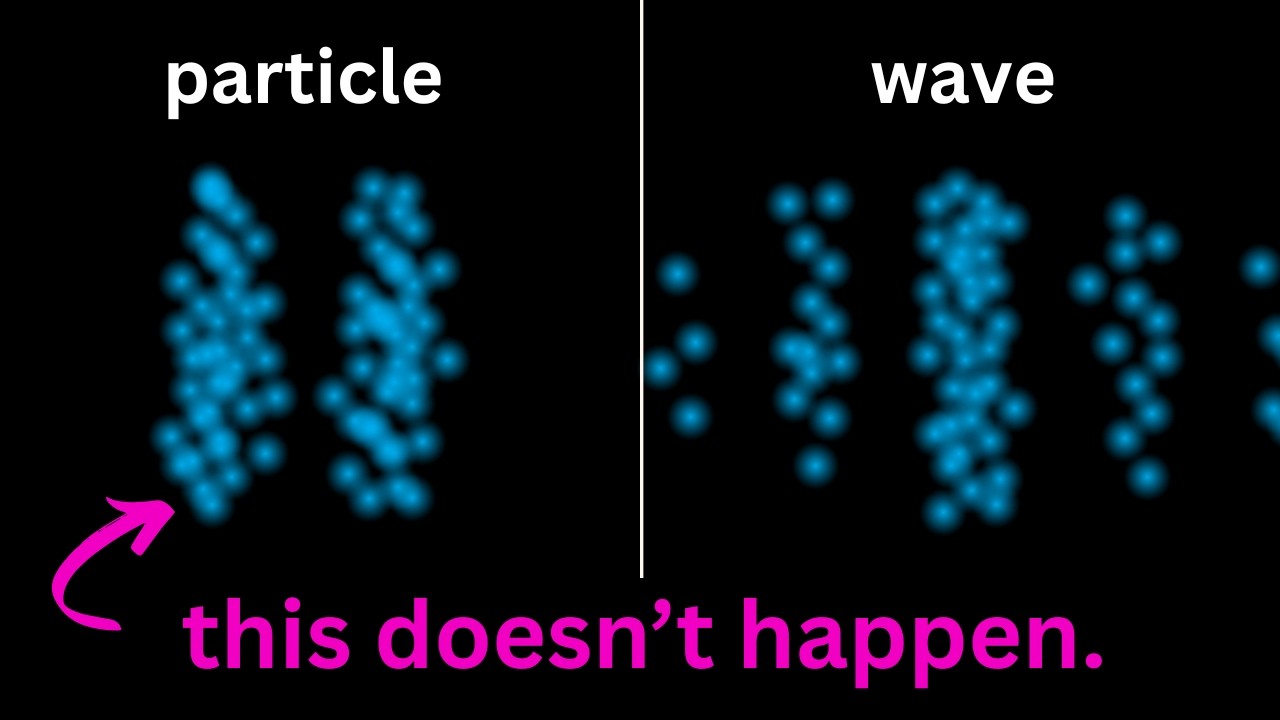
For over 200 years, this elegant test has helped us make sense of one of light's greatest mysteries. How it can behave like both a wave and a particle. But what if the wave aspect isn't necessary at all?
In a groundbreaking study published in Physical Review Letters, physicist Gard Rempa and his team at the Maxplank Institute for Quantum Optics in collaboration with ETH Durk and Brazil's Federal University of S Carlos propose a bold alternative. They suggest that interference, the very thing we observe in this historic experiment, might be explained entirely through particle interactions using a new framework built around bright and dark photon states. This emerging idea known as the dark photon interpretation could transform how we understand superposition, detection, and the very fabric of quantum reality.
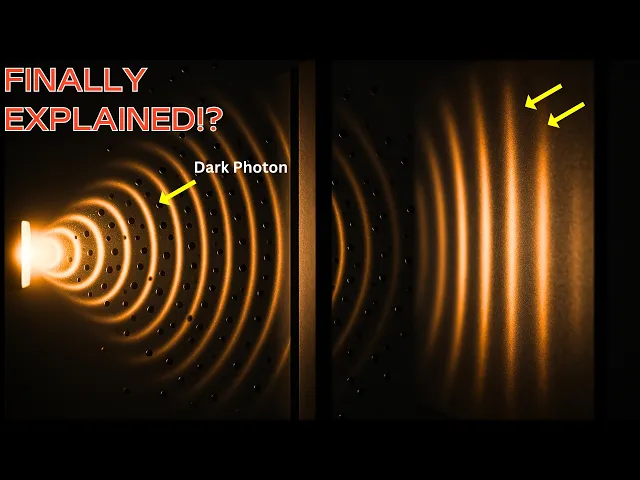
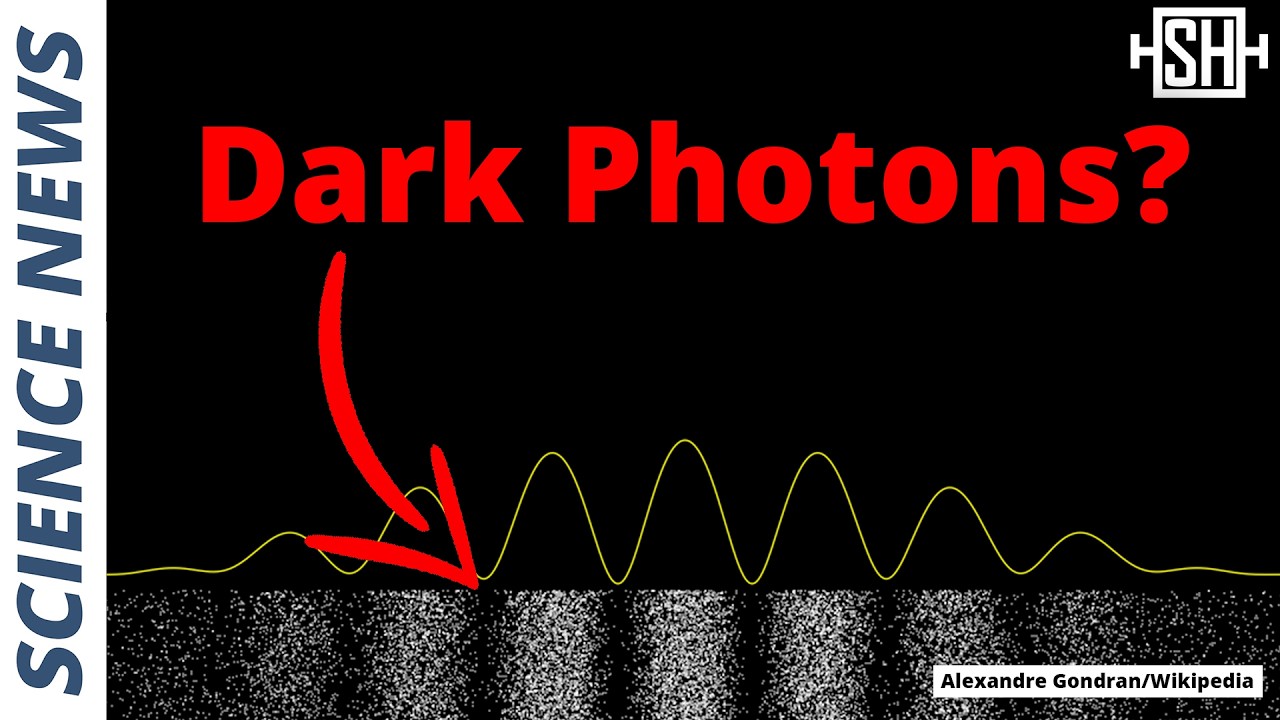
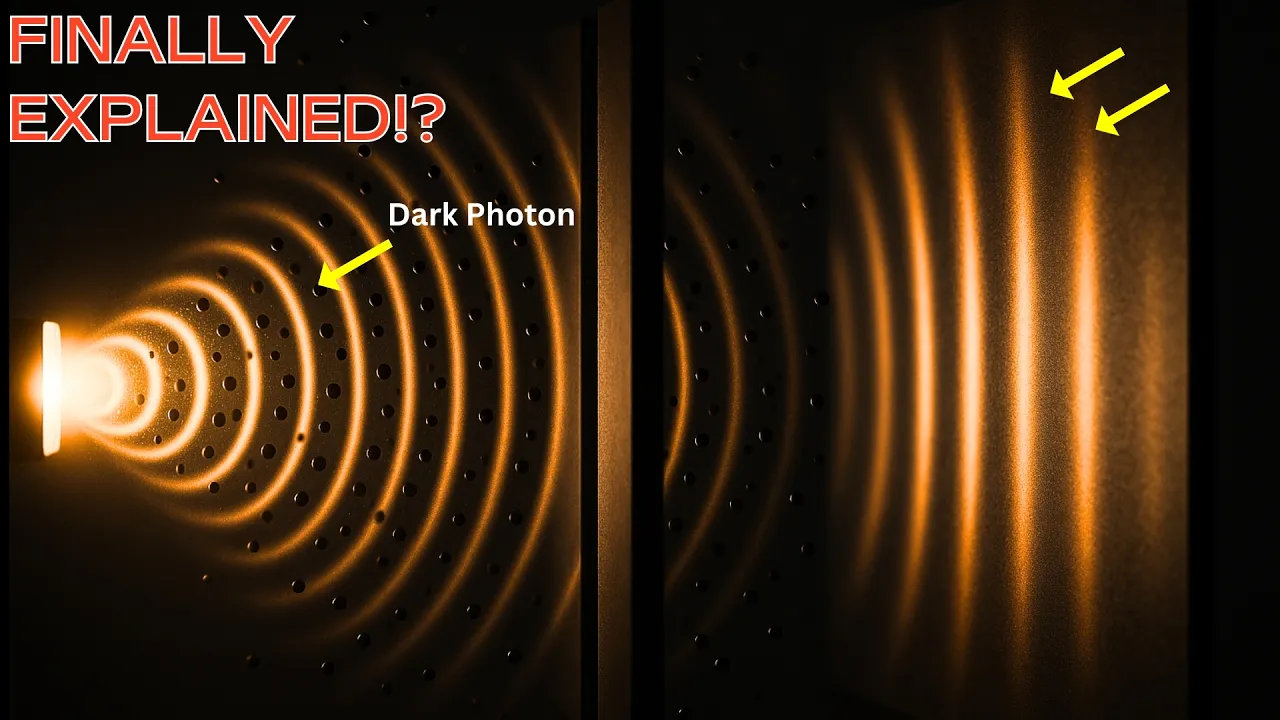
In this video, we will explore this gamechanging theory and why it's causing a stir in the world of modern physics. For centuries, the double slit experiment has beautifully illustrated the dual nature of light. When light passes through two narrow slits, it produces alternating bands of brightness on a screen, a telltale sign of interference.
A century later, quantum theory added a twist. Even individual particles like photons create the same pattern when sent one at a time. It seemed to prove that particles behave like waves, somehow traversing both paths at once until measured.
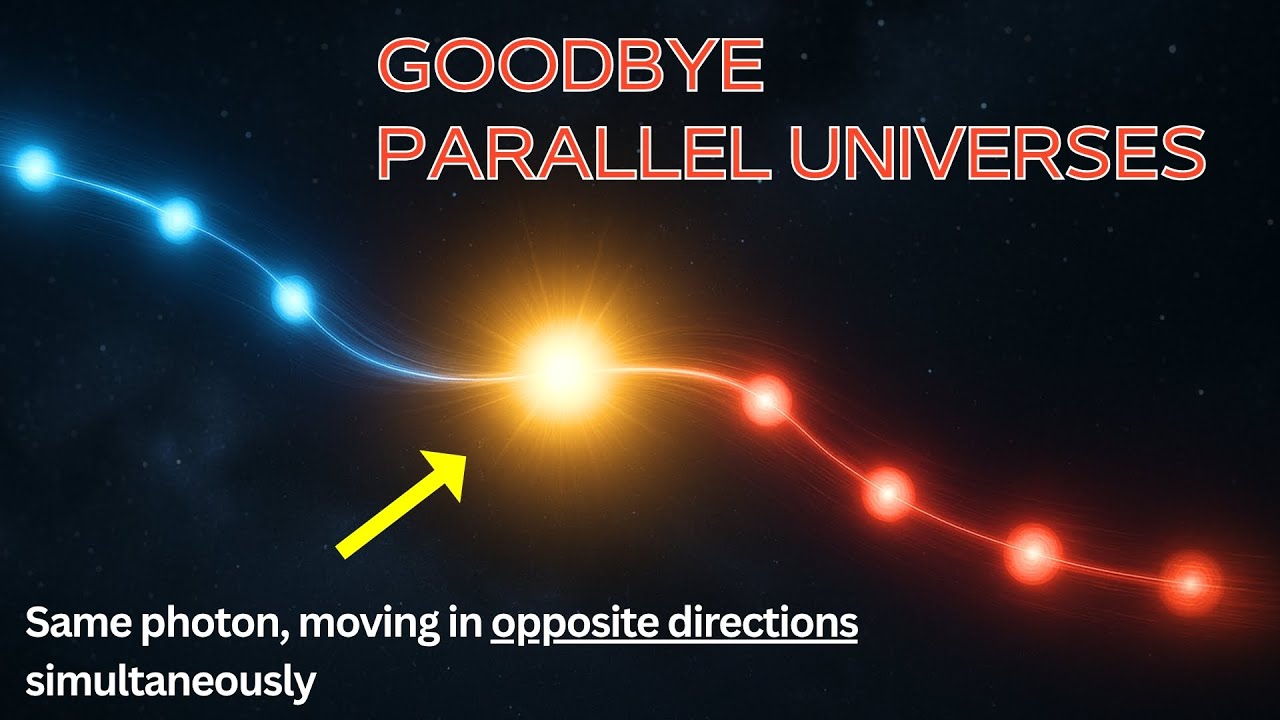
But Rebe and his colleagues offer a fresh take. Perhaps waves aren't required to explain this pattern. According to their findings, interference may result entirely from quantum particle states, specifically a superposition of visible, bright, and invisible dark photon modes.
In this model, the bright photons are the ones our detectors can capture, while the dark ones exist but remain beyond direct measurement. So, how do these unseen states affect what we observe? The answer lies in quantum entanglement.
When a photon encounters the slits, it doesn't split spatially like a classical wave. Instead, it enters a probabilistic blend of detectable and hidden states that interact not through space, but through quantum probability amplitudes. Ghard Rempa puts it this way.
Our description provides a quantum picture with particles of classical interference with waves. Maxima and minima result from entangled bright that couple and dark that do not couple particle states. This model deepens our previous understanding.
The light's interference pattern isn't due to overlapping waves, but rather to entangled quantum states generating statistical detection patterns. And that's a profound shift in how we view measurement, probability, and the behavior of particles under observation. What's revolutionary is that this particle only framework still aligns with quantum mechanics.
It doesn't abandon the foundations. It reinterprets how we explain one of the most observed phenomena in quantum optics. The idea has been published in one of the most respected physics journals, physical review letters in 2025.
It builds on decades of quantum optics research, including quantum eraser and delayed choice experiments, all of which suggest that measurement itself is far more intricate than we imagined. If this new model is correct, it means we've been interpreting light's behavior not inaccurately, but incompletely. There's more beneath the surface, something we've been missing all along.
At the heart of this theory lies an important question. What happens to particles we can't detect? Traditional physics often treats non-detection as non-existence.
But quantum theory has always hinted that what isn't observed may still be real, just hidden from view. The dark photon framework brings this idea front and center. In this picture, there are two key photon states.
bright ones which interact with detectors and dark ones which remain inaccessible unless something alters their coupling with the environment. Here's the mindbending part. The interference pattern we associate with wave behavior isn't caused by waves spreading in space but by quantum entanglement between these two photon modes.
The bright states create the observable fringes on the detector. The dark states, meanwhile, occupy regions we once assumed were empty, the zones of destructive interference. But those empty regions might be hiding something.
According to the researchers, dark states can persist in places where classical physics says light cancels out. These regions aren't voids. They're filled with potential, just inaccessible through ordinary means.
This flips the measurement process on its head. In the conventional view, detecting which slit a photon passes through collapses the wave function and erases interference. But in this new model, it's not about destroying a wave.
It's about toggling between detectable and undetectable photon states. Measurement shifts the photon's coupling, not its trajectory. This view echoes recent developments in quantum information science.
Weak measurement techniques which allow scientists to extract limited data without fully collapsing a system show that observation can be subtle. Instead of all or nothing outcomes, measurement can tease out information gently, revealing hidden layers of a quantum system. Likewise, quantum eraser experiments where the interference pattern reappears or vanishes based on how you observe the system find a fresh explanation here.
It's not that you're changing the photon's history, but rather determining whether it becomes a bright or dark participant in the outcome. This perspective suggests that quantum mechanics isn't merely about what exists, but how our interaction defines existence. The act of measurement isn't just observation, it's participation.
The dark photon interpretation captures this beautifully. It reimagines interference not as self-cancelling waves, but as a dynamic conversation between hidden and visible quantum states, a conversation that only becomes real when we choose to listen. This new framework does more than reinterpret an experiment.
It expands our entire understanding of quantum behavior. If accurate, it could alter how we build detectors, interpret data, and even use light as a quantum tool. First, there's technology.
If dark photon modes occupy regions once thought empty, we may be missing signals in existing quantum systems. Future detectors designed to manipulate or stimulate transitions between hidden and visible photon states could reveal phenomena we've never observed before. Think of it like shining a flashlight into a room we assumed was dark, only to discover it was full of structure all along.
This concept could redefine quantum sensing. Devices that exploit dark modes might allow for ultra seccure communication or more precise quantum computing where hidden states provide additional channels of information immune to decoherence or eavesdropping. And this isn't science fiction.
Several real world experiments resonate with this view. Quantum eraser tests show that detection outcomes can be influenced by future measurements. Under the dark photon framework, the pattern was always there, but whether we made it visible was up to us.
Also, weak measurements demonstrate that information can be extracted without full disturbance. This supports the idea that undetected states are still present, merely uncoupled. Furthermore, entanglement experiments have long puzzled researchers with their instant distanceing connections.
Rethinking one particle's transition between detectable and hidden modes offers a new interpretation for this quantum spooky action. Even gravitational wave detection plays into this. Tools like LIGO use squeezed light and quantum optics to detect faint space-time ripples.
Understanding how undetectable modes influence light behavior could further reduce quantum noise and enhance these observations. And interestingly, the concept of dark photons already appears in cosmology. Some researchers propose that dark photons, distinct but conceptually related, could comprise part of dark matter.
Both involve particles that exist, interact subtly, but remain unseen by traditional instruments. The dark photon model could serve as a conceptual bridge linking quantum optics to cosmology and particle physics. A true unifying shift.
So where does that leave us? Not with a final answer, but a better question. What else is happening that we haven't yet learned how to detect?
Thanks for joining us on this deep dive into the dark photon theory, a bold re-imagining of light and measurement that could change everything we thought we knew about the quantum world. Until next time, keep your mind sharp, your curiosity active, and your photons, bright or dark. See you in the next video.
Heat. Heat.