Now we can say we’ve got it all, because [talking over each other] the house used to be made of cardboard, like an Indian’s house, it looked like one of those houses made of straw. It was. Our situation used to be more difficult, especially the problem of food.
But thank God, the only problem now is the house. But with faith in God, we’ll get better, little by little. We’re arriving in a favela, called Sovaco da Cobra.
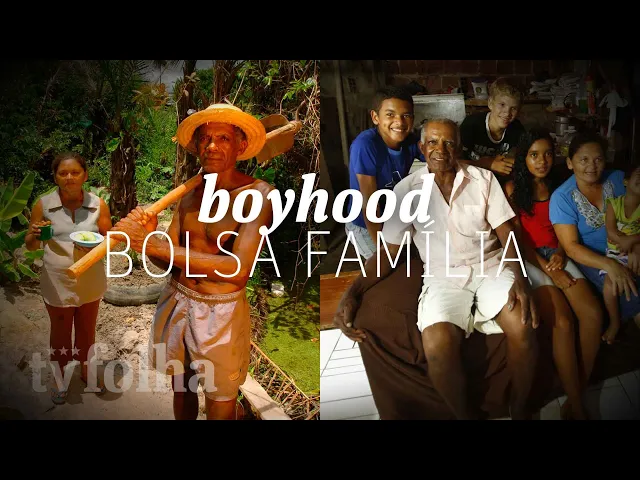
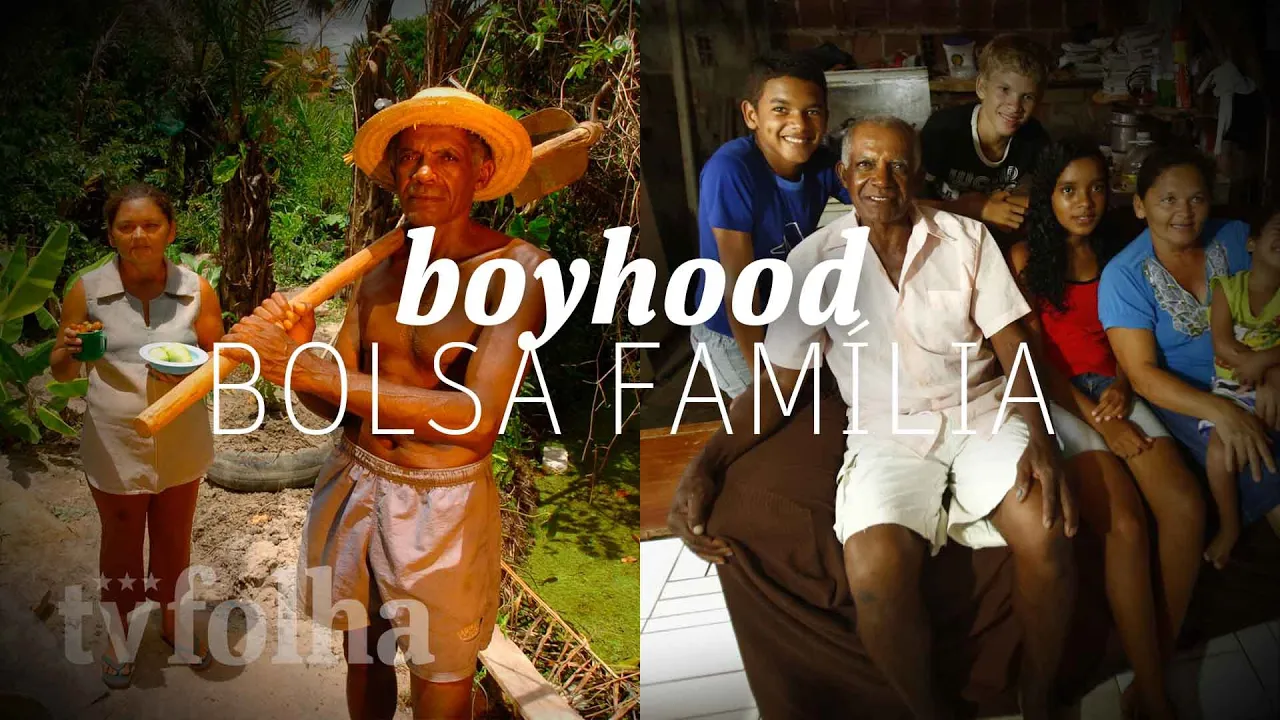
This is a poor area on the outskirts of Jaboatão dos Guararapes, a city close to Recife. We’re here in front of the Dumont home, which Folha has been visiting for ten years, in the neighborhood of Sovaco da Cobra. Fernando Canzian SPECIAL ENVOY Ten years ago there were ten members of this family: Sueli Dumont, her husband Ronaldo, and eight children.
Today, there are nineteen. Dumont family 2008 Dumont family 2010 Dumont family 2013 Dumont family 2015 There’s a lot more of us now, things are more difficult. Isn’t that right?
But it’s God’s will. Things will get better. Ronaldo Dumont STREET CLEANER Yes, there are more of us, even Julia here now.
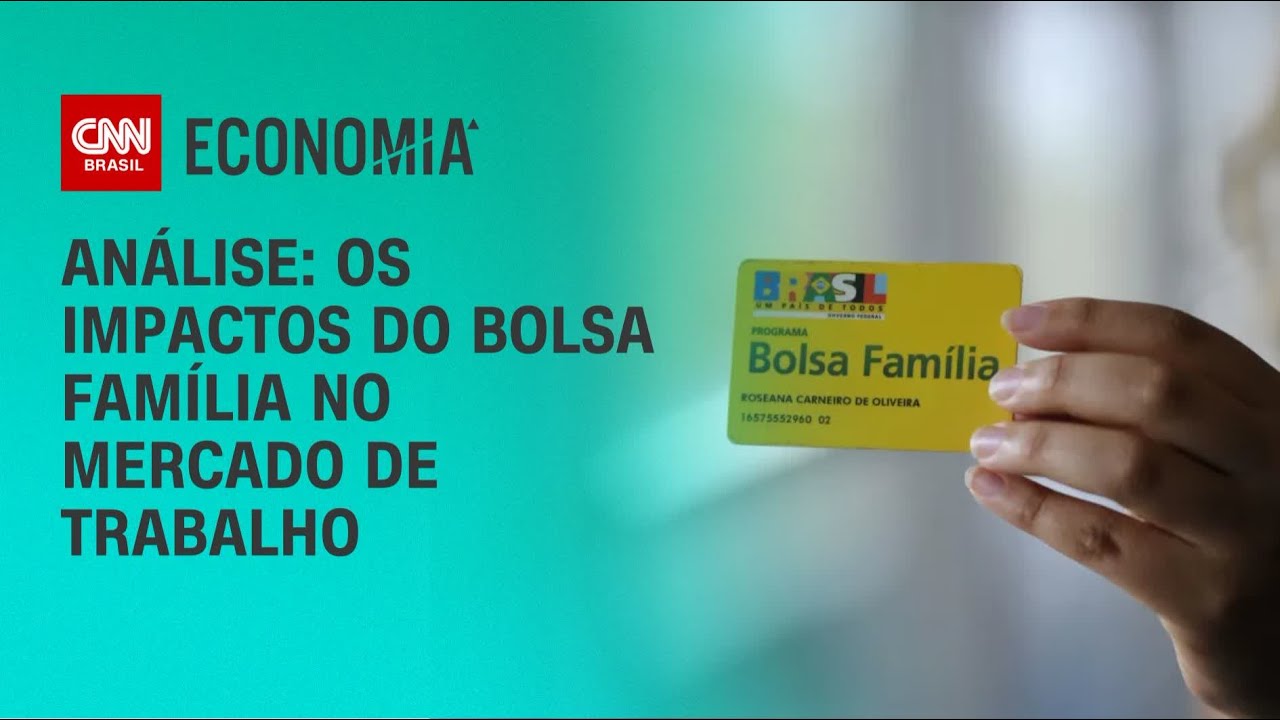
Julia THEIR YOUNGEST The family is a bit bigger, but now that’s enough. Their children also had children very young, and today practically all of the children in the house receive the Bolsa Família. Your children receive the Bolsa, right?
That’s right. All three? All three.
Kássia Dumont MANICURIST / RONALDO AND SUELI’S DAUGHTER How much do you receive in total [per month]? R$310. Alright, how’s it going?
Everyone receives it, her over there, her too… Me too. But are all the children in school? Yes.
And what were you doing when I came here with the [government social] program “Agente Jovem”? What did you learn there? Priscilla Dumont HAIRDRESSER / RONALDO AND SUELI’S DAUGHTER Just to mess around!
And make lots of babies! Mess around and make babies! So when you lot were in “Agente Jovem”, and you started having children, nobody dropped out of school, did they?
I finished my basic schooling, but I didn’t have the patience to carry on and go to middle school. They are highly dependent on the state. In the whole family, there is just one person, the patriarch, who is employed and receives a minimum wage.
He’s a street cleaner. Things are more difficult for me at the moment, because my wife is busy with the girl and she can’t work or help me out. And if that weren’t enough, I’ve got a hernia in my stomach.
I can’t lift any weight. Sueli Dumont HOUSEWIFE To give you an idea, they have a family income of R$852 from the Bolsa Família alone. Where’s your dad, is he here?
Yes. Just a few meters from the Dumont house lives the family of Pedro and Micinéia, which Folha has also been monitoring for the last ten years. When I started coming here, back in 2005, the children were still small.
You were receiving the Bolsa Família, but Pedro wasn’t drawing a pension… Yes. The situation is exactly the same. They depend 100% on the state.
Like this, you’re going to throw it on the floor, you see? He receives a pension… …for invalidity, because of the accident I had. Pedro Geraldo Silva RETIRED And you receive the [monthly] equivalent of the minimum wage?
That’s right. Make yourselves comfortable. Don’t mind the mess; it’s that my wife is in hospital.
What happened? She’s had a baby boy. Isaque.
They had a son, Isaque, who has Down’s syndrome. Where’s my kiss? Give me a kiss, give me a kiss!
Like this, you’re going to throw it on the floor, you see? Micinéia Silva HOUSEWIFE They’ve managed to get another pension as well. It’s another minimum wage.
So the family income today is equivalent to two [monthly] minimum wages? That’s right. And the… R$200 from the Bolsa Família, yes.
Vanessa RECEIVES THE BOLSA So they have what may be considered a pretty high income for that area, Alan LIKEWISE for the situation they live in. You used to complain that you couldn’t always eat meat; how are things today? Today I complain to Pedro, because when we used to go shopping he would buy meat when he should have bought more rice, beans… Pasta… …and now the meat he forgets!
Our priority is food. It’s fundamental. So are you going to have meat today?
Yes. If she says, “Pedro, today I want to eat meat”, then I can go out and buy it and she’ll have meat. Silva family 2005 Silva family 2008 Silva family 2010 Since you first visited us, lots has changed around here, Silva family 2013 although you see that the house is in a bit of a state, we’re doing work on it, because, you know… That’s my bed.
I sleep on top, and Luan below. Bedroom 1 This is Micinéia’s room… Where’s my kiss? Give me a kiss, give me a kiss!
The same room …and that’s Vanessa’s bed. After Isaque was born, we ran out of space. So I put a mattress on the floor and sleep there.
That’s Isaque’s crib. Bedroom 2 That’s my bed, that’s Vanessa’s, she’s growing up quickly, isn’t she? This is the boys’ room, Luan and Alan’s.
Come and see their room, it’s wet because of the rain, and we’ve put this cardboard here to stop the damp. Here is the kitchen… How did you say you bought this land? I bought the land when I was receiving R$312.
I paid R$250 every month. In total you paid R$1200, right? Yes.
I bought it with the money from the Bolsa Família. He didn’t even know about it. I bought it to give to my daughter, she didn’t do anything, and other people were occupying the land back there.
So I bought this and I built on it. So we can see that from a material point of view, the Bolsa Família has helped these families a great deal. To give you an idea, we couldn’t buy furniture, but today we can.
We couldn’t afford electro-domestics, we had to buy everything second hand. My son learnt how to do tiling with my brother-in-law; he’s put some in here. Their priority was to improve their house.
So we don’t eat much, but we make improvements to the home. This is your room, and Julia’s too? Yes.
This is the boys’ room. We still need to paint here. It was Kássia who gave us this fridge.
I won this here gambling. It’s been a great help! This room belongs to my oldest daughter.
I sorted it out for her while they finish her house. Water and electricity…are illegal? Yes.
When things get better… We don’t pay for water, electricity we used to pay, but there was a mistake, and I went to sort it out… If we were to legalize our supply, we would have to start paying [property tax] IPTU. If we were to do things properly. Tereza Campello SOCIAL DEVELOPMENT MINISTER …so lots of people think, “ah, the Bolsa Família is a lot of money, and so people quit their jobs.
” 75% of the adults who receive the Bolsa Família work, so it’s not true to say that people get the Bolsa Família and stop working. They work just as much as those who don’t receive it. The economically active population in Brazil is about 75% of those of working age.
So it’s the same! Why do people say it’s different? It’s just prejudice.
While these families are just a tiny sample of those assisted by the program, the aim of monitoring them was to get an idea about the development of the children. Half of those receiving the Bolsa Família don’t work, because they are less than 18. We want the children in school and they are.
This is a victory for the country. …so what are these boys going to do in the future? Come on Alan, what are you going to do when you grow up?
I don’t know! You don’t know? For the moment, you’re going to study, aren’t you Alan?
I want to be a civil engineer. Civil engineer! Hmm.
Me too, a civil engineer. What do you want to build, bridges? Yes.
And buildings. I’m always encouraging them, talking to them, saying “look, there’s a lot of good work out there", I say “you must study, so you don’t have to go through the same difficulties as me…” It’s worth emphasizing the following: they will necessarily have a better life than their parents have had. I’m studying for my entrance exam.
To get into university? Yes, in IEF, Sesc, Senai…technical college. What do you want to do with your life?
Construction. Is that course paid for by the institution? No.
And what about Luan? He’s always saying he wants to set up an internet café. An internet café?
You’re going to be a businessman then! Luan IS THE OLDEST The children have different expectations. But it still might take another two, three generations, until they achieve a decent, reasonable, competitive level on the labor market, education market, etc.
The biggest worry today is not whether the children are in school, it’s the quality of the school. So we ask, is the child in school? We believe so.
We are informed by the education network, via a national system. So every two months we assess attendance, and take measures. If attendance is lower than expected in those two months, the family is notified.
If this continues after another two months, we take action and block the benefits. You’re already speaking English, right? Kind of.
Say something in English. "What’s your name? " "What’s your name?
The book’s on the table. " Yes. Every time I’ve been here, I’ve done dictation, I’ve done reading with the boys, and their progress over the years is clear.
"I have lots of friends in seventh grade. " What for? Write of course!
Don’t I always ask you to do the same thing? "My name is Luan. I’m in eighth grade.
I have lots of friends in school. " "My name is Luan. I am… Sixteen.
…sixteen years old, and I’m in the second year of middle school. " "Drmatic lighting. Great contrasts of light and shadow.
" "In the center of the scene, comma, in the middle of the island, in total darkness. " If you compare them with a child from the southeast who goes to private school, or even one who goes to a state school, I think their progress is much less. I had the chance to visit the schools they go to a few times.
So fair enough, the government gives them the money for the Bolsa Família, but if you look at the quality of the school, the roofs are leaking, the desks are broken… The area of the school where I have my Friday class has been damaged, it cracked. They’re repairing it, and we couldn’t have classes every day. The children would complain all the time that the library was always closed… They don’t let many people in there.
To get books? And what about the food, is it any good? Yes.
My interest in the Bolsa Família program began in 2003, when I was the Folha de S. Paulo correspondent in Washington. The Lula administration had just come to power, and they were considering possible social programs for Brazil.
Several figures from the government went to the World Bank in Washington to study a program that Mexico had implemented… [Spanish] "With the program “Opportunities”, we support the families most in need…" …Brazil copied it. [Spanish]…for a better future. When I got back to Brazil in 2004, I wanted to see how the program was working here.
We chose to come to Sovaco da Cobra here in Pernambuco because a friend of mine from Recife said it was one of the worst places in Brazil in terms of HDI and infrastructure. So basically I ended up coming back here every year. In 2005, when I first came, it was very poor; there was no water, nothing.
But people were receiving this money. And so I’ve monitored their development over the ten years that I’ve been coming here. There are 14 million families enrolled.
To the contrary of what people think, the average payment per family is just R$170 a month. TOTAL NUMBER OF FAMILIES ENROLLED IN THE BOLSA FAMÍLIA BY REGION So the Bolsa Família is not replacing their income. 1.
7 million – North 750,000 – Midwest 970,000 – South 7. 1 million – Northeast 3. 5 million – Southeast But it’s a help, often it helps the family to stabilize themselves.
Raul Velloso ECONOMIST So I see people, with a certain amount of prejudice, referring to the Bolsa Família as a program that perpetuates poverty. People think that it accounts for most of the social spending in the national budget. PUBLIC SPENDING % OF TOTAL The national budget is a big balance sheet, more so than in any other country.
23. 7% (+ than 1 MONTHLY MINIMUM WAGE) 15. 9% [National Social Security Institute] INSS (= 1 MW) 4.
9% Unemployment Benefit and Social Assistance It shows social spending. 3. 3% [Organic Law of Social Assistance] LOAS/[Lifelong Monthly Income] RMV 2.
8% Bolsa Família 9. 9% Pensions and disability benefit In this year that I studied, 2012, it shows 74% of spending. 13.
2% Government staff/civil service 8. 2% Health 6. 0% Investment 12.
1% Other spending 73. 7% SOCIAL BENEFITS The Bolsa Família is nothing, 2. 8%, just a little portion of the total.
I think that the Bolsa Família has been a complete success, not least because we’ve managed to attend 50 million people with just 0. 5% of our GDP. The political success that first Lula and then Dilma Rousseff have had with the program is also very clear.
There are politicians who even today defend cutting spending on the Bolsa Família. If we think back to 2005, Lula was up to his neck in the Mensalão scandal. Soon after the election in 2006, I looked at all the electoral data, and it’s clear: in the areas where the number of Bolsa Família recipients was higher, the greater the number of votes for Lula.
And he won the election. CAMPAIGN PROPAGANDA FROM 2006 We’ve proved that it’s possible to grow, and at the same time, distribute wealth. …even his opponents have been saying “We won’t abolish the Bolsa Família!
” CAMPAIGN PROPAGANDA FROM 2010 Not only will I maintain the Bolsa Família, I will extend it. Economic stability is important, and so is the Bolsa Família. It became an electoral necessity.
CAMPAIGN PROPAGANDA FROM 2014 We will maintain the Bolsa Família. The Bolsa Família will continue… So it is an extremely important social program, absolutely necessary in a country with income distribution as unequal as Brazil’s, but it’s clear that whoever is in charge of the government will have an advantage over their opponents, because they can offer the Bolsa Família. It was President Lula who put hunger and poverty on the country’s political agenda.
I don’t know. I don’t understand politics, but they’re saying that Rousseff is running Brazil into the ground, and Petrobras, everything… In spite of the corruption, I would still vote for her, because this government has governed for the poor. I voted for him.
I would vote for Lula, yes. I don’t know if her government has increased inflation. I used to go out shopping with R$200, and I would bring back a whole cart full of shopping.
Now you go out with the same money and you come back with just a bag. So it’s obvious that a father would prefer to have a job where he earns R$800 a month than receive R$200 from the Bolsa Família for having two children in school. People think that the recipients of the Bolsa Família work informally in order to claim fraudulently, but it’s not true.
If you look at the history of global poverty, the people who work informally in general are the poor – why? Because they are uneducated, they don’t know how to formalize themselves, they don’t have access to decent employment… Given the situation that President Rousseff has put us in now, it’s going to take a long time to improve and the unemployment rate will increase. So the route out of dependence on the Bolsa Família that was beginning to appear towards the end of the Lula administration and up to the middle of the Rousseff administration, has now almost completely disappeared in her second term.
What we’re seeing is rising unemployment and the removal from the labor market of people who could have stopped receiving the benefit.