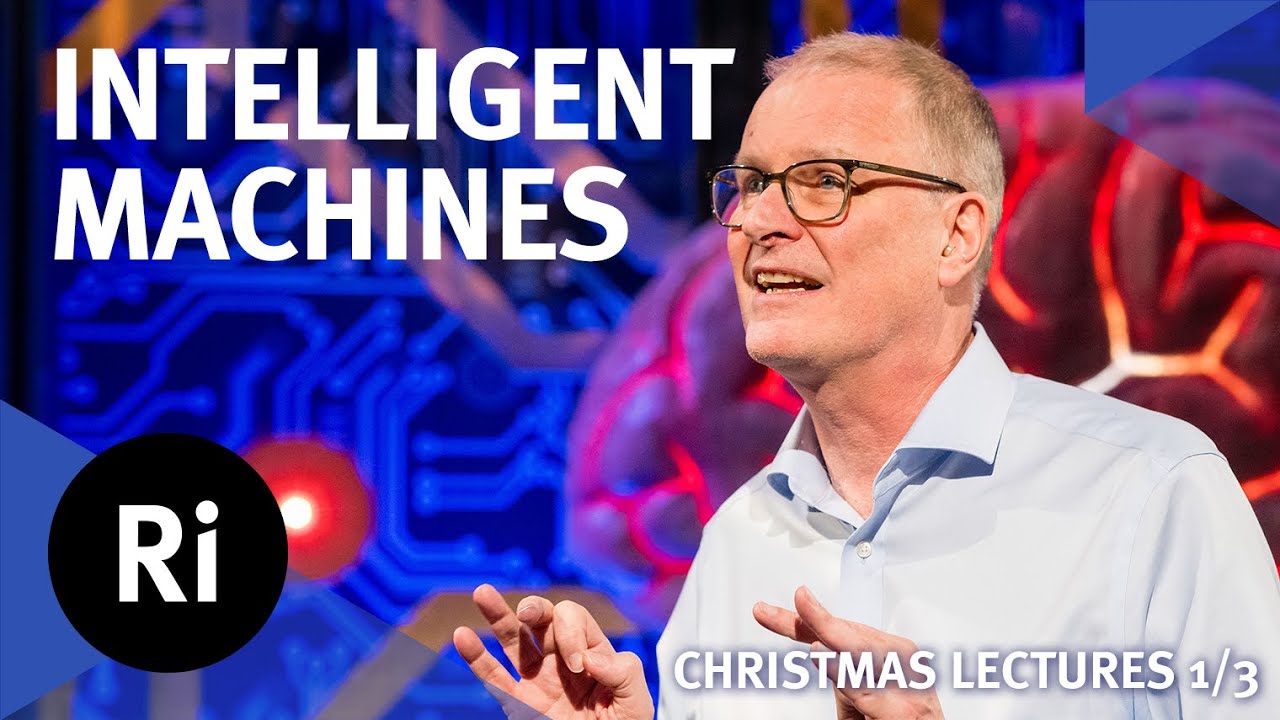
so my name is Mike waldridge I am a professor of artificial intelligence at the University of Oxford and director of AI at the Allan touring Institute uh in London I'm an AI researcher I've been an AI researcher for more than 30 years uh and the reason that I'm here today is I'm this year's Royal Institution Christmas lecturer which will be on artificial intelligence um the question what is artificial intelligence is just a phenomenally difficult one nobody owns artificial intelligence it's a very broad Church lots of people have very different ideas about what it is and
what it should be for some people artificial intelligence is the Hollywood dream what they're after is the idea of building machines which are as fully capable or perhaps even better uh more capable than than human beings machines that could do everything that a human being could do uh and that's sometimes called General artificial intelligence um for other people and I'm more in that other Camp artificial intelligence is about building tools building uh uh computers that can do very specific tasks better than human beings can so for example uh machines that can uh diagnose abnormalities on
a heart scan or spot tumors on an X-ray those kinds of things um and uh the bulk of work in artificial intelligence is around those kinds of problems um but I say it's a broad Church nobody owns it I certainly don't own it you know everybody listening to this will have their own views but I have to say the center of gravity in AI is around extending the capability of machines to get machines to do things which currently only human beings can do I hate the word revolution uh to describe these things but I think
what we've seen is genuine breakthroughs in the sense of a step change in capability of AI in the last few years and it happened around about 2020 prior to chat GPT chat GPT is the one that everybody noticed but around about 2020 there were AI systems released which were markedly better than the systems that went before them uh and that really got the attention of AI researchers and we realized okay this is a different game now where we're in a different League here in terms of the capability and so genuinely I think somewhere around about
2020 we moved into a new era things have definitely changed uh and everybody in my community is busy exploring what these new techn Oles can do what these new AI systems can do uh trying to understand them which in itself is no no trivial thing they are phenomenally complicated things to try to understand why why they do what they can do and how they do what they can do but yeah I think we are this is one of those moments like the emergence of the worldwide web that is going to be a watershed moment in
scientific history we are at the point now where general purpose AI techn Technologies are reaching a mass market and that's a new thing we haven't been there before and it's happening very very quickly so when the worldwide web first appeared it took sort of five or six years for it to really reach a mass audience before people people on the clap Omnibus were were using it and we've seen much more rapid take up of these general purpose AI tools just in the just in the last year and so things are changing much more quickly than
than we've been used to in technology over uh over the last few decades we've seen lots of technological changes the the arrival of smartphones around about 210 and then going back to the worldwide web uh before that and then before that the desktop computer and so on but they all took a you know years to unfold and we're seeing this unfold in the period of of months if not weeks so it's just going to be embedded in absolutely everything and to some extent it already is but we're going to see a lot more roll out
of that technology into your word processor and your web browser and So within a year I predict pretty confidently predict at this point you know you'll be able to just select a paragraph in in your word document and there'll be an option to summarize it or to turn it into beautiful English or to turn it into English that would be understandable for a 10-year-old audience or for a a professional business audience and so on and people won't even realize that that's AI but absolutely it is AI this generation is going to think of ways of
using this that we can't even begin to imagine they're going to think up very clever and genius and for us old fogies weird ways of using this technology they're going to create new businesses and services again that we can't even guess at right now um they're going to find applications for it in their work life it's going to make them more productive it's going to take away a lot of the drudgery I think of for an awful lot of jobs and free them up to do the things that require human intelligence and human Insight uh
uh and emotional insight and so on it's going to free them up in their in their jobs to do that they're going to find use ways of using it in Leisure it's going to appear in computer games and endless different applications so it's going to enrich their world in an enormous number of ways but for every uh potential beneficial use of this technology there are there are ways in which it can be abused and misused and it's just so important that people understand what those are and go into using the technology with their eyes open
and I think one of the most important ones was the issue of data and the being the unwitting provider of data about yourself so everywhere where people deal with content with understanding content processing it you people whose jobs are to take do documents and to summarize them colate them into a single document you know just in London there are probably hundreds of thousands of people whose jobs more or less involve doing just that um uh people whose job is to summarize or extract their key points from text people who create uh routine copy uh pieces
of text people who create routine pieces of artwork all of those in the very near future are going to be affected by this technology if your job largely involves following a script and the only thing that you're really required to do is to understand what another human being is saying but otherwise you're just following a script then those kinds of jobs seems to me are very vulnerable and uh in the UK one area of immediate concern is around call centers and there are hundreds of thousands of people in the UK employed in call centers um
and there is potential it hasn't happened yet but there is potential for AI technology to automate a lot of those processes it is absolutely changing science all the experimental Sciences are busy looking to see what they can do with AI Technologies and uh if you're an experimental science you produce data and and things like the square kilometer array telescope uh all of those like CERN produce vast vast vast quantities of data and AI now gives you another tool to be able to analyze that data to spot patterns in it uh to to maybe form hypotheses
about what's going on in the data now I have to tell you there are scientists out there who think this is more or less the end of civilization you know the idea that it's no longer human beings that are forming the hypothesis but that a machine is forming a hypothesis or maybe even the machine uh isn't even doing that it's just telling you that if you eat uh if you eat these red toad STS then you'll die but it can't tell you why or form a theory about why you would die and for some people
don't think that that kind of Extreme inductivism as it sometimes called is is even science but uh everybody is frantically looking to see what they can do with this so it really is changing science across the board so suppose you are an astronomer and what you're trying to do is you're trying to figure out how many spiral versus bar galaxies there are out there so what do you do you can take pictures of the sky uh and expose them for a long time and you'll get pictures of lots and lots of galaxies and 20 years
ago you would go through those pictures and you would count the number of spiral versus bar galaxies so with how does AI help you with that well with AI what you can do is you simply rather than writing a program to identify a spiral or a bar Galaxy what you do is you simply show the program and you say that's a spiral galaxy that's a bar Galaxy that's a bar Galaxy off you go and the program figures out how to do that identification on its own and that's what the technology of neural networks and the
like the machine learning Technologies that's what they're extremely good at and that's just one example one very simple example of how the Technologies might be used in modern science but you can think of exactly the same kinds of scenarios everywhere you look in science in biology and chemistry and so on I'm absolutely fired up and interested in this subject and one of the reasons is because stuff that seemed like it was just unimaginably distant at the start of my career we now have you know we have tools that you can just converse with in ordinary
language they didn't exist even a decade ago nothing like the tools that we have now existed even a decade ago and stuff that was just pure speculation and philos philosophy 10 years ago now we can just we actually can try out uh and and and it's transforming AI into a kind of new science uh in we're Reinventing uh AI as a field to be able to explore what large language models can do what they can't do you know do do they really understand people do they really understand at all and these used to be philosophical
questions and now they're practical ones we can actually roll up our sleeves and try things out and that's just enormously enormously exciting