How much can you fit inside the moving box? A child's steps? The walls, painted in our favorite colors?
The blood and the pain of this wound, forced open by the tractor, trying to knock down the story of our own place to live? We leave in despair. Deep roots ripped out by cudgels, sledgehammers, lies, gunshots, promises, and fear.
When they demolished the boy's room, the hole they left wasn't just in the ground: they left their destruction inside of my chest. Where will we take the bitter reminder of our destroyed shelter? Meanwhile, in museums, they exhibit little colored boxes, imitating favelas with a cynical smile.
Part of the broken roof carries the indignant memory of the entire house, removed with dishonest arguments of progress or of preserving nature. The nature of greed and of prejudice sets the tone for the redesign of the lot on the clipboard, where they have crossed out lives, smiles, challenges, and victories to clear the way for hatred, and for paths marked by poverty. Look at that hole they're digging through.
It has a piece of someone who lived here. You know why? Because they lived here!
It's not for nothing! It's not for nothing! You can cover your ears!
You can cover your ears! For me and for people in other favelas, the Olympics are synonymous with disgrace. It's a disgrace.
I don't see any core to the Olympics. All of this money has been spent, and all of these people have been evicted from their homes because of the Olympics. It's absurd, because they're taking people from the land where they live, where they have an established history, where they've struggled to build their houses.
They're being pulled away from all of that for the Olympics, which will be over before you know it. And then what? Countdown to the Games, To the biggest number of dead bodies: To the armored truck medals.
This mayor's message is clear: Cops, and a weakness for militarization (It's too much! ) Changing this government does nothing: Genocide keeps coming on strong With bullets and forced evictions. Who is the Port District being reformed for?
If we can't have today, there will be no tomorrow. We're seeing red, and our feet are on the ground. It's not by chance that bus lines are being cut.
Black people are suspect; we're not allowed through the tunnel. If you really think there's no connection, better turn off the TV. The World Cup is over, and we're still crammed in like sardines: It's hard to even get on the ferries, the subway, the train, the rapid bus service.
Want to convince me while my mom is getting screwed over? If it's all so good, make your mom use it. The Olympics of Denial They're for the gringos, not for us ordinary folks.
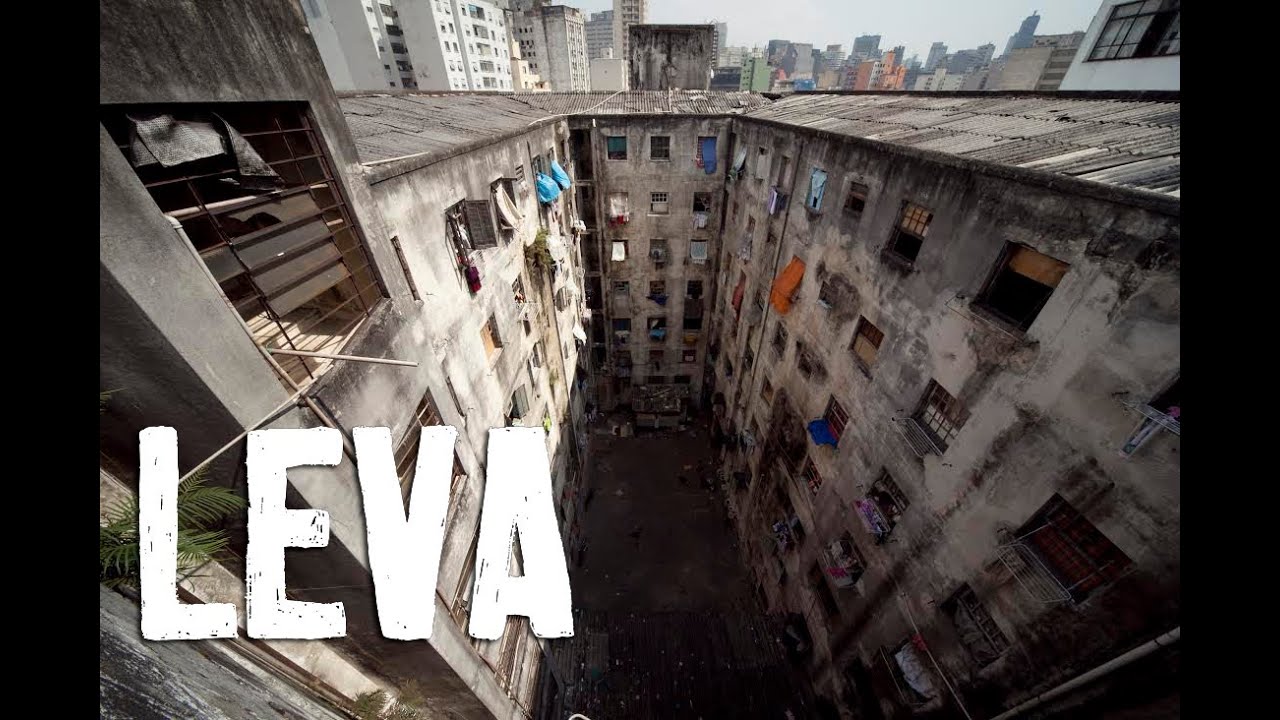
It doesn't matter how much history is there: One more house is being knocked to the ground. COUNTDOWN EVICTIONS Throughout Rio de Janeiro's history, forced evictions have been used as public policy. They have mostly been used against Black people and poor people.
This process has increased since October 2, 2009, when Rio de Janeiro was chosen as the host city for the 2016 Olympic Games. The mayor's office has claimed that these forced evictions were meant to create space for Olympic parks and for new roadways related to the Games. When the areas being evicted did not fit these criteria, the mayor's office often claimed that evictions were necessary because of environmental risk factors.
From 2009 to 2015, 22,059 families were forcibly evicted in Rio de Janeiro. This adds up to nearly 77,206 people, according to a dossier published the World Cup and Olympics Popular Committee. When evicted people are relocated, they are taken to distant places.
One example is the Cosmos neighborhood, located 70 kilometers away from Rio de Janeiro's city center, where public transportation, schools, and hospitals are all insufficient. OK, folks. This is the beginning of Estradinha, a paradise that the Mayor has always wanted to remove.
He's always wanted to destroy it. And today I ask myself: why does he want this? He said that this here is a risk area.
To his surprise, we discovered that it's not a risk area, but that it's going to be a rich peoples' area. Because if he puts a gate in right here, it will turn into a gated community. Those of us who live here haven't deforested the area, we've preserved nature here.
It's a cool place. In the morning, there's a marvelous breeze. What rich people wouldn't want to live here, right?
We don't hear noise from cars, except for the ones that come in here. So it's important to the Mayor to get rid of the people who live here so he can sell the land and make money. Because we know that Rio de Janeiro is running out of land, so they're running here to the hillsides to get rid of the people who live here.
They'll throw us out to some neighborhood at the edge of the city, where things are hard. And the people who were born here, the people who live here, have established their whole lives here. The kids have their schools close by, here on the hill or in the area around it.
So when the Mayor takes people away from here and throws them far away, he's getting rid of their entire history. We see that everything he's done here doesn't have anything to do with preparations for the World Cup, which is already over, or with the Olympics, which will happen soon. On that day, when that commission over there said: "Rio de Janeiro!
" people let off fireworks, and they partied. But here in the favela, we didn't. Because we knew, from that day forward, that something was going to happen.
It wasn't just here in Metrô Mangueira. It was happening in more than a hundred favelas. I won't give up this house!
Not over my dead body! And neither will my husband. I'm getting irritated, but it's not your fault.
. . I was at work in Copacabana, and my daughter called me saying that lots of cars had shown up from the mayor's office.
The cars were full of "social workers. " And they were handing out removal orders, saying that the houses were being closed off. In other words, it was a risk area, and we would have to leave.
And at the time, my daughter was 14 years old. When she called me, she was terrified. I had to leave work in a rush.
When I got home, I ran into people who said they were from the Civic Defense Agency. They said that the house I lived in was in a risk area, and they wanted me to sign a legal order closing it off. I asked them, how can I sign an order saying that my house is going to fall when I know that it isn't going to?
They said, if you don't sign it, you'll be the only person here who won't get anything. So I argued and everything. But finally, since everybody was signing it, I wound up signing it, too.
You're not coming in! If you come in, you'll set it on fire! If you come in, you'll set it on fire!
You're not coming in! You're not! You're not coming in!
You're not! I don't have shit left! I don't have anything left!
I don't have anything! I don't have anything left! So we went to the meeting.
I had to leave work. The president of the Residents' Association didn't want us to put up a fight. He wanted us to relocate to Cosmos.
Because of him, 107 families went to Cosmos. Most of them regret it. They don't like to give interviews and all that, but when they talk with us, they tell us.
This right here is a piece of the old road. On this stretch, where it curves that way, it's pulling away from the old road. That's a piece of the old road right there.
So did they really need to take our houses away to build the new road? It's pulling away! They're so stupid!
If I were in their place, if I wanted to do it right, I'd bring out an excavator and get rid of all this. They just left all the evidence right here! They said that they needed to remove the community, which had been here all this time, in order to build the Transoeste Roadway.
But where does the Transoeste pass through? Huh? Isn't that right?
The Transoeste is all the way over there, but they knocked down all of the houses on this side. Like mine, for example. When they knocked them down, the Transoeste had already been running for a year!
So their argument is bullshit. I think it's bullshit! I hate barefaced lies!
I hate barefaced lies the most. Because I can prove right now, I can give you physical proof that the highway is running over there, and all of this space is empty. Well, they told me that I'm idiot, a sucker, that I'm crazy to say that they took our houses away because of that highway.
They took our houses away because of this land. They used the higway as their argument, but they just wanted to drive up the prices on the land. Over there, where the high-speed bus passes, up until here, this was all part of the favela.
Why did they take that away? So that's why we're fighting so hard. The people united will never be defeated!
They deliver a piece of paper, and they order us to leave in 48 hours! We're working people, you know? If we live here, it's because we've worked hard, we weren't born in golden cradles.
We're poor, we just want to give a better life to our children. Understand? They can't just come in here with police, with the special forces, with a bunch of people to take us away from here.
Look at the nice things the Mayor is making you do! This here is our debris. Parts of the foundations of our houses.
Pieces of life from our houses. If someone says that we lived in wooden shacks, that's not true. This is a column from our houses.
My house was over here. Right over here. I'm standing on my debris.
It's still mine. It's mine. Nobody paid me for it.
Right here. This is ours. It's from our construction.
“João, they're knocking your house down! ” So everything stopped over there, and we all came running over here. But it was a tiny little house, and they came in with a huge machine.
With two blows, they could knock it right down. Right? But it was good that people filmed it.
They filmed how it was destroyed with everything still inside it. They broke everything. Everything ruined, the sofa, everything right there, covered in debris.
There were approximately 700 families in our favela. When the mayor's office came in and started taking people to Cosmos, they didn't start from one specific place. No.
They undermined us. They would remove one family down here and leave another one. Remove one family up top and leave another.
Understand? She only found out because we called her and told her, “Your house has been knocked down. " It was all to destabilize us, to weaken our union.
And people always want things to happen very quickly. They're very afraid, because when people from the mayor's office came into the favela, they always came to terrorize us. They'd say that the excavator would come and knock over the houses of everybody who didn't want to go to Cosmos.
So we suffered a lot. What they're doing is cowardice to the people who live here. They started destroying houses.
They would buy and destroy, buy and destroy. And they left all the debris from the demolitions right there on the ground. This kept the rainwater from flowing normally, because all of the rainwater pipes became blocked with the debris that the Mayor left behind.
They destroyed the houses and left the debris there. We got a court order for the debris to be removed. This court order said that the debris had to be taken away within a month.
But there's still debris all over the favela. The Mayor still hasn't managed to do what the law ordered, which was to take away all of the debris. When the Olympic Games are happening, when all that's going on, I'm going to remember every house that was removed here.
All the residents who cried because they were being taken away, taken out of their houses by force. Because a lot of people were taken away by force. It's old, it's falling apart, but it's mine!
It's mine! Why don't you knock down the Mayor's house? Everybody takes people away.
But nobody comes here to give us a fucking hand! Because it would be much easier to build a bunch of containing walls than to evict everybody! They're taking people away from the land they live on, where they have an established history, where they've fought to build their own houses.
They're dragging them away to put on the Olympics, which will be over soon. And then what? How will these people live once the Olympics are over?
What will their lives be like? So here in Estradinha, the Olympics aren't worth anything to us. They pulled houses away from here for no reason.
For no reason. We know that favela of Vila Autodromo has suffered a lot. They're still suffering a lot.
They're being pulled off of their land, and it's not for the Olympics. And then what happens afterwards? You know what's going to happen on that land?
Rich people are going to take it over. The people who have the most are going to live there. All the money being spent to buy out these houses and these residents is because of people with business interests in that land.
We don't like living in ugly places, either. When I had my first meeting with Mayor Eduardo Paes, I told him, “Let's improve the favela. Why don't we improve the favela?
Right? We'll all pitch in. " "Because in the favela, we're workers.
We also like to have nice houses. ” Understand? That's what I said to him.
"You don't have to take us out of there. ” Because there are kids there who go to college, right? There are people whose children study.
And lots of the children who went to Cosmos missed a whole year in school. College students who went to Cosmos had to change schools, all sorts of things happened. And then there are the people who couldn't take it, and who died.
Understand? That's what I told him. “You don't have to take us away from there.
Let's improve it. If it's ugly, let's improve it! ” And he looked me in the eye and said: “I want all that cleaned out.
” In other words, we were dirty. So I asked him, “Are you calling us dirty? ” And he just looked at me and said: “I want it clean.
” We make Maracanã ugly, right? It's the biggest stadium in the world, right? Because to get to the stadium, you have to pass through the favela.
We're neighbors, right? If we're here, we could be back in our community, and it could be as nice as it is here. So I don't have much satisfaction saying that, because I'm not back in my own community.
Because I didn't want to be here. I came to a place where I didn't want to be. I live in 42 square meter house, which is not what I dreamed of for myself.
Because in the favela, my house was simple, but it was mine. I did things the way I wanted. If I wanted to sell my house, I could sell it.
Not here. Here, I have to wait 10 years to get the deed to the house. I'm not in the "My House, My Life" program because I didn't have a roof over my head.
The "My House, My Life" program is for people who didn't have anywhere to live, but we had a roof over our heads. It was in a favela, but it was ours. This is the legacy of these Olympic Games.
Not just for people in Rio de Janeiro. For the whole country, the legacy is what's going on here. It's too bad that the people who are responsible for this won't pay anything.
Understand? The only people who pay are the poor. After everything we've been through in Rio de Janeiro, all of this disgrace is also a lesson for us.
We learn from the disgrace, too. We've started to understand why these absurd things are going on in Greece, in all of these countries that have had mega-events like the World Cup and the Olympics. They put in a nice background to take a nice little photo and to make more money migrate in, so they can exploit these spaces where there's a lot of poverty.
They come in to turn it into a lot of money again. Their money is dying out. It needs to reproduce, it needs offspring.
So they used Rio de Janeiro. It's a city that was already a bit old, a city without much perspective. And they used the argument of the Olympics.
We have to get beautiful for the Olympics. Marvelous city, full of enchantments! Marvelous city, heart of my Brazil!
This is the Olympic city! This is the Olympic city! That's their argument.
It's their argument everywhere in Rio de Janeiro: That we need a reformation. We need a legacy. We need to leave a legacy for the people.
But what they're leaving us is what you see here. The legacy that we're going to get from the Games and the World Cup is a legacy we've already had for a long time: Houses knocked to the ground. People have already died because of this.
In six months, we lost six people in the favela. Six people who died, with various other problems. One day, when I said that, people asked me: Are you saying they weren't ever going to die?
Yes, they would have died. But would they all have died within six months? Even the young ones?
- I live here. - No, he lives here! - No, he lives right here, man!
- It's his house! When you leave your place, especially when you're taken away brutally, you lose a lot. You lose your roots.
In other words, it's not just the house! The house is the least of the losses. The least of the losses is the house.
What you lose are your reference points in general, right? What you call "belonging. " That's a new word for us, “belonging.
” In other words: everything that a living place entails. And you lose it for nothing. If we lose all that, is it a legacy?
For us, it's a disgrace. Our history doesn't have a price. The Mayor can come here, destroy a house, and get rid of the debris, but he can't remove the history from the hearts of the people who live here.
What will remain of that history in these people's lives after they've been evicted? Only memories and sadness, because they couldn't understand the value of history in their lives. So for me, the Olympics are a disgrace for the poor.
How much is it worth to evict people who don't have a price? In the official paperwork, we're not worth even a single tear. But in real life, our resistance has often stopped the machine.
A constellation of people who struggle: When one house falls, another house is occupied. When one voice can't force itself out, another shout is heard. "Favela" is a collective noun.
We grow up, laugh, and suffer as a group. Information has a color. In every alley, and every street, the many losses can't silence the multitude.
Telling and retelling the suffering of this imposed exile, in certain moments, alerts and prepares those who will come after us. It embraces and recognizes those who are walking against the wind, against the current. Countdown to the Games, To the biggest number of dead bodies: Winning the armored truck medal.
This mayor's message is clear: Cops, and a weakness for militarization (It's too much! ) Changing this government does nothing: Genocide keeps coming on strong With bullets and forced evictions. Who is the Port District being reformed for?
If we can't have today, there will be no tomorrow. We're seeing red, and our feet are on the ground. It's not by chance that bus lines are being cut.
Black people are suspect; we're not allowed through the tunnel. If you really think there's no connection, better turn off the TV. The World Cup is over, and we're still crammed in like sardines: It's hard to even get on the ferries, the subway, the train, the rapid bus service.
Want to convince me while my mom is getting screwed over? If it's so good, make your mom use it. The Olympics of Denial.
. .