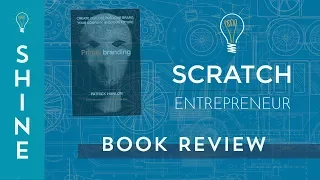
how's it going my name is Jorge whiner I'm the chief Whaler of whole whale we have a very interesting intro here for our primal branding podcast and we'll get to the podcast in a second but I missed something I interviewed Patrick Hanlon literally in 2017 and I totally got it from a brand perspective he talks about the seven elements of the brand talking through pieces like ritual and Creed and having a belief system but what I didn't understand is actually at the key to why I think in many ways we've been kind of failing and
as a creator ourselves at Holwell with our podcasts and our videos and it's in this simple fact that there's cars driving by people driving by right now and I'm creating content in similar ways that people kind of drive by grab information and run from us they get it and go and that's not a relationship it's a tension which I care about we're getting that attention but there's something very different about someone who gets a quick seven tips about this or that or one extra fundraising idea and somebody who actually understands what we're trying to build
and build together at whole whale but also for any channel so we want to come back to this and say like listen carefully because at the core of this is the difference between having people drive by your content and people stay come by and you know engage in your community so think about the elements of the seven elements of that primal brand and what Patrick is talking about once we get into this conversation I hope it's helpful it's gotten me thinking quite a bit about how we're going to be phrasing what we're building here with
our content [Music] welcome to episode number 177 this is a special rebroadcast of an incredible interview we did with Patrick Hanlon the author of primal branding now this was a book written in 2011 and I'm starting to see the elements inside of the brands primal code pop up in a lot of popular movements in also the research I've been doing on YouTube channels that are really crushing it right now and they're all picking up these elements and so this is like really become quietly like an incredible blueprint for designing the holistic communications strategy of organizations
that you know in this in this interview I don't think I fully realized how much knowledge was being dropped and how much I really should have taken it to heart so I'm rereading the book and I'm reapplying it actually to some new fields specifically around video and some audio branding but overall I think there's a lot more to this episode than I realized so hang in there you know we have an intro and he gets going about four minutes into it so if you want to skip into that go for it but there there are
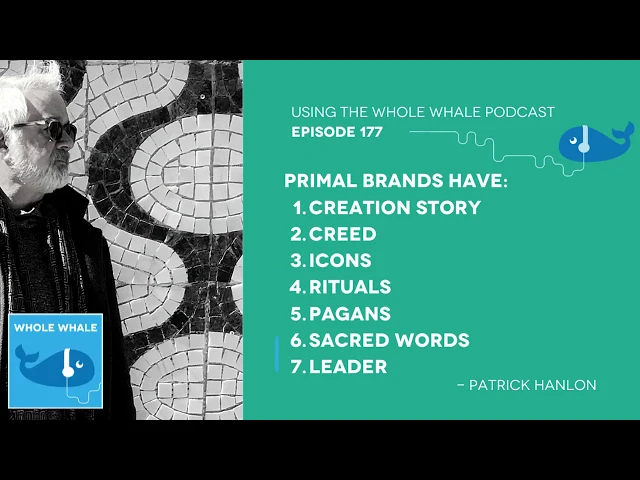
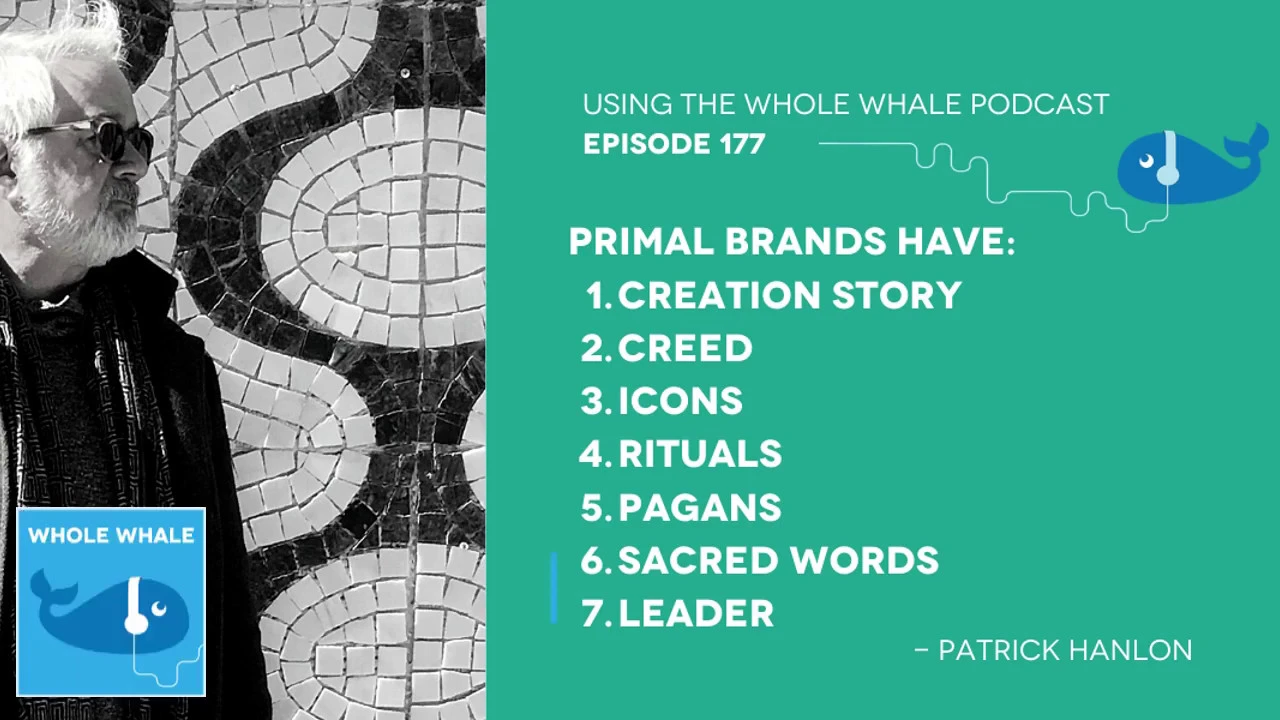
some elements that you should be taking note of and just to give a little quick framework for you the book was primal branding and he talks about it as a brands primal code with these seven elements and I want to just sort of prime you with them the the first is a creation story as in where did you come from you know Moses on the mountain type of thing number two Creed what is that just do it as a Nike that is your organization's creed is it repeated and can your audience sort of see themselves
being you know repeating and saying these words in association with you number three icons you know the iconography of the American flag or a Starbucks cup or the Nike swoosh and Apple logo that you're probably looking at as you're you know listening to this as we speak number four what are the rituals what are the routines and rituals and that are associated with organization and I mentioned sort of the annual giving or moments like that however you know rituals go far far beyond into what we're thinking and associating with preparing our cup of coffee or
tying or thinking about tying our shoes as we go out for a run and that type of ritual of working out number-5 pagans so the sort of non-believers it's us and then its Coke or Pepsi it's Apple or Mac it's Burger King or McDonald's and so how do you define the non-believers and the believers and that sort of strengthens the who we are by definition of who we are not number six sacred words I really love this one and I'm really working on trying to think more about it but the sacred words are the sort
of language we end up using and you think of you know the ordering animal style at an in-and-out burger and like knowing this secret words there or you know going back to coffee you know double flat extra mocha latte whatever can I get that in taller grande they could have just called it small medium and large but they didn't they use the sort of words that were inside are sacred to the institution what are those words that you work for your audience to understand and use to define the issues around it and this is different
than the Creed right this gets into the the nature of how we talk to each other and identify each other and speak with the same you know the same concepts and number seven leader I get a little nervous to be honest around leader but talking about that founding leader that Ghandi type figure however making sure you avoid a cult of personality here and instead make it about the the we not me of leadership but certainly part of the brand is having that epic leader and you cannot say the word apple without thinking Steve Jobs and
it's just uh you know a function of of that brand end of many strong brands so those are your seven I want you to think about how we touch on each of those as we apply it to the nonprofit sector in here again I've been studying them and thinking deeply about how we're incorporating them at whole whale into some of our videos that we've been creating on YouTube and some of our approach to what we're trying to build so again the brand's primal code just a primer here number one creation story number two Creed number
three icons for rituals five pagans as in believers and non-believers six sacred words and seven the leader alright I hope you enjoyed this this podcast and really listen tune into it again you know if it feels like it's going a little slow and fast forward jump into a new spot but there's a lot of value in here and I hope you're as excited to listen to it as I was when I came back around and gave it a second thought alright enjoy this is using the whole whale stories of data and technology in the social
impact world my name is Jorge whiner your host and the chief Whaler of whole whale calm thanks for joining us [Music] I'm excited today because we are speaking with somebody who can really shed some light on what the word branding and the activity of branding really means when you get down to it he's the author of primal branding his name is Patrick Hanlon and he's also the founder of think topia of getting back to this I sometimes have the feeling when someone says the word branding like I'm playing like buzzword bingo hey also well hold
on I'm just gonna play this for you and it pretty much captures how I think it's evil look if you send a horde I don't think I miss what you're thinking miss yeah so nigo Montoya captures it perfectly people say the word branding quite a bit and I'm always in the back of my head I don't think that means what you think it means I'm excited because we're about to dig into exactly what branding means to Patrick so here we go thanks for joining us and I'm here with Patrick Hanlon the CEO of think topia
and the author of primal branding Patrick how's it going man hey it's great to be here thanks for having me Dirk yeah look I'm very excited to have you on because we're gonna talk about branding and some elements that can apply to nonprofits I love your framework and approach but first I feel like I may be selling you a bit short because you know you've you've done work with like fortune 100 clients like Amex but also in the nonprofit sector you know you've worked with folks like little-known foundations like the Bill and Melinda Gates Foundation
can you fill us in a little bit more you know about your background and maybe work specific in our sector sure yes I've always worked in in the so-called nonprofit sector and even when I was writing Super Bowl ads for advertising and the Bill and Melinda Gates piece was especially interesting because there was a triad of at radical media production company there and Michael franzine II who was the director there and MTV NSYNC topia and we were put together to try to help keep african-american kids and Hispanic kids in high school 49% of them dropped
out of high school and so you can imagine the economic health educational metrics that go along with that and we were lucky enough to get on Oprah and Bill and Melinda Gates were on Oprah and Oprah held up one of my one of the things that I wrote that was fascinating that transitioned the person from MTV Tessie topo moved over to Time Warner Cable and we worked with her there on something that called stem at the time and still called stem but people didn't know about it at the time and so they worked Time Warner
Cable worked very closely with the White House and they became the White House's privately funded initiative to help encourage other teaching of science technology engineering and math in the country and actually when President Obama a couple years ago started talking about science technology and injury engineering and math sorry it's hard to get that out sometimes he got his figures from Time Warner the staff got the figures from Time Warner because they'd captured all that so yeah lots of fun working on things like that a very serious subject sometimes but very powerful and very impactful yes
so obviously there's two different entities either one is think topia and the other is is the book primal branding which I'm particularly curious about what was the impetus behind the idea behind you know the framework you applied to to branding sure basically I wrote advertising and every time you most people have already don't know this but every time you before you come up with an ad they give you what they call it which basically tells you what you're supposed to communicate and in between the lines on most of those briefs they either wanted you to
become if you read in between the lines they either wanted you to become the next Nike or the next Apple 1984 spot create that for them and of course that's said with a lot of cynicism I guess a little bit of snark but also with a lot of experience and I would had a problem with a client at a time at the time and I was wrestling with a problem with a client and right today we call it the problem would be authenticity that weren't being authentic and but I at that time I just felt
that something was wrong and so and the client was Lego and something was wrong they were going out of business and but no one knew that at the time and so he I started thinking about why do we think or yes think something good things about some people's products or companies or services and not about others and so I started thinking about you know the typical marketing kinds of things like quality and Trust and I guess vision things like that and but what it really got down to is that we believe in them and so
I started looking at that cliche called belief system and discovered that there actually is a system behind belief the creation story create icons rituals a special lexicon non-believers and a leader and once you wrap all that together you have a constellation of parts that not only directs or helps you differentiate between because each one of those is a differentiator it can become a differentiator and but you have a constellation of parts that lead to what we call a strategic brand narrative and that is what you need in today's world who not only distinguish yourself but
really of course once you create a belief system you attract others who share your beliefs and that's what we need and that helps build community around you whether it's two people or two billion people yeah and you definitely need it in social media oh yeah I mean I'm noisier the system is the clearer obviously your signal needs to be getting back to the jump it seemed like you were realizing that the client had a deeper problem and it was that bridge that a brand is actually a belief system and when you're talking about a belief
system then we can begin to dissect it a bit more you know you were rattling through some of those elements but just to list them out you know you're talking about a creation story you're talking about a Creed icons rituals what you call pagans and the believers not believers the sacred words and and leader a lot of elements do you need all seven equally or are there kind of like a pick and choose them well you need to be a powerful brand a Nike Apple Starbucks Trump Obama you need all seven of them I mean
you have all seven of them that's how you become those entities do you really need them no you can be in a low-interest category like a tires or mattresses and get away with one like tires the Michelin Man I guess right or the blimp so you have one yeah I got right and so but I think that if someone else came along who had purpose who had a little bit more going for them a larger story a better story a more impactful story that resonated with people Michelin and Goodyear could find themselves disrupted and I
guess thinking about mattresses for a second you know Casper mattresses has come in and there's that's a category that's low interest you don't even call a mattress a mattress when you get it it becomes your bed right and so Casper mattress now I don't know if you've heard of them but they're making great strides of making great inroads in that category just by having a better story bigger story yeah absolutely I'm actually I'm actually a tough needle guy so you know I felt like it was too popular so I went the other way but this
is interesting right we're talking about products but I'm let's say an executive of a midsize non-profit and you know one thing I have in spades is a creation story is great it's bold somebody survived a thing and it's inspiring how do I then build that into a belief system like what is the next step how do you go about thinking about this and what is the difference what is the difference between when we talk about a mattress and when we talk about a not-for-profit social movement well the thing that pulls them both together is that
you have community that's what you want that's what you need is to have a community you can't be just one person trying to do this you need to have the the networks of other people that's what makes us stronger and more impactful and so what you're trying to do whether it's two people or you know many many more you're trying to take that community drive that community create networks around that community so you can create even an even larger community and so if you have a great creation story in most or I would say a
lot of nonprofits do have that one visionary person who either had the division or the capital to want to do something and make something better right and so you take use that as kind of the nucleus and they probably wanted to do it for a reason so that would draw bring along your Creed the creation story once we know where you're from we want to know what you're about and so that would be the Creed and in products and services would be like think different for Apple or just do it for Nike for example you
know which you know get come down to the theme lines sometimes but internally there might be something else going on and by the way there is an external community and there's of course the internal community usually we in marketing a lot of the times we talk about that external community because that's your consumers your users and and so forth but there's also the community inside especially in nonprofits and because if you don't believe in what you're doing you're certainly not going to get anyone else to believe right and so that internal community is so so
necessary and so important but once we know where you're from and you tell us what you're about we have to be able to identify you this is where the issue of brand has been traditionally where you think of the brand as being the Nike swoosh or even the Nike shoe so it's the product or the logo and probably these days the website but it's so much more and the the icons are really those quick concentrations of meaning that signal your brand they might for Apple for example it might be the earbuds you know that they're
Nike excuse me Apple earbuds and it not beats which are also Apple yeah by the way have become an Apple product but or you see someone walking down the street or across the street with the Starbucks cup and you're looking for a Starbucks Starbucks you ask them because they're prior to the tribe right more than once I've gone up to someone and asked hey where'd you get that just to find out where the local Starbucks is and when I'm out of town and so icons engage all the sensitive sites on materiality about their public being
out there and their internal facing as well and sometimes they're both but I was just at speaking at heifer international down in Little Rock last week and they have a great facility down there that's you know leads awarded and that building is an icon right and the fact that its lead yeah you know is just adds to their reason for being right and they had the garden and goats and all this other stuff were surrounding it and not not wandering around they were in a they were actually they had actually the goat had just given
birth but the but you know that all adds to their reason for being and and reinforces the reason for being because they give away goats and cows and so forth advantage people so our people are might be struggling at some level in so icons and then we icons and rituals go closely together you know in this in tempers played case the giving of the goats would be a ritual meetings are ritual this podcast is ritual and we have certain expectations that need to be met for each one you know and annual giving drives our rituals
and I always say if you want a good ritual get a hug if you want a bad ritual call Comcast and when we talk about rituals it seems like you're referring to both pre-existing rituals such as giving gifts around the holidays or putting toothpaste on my toothbrush versus ones that we completely create and in the case of heifer you know obviously given giving the goat in that moment how do you distinguish between the two am i trying to use both is it easier to jump on and something established or sort of pave your own way
uh that's a great question and a very interesting one because in terms of ritual another word for ritual might be processed for methodologies and so you know in any given category there are there may be some processes or rituals that are standard that becomes standard within that category for example if you're making car building cars for Americans you put the steering wheel on the left hand side so that their ritual of driving can take place right if you're in England you're you're on you put the steering wheel on the right hand side so that is
sort of a because that fits into that category of expectations so there are certain like as I mentioned earlier there are certain expectations that need to be maybe may need to be met within a particular category but more recently a lot of our rituals have been disrupted like uber has well Starbucks has disrupted or did disrupt how we had coffee in the morning right we used to have it at home now we have it at Starbucks or place like Starbucks or some of us have got returned home with our key cups or something the the
ritual of grabbing a cab in San Francisco is hugely disrupted by uber and left right and and there are we are smartphones our iPhones or droids or whatever have hugely disrupted lots of rituals from looking at your calendar to messaging yeah it's interesting because in the not-for-profit sector I'm of two minds like one is that it is very difficult to have a cold start it's very difficult someone saying like yeah sure obviously I want to build a community and you're talking about brands that are like you know multi-billion dollar companies but when you're trying to
find that initial spark you know I look back to like alright are my jumping in on givingtuesday am I trying to figure out the way for example like UNICEF did jumping on to the giving opportunity around Halloween and they have the little you know all Halloween boxes that they can give the kids to go raise to the Salvation Army bell ringing during the holidays and like you hear that bell and you're like all right there's my salvo Santa I'm like I'm birthing my open example all right it's easier to jump on to something pre-existing and
edit your own flavor rather than like alright let's create our own Movember as awesome as that is and it's established and like many many men will embarrass themselves in the name of prostate cancer that's November but that's you know that's like lightning in a bottle and my is my instinct off here what are your thoughts well I think that those examples that you've given are all new examples largely new examples of the you know ways that we that organizations have tried to make the ritual of giving do it in a new way and so the
and I was thinking as you're talking about the the whole ice bucket thing we had on social media last year or the year before and what a a newsflash that was for everyone right and so I think that a lot of institutions organizations are trying to become self-sustaining and and in order to do that we have to get people's attention attract awareness and lift our name up so that people recognize us and what we stand for and so so that gets into a bit of the the old advertising bucket right and PR bucket and which
is which is important and because I think most organizations do need to be self sustaining and I want to take a step back to the words Creed when you talk about it are we talking about a tagline are we talking about that list of beliefs what is that yeah we're talking about your reason for being and hopefully it's differentiated from everyone else's reason for being but it's really it can be it's been categorized and so when you're described in so many ways but the one that works for me is it's the reason why you get
up in the morning and go to work or go back in and then that's balanced with also the tagline element once you've got the raw ingredients of why like my purpose vision mission then I sort of synthesize that into the like the quick takeaway that I remember yeah yeah and a lot of times especially for companies like Apple and Nike and so forth those things have been whittled down or distilled by you know incredible copywriters and could work deliberately to hone that thing down we don't have that same freedom unless we get incredibly lucky at
most organizations right we're kind of doing it ourselves you know sitting in front of the TV with the kids but a lot of times you can have that spark of inspiration you can find the right partners and by the way those partners are part of the community that you're building so finding those right partners to do the right thing for you is a part of you're a part of one of one of the advantages you can drive home just by having your story together because once you're able to tell someone okay here's where this assuming
you're new here's why we're doing it here's what this is here's how it's start where the idea comes from here's why we're different here's what represents us whether it's a logo or the new website or whatever and here's what we're trying to do here's the way we act and and behave here's or not and never want to become here's the language that we're using to describe what we're up to and here's the team that's leading it you've just very colloquially be and been able to conversational eyes everything that we've been talking about and thriving that
now deeper into kind of your elevator speech and then into maybe even just one word yeah so it's interesting because I was actually about to go to that this the sort of modern-day Saatchi and Saatchi one word brand right that like you pay session Sachi all of your dollars and they come back to you with like from on high the golden word that you will then repeat repeat repeat in their ear to get you there if I were to say not-for-profits to struggle in one area more than others I would say it's in this Creed
section and I would say it's in this Creed section that you know nonprofits have missions that like go on for like two three four sentences you know like we're gonna change the landscape for low-income people in this district of you know and it continues so what is your advice or what is your approach on how we get back to the synthesis of that yes well that's where you become like a coach or psychologist because you have to tell them they're not alone the same thing happens inside the hallways of most most corporations and and that's
really that really is the challenge because what you're trying to do is get to that essential truth that makes you both makes you different differentiates you but also illuminates what you're all about and what you're trying to do and so that's tough you know there's light there's science to that there's art to that there's analytics that go along with that right and so it's no easy tour and lots of companies whether they're on the shelf or online or face that same challenge and even people face that challenge cities to face that challenge and certainly things
face that same challenge so what you're trying to do then is to part of it maybe just to find something that that that thing that way that you're trying to create impact or trying to help maybe that is the thing that's substantially different and you're coming at it from a different POV and a point of view either tactically or just your mission or the way that you're executing Paul talks about how he was helping farmers in Nepal just to grow you know more cauliflower or potatoes and he used a drip system that he that was
made out of you know post-it notes and stuff but and it did not cost a million dollars but it was just very very simple but he was able to do that so it was a different he's just used engineering his own engineering skills and the technologies at hand to create something that would still be here what he left yes so you know I think to come back to why why shorter is better and some of the analytics I mean it's a fundamental immutable truth about the human memory that there's decay memory decay happens we have
you know literally seven digit phone numbers because they test it and they realize that when you add that eighth that's the cliff in terms of what we forget of course no one has to remember phone numbers anymore but the shorter it is in terms of how people are associating you in their memory and the rituals they associate you with it's more likely that you'll you'll come up when the buying decision or moment happens is that a fair summary of the the reasoning here well I think the thing is is is both attention and awareness and
our attention spans have shrunk to to nano size and we're also Dell you just by you know a million different impressions every day yeah or so it seems right and I don't know if anyone can put I think there probably are some factoids around that but the and so how to break through that and how people pay attention is you know totally up for grabs but so that's why you need to build a story you can't just be another person you have to have that narrative so that when you do get someone's attention and by
the way word of mouth works wonders in advertising we used to snarkily say that word of mouth is the best form of advertising always has been the best form of advertising but it was snarky because we knew darn well that there was no there were no metrics there we couldn't at that time anyway put numbers to people's conversations in you know in the office kitchen or what women we're singing in the parking lots or across the fence from one another these days they put all that online and we can put metrics against those so that
data now has become very important and word of mouth is incredibly important and so it's not just what we're spinning out there for people to pick up but it's what people are talking about and by the way there's a great piece that people should know I think that comes from one of the PR companies that I'm spacing out on right now but maybe we can fill it in later the that people things only come rise to your awareness after they people see it from or hear about it from five different places so maybe your friend
says something you see something in the news that's - you see an outdoor board that's three you read something or find something on Facebook that's four and then you you see an ad or something that's that'd be five okay or maybe another friend says something or you see something on Twitter okay or snapchat and so but only then does something are we aware of something whether it's a new movie or a new kind of yogurt or what that is or a new community organization and so thinking about that that starts to have ramifications and how
you activate these pieces of what we call code and where they go so you can you might think about having the creation story in one place and the Creed or whatever and another and what you're not never want to become in someplace else and so that you're able to tell your complete story because what those seven things do is they're they really paying the emotional touchpoints you have and and and also the things that we are hard-wired that our brains need to have something just make sense and I caught icons for example tell us whether
we are safe or in danger you know sounds and smells certainly and if we see a tiger coming running at us we know that we need to do something and so the we need to respond right and so understanding that this is sort of a multi-dimensional framework that seems very simple seven things but there it's very multi-dimensional and there's a lot at stake and so those organizations that are able to pull this narrative together about here's how we started here's what we believe in what we're about here's what represents us here's the way we act
this is the way we act this is the way we talk about what we do this is what we surely don't want to become and we let other people do that and here's the leadership team once you're able to pull all that together you just make sense to people you have people you know not rather than become confused and so I [Music] yeah yeah I want to move on to obviously building familiarity with with an audience matters but there's another ingredient here that I don't hear a lot about if you're talking about believers non-believers or
pagans you know the different language can you talk a bit about that in the context of the nonprofit sector how do I go about and how do we do it in a way that's like not antagonizing you know you brought up frankly Trump before and it's very clear what the pagan believer non-believer segments are there can you talk a bit more about how you you evolve that and define that sure the in the vote in the most simplistic form there the competition and it's Mac versus PC its Coke versus Pepsi it's you know snapchat versus
Facebook maybe or whatever whoever else is looking for your time at that moment and but I'll tell you one thing one of the things is that it's a great way of figuring out who you are and because if you can identify those people who are not the judge that you do not want to become we're not a part of your community or a tribe you it helps you backtrack into who you are so we're not this yeah oh we never want to become that helps you backtrack into who you are and what you really do
want to do and what you do what really do want to accomplish a lot of people try to take on too much and it's better to simplify your story anyway even if you down the road want to you know you envision so much more but that's one way of doing it we don't call things pagans anymore we were called out on that but someone in okay but in Australia of all places but the but it is in marketing and so forth we tend to think oh this is such a great idea that once everyone becomes
aware of it of course they're gonna want to buy it and if we just tell them you bought more about it and increased the frequency and increased the awareness and put more spend more money right like coca-cola spending a billion dollars bit more on that right so differentiation is kind of like the believer non-believers using that parlance but it's tough I'm a breast cancer organization I can't make an enemy of Susan G Komen I can't be like oh they're evil they're doing it the bad refrain how do i reframe believe or not well that would
be one of the that would be one of the things we wouldn't want to do I'll do that cap so you have to find out what what you really really are about and there are all kinds of ways after for going after that problem there are all kinds of ways I mean maybe there's a different problem a same but different problem that you are way to approach it there are all kinds of abuse and so forth as well child abuse sexual abuse and so forth there are many forms of cancer and it's difficult to respond
to that really without knowing what yeah yeah the example is but I've worked with the American Cancer Society and some other organizations like that and the so you tilt it or reframe it in the way that best suits you yeah I mean I think it's also interesting going back to the coke first Pepsi you know you're like oh my gosh what total polar opposites we're talking about the same damn sugary drink and if you can have like basically believers non-believers of a stupid sugary drink you can certainly figure it out in your sector well I
think so or maybe maybe you focus on not solving cancer the research but you work on hospice care or you're working on technology or you're working on you know other solutions or yeah so it seems like a non-profit sector we end up with more the believer we are the believers this is how we define the believers framework and sort of passively let it be in terms of the non-believers people that don't think that there can be a cure people that don't believe that you know there's an end for domestic violence or something to that effect
we are filled with believers right Oh actually we're filled with not just believers but zealots and people believe believe very strongly because they have many times they have some kind of personal connection to the problem you know whether it's cancer that you mentioned or whether it's abuse of any kind or you know any of the other opportunities that are out there I mean dozens of them before we get to a rapid-fire round and then at the end I do want you to talk a bit about think topia before we get to the rapid-fire around I'm
curious you know you've worked with many different organizations and also not-for-profits what are you know some of the winds or upsides when it comes to the impact of when a brand gets this right in the context of primal branding and checking these boxes are there any stories or case studies or sort of metrics you have to throw at this yes there are some metrics and so forth I can't really get into that but one of the things that I was thinking about when as we were talking and remembered is I think this is true that
I did the first public service spot for child abuse on MTV the first public service spot on MTV and we used Tom Waits and it was for verbal abuse and it just increased awareness of the problem and at that time no one was talking about really talking about child abuse at all and but you can see where were where we've come since then and the so what primal brain with this process or methodology construct here is to cut whatever you want to call it and it's been called all of those things does is that these
things become tools so you can work yourself through the pot through all of those pieces of code and figure those out and I'm sure people who have been listening and been going oh yeah we have that and we have that but I don't know what that would be and so the big brands the most powerful brands have all of those things and you know democracy has all of those things climate change has all of those things and so forth and the so the ability to pull that story together is crucial and fundamental and it's also
the superstructure that helps pull your brand community together because once you lay down a belief system you'd attract those who share your beliefs and nowhere is that more fundamentally possible and important than in nonprofit organizations or and the work that they do right and so people are committed you know work 24 seven eight days a week in order to get some of these things done they're donating time when they could be you know at home with their families etc etc so there are a lot of committed people and to help keep them not only keep
them motivated because a lot of them are so self motivated but to keep the dream alive it's great to have these things in place and to remember that they need to be resonant it's not just enough to just identify them but they have to be tweaked from time to time and a lot of time when organizations become kind of old and stale and you know some maybe lose their some of their funding etc or don't seem as relevant as they once used to the reason is is that they've let some of these things get a
little bit dusty rusty tired and and that's the part of the bell curve right we were successful for a while we're at the peak or the hot thing and everyone wants us and then after a while we lose touch a little bit and so when we work with hundred year old and and they start to go away they start to fade so we work with a lot of hundred year old brands that traps Levi's and so forth Johnson Johnson and one of the things we do is we identify okay where'd you guys come from you
know what are you about yeah you know with your icons etc and we go list them and sometimes those need to be refreshed sometimes that's often someone's in the midst of redoing a logo or packaging well and how do you fit into date into today's world that is so rapidly-changing you know how to in in modern times and not now it's really refit retrofitting or re-engineering it so that it's not it's been attractive for baby boomers how do we make it part of the consciousness of Millennials and Gen Z right so things need to be
changed so we are think that that answer the question we wandered around people I think what I'm what I'm taking away from that is the clearly defined elements of a brand the more you're able to to make sure you're doing things right there's an immutable law it seems of the universe that will help you attract the humans that self-identify with that and then your community grows and then you certainly are able to to see those types of results so it's it's very helpful I think as you know that that framework but I want to move
into our rapid-fire section go go already what is coming in the upcoming year that you are most excited about we have a primal to things where we have a primal branding certification course that we just launched two weeks ago we're excited about that and then we're thinking about building deep belief networks next alrighty talk about a mistake you've made in your career that has shaped how you do the things oh I stayed employed by someone else for too long and I've had much more satisfaction both on the job and as a human being doing my
own thing started that earlier what is something you think you or your organization should stop doing second-guess people second-guessing people okay and finally if you had a Harry Potter type wand that you could wave over the nonprofit industry what would it do well the United Nations who've worked with has I think it's 17 sustainable endeavors from poverty to illiteracy to other things that are the big problems that are facing the planet I would cure or eradicate those welcome at if I had a magic wand and just go straight to the problem on the Millennium Development
Goals and just for fun if you could jump in a hot tub time machine and go back to when you were just maybe about to write the book what advice would you give yourself everything is gonna be okay despite what you think hey thank you so much man for being on speaking to our audience about this topic final question for you how do people find you how do people help you they can find us on think topia com I'm also write for Forbes but there's also a prime and there's more importantly I guess for this
discussion there's a primal branding on Facebook that if you come in and ask to join will let you in then what was your second question how do people help you and in so many ways we'd have to have another podcast so many ways well I know they can certainly get in touch with you I think topia you offer services there that will help folks walk through this process obviously it's well baked and well tested so I know that is certainly one way that you wouldn't say that you that's true yeah but it's mostly how can
we help them again thanks for joining us and take care thanks so much for having me I hope you found this as informative as I did I think it helps with some of the the soft science when it comes to really getting to the essence of your brand and distilling it into what it really means to have a brand that's gonna resonate and grow learning from you know everyone who's you know in the for-profit sector selling everything from coffee to coke dumb mattresses to now our our own brands that are trying to build up more
people joining to the cause more people trying to change things in the world that should be and you know go through those elements and sort of check those boxes and say alright how are we doing on these different elements maybe you aren't struggling with Creed but you are with how you define believers I think there's a lot of opportunity also to think about how you're strategically using rituals so no shortage of homework and as always from our guest today episode resources will be available this is episode number 69 you can find that at ole whale
comm slash podcast as always thanks for joining us take care this has been using the whole whale stories of data and technology in the social impact world resources as always may be found at old whale comm slash podcast thanks for joining us today's music brought to you by the one and only Greg Thomas Greg Thomas music Borg this guy's phenomenal and if there's a jingle in your head or a tune song in your heart he'll find it and put it to put it to paper well at least a digital paper and help you add a
bit more narrative to any sort of video or work you're doing [Music]