They arrested him without evidence, rushed him through the system, and set his bail at $10,000. Until one phone call changed everything. The air was thick with late summer heat as Jamal Reynolds stepped out of his house, the sun pressing down like an iron.
He had one goal: grab a bottle of Gatorade from Jim's Corner Mart and head back home before his mom called to check in. He had 10 minutes tops. Jamal wasn't the type to waste time outside, especially in this neighborhood.
Not because it was dangerous, but because people watched him differently than they did his classmates from Rockford High. Being a 16-year-old black kid in a mostly white suburb meant walking a tightrope; he knew the rules: keep your hands visible, don't linger, don't run, don't give them a reason. As he stepped inside the corner store, the cool blast of AC hit him like relief.
The place was small, crammed with shelves of chips and sodas, and smelled like old coffee. Mister Jim, the owner, barely looked up from his newspaper. A white guy in a polo stood near the counter, scanning the aisles with a tense jaw.
Jamal headed straight to the drinks, pulled a blue Gatorade from the fridge, and made his way to the register. As he passed the snack aisle, something caught his eye: a guy in a black hoodie shoving candy bars into his pockets. He moved fast, eyes darting toward the front.
Jamal barely had time to process it before the hoodie-wearing guy bolted. The electronic chime of the door swinging open barely finished before the store alarm screeched through the air. Jamal froze.
Mister Jim jumped up, cursing. The guy at the counter spun toward the door, then just as quickly turned his eyes on Jamal. “You!
” the man barked, stepping forward. Jamal's stomach dropped. He turned, confused, but the guy was already in his space, a hand clamping onto his arm.
“Let me go! ” Jamal yanked back. “Don't move!
” The guy pulled something from his belt—handcuffs. It was then Jamal saw it: the badge clipped to his belt. An off-duty cop.
A chill of realization washed over him. “The guy ran that way! That wasn't me!
” Jamal tried glancing at Mister Jim for help. The owner hesitated, brows furrowed, but said nothing. Jamal's pulse hammered; this wasn't happening.
This couldn't be happening. But the officer wasn't listening. He shoved Jamal against the counter, twisting his arms behind his back.
“You think you're slick? ” the cop muttered. “I didn't do anything!
” Click. The cold bite of cuffs snapped around his wrists. Customers watched—some whispering, some pulling out their phones—but no one stepped in.
A siren wailed in the distance. Jamal's legs locked up; he knew this was bad, really bad. And just like that, a bottle of Gatorade turned into handcuffs, flashing lights, and a future he couldn't control.
But the worst part? No one cared to hear his side of the story. The ride to the station felt longer than it should have.
Jamal sat stiff in the back seat, wrists aching from the tight cuffs, heart pounding like a drum in his chest. The cop driving hadn't said much after slamming the door shut; he just radioed in a juvenile suspect in custody and kept his eyes on the road. Jamal wanted to scream, wanted to make him listen, but something told him it wouldn't matter.
The station was a gray, windowless building that smelled like sweat and old paper. The moment Jamal stepped inside, a uniformed officer tugged him forward, steering him past rows of desks and ringing phones. His sneakers squeaked against the linoleum as they led him to a holding area.
A tall, broad-shouldered cop with a badge reading “Sergeant Miller” looked up from a clipboard. He barely glanced at Jamal before sighing. “Shoplifting,” Miller muttered, bored.
The arresting officer, Detective Carl Brewer, nodded. “Got him at Jim's Corner Mart. Owner didn't see the act, but he was the only one near the shelf when the alarm went off.
” Jamal stiffened. “That's not true! I was—” Brewer squeezed his shoulder hard enough to shut him up.
“Camera footage? ” Miller asked. “Didn't check yet,” but Brewer gave a casual shrug.
“Kid fits the description. ” Jamal's stomach churned. Description?
That guy had been in all black with a hoodie. Jamal was standing here in a gray T-shirt and basketball shorts. It didn't matter.
Miller barely reacted; he just scribbled something down and nodded toward an open doorway. “Take him to processing. ” Jamal tried again, voice shaking but firm.
“I didn't steal anything! Check the cameras! Ask Mister Jim!
” Brewer ignored him. Instead, he yanked Jamal toward a small room where an officer with a camera waited. Mugshot, then fingerprints, then a form he had to sign with shaking hands—the words “Juvenile Detention Pending Arrangement” staring back at him.
Jamal's body felt like it wasn't his own, like he was watching this happen to someone else. Finally, they led him to a cold metal bench, cuffs replaced with zip ties, and left him there. The room wasn't a cell, just a waiting area with a few other kids slumped against the walls, all looking just as lost.
Minutes passed, then an hour. The longer he sat, the more the fear sank in. Would his mom even know where he was?
She'd been working late all week. What if she called his phone and it went straight to voicemail? What if she thought he was just out with friends?
A door creaked open. Jamal's head snapped up as a public defender in a wrinkled suit stepped in. The man looked about 30—tired and not particularly interested.
“Jamal Reynolds,” he asked, flipping through papers. Jamal’s throat went dry. “Yeah.
” The lawyer sat down, tapping his pen against the folder. “You've been charged with shoplifting and resisting arrest. ” Jamal's chest tightened.
“That's not—” “I'm here to represent you. ” For the arraignment, the lawyer cut in, already moving on. "Your hearing is first thing in the morning.
" They were keeping him overnight; panic clawed at his ribs. "I didn't do anything," he tried again, quieter this time. The lawyer gave a half-hearted sigh.
"That's what they all say, kid. " Jamal sat back, heart thudding painfully against his ribs. For the first time, it hit him—really hit him—that this wasn't just a misunderstanding.
They weren't going to listen; they were going to bury him. But tomorrow everything would change; they just didn't know it yet. Jamal barely slept.
The hard plastic bench in the holding area had left his back aching, and every time he closed his eyes, the reality of what was happening crashed down again. By morning, an officer unlocked the door, calling his name. "Let's go, Reynolds.
" The walk to the courtroom was a blur of heavy doors and echoing footsteps. His hands were zip-tied again, tight enough that his fingers felt numb. His lawyer—he still didn't know the guy's name—walked beside him, flipping through his notes like he was catching up on the case last minute.
Jamal's stomach twisted. He'd seen enough courtrooms on TV, but this wasn't entertainment; this was his life. Inside, the air was stale.
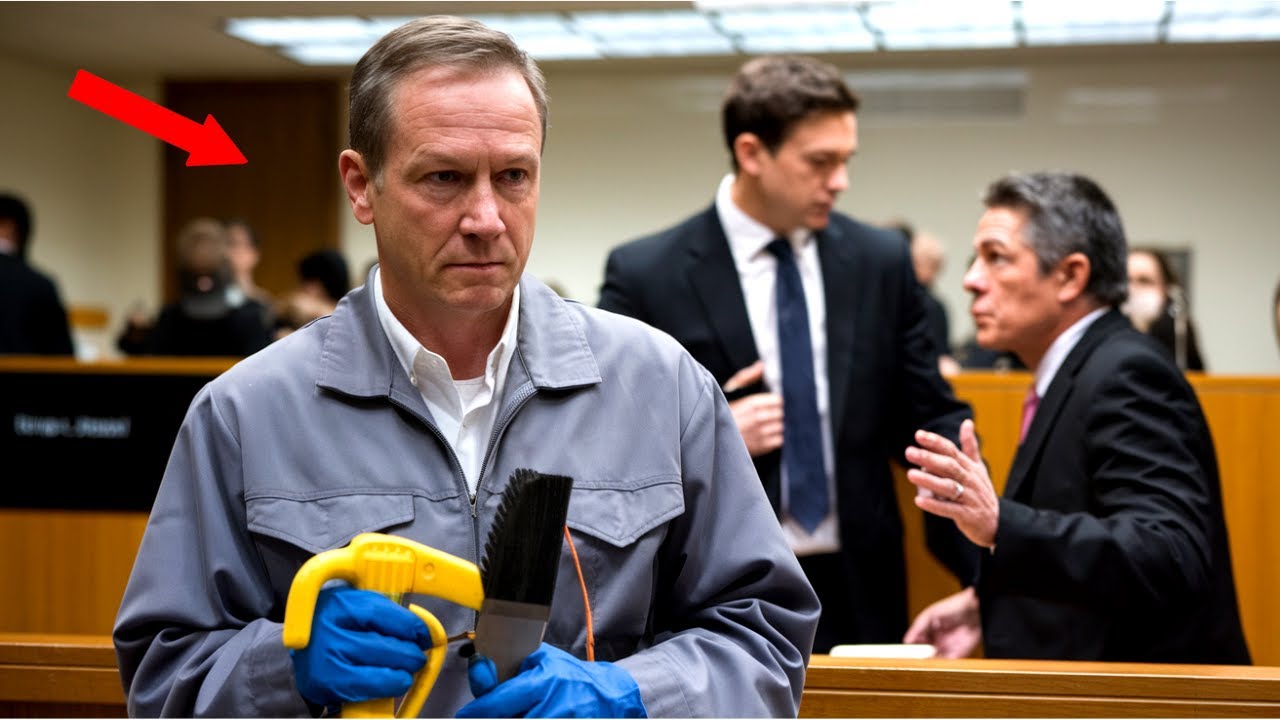
Rows of wooden benches lined the room, a few scattered people sitting with bored expressions. At the front, the judge's bench loomed high, like a throne, and then there was him: Judge Warren Kincade. Jamal's lawyer had said his name like it meant something, like it was bad news.
And now, standing there looking up at him, Jamal understood why. Kincade was an older white man with thin lips and sharp eyes—the kind that didn't soften, not even in moments of mercy. His robe sat perfectly pressed, his gavel resting on the bench like it had already made its decision.
Jamal swallowed hard. The prosecutor, a young guy in a too-tight suit, shuffled his papers and cleared his throat. "Your Honor, the defendant was caught at the scene of a shoplifting incident.
The store owner activated the alarm, and the arresting officer, Detective Carl Brewer, witnessed him attempting to flee. " Jamal's head snapped up. "That's a lie!
I didn't—" His lawyer grabbed his arm, whispering, "Don't talk unless I tell you to. " Jamal felt his chest tighten. The judge barely looked at him.
"Does the prosecution have video evidence? " The prosecutor shifted in place. "There is surveillance footage, but it hasn't been reviewed yet.
" Kincade nodded slowly. "Then we'll proceed without it. " Jamal's breath hitched.
"Without it? Your Honor—" His lawyer started straightening his tie. "I ask that we postpone until we can review that footage.
" Kincade cut him off with a raised hand. "Mister Reynolds was seen in the immediate vicinity. He resisted arrest.
The police had reason to believe he was guilty; we have more than enough to move forward. " Jamal's legs felt weak. The whole thing was moving too fast.
Then came the part that made his skin go cold. The prosecutor leaned forward. "Given the defendant's age, we are requesting that he be tried as an adult.
" Jamal's stomach dropped. His lawyer hesitated. "Your Honor, my client is 16; he has no prior record.
A charge like this—" Kincade was already shaking his head. "We need to send a message. These offenses are not taken lightly in my courtroom.
" Jamal felt his hands go numb. Adult court? That meant real prison time.
That meant a felony record—one that wouldn't disappear when he turned 18. This couldn't be happening. He turned, searching the room hoping to see his mom there, but she wasn't.
And in that moment, Jamal felt truly, completely alone. But then his lawyer whispered, "Do you have any family you need to call? " Jamal's lips parted; oh, they had no idea.
Jamal's throat felt dry. He wanted to scream, to tell them to roll the footage, to demand someone—anyone—listen. But every time he opened his mouth, the system moved faster than his words could catch up.
Judge Kincade leaned forward, fingers tapping against the bench. "Mister Reynolds, you are being charged with theft and resisting arrest. Given the circumstances, I am inclined to agree with the prosecution's recommendation.
" Jamal's stomach twisted. His lawyer half-heartedly raised a hand. "Your Honor, we ask for release under parental supervision while we prepare a proper defense.
" The judge barely reacted. It was like Jamal wasn't even a person—just another case file to be processed. "I don't see a parent present," Kincade said flatly, scanning the courtroom.
"That tells me everything I need to know. " Jamal's heart pounded. She didn't know.
His mom had no idea; she would have been here in an instant, but she didn't even know he was missing yet. His lawyer cleared his throat. "Sir, my client is a minor; we can't assume negligence.
" Kincade cut him off with a raised hand. "I'll allow a public defender's request for a preliminary bail hearing, but I'm not inclined to be lenient. " His gaze hardened.
"This isn't the first time a young man has stood before me claiming innocence. " Jamal felt his chest tighten. This man had already made up his mind.
It didn't matter what he said; it didn't matter what was true. This judge had already decided his future. The prosecutor glanced at his notes.
"Your Honor, given the severity of the offense and the defendant's resistance during arrest, we request bail be set at $10,000. " Jamal's breath caught. $10,000 for a bottle of Gatorade?
His lawyer barely reacted. "That's excessive! " Kincade didn't blink.
"Bail is set at $10,000. Next case. " Jamal's legs locked up; it was done—just like that.
A gavel slammed down: final and unforgiving. The officer behind him grabbed his arm, pulling him toward the exit. His lawyer sighed, already moving on to his next case.
Jamal couldn't breathe, couldn't think. His vision blurred as the officer. .
. LED him through the side door back toward the holding area. This was it; they were sending him away—unless, unless she found out.
He looked up at the officer gripping his arm. His voice came out hoarse but clear. "Can I call my mom?
" The officer didn't even look at him. "You'll get one phone call when we get back. " Jamal swallowed hard; his next words were slow, steady.
"She's the U. S. Attorney General.
" The officer's grip loosened. The words hit the room like a gunshot. The prosecutor's pen stopped mid-signature; his lawyer's head snapped up.
Judge Kincade's expression didn't change, but his fingers clenched the bench just a little tighter. And just like that, everything shifted. The silence that followed Jamal's words was instant and heavy.
Detective Brewer, the cop who had arrested him, stared at him like he'd misheard. The officer gripping his arm loosened his hold completely. The public defender blinked.
"Wait, what? " Jamal felt the shift before he even saw it. Judge Kincade didn't move, but there was something about the way his jaw set—a flicker of tension that hadn't been there before.
Jamal swallowed hard, holding his ground. "My mom is the U. S.
Attorney General. " The prosecutor hesitated. "And her name is.
. . ?
" Jamal's lips curled into a humorless smile. They were scrambling now. "Angela Reynolds.
" That name meant something; it meant power, it meant oversight. And in a room full of people who had been so sure they could crush him without consequence, it meant trouble. The whispers started immediately.
A court clerk shifted uncomfortably, glancing at the judge. The bailiff, who had barely looked at Jamal before, was suddenly studying him like he was seeing him for the first time. The prosecutor cleared his throat.
"Your Honor, given this new information, perhaps we should reassess the conditions of bail. " Kincade didn't move at first; his fingers tapped the desk once, twice, before he finally exhaled and leaned forward. "You expect me to believe you're the son of the U.
S. Attorney General? " Jamal didn't flinch.
"I expect you to let me make my phone call. " More silence, then Kincade said sharply, "Take him to holding," flicking a hand toward the officer. "We'll verify his claims.
If it's a lie, we proceed as planned. " Jamal's heart pounded as the officer grabbed his arm again, this time with far less certainty. But it didn't matter because he wasn't lying, and once that call went through, everything would change.
Twenty minutes later, Jamal sat in a windowless holding room, hands resting on his lap. His fingers still tingled from where the zip ties had cut into his wrists, but he barely noticed. Across from him, the officer who had been so eager to push him through the system now sat with a phone pressed to his ear, nodding too much, too quickly.
"Understood, ma'am. Yes, he's safe. Yes, your Honor is still in the building.
I'll let them know. " A beat of silence, then the officer slowly lowered the phone, glancing up. "She's on her way," the officer said stiffly.
Jamal just nodded. Outside the room, the entire courthouse was shifting; conversations had changed tone, calls were being made. A quiet ripple of panic had spread through the building as the realization set in; they had just railroaded the wrong kid.
And at the center of it all, Judge Kincade sat behind his bench, his fingers still curled against the wood, his jaw tight. For the first time, he was the one who had something to lose. The sound of heels clicking against the marble floor echoed through the courthouse.
It was sharp, decisive, like a blade cutting through the uneasy silence. Jamal didn't have to see her to know his mom had arrived. The officer who had taken the call stood up a little straighter.
The courtroom doors, which had swung open so easily for Kincade's rushed verdict, now felt like barriers as people glanced between each other, unsure of what to do. And then Angela Reynolds stepped inside. Jamal had never been so relieved to see her in his life.
She wasn't just his mother now; she was a storm wrapped in a navy blue power suit, and she was furious. Her eyes locked onto him first, a quick sweep assessing, checking he was okay. Then she turned to Judge Kincade.
Kincade didn't stand, didn't acknowledge her authority in the room. But the way his hands curled on the desk, the way his jaw tightened, told Jamal everything he needed to know. Angela's voice was calm, clipped, and sharp enough to cut glass.
"I would like to know," she began, "why my son was denied due process. " No one spoke. Kincade exhaled through his nose.
"Missus Reynolds," he began, "Attorney General Reynolds—" A pause. Jamal almost wanted to smile. Kincade leaned forward, schooling his expression.
"There was substantial cause for arrest; he matched the description given, resisted detainment, the store has surveillance cameras. " Angela said, cutting him off with the ease of a prosecutor dismantling a weak case, "Did you review them before setting bail at $10,000? " Silence.
Angela glanced at the prosecutor. "Did you? " The young attorney stammered, shifting his weight.
"The footage hadn't been reviewed at the time of the arraignment. " Angela's expression didn't change, but her eyes sharpened. "I see.
So my son, a minor, was detained without proper evidence, denied access to his legal guardian, and pushed through a legal system that chose to act first and verify later. " Kincade's fingers drummed against the desk. "The arresting officer had reason to believe—" Angela stepped closer, her voice dropping.
"I've reviewed your past rulings, your Honor. You have a pattern. " A flicker of something crossed Kincade's face—not surprise, but recognition.
He knew what she was implying, and so did everyone in that room. Angela turned toward the bailiff. "I want my son's release paperwork now, and I want every piece of documentation on this.
" Case pulled and delivered to my office by morning; the bailiff didn't hesitate. Jamal watched as the same officers who had treated him like a criminal now scrambled to correct their mistake. He could feel it—the shift, the fear; they had messed up, and they knew it.
Judge Kincaid's gaze darkened, but he said nothing, because what could he say? Jamal had walked into this courtroom powerless; now he was walking out free, and Kincaid, he was the one under scrutiny now. The release process moved faster than Jamal had ever thought possible.
Officers who had ignored him before were suddenly rushing to correct paperwork, avoiding eye contact like he was something radioactive. He barely said a word because what was there to say? They weren't sorry; they were just scared.
By the time he stepped outside, the sky had shifted to early evening, the heat finally breaking. The courthouse steps were mostly empty, except for one person waiting at the bottom. His mom, Angela Reynolds, stood with her arms crossed, watching as he walked toward her.
There was no anger on her face—not at him anyway—just that fierce, unwavering focus she always had when something was deeply wrong. When he reached her, she exhaled long and slow. "You okay?
" Jamal nodded. "Yeah," but his voice didn't sound like his own. She studied him for a moment, like she could see every hour of fear, every second of helplessness he'd felt behind those walls.
Then she placed a hand on his shoulder and squeezed. "I need you to hear me when I say this," she said softly. "This was never about you; this was about what they thought you were.
" Jamal looked away; he already knew that. His mom sighed, glancing back at the courthouse. "Judge Kincaid has been doing this for years—rushing cases, handing out harsh sentences to kids who look like you while others walk free for worse.
" Jamal's stomach twisted, and no one stopped him. "People tried, but no one with enough power to make it hurt. " Jamal let that sink in.
Today, they had tried to bury him without hesitation. If his mother had been anyone else—if he had been anyone else—he'd be stuck in a system built to break him. Angela took a slow breath.
"That's why I do what I do, Jamal. Not because I want power, but because I know who they use it against. " Jamal felt something shift inside him because she was right.
They only stopped today because they were afraid of who was watching, and that meant maybe next time there wouldn't be anyone watching at all. His mother squeezed his shoulder one last time before leading him toward the car. As he climbed in, Jamal glanced back at the courthouse steps, at the place that had tried to erase him in a single afternoon.
"Not today. Not ever again. " But the real question was, how many others had already been lost?
Some people get lucky; Jamal did, but too many don't. This isn't just one story; it's a reality—a system that decides innocence based on who you are, not what you did. A system that counts on no one being powerful enough to fight back.
Judge Warren Kincaid lost more than a case that day. Within weeks, his courtroom was under federal review; cases were reexamined. The system that had protected him turned on him the moment it was no longer convenient.
Power only bows to power, and when the right people are watching, the whole game changes. But the real fight? It's making sure the next Jamal isn't alone in that courtroom.
If you believe stories like this need to be told, make sure to subscribe, because the more eyes on the truth, the harder it is for injustice to hide.