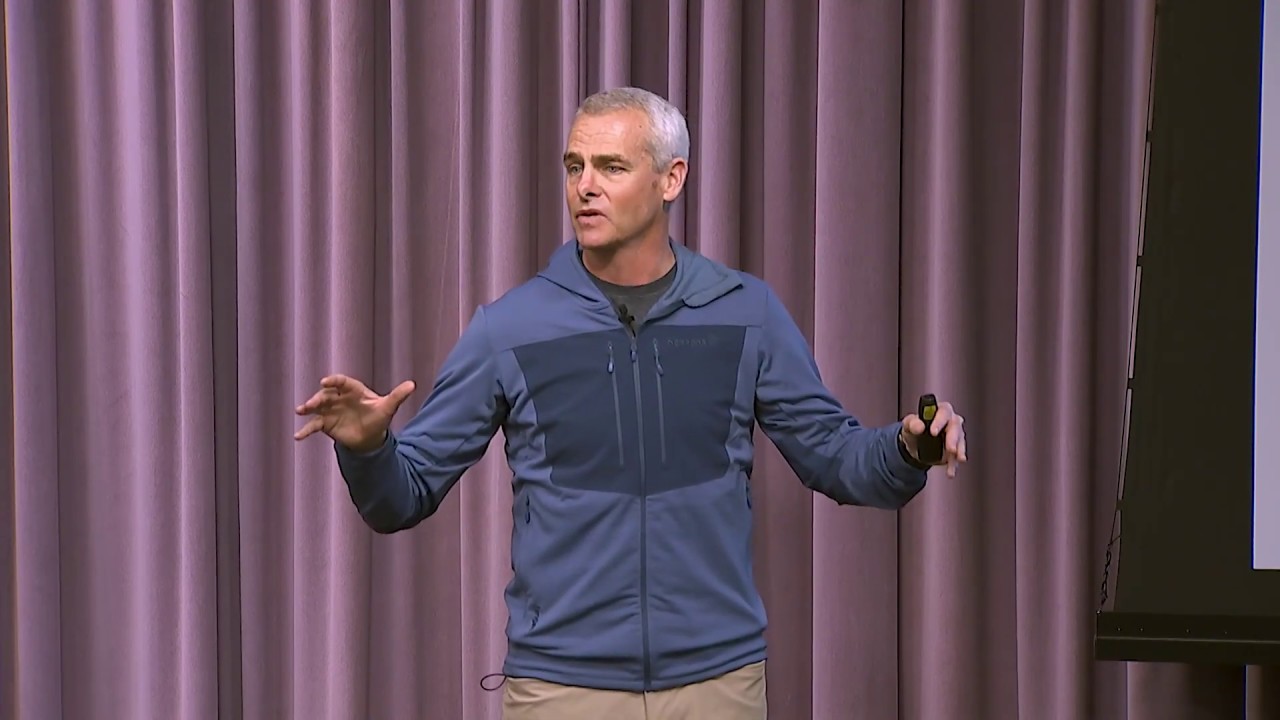
a quick background on strata so 2009 January of 2009 that's the official start date to be clear its history goes all the way back again to the previous century as I mentioned Michael and I've been friends for a long time we met in the boathouse right there that's Newell boathouse on the Cambridge and the Charles River there in Cambridge at Harvard we met there on the crew team it was an amazing experience really hard to define for those of you who haven't ever been in a boat like that but the camaraderie the esprit de corps
frankly just the trash-talking and the competition everything that comes with being on that team was perfect it was sort of what defined my college experience the only problem was that I graduated and when I graduated poof it disappeared this whole idea is sort of having my tribe my team that I could hang out with and that kept me inspired was gone and so as early as 1995 Michael and I had actually developed a business plan it's called Cana sports at the time not Strava but we were fully intent on creating this virtual locker room we
were going to use this new thing called the Internet to create this place where we could get all of our buddies to bring their workouts together we were going to have this wonderful sort of virtual team good-news-bad-news in 1995 right the bad news we were way too early were about 15 years too early in terms of the idea the technology was not there to capture the activities and frankly even the consumer behavior wasn't there but the good news was by pursuing kind of sports that's what actually introduced us to the customer email problem so lesson
number one that I would just share with you you know often times I talk to entrepreneurs and they'll say to me I just or I should say wannabe entrepreneurs they want to go start something but they just say to me I just don't know the right idea I just don't have the right idea I would just caution you that pick an idea and just start rolling with it start having conversations and you'll be amazed at where it takes you if anybody had told me that a virtual locker room would lead to an enterprise software company
worth 11 billion dollars I would have laughed but that is what happened like the opportunity of pursuing the sports introduced us to this problem because of the sporting good companies and the things that they were experiencing online and because we were objective we were able to evolve our business and become kana communications right the other piece of good news was we were 15 years too early we were still very passionate about the idea and so come 2009 the world had changed for one things like wearable devices the smartphone's you're able to capture activities in ways
you couldn't do it 10 years earlier and the other thing that had changed was consumers themselves the athletes there was you're much more comfortable sharing your information online that was not something we were doing in the late 1990s so 2009 we decide to start a business how do we go about doing it right we had this vision Michael and I were really excited about creating a consumer brand it was not something we'd done before we done enterprise software but when we thought about the companies that we admired they were much more akin to that the
virgins and the Patagonia is in the north faces of the world these these iconic brands and so that's what we wanted to do with Strava and we thought how could we create something using the internet to inspire this global community of athletes so that was the vision for the business from day one we still have that in the business plan but our go-to-market strategy was this niche it was basically taking a page right out of the Khanna playbook let's pick one category one group of athletes go really deep be authentic with them and let's see
where that lends us or sort of takes us down the road in this particular case we picked the passionate cyclist in fact internally we refer to them as mammals these are middle-aged men in lycra all right that is our target audience all right and on the surface to us they look really really good very fanatical about their sport right very intense and obsessed with their data and the technology associated with cycling they tend to spend a lot on their sport and frankly there wasn't another solution out there on the market there were lots of things
coming out for runners and so forth but there was nothing for the cycling audience so Michael and I looked at that and said great this is perfect but again I will tell you when we talked to investors even family and friends we were accused time and again of cute little hobby but you're never going to be able to build a business there we heard this over and over and over despite hearing it because of the effect that we had in kana and frankly we were sort of middle-aged men in lycra and we needed this solution
so we just started building and we did four things that I want to share with you when it comes to being an inch wide and a mile deep first thing we did was we did grassroots recruiting right oftentimes in entrepreneurs particularly here in the valley you're immediately trying to figure out how do you get your first thousand your first 10,000 your first hundred thousand customers online we did not think that way we were literally I can remember the first five cyclists that we had on stralla right there's a gentleman I won't give you his name
but his initials or DB he's our first customer he's still honest rival 11 years later like we were begging and borrowing and stealing from cyclists anywhere we could we would go to local cycling clubs here we would crave going down to Costco and trying to figure how to negotiate with Costco to buy tens of thousands of dollars worth of Garmin cycling computers just so he could give those away to our friends so that they would participate on Strava because we could not get Garmin to sell us a device so we had to negotiate with Costco
we got fleeced by eBay sellers who promised us hundreds of Garmin's devices that would never show up after us sending them checks I mean we did everything wrong but we were worried doing is really going grassroots trying to find those early customers early cyclists that we could do which was the second thing create a conversation with them right this was about sitting down and really listening to what their needs were as a cyclist forging this relationship we didn't call them customers they were our partners in this project and what was happening was when you had
that conversation you start to hear these little nuances that become very very important for instance as a cyclist it doesn't matter whether you're going on a 5 mile ride a 20-mile ride 50 mile ride or a hundred mile ride it turns out that there's always this iconic moment there's this moment when you hit hill and you're going to climb it as hard as you can and that's the thing that cyclists remember it's like what they memorialize on their rides is the the climb that they do so for us that was important because if we could
figure out how to capture memorialize that climb inside Strava that's the kind of unique opportunity that nobody else was offering we learned that they were really fascinated with power or wattage you know sort of the the energy output that they were doing so how could we take advantage of that data that was coming through things like the watches and their bicycle and take advantage of that information and do something unique online all right the third thing we did that was really critical at Strava was we focused on this notion of engagement but again if you
think about a consumer model you have acquisition of your customer you have engagement of your customer you have monetization that's kind of the three basics right there's churn and retention everything else but the three basics are acquire your customer engaged them and then monetize that Strava it was all about engagement that's where we obsessed we spent our time trying to figure out once we'd found one of those cyclists grass roots or otherwise how do we get them to just keep uploading time and again how do we make the experience as exciting as possible how do
we create this long-term relationship with them all right their thought process was twofold one was because we were talking about a vertical niche we knew that we had a finite number of customers out there so anyone that we got we wanted to keep around but the other reason that that was so important was that we learned very early our best source of growth was word-of-mouth so by focusing on engagement we actually saw that our growth actually accelerated so without focusing on it that was a great strategy and then the fourth thing that I'll mention that
was really part of this inch-wide mile-deep strategy was a simple notion of what we call single player mode all right there's this misconception with Strava that from day one we were out to sort of build the community how do we sort of bring this party together in one big place and yes we were really excited about this idea of a virtual team like we believe that people make other people active it's something we've seen we can actually show you the data it's really true as soon as you have followers on Strava really good things happen
but in the early days of Strava it was all about what we called single player mode and what I mean by that is we had to assume we had one customer one cyclist who was uploading one ride on Strava how do we make that experience valuable so they'll want to come back again right so it was all about high utility sort of just high value from that one experience it was that single player mode that was critical early on I talked to way too many entrepreneurs where they're like it's going to be this amazing community
based business but we're just we can't figure how to bring everybody together like you got to get product market fit for that one customer and once you do that a couple years in we got very excited about the community features but we had to grow into that we had to mature into that opportunity so those were the four the last one I'll say that we did was what I would call patience right expansion only happened after we really felt that we had nailed this niche this first group all right and what I meant by that
was we needed to know that we were the definitive leaders when it came to serving the cyclists online right we could see that both in the numbers we could see that an engagement we could see it by what was being written in the press but it wasn't until we felt that we had established that number one position in the marketplace that we gained the confidence to really think about now an expansion strategy and we frankly we took a page I would argue more so out of some of the other sporting good companies than we did
sort of tech companies because expansion for us was akin to what Nike did or others where we picked a new sport there was a new vertical and said okay now it's time and we went after running it was three years later 2012 that we launched running we launched it first off as a separate app today it's all integrated into one but we actually had cycling Strava cycling strauber run they were separate we learned a ton of difficult lessons we originally thought we could basically take the cycling experience reskin it is the old 80/20 rule 80%
of it would work for a runners know if we were going to be authentic if we were going to get that same kind of high running engagement we really had to start internally with the DNA of the company and rebuild from the ground up a running experience but it did work what we saw as I mentioned earlier word of mouth began to spread we saw a really fascinating viral effect we saw that many of our athletes are not cyclist or runners we find that they tend to be multi-sport unless you're professional and you're making a
living as a cyclist you're not riding every day you're riding and then you're running and you're skiing and the in the winter and you're swimming in you're playing around you're doing lots of different things and so we found our existing athletes we're expanding with us and they were bringing more and more of their friends along

![Getting to Product-Market Fit [Entire Talk] - Alexandra Zatarain (Eight Sleep)](https://img.youtube.com/vi/Q81wBNuIe4o/maxresdefault.jpg)
![Mental Health Tech, Mentally Healthy Startups [Entire Talk]](https://img.youtube.com/vi/j-BIy0i3ITY/maxresdefault.jpg)

![Exploration in Sports Technology [Entire Talk]](https://img.youtube.com/vi/K_CLQQBj2PY/maxresdefault.jpg)