For generations, humans have been on a quest to understand the mysteries of hyperdimensional physics, and unlock the secrets of anti-gravity. Many scientists consider anti-gravitational technology to be the Holy Grail of the 21st century – a single technology that will completely change human civilization and bring about a new age on Earth and beyond. That such technology is possible is backed up by the countless UFO videos and sightings all around the world.
Recently, even the United States Navy released mysterious footage of a UFO encountered by Navy pilots. - There's a whole fleet of them. Look on the S.
A. - Look at that thing! - It's rotating.
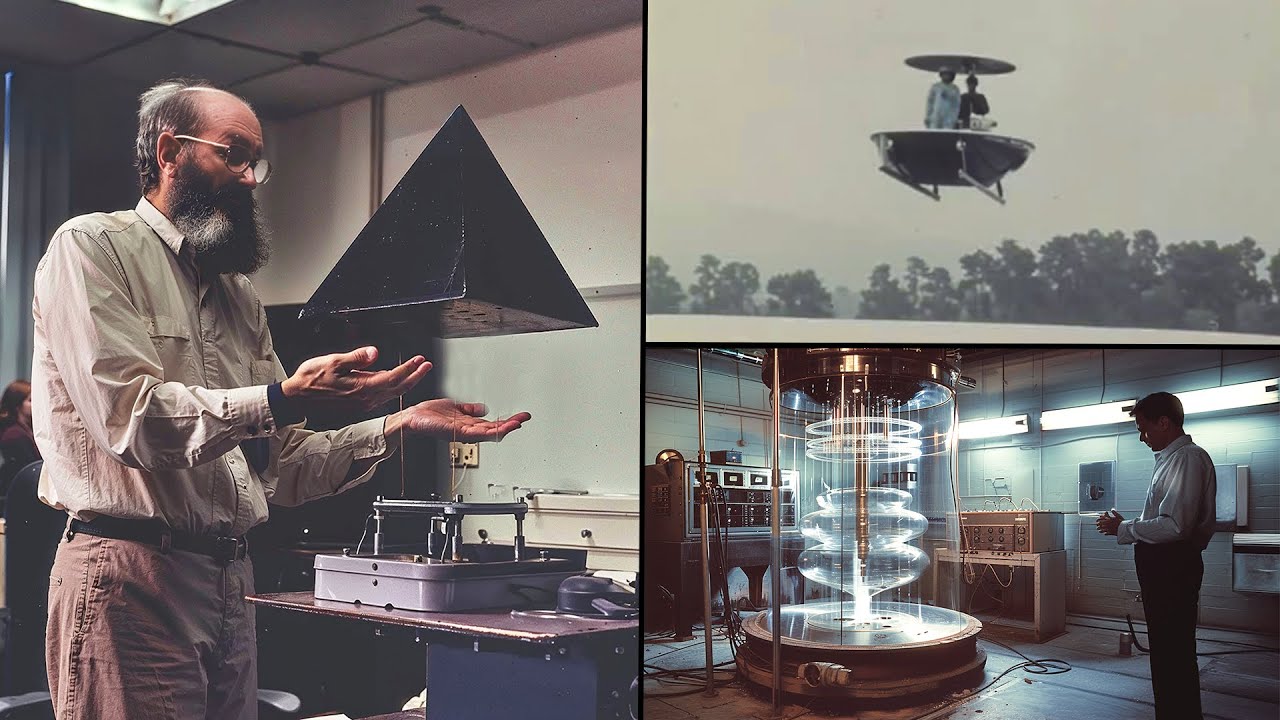
According to the data, NASA began its work on anti-gravity technology in 1992. They believed that a device built around a superconductor and a magnet could shield an object from gravity. Declassified documents indicate that the United States started their anti-gravity research much earlier, as far back as the 1950s.
Many believe that after the infamous Roswell UFO crash in 1947, the US government started spending billions of dollars on reverse-engineering extraterrestrial technology. Curiously, the US Secretary of the Navy is listed as the administrator on several radical aviation technologies patented by aerospace engineers. For example, a mysterious man by the name of Salvatore Pais is named as the inventor of four ambiguous patents for which the United States Navy is the assignee: a bizarrely shaped "High Frequency Gravitational Wave Generator;" a "Piezoelectricity-induced High Temperature Superconductor"; an "Electromagnetic field generator and method to generate an electromagnetic field" that could deflect asteroids, and, perhaps strangest of all, a "Craft Using an Inertial Mass Reduction Device," described in the patent as "hybrid aerospace/undersea craft which due to the physical mechanisms enabled with the inertial mass reduction device, can function as a submersible craft capable of extreme underwater speeds.
" There is a "lack of water-skin friction, and enhanced stealth capabilities. " "This hybrid craft would move with great ease through the air, space, and water mediums, by being enclosed in a vacuum plasma bubble or sheath, due to the coupled effects of EM field-induced air and water particles repulsion and vacuum energy polarization. " While all are relatively outlandish sounding, the latter was personally vouched for by the Chief Technical Officer of the Naval Aviation Enterprise, who claimed the Chinese were already developing similar technologies.
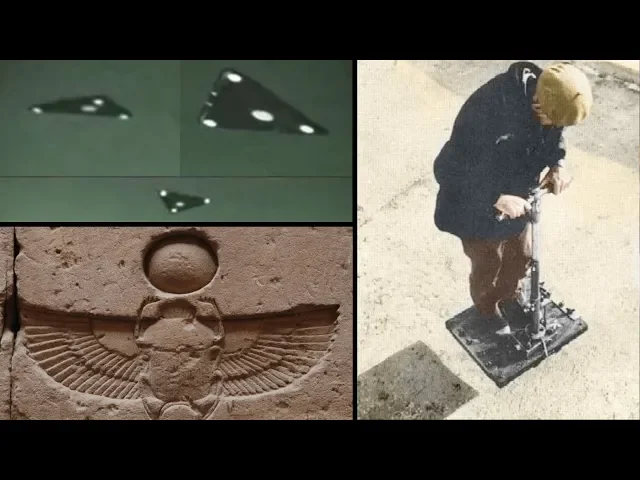
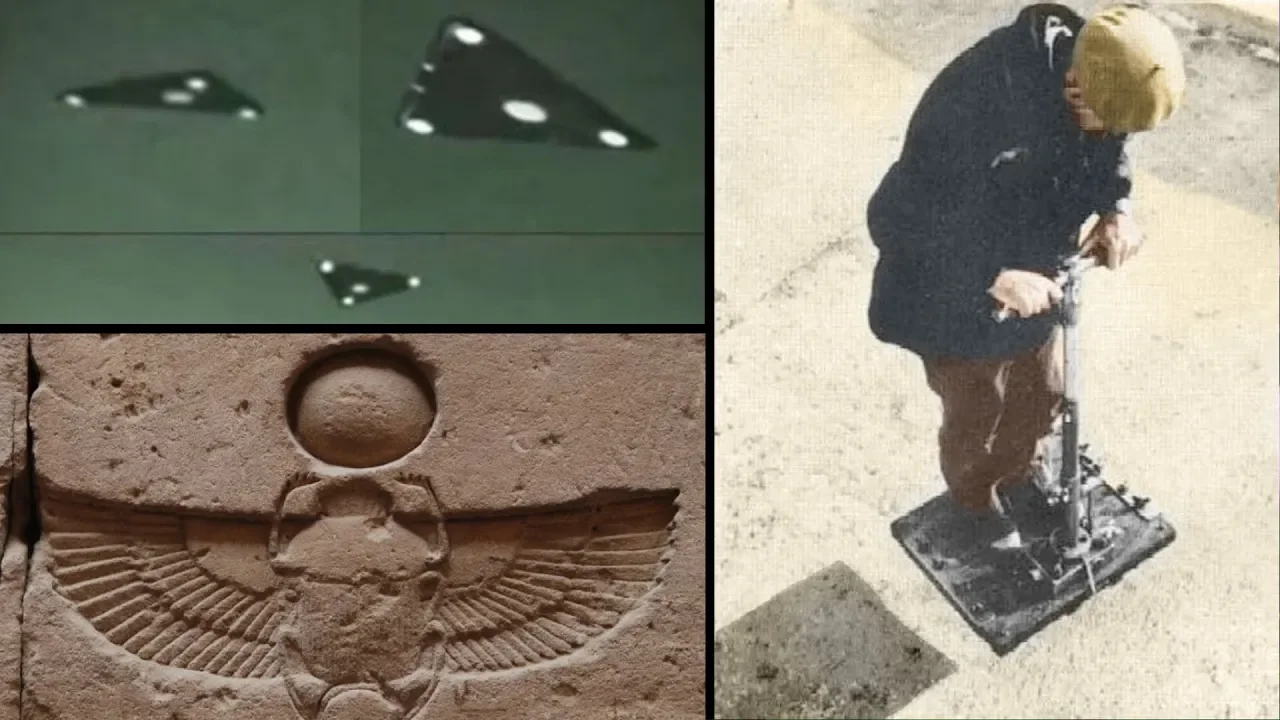
Although the US had not admitted to possessing such a craft, countless people have witnessed a strange triangular UFO in the sky, which looks exactly like the mysterious craft from the patent. But if there is still doubt, take a look at this Google Earth image, spotted a few years back in Australia. Of course, follow the coordinates now, and you'll find that the mysterious object has been hidden from Google Maps, which makes it even more suspicious.
No doubt, the world of anti-gravity is one of cloak and dagger, of extraterrestrial implications and dark money funding. However, the man that we've dedicated this video to was not a backroom power-player or governmental elite, but an ordinary man in an extraordinary position at the forefront of anti-gravity discovery. He did not accomplish this with billions of dollars or secret government facilities, but simply by observing nature and all its wonderful creations.
(Sponsored advertisement) Viktor Stepanovich Grebennikov was born in 1927 in Simferopol, a populous city in the Crimean Peninsula region of what was then the Soviet Union. Only a few years before he was born, the city had been an important theater in the Russian Civil War. Grebennikov's mother was a noblewoman, and his father, a simple mechanic, two classes which previously would not have intermingled.
For his part, Grebennikov was an intelligent, curious young man, and he became among the first of a new, educated generation. It was this education that led him as an adult to Novosibirsk, on the southern tip of the Western Siberian Plain. There, Grebennikov took to a wide range of interests, becoming a scientist, specifically an entomologist – which is the study of insects – but also a naturalist, painter, and rugged outdoors man.
He may also have been a poet, judging by how he described the natural beauty of the Siberian steppe. As he wrote: "A quiet evening in the steppe. The sun's red disk has already touched the faraway, misty horizon.
Pods of ducks gleam over the evening lake, sandpipers are also heard in the distance. The high, pearl-colored sky stretches over the calming world of the steppe. How good it is to be out here, in the open country!
" It was this love affair with nature, far from the stuffy offices and thick books usually associated with scientists, which sent Grebennikov down the path of discovery that would define his life. It happened almost entirely by chance one evening in the early 1980s. Grebennikov was engaged in his favorite pastime, roaming the vast steppe along with his intent to camp under the stars.
As he laid his head on a makeshift pillow, Grebennikov was overcome with an unpleasant feeling – a headache, ringing ears, and a metallic taste in his mouth. He realized that he had set up camp on top of an underground bee city, that in fact, in his own words, ". .
. the entire steppe is dappled with their holes like Swiss cheese, and in places, almost like a sponge. " What could this mean?
Grebennikov wondered. He returned to the spot four more times, through varying weather and times of day, and each time found the results the same. He noted that five meters away from the boundary of the bee city, he felt no effects, but as soon as he entered the area, he felt similarly unpleasant.
This weighed on Grebennikov's mind for some time, until years later he happened to be in an area where another bee city had recently 'died,' that is, collapsed as a result of erosion and the passage of time. While investigating the site, Grebennikov collected parts of the nest, the familiar 'honeycomb,' and returned to his office. There, he noticed the most unusual phenomenon.
When he put his hand over the honeycomb, he could feel a heat emanating from it, a "thermal sensation" which made him light-headed. He got others to try, and they reported similarly, feeling heat or cold wind, having numbness in their fingers or feeling as though their hand was being pushed around. Most peculiar, the cause of this could not be measured by any traditional scientific device.
Grebennikov noted that: "thermometers, or ultrasound detectors, magnetometers and electrometers- did not respond to them in the slightest," Further, the effect could not be blocked by covering, even with a thick piece of metal. Strangely, clocks – both mechanical and electronic, started running inaccurately when placed near the zone. By chance, Grebennikov had discovered the Cavity Structural Effect (CSE), which is what he called this type of 'force field' which surrounded cavernous honeycomb-like objects.
Believing this to be an important and potentially groundbreaking discovery, Grebennikov published an article on his findings. Surprisingly, the article went unnoticed or ignored in the mainstream scientific community. Thus, Grebennikov was left to continue the work himself.
While his status as an entomologist was probably at least partially responsible for the indifference of the scientific community, it was this vocation that allowed Grebennikov his next major breakthrough, a discovery that would change everything. In 1988, Grebennikov was examining the chitin shells of insects under a microscope, when he noticed what he called: "an unusually rhythmic, extremely ordered, incomparable honeycomb, solid multidimensional composition, which looked as if it was pressed by some complicated automatic machine. " As he moved deeper into study, something extraordinary happened.
As Grebennikov described: "I was about to place a second identical plate with the same unusual cell structure on its underside, almost purposely on top of the first one. But then, the little plate came loose from my tweezers, hung suspended above the other plate on the microscope stage for a few seconds, then turned a few degrees clockwise and swung – and only then it abruptly fell on the desk. When I came to my senses, I tied a few panels together with a wire and it wasn't an easy thing to do.
I succeeded only when I positioned them vertically. What I got was a multi-layered chitin block and I placed it on the desk. Even a relatively large object, such as a thumbtack, would not fall on it.
Something pushed it up and aside. When I attached the tack on top of the "block," I witnessed incredible, impossible things. The tack would disappear from sight for a few moments.
That was when I realized that this was no "beacon," but something entirely different. " This incredible discovery got Grebennikov thinking. Science suggested that some bugs should be too big to fly, based on the size of their wings and the speed of their wings' beat.
Was the Cavity Structural Effect caused by this 'incomparable honeycomb,' creating some sort of anti-gravity field, allowing the bugs to defy physics and fly? Were the bugs, in fact, not flying at all, but levitating? Following this line of thought and the works of past scientists like Nikola Tesla, Grebennikov set about trying to create some sort of anti-gravitational vehicle.
For years he toiled, pouring heart and soul into the project, until finally, he came up with something possessing apparently amazing characteristics. By attaching hundreds, if not thousands of chitin shells to the bottom of a simple wooden platform, Grebennikov had invented an anti-gravity vehicle which he claimed could travel at up to 1,500 kilometers per hour, as many as 300 meters off the ground. He operated the device by stepping on the platform and using two handles attached to the base by a single pole.
Despite the incredible speeds, the rider did not experience any effects, no inertia properties, or dynamic pressure, almost as if they were ensconced in a bubble or force field. Further, when in flight, the device was invisible from below, appearing as only a light sphere or cloud in the sky. Observers noticed that even his shadow was missing when in flight, and his watch was constantly shifting forward or backward.
We know from Einstein that time, space, and gravity are intertwined. Humble in the face of such a potentially world-changing invention, Grebennikov believed that so-called 'real' science should investigate his discovery. Thus, he filed for a patent.
Shockingly, his patent application was resoundingly denied, while Grebennikov was rejected and called out by skeptics and other scientists. It certainly didn't help that he lacked photographic proof, as his camera would malfunction during flights as a result of the Cavernous Structures Effect. But the reception he received for such an apparently groundbreaking invention represented the antagonistic relationship Grebennikov had with the establishment throughout his career.
He was not shy about this, asserting: "The joy of creative work, even of work that ends in failure, is far higher and brighter than earning any diplomas, medals, or patents," and describing those he was at odds with as "evil, ignorant people. " But perhaps the reception to Grebennikov's invention went beyond mere antagonism. In 1992, his patent application having been rejected, Grebennikov sought to publish a book detailing his discovery, the principles, and measurements of his invention backed by a litany of full-color images.
It was said this would include photographs of a demonstration of the machine Grebennikov gave at a museum. However, just before the book was released, the publishers, possibly at the behest of authorities, undertook dramatic edits of the book, removing hundreds of pictures and all schematic details. Why, at the same time Grebennikov was being called out by skeptics, was evidence of his invention being subverted?
According to a longtime colleague, Grebennikov was part of a so-called scientific underground that was persecuted and victimized by the scientific establishment and governmental authorities. Given the money governments were admittedly and allegedly spending in pursuit of the secrets Grebennikov had apparently discovered, it is perhaps no surprise his discovery would be suppressed. Maybe Grebennikov had inadvertently stumbled across something more powerful, and thus more dangerous than he could have imagined, a deep and almost mystical power sought by humans for centuries, dreamed about with every UFO sighting or unexplained human artifact.
Consider the Great Pyramid of Giza, a structure so incredible that generations of deep thinkers have speculated how an ancient society could have created such a thing. It is a mystery so inexplicable that some have suggested the ancients must have had access to some sort of alien technology. This might not be as far-fetched as it sounds.
Recent research shows that the Pyramid centralizes and conveys electromagnetic energy into the inner chambers and towards the top, as in Grebennikov's honeycomb. Further, where chitin shells from bugs powered Grebennikov's flying machine, the beetle was a vitally important symbol in Egyptian mythology, often depicted in art and icon. Alien or not, it appears the Egyptians may have had access to a knowledge since lost to human beings, thirsted for by governments, and rediscovered by Grebennikov centuries later.
What exactly Grebennikov discovered is unknown to this day. It may sound incredible, but the mysterious usually does until it becomes a reality. Before his death in 2001, Grebennikov left us with these words: "There is no mysticism, the thing is simply that we, humans, still know little of the Universe which, as we see, not always "accepts" our all too human rules, assumptions, and orders.
" Thank you for watching. (Sponsored advertisement) If you enjoyed the video, please hit the like button. And if you're new, press Subscribe and the bell next to it for future notifications.