Pakistan was sleeping quietly on the night of the 7th of May, 2025. Then at 10:05 a. m.
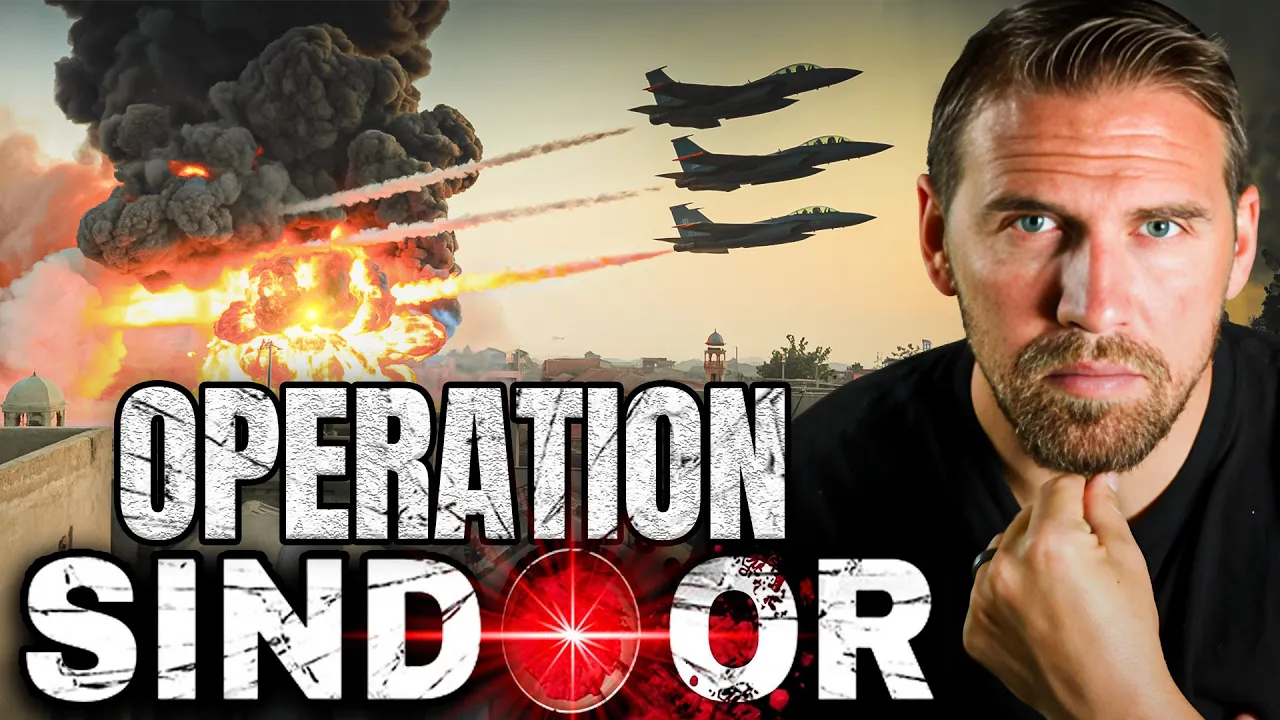
, everything changed. India launched air strikes on nine different spots across Pakistan and Pac. India says over 70 militants were killed.
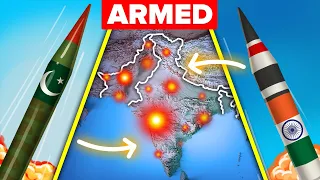
Pakistan's now calling it an act of war. Don't forget both countries have nuclear weapons. So the big question is will Pakistan strike back?
On April 22nd in Kashmir, four terrorists crossed over the Pakistan and opened fire on tourists, killing 26 people. All across India, people are furious. They marched in protest.
After that, India took a calmer approach. They stopped talks with Pakistan and froze the river water pack that sends water from India to Pakistan. Pakistan didn't take it lying down.
Their leaders shot back. If you block our water, you'll have blood in those rivers. The Indian prime minister gave full permission to pick targets, make plans, and act as they saw fit.
Intelligence agencies went to work tracking down those terrorists, and the army took its positions along the border. Fighter jets ran drills in the sky. Warships patrolled the waters and soldiers loaded their weapons.
Pakistan was on high alert. Nobody there was getting much sleep. It felt like everyone knew something big was coming.
On the night of May 7th, 2025, Pakistan was quiet and dark. Most people were asleep in their homes. Then at exactly 10:05 a.
m. , the whole mood changed. Indian jets lifted off from their runways.
Total they launched 24 rockets. These missiles flew fast and true toward nine hidden militant camps. Some camps were tucked away in the hills of Pakistan administered Kashmir.
Others lay out in farming areas in Punjab. India's planners had picked these sites carefully because they believed this is where the militants were. Within minutes, each missile hit its mark.
In Muzaf Farabad, locals heard deep booms and saw tall clouds of smoke. In Ki and Shakagar, flames lit up dark fields. In Ahmedur Shakia, villagers ran outside to find the ground shaking and dust rising where a camp once stood.
Indian leaders say they aimed only at the camps. No homes, schools, or army bases were touched. They made sure the attack was precise to spare ordinary people.
By 1:25 a. m. , the final missile fell into its target and the attack was over.
Back at Indian command centers, officers watched their screens and saw that the operation went as planned. The jets returned to base. Over the border, Pakistan's reaction was quick and intense.
Air raid sirens screamed in cities. Soldiers ran to their stations. Radar dishes turned to track the skies.
Families woke up in panic, huddling in basement or rushing into the streets. No one slept that night. By morning, the news came out.
India says about 50 plus militants were killed in the strikes. Pakistan's leaders condemned the attack as an act of war and warned they might respond soon. Masud Azahar was one of India's top terror targets.
Intelligence said he helped plan the April 22nd attack in Pahogam and ran training camps in Pakistan administered Kashmir. When India struck on May 7th, they aimed at his hideout near Kotley, hitting nine spots with 24 precision missiles. But Ajahar wasn't there.
He'd slipped away just hours earlier. Tragically, about 10 of his family members were killed when their house next to the camp was struck. As for Aahar himself, no one knows for sure what happened to him during the raid.
He could still be alive, hiding somewhere, or he might have been injured or killed later. And this isn't the only clash that happened between India and Pakistan. On September 18th, 2016, four militants slipped across the line of control from Pakistan into Uri, Kashmir.
Undercover of darkness, they breached the camp fence and opened fire on sleeping soldiers. By the time help arrived, 19 Indian soldiers were dead and over 30 wounded. The attackers then vanished back across the border.
India reacted with outrage, blaming Pakistan-based groups for the raid. Diplomatic ties and some trade with Pakistan were scaled back immediately. India's surgical strikes 10 days later on the night of September 28th to 29th.
India launched surgical strikes against militant camps across the line of control. Quiet planning intelligence pinpointed the exact locations of seven militant launch pads. Only top commanders knew the plan.
Stealth crossing after midnight. Paris special forces teams crossed the line of control on foot, avoiding patrols in rough terrain. Precision raids.
They hit each camp with explosives and grenades, destroying bunkers, weapons, and communication gear. Brief firefights broke out, but the strikes were over in minutes. Swift withdrawal.
Troops pulled back across the border quickly, leaving flattened camps behind. public reveal. At dawn on September 29th, India announced it had destroyed the launchpads and killed a significant number of militants with no Indian casualties.
Pakistan denied any incursion, calling India's claims propaganda. Global leaders urged both sides to avoid escalation, warning that conflict between two nuclear powers could be disastrous. On February 14th, 2019, a suicide bomber from the militant group Jaish e Muhammad rammed an explosive laden SUV into a convoy of India's central reserve police force CRPF near Pulwama in Indian administered Kashmir.
The convoy was carrying about 78 vehicles and nearly 2,500 officers on their way to provide security for local elections. The blast happened around 3:15 p. m.
, ripping through one of the buses. Tragically, 40 CRPF personnel lost their lives and more than 60 were injured. The attack was one of the deadliest against Indian security forces in decades and sparked a widespread anger and grief across India.
India's response just days later on February 26th India launched operation swift retort under cover of darkness before dawn Indian air force Mirage 2000 jets crossed the line of control and dropped precision bombs on what they called a jaish training camp in Balacott Pakistan administered Kashmir. India said it had struck the camp where the Pulwama attackers were trained. Pakistan scrambled its air defenses and in a brief dog fight both sides claimed to have down enemy aircraft.
One Indian Mig21 Bison was shot down and its pilot was captured though he was returned safely to India 2 days later. Pakistan also reported losing one F16 jet but India denied this claim. And now on May 7th, 2025, India called its airirst strike operation Synindor.
In Hindu tradition, a husband applies Synindor Vermilion to his wife's hair, part as a sign of love and marriage. The name honors the memory of the Pahogam attack victim whose husband was killed. His widow's synindor now marks her loss.
India was quick to say its May 7th strikes were aimed only at terrorists, not at Pakistan itself. Operation Synindor targeted militant camps and training facilities, not civilian areas or military bases. But Pakistan didn't stop there.
In Islamabad, top security officials have been holding emergency meetings around the clock, weighing their options. Publicly, Pakistani leaders have reminded everyone that their country is a nuclear power and that their missiles are built to be used, not just stored in silos. I'm not here to push any sites agenda.
I just want to bring you the real facts from the ground. And your one like and subscribe motivates me and my team. The tension is real on the ground.
Almost immediately after operation Synindor, Pakistani forces opened heavy artillery fire across the line of control. Today the Indian government said that Pakistan struck back on the night of May 8th firing drones and missiles at places like Shinagar, Jamu and Amritser. Indians air defense system shot down every threat and destroyed drones and missiles are being collected as proof.
Early this morning, India hit back at Pakistan's air defense radars, knocking out at least one system near Lahore. Along the line of control in Jammu and Kashmir, Pakistan also fired mortars and heavily artillery into border villages in Punch and Rajuri. Local officials report that at least 15 civilians, including women and children, were killed in the shelling with 43 more injured.
India's leaders are watching Pakistan's movements closely. India's military remains on high alert along the border with fighter jets scrambling on training missions and troops reinforcing forward positions. The prime minister has publicly said that India wants peace but will not hesitate to defend itself.
Ordinary Pakistani citizens already struggling with high inflation in a shaky economy now face the added fear that a fullscale war could break out at any moment. People report sleeping with one ear open for sirens and families are quietly stockpiling food and water just in case. For now both countries are locked in dangerous standoff.
India insists it struck only terrorists. Pakistan insist it has the right to respond. Meanwhile, ordinary people on both sides of the border watch and wait, hoping the crisis ends without sliding into open war.
Will Pakistan reply with full force military action? I never imagined my last video would go viral. Thank you for all the responses.
If you haven't seen it yet, the link is in the description. That's all for today. Stay alert and see you soon.