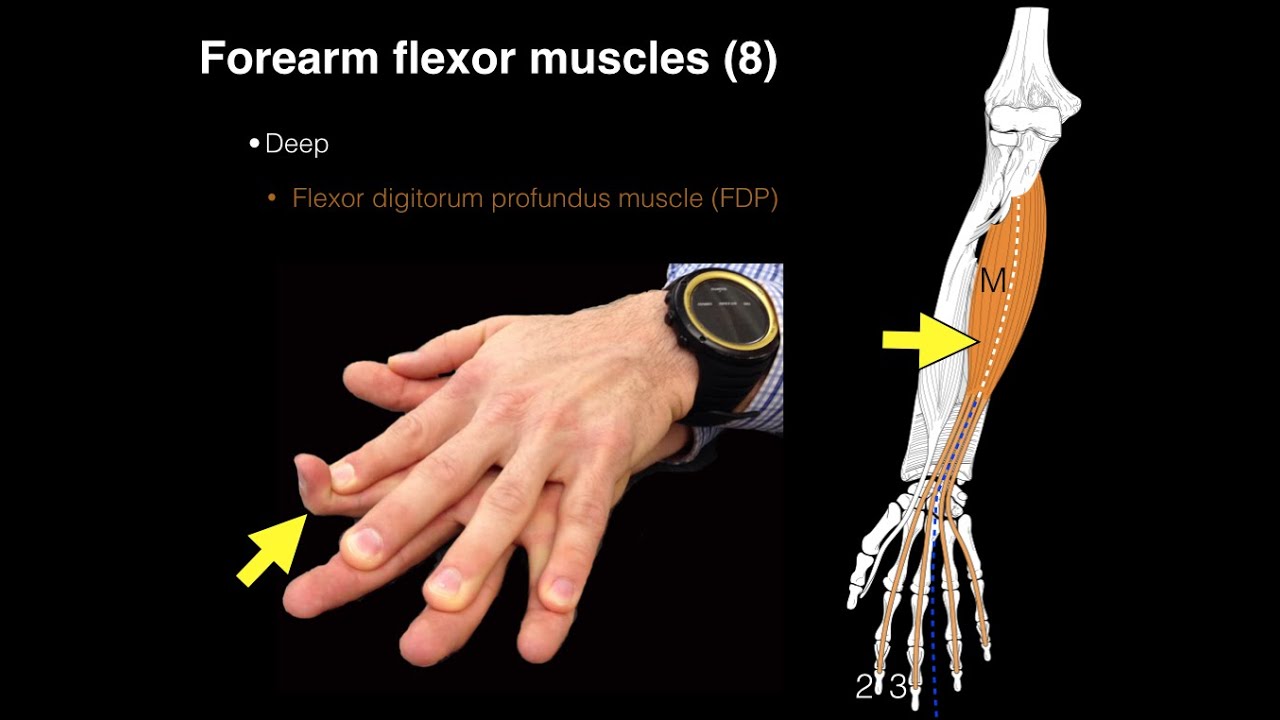
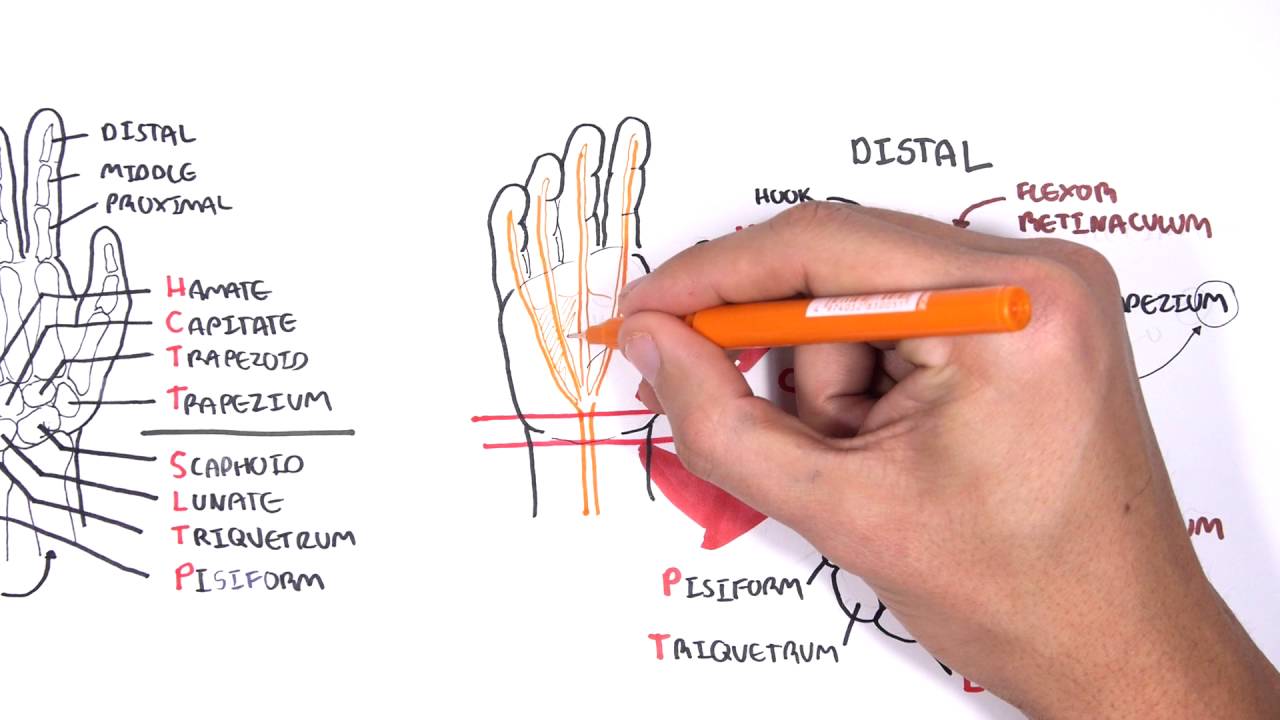
[Music] in this lesson we will review the anatomy of the long flexor tendons that go into each of the fingers and let's start by looking at a simple line drawing of a representative digit and the left-sided image is the Palmer view and then the image on the right side of the screen is a lateral view of the same digit and to get ourselves oriented we have the distal middle and proximal phalanges and then the metacarpal at the at the base the first tendon is the flexor digitorum superficialis which is seen here in orange color this
is the FDS or flexor digitorum superficialis and as it crosses the metacarpal phalangeal joint somewhere over the proximal phalanx area it splits into two and these two slips cross the proximal interphalangeal joint and attach onto the middle phalanx this is the classic arrangement of the FDS tendon in each of the four fingers you'll recollect that each of these fingers has another tendon from the flexor digitorum profundus and the FDP tendon goes deep to the FDS and continues on its way up to the distal phalanx and it does this by going in between the two slips
of the FDS it crosses through up to the distal phalanx and so this is the distal part of that flexor digitorum profundus tendon the FDP and it's more proximal location is seen here this relationship is a very important relationship and we need to review it in a lateral view as well just to clarify the arrangement so if we look at the lateral view we have the two tendons here the flexor digitorum superficialis and note that it is split and it allows the FDP to come up to the distal location and attaching on to the distal
phalanx this arrangement is an important arrangement because often times one is faced with a situation where one might have a patient with a laceration over the Palmer's the finger and in those circumstances it is important to make a clinical assessment as to whether the SDS or the FTP or in fact both of these tendons have been cut and there are some simple clinical maneuvers by which one can differentiate and make a good clinical diagnosis another point to note is that the metacarpal phalangeal joint and the proximal interphalangeal joints these are flexed by both of these
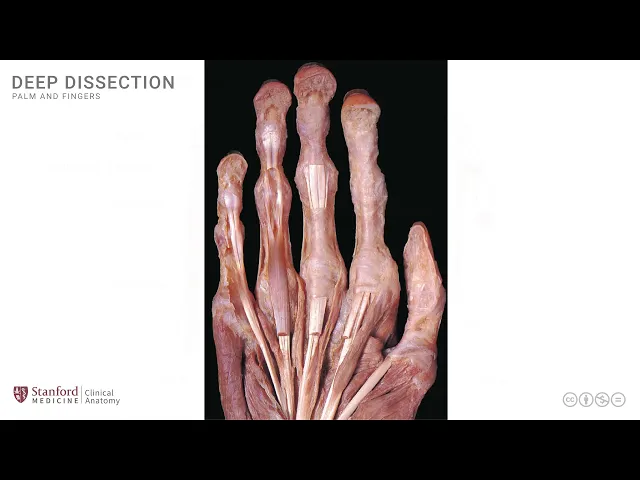
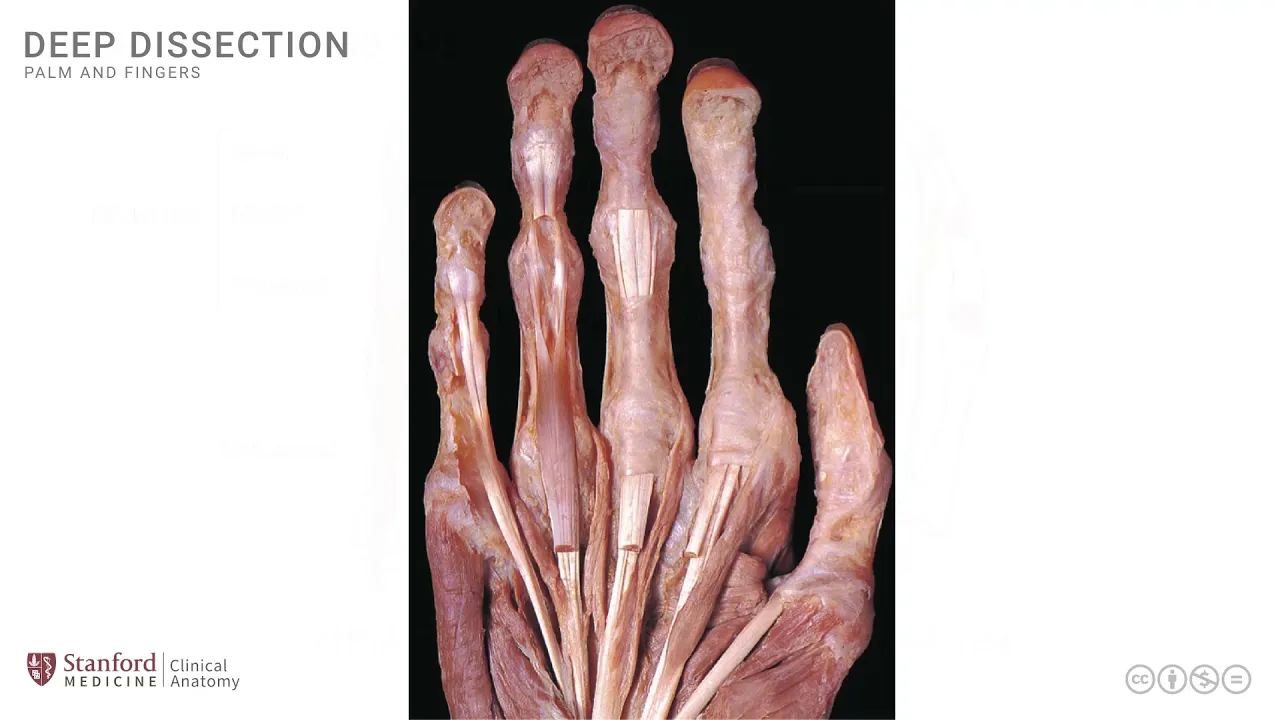
tendons because both of these tendons cross these joints the distal interphalangeal joint only has the flexor digitorum profundus tendon in relationship and is therefore flexed only by the FDP tendon let's look at this arrangement in a deeper dissection of a right hand now and I will take the ring finger to start with and let's put the FDS in its position which is now highlighted here and one can see the FDS splitting into its two slips and then going on its way to the middle phalanx the FDP is seen in its more proximal location going deep
to the FDS and then it continues more distally on its way up to the distal filling so this is the F D P here as well and in fact it has been removed in its middle segment which is depicted by the dashed lines that middle segment of the FTP is now quite visible in the middle finger and one can see the FDS in the middle finger as well going into into the split and and extending into the middle Fehlings there's another important muscle in this area which is known as the lumbrical or lumbricals because there
are many of these which is seen in this area and I'm going to now depict that in red for all four digits the lumbricals are small worm-like muscles in fact the name lumbrical means worm-like and they have an attachment in each of those four flexor digitorum profundus tendons and in each of the digits they cross the metacarpal phalangeal joint area on the radial side and then attach onto the extensor mechanism on the dorsum of the hand and therefore these muscles are pretty unique because they don't have any bony attachment whatsoever they extend from the flexor
tendons onto the extensor tendons in terms of being attached on to the extensor mechanism and they have a very specific role in fine-tuning the relative tension between the flexors and extensors and allowing for that immense amount of manual dexterity that is available in our hands to perform a variety of tasks everything from playing a musical instrument to painting to performing surgery so those are some of the features of the flexor long flexor tendons and associated structures in the deeper part of the palm [Music] you