- 50% Of the founders that I work with are bootstrapped, they'll never raise money. They'll just grow their companies and they'll exit the business while they take profits. On the other hand, 50% of the founders that I work with are venture backed.
These are folks that are building and going after a massive toll addressable market. They're looking to raise money, they have raised money, and they're using that money to fuel their growth. There's no right or wrong way to build a SaaS business, but it's important to know that they're two very different games.
And if you're gonna play the game of venture capital, you need to know the rules. In this episode, I'm gonna walk you through the three principles that you absolutely need to know on how the startup funding game works and how you can use it to your advantage. Intro!
(upbeat music) What's up everybody, welcome to Unstoppable. I'm TK and on this channel, I hope SaaS founders like you, grow your SaaS businesses faster with an unstoppable strategy. Now, if you're new to this channel, welcome.
I drop an episode every single Sunday with actionable strategies and tactics from the trenches on how to grow your SaaS business faster. So if you're new, be sure to hit that subscribe button and that bell icon that way you'll get notified every single time I drop an episode with the TK Energy. Now, if you're already part of this community, if you're part of my SaaS go-to-market coaching programs, my people, welcome back.
It's really awesome to see you over here. In my last business ToutApp, I raised an angel round, I raised a seed round, I raised a Series A, I raised a Series B led by Andreesen Horowitz, one of the best venture capital firms out there. But when I first started out, when I first started ToutApp, I was actually funding it using my services business and then eventually it got to a point where I saw the growth was so immense, the market was so incredible, I just had to raise venture capital.
Now, at that time, I had no idea how the game of venture capital worked. And even today, as I work with founders inside of my go-to-market program, I consistently see the same mistakes founders make when they're setting out to raise funding. So in this episode, I'm gonna walk you through the three key principles you absolutely need to know on playing the startup fundraising game.
And when you know these principles and apply them, you too will be able to raise funding and grow your SaaS business. So if you're excited to dig into this and dig into principle number one, go ahead and smash that like button for the YouTube algorithm, it just loves it when you do that. Let's go to principle number one.
Principle number one before you even think about raising money, is you need to understand when venture capital is helpful and when it's not. And in order to understand that, you basically first need to understand what are the key stages your SaaS business will go through. The first stage is when you basically have an idea for a SaaS business.
The second stage is when you hit product market fit. This is when someone and a consistent number of people are paying for your product, which means that there's a whole market out there that wants to pay for your product. Then you get into the growth stage.
This is where you know that there's a market and you're actually building out the go-to-market motions to actually generate more and more revenues and take more of that market. Then you enter into the scale stage, which is there's definitely a market, there's probably multiple players in this space and you wanna be number one. And then eventually, regardless of whether you're bootstrapped or venture backed, there's some sort of an exit.
An exit could be an IPO, it could be a sale to a strategic investor or it could be a sale to a private equity buyer. Any one of those things are perfectly good exits, especially for a venture backed business. IPO is really the best one.
Those are the stages that you're going to be going through. Now, as you are going through these stages, there's essentially one key metric that's going to change, and that's the one key metric that the venture capital game is built on and you need to understand. That is your month over month growth.
Month over month growth of revenues pretty much dictates, especially for B2B SaaS, dictates how interested investors are going to be in your company. And when you are starting out at the idea phase, there's obviously no growth. When you're going into product market fit, there's a little bit of growth.
As you go into the growth stage, there's more growth as you start to scale, there's even more growth. And ideally, if it's a successful exit, there's gonna be tremendous growth at the time that you're exiting. The main reason is, while we're growing and that's why someone else wants us because they can see how they can make it grow even faster.
These are essentially the stages that you are going to go through in your SaaS journey. And by the way, up until this point, all of this is true even for bootstrap founders, you're gonna have to go through an idea to product market fit to growth, to scale, to exit. Now here's the thing, there are different funding options available based on the stage you're in.
So I'm gonna create a delineation right over here between idea and product market fit. Between growth and scale and then of course scale and exit is just a separate stage. Now given these stages that exist here is what are the funding options that are available to you.
Now let's take care of the obvious one. The most obvious one is you can have friends and family, and this pretty much applies to this early stage. Friends and family you can go pitch them and say, "Hey, you love me, would you invest in this business?
I'm really excited about it. " The other option is another business. This could be a services business.
This could be your trust fund, this could be the family business. This could be another business that is profit generating and has a lot of free cash flow. And you say, you know what?
I really want to get into the SaaS business, the SaaS game. So I'm just gonna seed this round and I'm gonna fund it. When you are in the idea driving to the product market fit stage, these two are almost always available.
And in fact, if you're bootstrapped, you can do these two and never do anything else, all the way to exit and retain majority of the company. This is where venture capital gets interesting. There are a couple of different things that are available in these various stages, and this is where founders often go wrong.
Founders think that they can actually go to a venture capitalist and say, "Hey, I have an idea in order to grow it and to build it, I need money, so will you invest in me? " That is by far one of the greatest mistakes that first time founders make. First time founders don't have a track record, they don't really have pedigree, they don't have any signs of success, and the business is brand new.
So most of the time investors are gonna be perfectly willing to meet with you, but then after the meeting, after they've learned everything, maybe they even have a portfolio company that's trying to do the same thing as you. They'll say, "You know what? You're just a little too early for us.
Why aren't you keep me posted and in the meantime I'll be rooting for you from the sidelines. " If this sounds familiar put it in the comments below and also smash that like button for the YouTube algorithm. The reason this happens is because of two things.
Number one, investors have an advantage in terms of information, they wanna meet with you as early as possible when you have the idea stage, but they really aren't going to invest in you that early. But by knowing you, they can keep track of your progress early on and invest at the right time. So they'll never say no to a meeting.
It's in their advantage to actually meet with you and get as much information about the business as possible because it helps inform their thesis around the space they're in. The second thing is founders think just because a VC is saying yes, there's a chance, but the reality is investors, venture capitalists are actually interested in investing in month over month growth more than they're willing to admit. Now, there are some exceptions to this rule.
You might be saying, TK, what about pre-seed investors? What about angel investors? This is where that distinction is important.
Lemme explain in this idea and this product market fit phase, we're in this early stages and the growth is not quite there, angels are a great way to raise money. They love this stage. Now there's a nuance here.
Angels are spending their own money. They could be wealthy doctors, they could be successful tech entrepreneurs with an exit, they could be executives at tech companies. These are folks that are in it for the sport of it.
They miss being a founder, they miss being an operator. They made their money and they really want a piece of your business, but more importantly, they love you and they want to be part of the journey. So in this stage, angels are phenomenal investors, and this actually applies to bootstrap companies as well.
Bootstrap companies sometimes take on angels. They know that they're not gonna go for the venture bed, but they'll eventually go for an exit and the angel is involved because they just want to be part of the journey. And angels are a great group of investors to pitch during this phase.
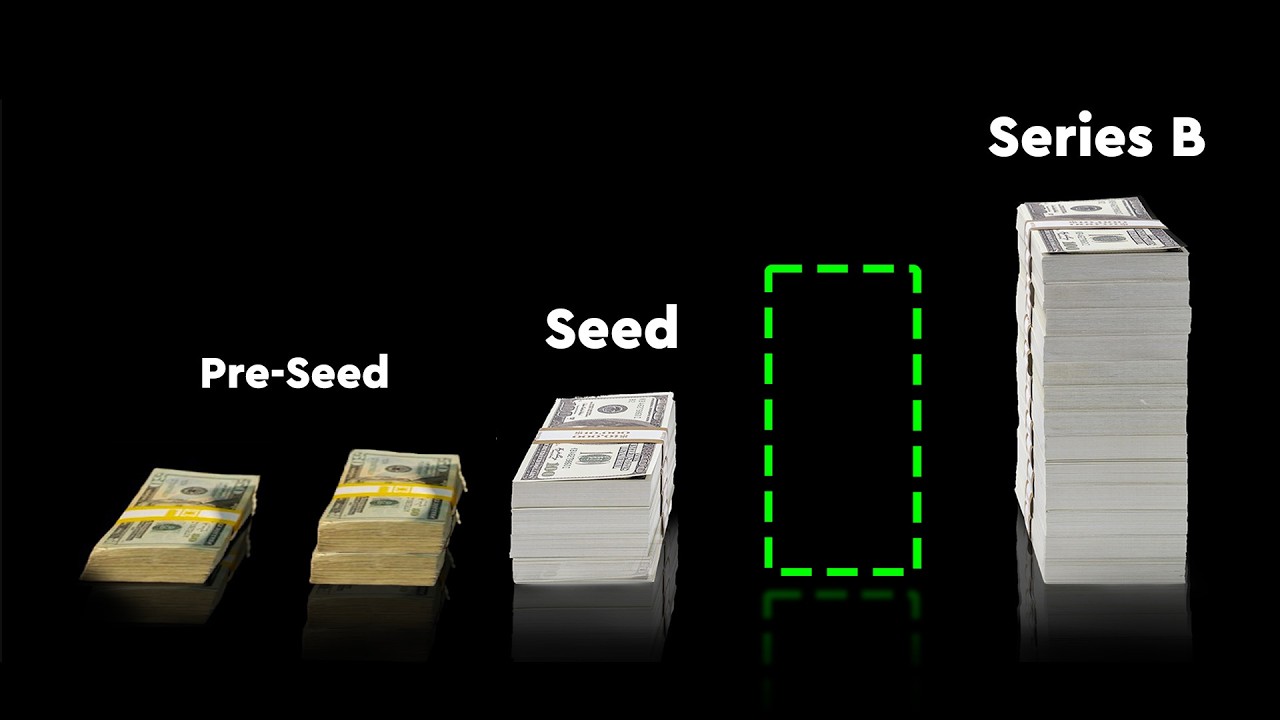
And the second type that often says they want to invest at this stage with the idea and the product market fit phase, are pre-seed. But pre-seed I think is a little bit of a misnomer. Pre-seed investors are really looking for two things.
One, they're looking for pedigree founders. What is pedigree? Well, if you're a YC founder, you're pedigree.
If you went to Harvard or Stanford, you're pedigree. If you went to one of the top unicorns and you were one of the first engineers, even though your idea and your product market fit is unproven, even though you are unproven as a founder, you have some pedigree. And these pre-seed funds will look at that pedigree.
Are there exceptions to this? Absolutely. Sometimes pre-seed funds will go for an absolute first time founder and completely bet on them, 'cause they really believe in the person, they believe in the pattern matching, that's applying in their heads and they believe in the market you're going after.
But I put it right over here because no matter what pre-seed investors will tell you, they're still looking at signs of growth or they're looking for pedigree. They are really in the scouting business. They're trying to figure out how do I get in early enough on a high probability founder, because they have the pedigree.
And that way I can actually funnel those investments into my partners that are in the later stages. That's how this whole thing comes together. So in reality, if you're thinking that, oh, I'm gonna go pitch investors, they're gonna give me money and then I'm gonna go build it and then I'm gonna go build the go to market, then you're gonna be wasting a lot of time.
You will get a lot of meetings, but in reality, at the end of it, they'll tell you that phrase that I'm sure you've heard if you've tried this already, you're too early. And at the beginning you might say, you know what? I don't get it, they knew I was pre revenue, they knew I was pre product market fit.
Why are they now deciding I'm too early? They knew I was too early. It's because of the information and that's why they do it.
Now, as we get into the later stages, that's where it gets really interesting, particularly in terms of venture capital as you get into the product market fit to the growth stage, where you're saying, you know what? We have a go-to-market machine. Let's just say we have one channel, we have founder-led sales, we're doing all the sales, but we know that there's a real market for it and we're starting to see some growth.
And we know that if we actually put in more salespeople, we put in more marketing dollars, we know that this will grow faster. Meaning you have some month over month growth with the founder led go to market that you have or some initial people that you've hired. But now you know that if you put in another dollar into that machine, there's gonna be a little bit more that comes out or at least there's gonna be more growth coming out.
This starts to become more of a high probability bet, which is why at this stage you can go into seed funds and you can even go into series A funds. Okay so that's the growth stage. As you start to get through the growth stage and you really get your month over month growth up, it becomes less of a bet on you the founder, less of a bet on the market, but more of a bet on look, there's clear math that says if we put in a dollar into this go-to market machine, $2 are going to come out and there's a massive market for this.
And this is where you get the series B+ funds. And all the later stages that come from C all the way to F. And then as you continue to scale and you continue to grow, there are certain exit opportunities that come up for you.
You could exit to a strategic, this is a larger company in your space that would buy you. A strategic example would be, for example, Marketo was in the marketing automation business. Adobe was in the marketing cloud business and Adobe bought Marketo, that was a strategic exit.
Another type of exit that you might get, which is kind of the coveted one when you venture back, is an IPO. An IPO is an initial public offering. This is when your company is at a hundred to 200 million in annual recurring revenue and you actually start selling stock to the public.
So that any person out there in the stock market can actually buy a piece of your company. And that's one of the biggest ways to exit and that's how venture capitalists really make their money. And the last piece is private equity.
This one is a little bit of a middle zone. Private equity are what we call financial buyers. Financial buyers are ones that say, you know what?
You are doing this much with the business, but I bet we can make it do better. We can put in a new CEO, we can revamp the leadership team, we can fix the go-to-market machine, we can fix your sales process, we can hook it into this other company that we have and we'll make more money and in three years we'll be able to sell that company for a larger price so we'll pay you a certain amount. Private equity buyers tend to pay a lower price for your SaaS business, but there's still great ways to exit.
In fact, a lot of founders that are bootstrapped continue on from their initial funding. They fund the business, they own majority of the company and they exit to private equity. That's a great way for bootstrap founders to make tens of hundreds of millions of dollars without ever raising a form of outside capital and being in a small market.
That's the cool part about this. So that's principle number two. If principle number one is these are the stages that you go through.
Principle number two is these are the funding opportunities that are available to you as you start to grow your business. And the biggest thing you need to learn from this is to know what stage you are in and who's the right investor to actually pitch. This is super important 'cause it'll help you allocate your time on the right things so that you can actually play the game.
What I gave you in principle number one and principle number two are essentially the rules of the game. You really can't change the rules. Maybe you can cheat, maybe there's one way out.
Maybe you'll talk to one founder that kind of followed a different mode, but that's not the majority. This is essentially the rules of the game. In principle number three, I'm gonna teach you how to actually play the game.
Before I do that, let me just pause here for a second. Are you starting to see the power in this? Are you starting to see the power of the venture capital game?
Are you starting to see the power of exactly what the stages are? And maybe you're starting to see some familiar things that have happened to you as you've dabbled your feet in fundraising. If you're starting to see the power in this, can I just get a yes in the comments below along with your crazy stories on fundraising and also smash that like button for the YouTube algorithm?
It just loves it when you do that. By the way, if you're at this stage and you're like, TK, I need to raise money, but I also need to drive growth so that I can raise money. So how do I drive growth without raising money?
And you probably need a proper growth strategy. This is why I have my five point SaaS Growth Strategy Guide. It's completely free.
You don't have to go anywhere right now. I'll link to it below. I'll tell you more about it at the end of this episode.
But right now, let's go into principle number three. So principle number three is if these are the rules, how do you play the game? One of the biggest things that I learned about playing the venture capital game the wrong way, meaning I made these mistakes as well, is that you gotta know when to talk to investors and how to talk to them.
And the biggest thing that you need to understand is in this phase, until you've hit this inflection point, this is essentially an inflection point. You are essentially not raising. This is one of the biggest mistakes that I made and a lot of founders make today.
Instead of focusing on the business, instead of talking to a thousand customers, instead of getting founder led sales and marketing going so that they can actually get revenues flowing, instead of building a really 10X product, they're wasting time dabbling with talking to investors. And when they talk to them, they're like, are you raising? They're like, well, we're kind of raising, we're working on a round.
And then you talk to 'em three months later they're like, are you raising, like we're kind of, we're still working on the round and you look like a stale deal. The most important way to play this venture capital game is to essentially be in a default state of not raising. Investor reaches out you can say, "Hey look, we're not raising, we're not there yet, we're in fact too early for you.
But I'm happy to have a conversation and maybe you can give me some advice or we, you can gimme some insights. " That's totally okay. But if you aren't hitting an inflection point of growth, raising is pretty much a kiss of death.
It's kind of like a first impression. You meet them and you're like, we're raising, and you're like, cool. Tell me everything about the business.
You tell them everything. You show them this deck and you don't even have customers. You don't even have that growth inflection point.
That's their first impression of you and you talk to them three months later, or six months later, you start looking like a stale deal. If instead you spend all of your time on actually talking to the customers and getting your go-to-market motions going, and getting your founder led, go-to-market going, then you can actually just engage the investors in a different way. You can just say, "Hey, look, we're just getting the thing going.
We're trying to get to product market fit. We're getting the initial revenues going, we're really early, so I don't wanna waste your time, but if you still wanna talk, I'm happy to talk. Maybe you can give me some feedback.
" That's it, there's no pitch deck, there's nothing to pitch, there's no raise. And if anything, if the investor truly loves you, then they'll reach out to you and say, "Hey, look, I love what you're doing. I really believe in you, we wanna preempt a round.
" Preempting a round is essentially where an investor comes to you because they know you like you and trust you, and they say, look, you may not be raising, but we really wanna invest in you. We'll do one of two things. One, they can put down a term sheet and say, "Yeah, we're super interested here's our offer.
" Or they might say, "Please let us know first as soon as you start raising. " Either one of those are great. The second one where they say, please let us know first is your most likely scenario.
And that's what you want to be doing. You wanna be building these relationships, not raising, not pitching, not showing a pitch deck and ready and willing to move when you come and say, "Hey, we are ready Now I know we talked, but we hit that inflection point. We're ready to raise a round, can we meet?
" And all of a sudden you are in control and you're controlling the frame. If you are not at that revenue inflection point, you're essentially going to be wasting a lot of time. And honestly, you're gonna be making bad impressions and that's something for you to think about.
Ultimately, the most scarce resource is your time and your attention. The entire job of the investor, and this is their job, is to meet with as many founders as possible to get pattern recognition, to get information, to get data points on you. So they have nothing to lose, they're doing their job.
It's not nefarious in any way. This is just what their job is. Your job as a founder is to get this curve going.
Your job as a founder is to use these funding sources in your own resourcefulness, like founder led go to market, to actually get growth going. And as soon as you get growth going at these inflection points is when you are raising. Something changes when you approach the fundraising game in this way, this is how you play the game.
Instead of looking like a beggar, hoping for money and saying, "If only you believed in me and if only you invested in me, if only you saw this business is right and the market is huge, I would be able to build this incredible company. " Instead of doing that, you get to work, you get to work on building, you get to work on selling, you get to work on marketing. And as soon as you start hitting these inflection points, then you go to the investors and say, "Hey, I'd like to show you my pitch deck we're raising, we're gonna raise over the next two weeks.
" And ideally, by the time you get into one of these inflection points, you have 10 to 100 investors that you've casually talk to over time but never pitched. That's the power in how you play the venture game, that's it. And remember, investors will want to talk to you.
They'll want to see your pitch deck. It's their job, it's not their fault, but you have to think about how best to spend your time and your energy and how to play this game in the best way possible. The last thing I want to tell you, and this is one of the things I learned the hard way, is that even if you take the most successful companies, you take companies like Uber, or Airbnb, the most successful Salesforce, investors looked at them in the idea stage and the product market fit stage and the growth stage, even in the scale stages.
And there were plenty of investors that said, "This is not a real business. This is not a big enough market. This is not a great founder, this is not a great product.
" Even though they were successful companies. Don't think that investors tell you if you have a good business or not, your customers do. At the end of the day, investors are just making a bet.
They're putting their chips in or not. It's their opinion and it's their inference based on the data that they have, based on the knowledge that they have on whether you have a investible company for them or not. But ultimately, the market decides.
The market decides if you have a great business or not. So if you're going to these fundraising meetings and trust me, I've been there, I've done the trek from Sandhill Road to San Francisco and I stopped off at the in and out along the way because I had a really tough investor meeting. I've done that, I've been there.
But don't beat yourself up. Those moments where you're sitting there and you're looking at your child, essentially your startup, and you're looking, it's not an ugly child, it's such a great company, why can't they see it? And you start second guessing yourself and you start wondering if the company's worse than you think it is, don't, it's not a judgment on you, it's not a judgment on the business, it's their opinion.
So don't beat yourself up over it, just keep going. Because remember, even the greats had plenty of nos from investors. In fact, investors keep an anti-portfolio.
It's a portfolio of companies that did tremendously well that they saw the pitch on and they passed, and it's their regrettable losses. And that's the name of the game. So as you're going through this process, you need to make sure you're focusing on the right thing.
You're focusing on actual customers, 'cause ultimately they decide if you have a successful business, if you have a growth business, if you have revenues flowing in, and then the investors will jump on, believe it or not. So to recap, the first principle you need to know about the startup funding game is to know what stages there are. There's the idea stage, the product market fit stage, the growth stage, the scale stage, the exit stage.
And in all these stages, the further along you go, the more the month over month growth goes in revenues. Second principle, in each of these stages, there are appropriate investors. Venture capital is really driven by month over month growth.
When you have glimmers of hope, pre-seed and seed funds are interested, that's when month over month growth is starting to go up. When you have healthy month over month growth, but it's not fully cranking yet, Series A is great. Once it becomes a mathematical equation, series B, C, D, E, and F and all the way comes into play.
Those are more true financial institutions versus VCs who are really betting on you, the market and the product really coming together. And eventually, whether you're bootstrapped or you're fundraising, you exit through an IPO, a strategic buyer or a private equity buyer, and they all have different prices that they pay. Once you know the rules, you know how to play the game.
The game is until you hit these inflection points of growth, you are not raising, you don't have a pitch deck, you are not pitching. None of that is happening. But as soon as you start hitting those inflection points, that's when you go to all those people you've had a conversation with.
With no pitch deck and no pitching, and you say, "Hey, I think we figured it out and I think we're gonna raise now, would you be interested? " And they're gonna be like, "Hell yeah, we're interested. I've talked to you for months or years and I've been waiting for this.
And that's where the game really gets fun. " I've been in your shoes before where I've been in pitch meetings that didn't go well, and I've also been in pitch meetings where I raised $15 million from Andreessen Horowitz. I've seen both sides of it.
I've raised from the likes of Jason Cal Canis, from Esther Dyson, from Dave McClure, and I've been said no from investors who later on came back to me and said, "Hey, we should have invested. " I've been on both sides, and it's a really tough game. Even for the best of the best investors and founders, it's a really tough part of the process.
It's not fun, it's not supposed to be fun. It's natural. But at the same time, if you know the rules of the game and you play it effectively and ultimately you stay focused on what do I need to do to get this cranking?
You get resourceful on how do I get founder-led go-to-market going? You get resourceful on how do I get sales and marketing going? How do I talk to as many customers as possible?
How have you really nailed this in? You get resourceful about that. Month over month growth starts to kick in, and as it kicks in, investor interest goes up because you're now at the right inflection point.
So now you know what the three principles are in the startup funding game. What you may not know is TK, how do I get growth going? How do I embrace founder-led go-to market?
This is why I created my five point SaaS Growth Strategy Guide, goes into detail on exactly how I approach growing SaaS businesses. It's completely free. If you wanna grab a copy, just go to getunstoppable.
com/strategy, getunstoppable. com/strategy. And on that, you just follow your email and you get access to it right away.
Also, if you got value from this video, please smash that like button for the YouTube algorithm, it just loves it when you do that. If you have a fellow founder, if you're part of a Slack group or a WhatsApp group with other founders, that would get value from this video, people that are in the trenches like us raising and going through this process, maybe stopping at the in and out between Sandhill Road and San Francisco, please share this video with them. I wanna help as many SaaS founders as possible in this funding journey.
Also, I drop an episode like this every single Sunday with actionable strategies and tactics from the trenches on how to produce SaaS business faster. So be sure to hit that subscribe button and that bell icon, you'll get notified every single time I drop an episode. And lastly, remember, everyone needs a strategy for their life and their business.
When you are with us, yours is gonna be unstoppable. I'm TK and I'll see you in the next episode, or inside the five point SaaS Growth Strategy Guide link below. Take care everybody.
(upbeat music) This is one of the biggest lessons that I learned even in my own journey. All the bigger funds will meet with you, but you shouldn't waste your (indistinct). Woo, wow.
I think I'm on no man's land, let me redo this.





![NEVER Say This To An Investor [9 Things]](https://img.youtube.com/vi/9yZsTCoEzZk/maxresdefault.jpg)