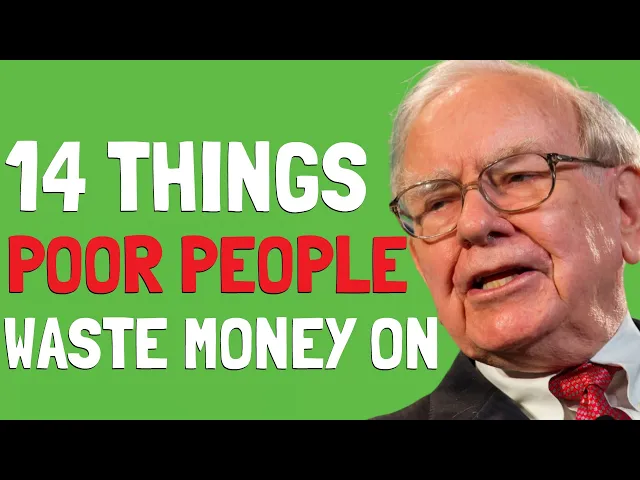
1. New things: We live in a consumerist era, so it's important to spend every single day on things that we both need and don't need. But let's turn to Warren Buffett for a second.
When he had his first child, he transformed a dresser into a crib for the baby. When he had his second child, he ended up borrowing a crib from a friend. The moral of this story is: why buy something new when you don't need to?
Before you even think of buying something, see if there's something you can repurpose in your home first. If not, see if you can borrow or rent the item for the time you need it instead of buying it. 2.
Smoking: Smoking is a bad habit for two reasons. The first is that it's bad for your health, and the second is that it's extremely expensive. There's a reason why Warren Buffett never smoked a cigarette in his life, even though he was alive during a time when it was much more commonplace to smoke.
The issue with smoking is that it's not typically enjoyed as an occasional thing. If you smoke, you smoke several packs a month, and if a pack costs you fifteen dollars, it's not hard to spend hundreds a month. Quitting is never an easy thing to do, but with incentives like your health and money, it can inspire a change.
Take it slow and steady, and don't give up, even if you fall back into your habit. 3. Junk food: Chocolate, potato chips, cookies, and candies of all sorts are not just the dreams of children, but many adults too.
While the viewer knowledgeable about Warren Buffett may say that Warren Buffett eats McDonald's every day and that's junk food, there's a stark difference. Warren Buffett eats McDonald's as his main meal for the day, whereas many people who eat junk food eat it on top of their regular meals. It's essential to find balance.
You shouldn't deny yourself a bite of chocolate or a bowl of chips occasionally, but to make sure you're not losing your money, make sure it's a treat or reward after a week of work. 4. They forget about themselves: When you break it down, the only person who can spend money and make money is you.
You oversee your finances and your growth as an individual, which is why Warren Buffett, the great investor, says the best investment you can make is in yourself. Essentially, the more you know, the more you'll be able to do, and the more you'll be able to save. For example, you could read investment books, personal finance books, or watch YouTube channels like Investors Weekly, which you can subscribe to in order to learn as much as possible about how to become financially independent.
5. Gambling: Have you bought a lottery ticket recently? How about a scratch card?
Or maybe you played real money poker with your friends? All of these are considered gambling, and while it may be fun, it's an easy way to lose a lot of money and can even become a serious addiction. The thrill of potentially winning a large sum of money is a pit that can cause you to spend so much money that, at worst, you can end up homeless.
If you enjoy the thrill of gambling, then make sure you only bring as much cash as you want to spend. 6. Spending too much on restaurants: After a full day of work, it's unlikely that cooking is the first thing on your list of ways to relax.
That's where the restaurant comes in. But unfortunately, you end up paying for the convenience and service. If you pay five dollars for a meal you can make at home, then it's normal to spend three times the price at a restaurant, or fifteen dollars.
Saving ten dollars a day can make a massive difference every month. It can be hard to find time to cook, so finding easy recipes with appliances like a slow cooker or a pressure cooker can help. 7.
Too many personal products: There's a massive number of personal products available for all sorts of things: perfumes, makeup, nail care, skin care, shaving, etc. But out of the many products, what do you really need? For example, Warren Buffett never buys any personal products, and he's over 90 years old.
If you feel like you're struggling to make it month to month, and you know you spent a lot on personal products, then go over what products you can cut off safely and still get the desired result. Even a small 25% cut can make a huge difference. Would you like an extra $25 a month?
Let us know by liking the video. 8. Cancel unused subscriptions: Most TV networks that used to be TV channels have now transferred to streaming services, but paying for individual services like Netflix, Hulu, Plex, Disney+, Amazon Prime, and more can add up very quickly.
It can be hard to tell what you use and what you don't. The first way around this is to never use automatic subscriptions. This will help you only keep the subscriptions you use, because you'll manually pay for them.
Another method is to ask yourself if you use a streaming service at least once a week. If you don't, then it's best to consider it an unused subscription. 9.
Not using your gym membership: With the New Year rapidly approaching, New Year's resolutions are being prepared. According to Statista, the top three resolutions for Americans in 2022 all had to do with exercise and health. The sad reality is that many people will buy a membership to better themselves, only to forget about it a few weeks to a few months later.
We get it, though; exercising consistently is hard, especially with a busy lifestyle. So if you have an unused gym membership, cancel it. If you are thinking.
. . Of one, but not sure you’ll commit, it’s better to start with free exercises like walking, hiking, or calisthenics.
10. Leasing new cars: the feel of driving a brand new car is an experience like no other, but that might be because the wallet you’d normally sit on is completely empty, as opposed to full of cash. New cars are expensive, and leasing means that you’re paying a large sum every month for an asset that’s constantly depreciating in value.
In other words, it’s money you’ll never see back. The question here is, why lease a new car when you can buy a used model that works just as well, but for a significantly cheaper price? If we asked Warren Buffett, he’d likely answer that a used car is the way to go, considering that he drives a used car himself.
11. Overspending on clothes: did you know that Warren Buffett gets his suits from a seamstress named Madame Lee? Never heard of her?
Neither have we, and that speaks volumes about Buffett. It’s clear that he doesn’t pay a hefty price tag on those suits, at least not in comparison to something like an Armani suit. To Buffett, clothes are simply to be worn, and if he looks good and feels good, there’s no need to spend tons of money.
There are two ways you can deal with overspending on clothes: firstly, you can simply avoid brand name clothes and shop at stores that offer high quality fashion for cheap, like Zara; or, if you’re a brand name lover, you can rent clothes for special occasions. 12. New gadgets and devices: the rate at which technology is growing is astounding, and so is the rate at which people spend on new products every year.
While it may be fun to stay up to date with the newest gadgets and devices on the market, it may be best to wait on the sidelines until you need to replace the new gadget or device. A quick Google search can show you that a new iPhone 14 Pro Max is just over one thousand dollars. Now imagine paying that every year and imagine what you can do with one thousand dollars extra every year.
13. Drnking at bars or restaurants: alcohol is enjoyable to many people and is part of a great experience during a night out at a bar or restaurant. Unfortunately, buying drinks is an extremely easy way to spend over a hundred dollars in a single night.
There’s a reason why Warren Buffett doesn’t drink. Since bars and restaurants have many expenses to pay, it’s normal for the price of alcohol to be three to four times the amount you can buy in a store. To avoid overspending on alcohol, you can either drink at home before you go out and have fun, or you can find a way to squeeze it into your budget by limiting other expenses.
Before I share this last tip with you, let us know in the comments below what you think poor people waste the most money on. 14. Debt from credit cards: it’s easy to forget that the money you spend on a credit card is not yours but the money that’s loaned to you.
Any money that’s loaned is money that you’ll not only have to pay back, but pay back with interest. For example, if you bought a couch for one thousand dollars with your credit card and didn’t pay it back immediately, you’ll end up paying over one thousand dollars for the couch because of interest payments. Fortunately, aggressive debt payment plans like the debt snowball method can help you get rid of debts quickly.
If you’re debt free, then focus only on using your credit card if you know you can pay your statements in full, or be like Warren Buffett and stick to cash.