Some of the best-known endemic animals of Mexico are the vaquita marina, the axolotl, the Cozumel frogfish, the Yucatan corzuela, and the Mexican spiny-tailed iguana, among others. Mexico is a country located in the southern part of North America. Due to this location, it is one of the tropical regions with great biodiversity.
In this sense, in the Mexican territory there are numerous islands, which are home to species native to that area. In addition to the insular regions, various states are rich in endemic species, whose distribution is restricted to that geographic area. Likewise, there are natural events, such as migrations, that enrich animal populations.
For example, in the winter months, the western and central routes of North American bird movements to the south pass through Mexico, thus being able to diversify its avifauna. The most characteristic endemic animals of Mexico Vaquita marina (Phocoena sinus) The Phocoena sinus is a marine mammal native to the Upper Gulf of California, in Mexico. This species is the smallest among all cetaceans worldwide.
The female measures 140 centimeters, while the male has a length of 135 centimeters. In relation to the weight, it is around 50 kilograms. This species is characterized by the fact that the upper part of the body is dark gray, which contrasts with the belly, which is light gray or white.
Its fins are large, in proportion to the dimensions of the body. The vaquita porpoise is classified by the IUCN as critically endangered. Mexican Green Macaw (Ara militaris mexicanus) The Mexican Green Macaw is a subspecies of the Ara militaris.
It is native to Mexico, spreading in the Pacific area, from Chihuahua to Guerrero. On the slope of the Atlantic Ocean, it is found from Tamaulipas and Nuevo León to San Luis de Potosí. In addition, it is in Morelos, Durango, Oaxaca and Puebla.
It is a large bird with green plumage. On its forehead it has a distinctive red spot, which stands out against its pink face. As for the t-shirt feathers, they are bright blue.
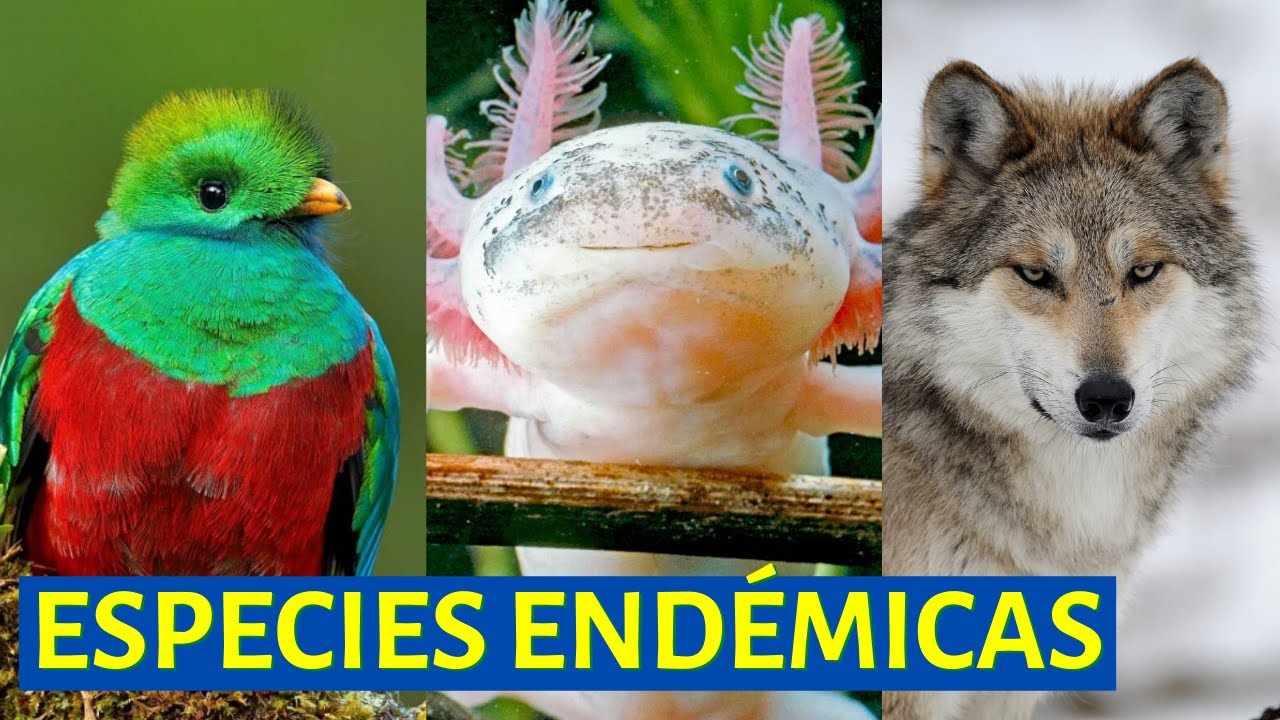
Mexican gray wolf (Canis lupus baileyi) The Mexican gray wolf is the smallest North American subspecies of gray wolf. In addition, it is one of the most endangered placental mammals on the continent. As for the dimensions, its size ranges between 140 and 180 centimeters, considering the tail.
His weight is between 21 and 41 kilograms. Historically, in Mexico, it was found in Coahuila, Chihuahua, Nuevo León, Zacatecas, Durango, Aguascalientes, Oaxaca, el Bajío and in San Luis Potosí. Unfortunately, the Mexican gray wolves were exterminated from their natural habitat.
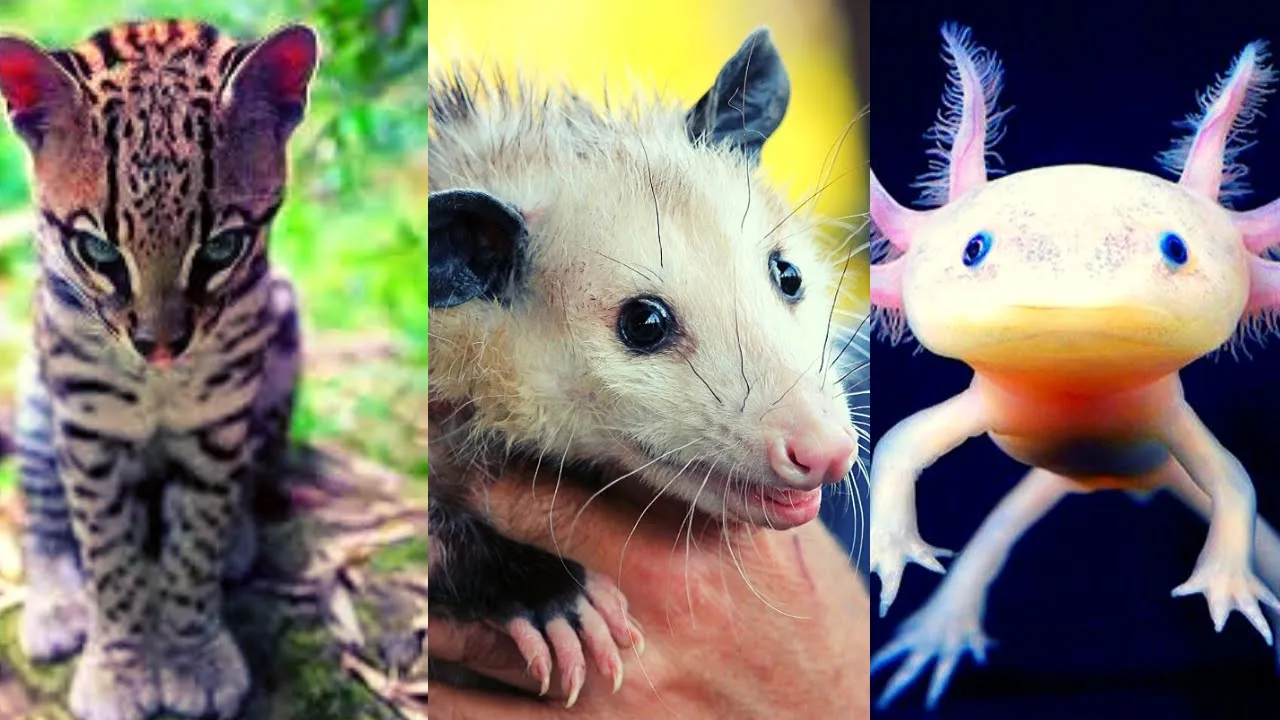
This occurred as a consequence of the eradication campaigns, implemented in response to the depredation that this wolf did to domestic livestock. Currently, there are reinsertion programs, however, it is still considered an extinct population in the wild. Axolotl (Ambystoma mexicanum) The axolotl is a long, dark salamander.
It has a cylindrical body, which is up to 30 centimeters long. Among its most outstanding characteristics are its large gills, similar to an appendix. These organs are extended from the back of the head.
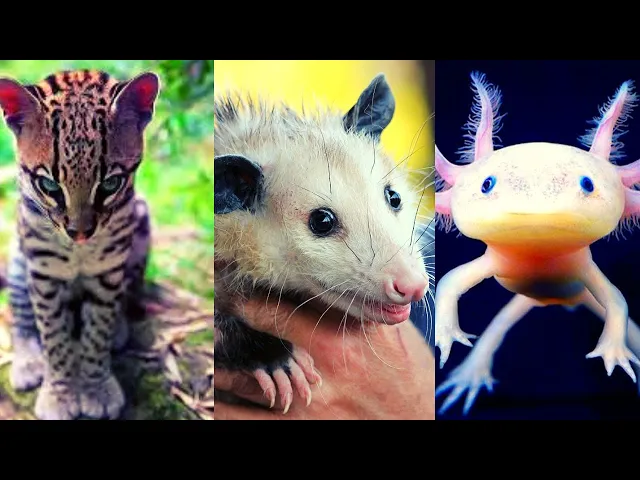
The Mexican axolotl is an endemic animal of the lacustrine system located in the Basin of Mexico, including the Xochimilco, Texcoco and Chalco lakes. However, due to its extinction from some of these regions, it currently lives only in the wetlands and channels of Xochimilco. Ocelot (Leopardus pardalis) The ocelot is a solitary animal with nocturnal habits.
This medium-sized feline is native to Mexico, the United States, South America, and Central America. In Mexico, it is distributed in Sonora, Tamaulipas, Jalisco, San Luis de Potosí and Aguascalientes. Their fur varies from pale to dark reddish tones.
It has brown spots, with black edges. These are small on the head and legs, while on the back, flanks and cheeks are elongated. As for the neck and lower body area, they are white.
The inner part of the legs has some dark horizontal stripes. Mockingbird (Mimus polyglottos) This bird is also known as the northern mockingbird. This is due to its ability to copy the calls of other birds, animals and even human beings.
Its distribution in Mexico is wide, although it generally lives towards the north of the country. It is also located in North America and Cuba. Adult specimens are gray on the upper part of the body, with light yellow eyes and a black beak.
It has a dark tail with a white border and long black legs. Cozumel Toadfish (Sanopus splendidus) The Cozumel Toadfish is approximately 24 centimeters long and lives under coral outcrops on the island of Cozumel. Because of this, it is also known as coral frogfish.
One aspect that differentiates this species from the rest of the Batrachoididae family is its bright coloration. Its fins are a bright yellow tone, which stand out against its dark body. This has a base coloration of a grayish brown tone, with patterns of light horizontal lines, bordered in black.
Its head is flat and it has a wide mouth, where there are small and sharp teeth. In relation to the eyes, they are located in the upper area, looking directly up. Cozumel Thrasher (Toxostoma guttatum) The Cozumel Thrasher is a bird that belongs to the Mimidae family.
Its natural habitat is the deciduous and semi-deciduous forest of the island of Cozumel, in Yucatan. The body is between 21. 5 and 24 centimeters long.
In relation to the plumage, the back and the head are dark brown or cinnamon, with a slightly paler face. In this, its black beak and amber eyes stand out. The wings stand out for having two white stripes.
As for the ventral area and the throat, they are cream-colored and have scattered dark stripes. Towards the area of the flanks and on the chest, this Mexican bird has thick dark bars. This species is in serious danger of becoming extinct, as it is strongly threatened by hurricanes and predation by some species introduced to the island, such as boas.
Gray mouse opossum (Tlacuatzin canescens) The gray mouse opossum is a marsupial that is distributed from southern Sonora to Oaxaca. Also, it is found in Yucatan and on the Marias Islands. This mammal has a gray body and is one of the smallest within the species that form the infraclass to which it belongs.
The eyes stand out on his face, which are framed by large circles of black hair. Their ears are round, wide and devoid of hair. As for the tail, it is prehensile and partially covered with hair.
The length of this is approximately equal to the total length of the animal. Northern Cozumel Coati (Nasua narica ssp. Nelsoni) This placental mammal is endemic to the island of Cozumel.
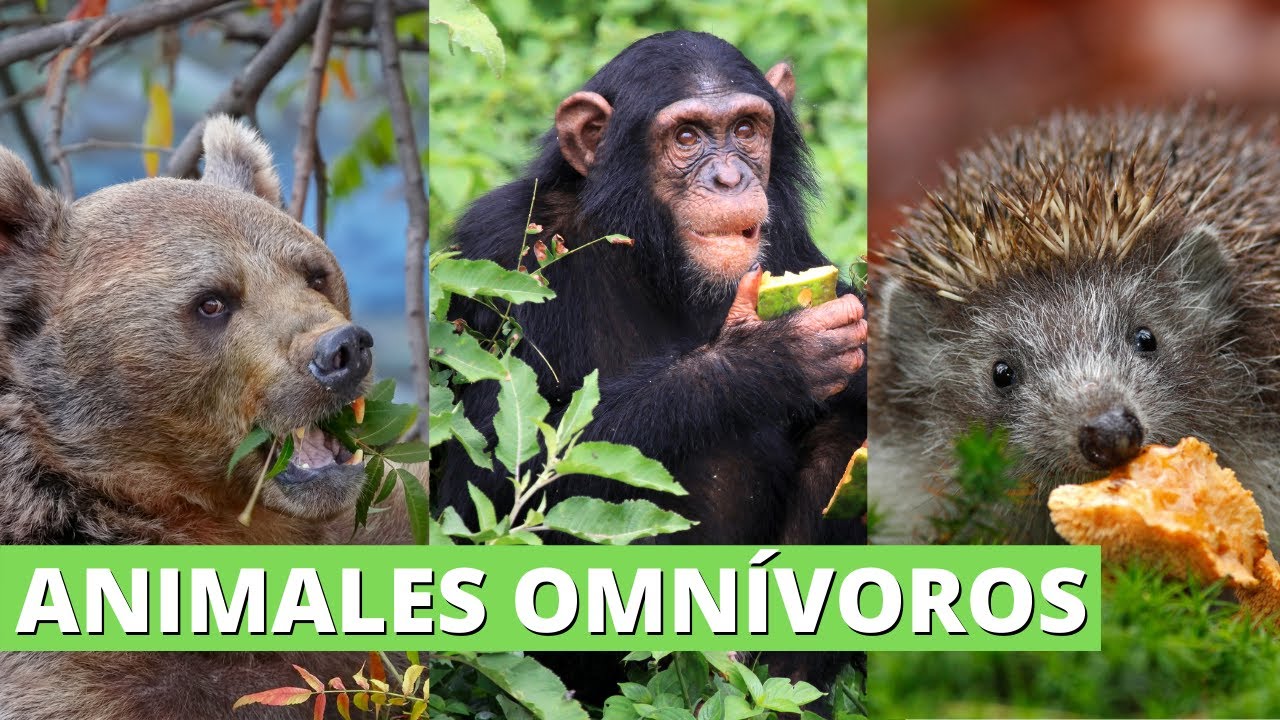
It is an omnivorous animal that feeds mainly on insects, snails, larvae, crustaceans, fruits, lizards and rodents. Also, it eats carrion, which it takes advantage of the remains of animals left behind by other predators. The body of the northern Cozumel coati is slender, with a long tail that usually has dark rings and is always erect.
On the head, the muzzle is elongated and ends in a black nose. One of its main characteristics is the dark patch in the form of a mask that is found on the face. In relation to the coloration of the dorsal region, the legs and the tail, it is dark brown, while the area of the shoulders and the head is brown, with golden streaks.
In terms of size, it is smaller than the continental species. Thus, the males measure approximately 78. 5 centimeters and the females 74.
4 centimeters. Mexican West Coast Rattlesnake (Crotalus basiliscus) This species is a venomous viper belonging to the Viperidae family. It inhabits tropical thorny and deciduous forests, located from Michoacán to southern Sonora.
This rattlesnake is one of the largest within its genus. It can measure from 1. 50 to 2 meters.
It has a robust body, in the middle of which there are between 25 and 29 rows of keeled dorsal scales. In relation to color, it has a grayish or brown background, where 26 to 41 dark spots overlap. These are diamond-shaped and the edges are clear.
The belly is white and the tail is grey, with a large rattle at its end. Mexican spiny-tailed iguana (Ctenosaura pectinata) This Mexican reptile is distributed along the Pacific coast, from Sinaloa to Chiapas, including the Balsas River basin. Within its preferred habitats are the coastal banks and lowland forests.
The black iguana, as this species is also known, measures around 120 centimeters. Its body is elongated and robust, with a row of elongated dorsal scales, which form a crest. As for the head, it is long and covered with small hexagonal scales.
The coloration is uniformly black, with some scattered yellowish-white spots. As for its diet, it is based on foliage, insects and fruits. Sinaloa Toad (Incilius mazatlanensis) The Sinaloa toad is characterized by irregularly distributed dark and light spots on its back .
The colorations of these can vary between brown and gray tones. In addition, it has horny and dark tubercles. In the adult stage, it has prominent cranial crests, with dark borders.
This amphibian, which measures between 55 and 100 millimeters in length, is endemic to the Pacific coastal zone, north of Sonora, south of Colima and southwest of Chihuahua. It usually lives in streams, ditches, agricultural channels, rivers and reservoirs. As for its diet, it eats beetles, ants and other insects.
Oaxacan Cecilia (Dermophis oaxacae) Oaxacan Cecilia is a species that is part of the Dermophiidae family. It is native to the southwestern region of Mexico, spreading on the slopes of the Pacific and in the Balsas depression, in Jalisco, Guerrero, Michoacán, Chiapas and Oaxaca. It has a robust blue-black body, which can measure around 454 millimeters.
This is formed by rings, from 119 to 139 primary and from 101 to 133 secondary. As for the head, it is large and has a subterminal mouth and eyes covered by a layer of skin. Thick-billed Parrot (Rhynchopsitta pachyrhyncha) This bird is distributed in pine and fir forests, located at an altitude of up to 3600 meters.
Its habitat is restricted to the Sierra Madre Occidental, Durango and Chihuahua. This species has a bright green coloration , with a thick black bill. Likewise, it has red feathers on the forehead, on the upper part of the wings and in a band that is located on the upper part of the leg.
Regarding the tail, it is black. The mountain parrot, as this species is also called, is among the animals that are in danger of becoming extinct, according to the IUCN. Cuatro Ciénegas Tortoise (Terrapene coahuila) This species, endemic to the Cuatro Ciénagas region (Chihuahua), is part of the group of reptiles in danger of extinction.
The black turtle, as it is also known, has a short and narrow shell, brown, almost black. The plastron is yellow, with some dark spots. Terrapene coahuila lives in swamps and shallow ponds, where aquatic vegetation abounds and the bottoms are muddy.
In relation to food, it is omnivorous and scavenger. 51% of their diet corresponds to insects, while plant species represent 46%. Emerald Tree Frog (Exerodonta smaragdina) This amphibian is characterized by a flat head, a spotted snout, a tarsal pouch, and a lack of an extensive axillary membrane.
In relation to the coloration, it is bright, in yellowish bronze or green tones. Likewise, it could have or lack dark reticulations at the dorsal level. The emerald tree frog is endemic to the Mexican Pacific, from the Sierra Madre Occidental, the Sinaloa Volcanic Mountain Range and the Sierra de Coalcomán, to Morelos and Michoacán.
Orange-breasted bunting (Passerina leclancherii) This passerine bird is part of the Cardinalidae family. It is native to southern and western Mexico. Thus, it is distributed on the Pacific Ocean slope of the Sierra Madre del Sur, from Oaxaca to Jalisco.
In addition, it is located south of the Isthmus of Tehuantepec and in the state of Chiapas. The coloration of the male makes it unmistakable. This, in the upper part, is turquoise blue and green, while in the lower part it has an intense yellow hue.
For its part, the female wears more opaque colors. The upper area is olive green and the lower area is yellow, with a bluish tail. Lilac-crowned Parrot (Amazona finschi) The Lilac-crowned Parrot inhabits western Mexico, ranging from Sonora and Chihuahua to Oaxaca.
However, it has become extinct in a large part of its original distribution. This bird is medium in size, measuring approximately 33 centimeters long from head to tail and weighing an average of 310 grams. It is characterized by the red color that it has on the forehead and the lilac crown, which extends to the sides of the neck.
At the moment that the animal opens its wings, the blue color of the tips of the primary feathers can be observed. Also, the red patches of the secondary feathers are appreciated. Yucatan Corzuela (Mazama pandora) This placental mammal is a small deer native to the Mexican state of Yucatan.
Like most members of the Cervidae family, the Yucatan deer lives in humid tropical forests. However, this species ranges across open, arid regions. The yuk or temazate deer, as this species is also known, has small antlers and its fur is brown.
In relation to food, it is a herbivorous animal. Their diet is based on leaves, flowers, mushrooms, herbs and fruits.