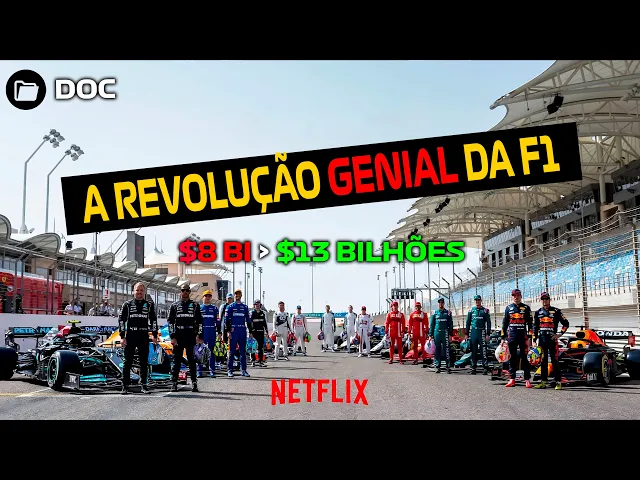
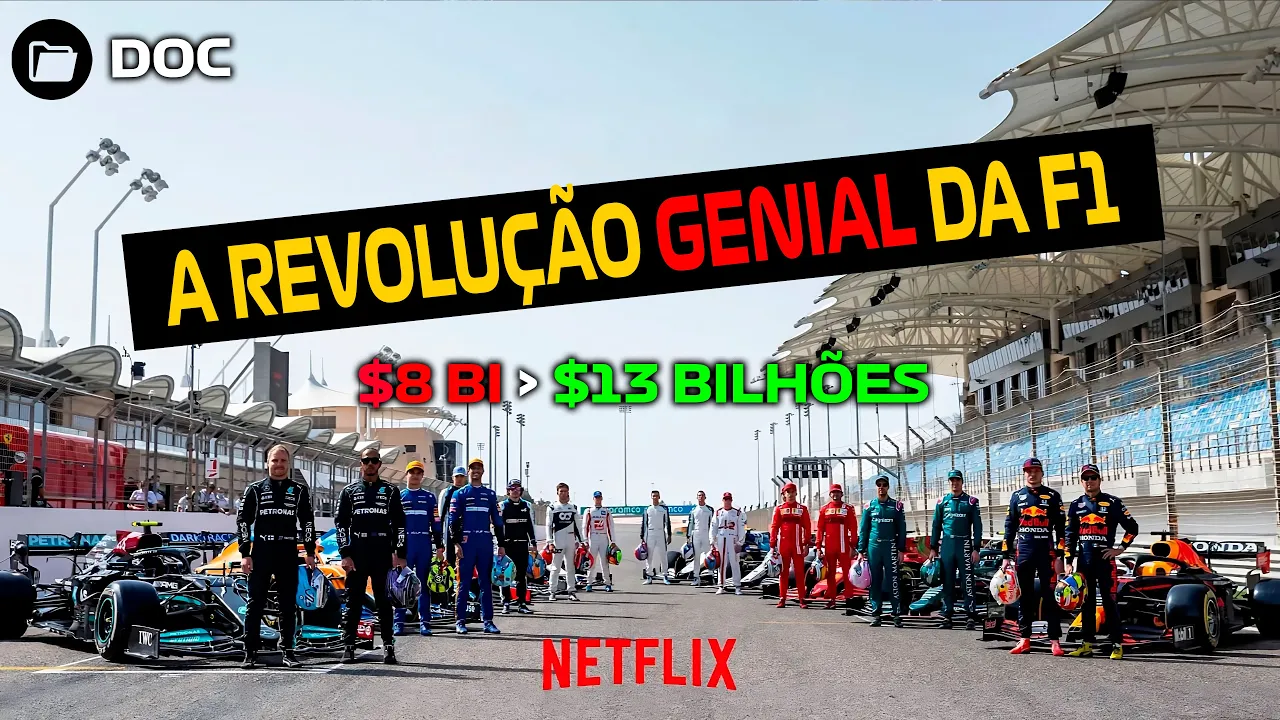
A sport with a market value of 8 billion dollars. The status of queen of motorsport. The pinnacle of motorsport had one big flaw and one big dream: break into the United States.
Today you will understand how Netflix revolutionized Formula 1 in Uncle Sam's land. Hello friend of Ressaca Formula 1, welcome to another video, I'm Matheus Pucci, and in today's documentary we're going to talk about Formula 1 and Netflix. With a global value of 8 billion dollars, formula 1 has always been a huge attraction worldwide.
However, in the United States there has always been a thorn in the side of the main category of world motorsport. Between lukewarm races, a public that did not embrace formula 1, also some vexations happened over the years with the most famous being Indianapolis 2005. What seemed like the lime shovel for Formula 1 to enter the American market, the main one in the world , ended up becoming a motivation for the category to return to American soil in the future.
In 2015 the then CEO of Formula 1 Bernie Ecclestone stated that he would rather reach the 70-year-old man who has a lot of money than invest in young people and teenagers who don't have money. The strategy seems good, logical, but it failed. And in 2016, Liberty Media, an American company, bought formula 1.
From then on, the vision of the category would change forever. The first point that Liberty Media wanted to attack was an American market. According to Liberty Media itself, the sport had almost a premium aura across Europe, but failed with the audience in the United States.
The idea then was to position formula 1 as a company of content, entertainment and to leave a little of the European roots of motorsport. Two years after the acquisition, a Netflix documentary series about Formula 1 was announced. At first, it received little attention and was even viewed with some disdain by some.
Two of the big main teams did not want to participate in the first season, in this case, Mercedes and Ferrari. Red Bull was the only big three that was present in Season One. What at first seemed like a bad thing, turned out to be a good thing because it forced the producers to focus on the battle for the championship, but also on the teams in the middle and back of the pack, giving a relationship with all 20 drivers in the category.
Formula 1 has a very favorable scenario for storytelling, the famous "story telling". And in this you need to maximize tension and conflict. Formula 1 provides its partners with a fertile soil of ideas for this.
There are battles between teammates and battles between teams. In the case of teammates, only one driver can have the same car as you. If you lose to someone else on the grid, there's an excuse, but when your teammate does, he's just better.
There's also the dynamic between teams, with just 10 teams in the league one place higher or lower could mean millions of dollars more or less. And this becomes easier to understand when we see that some team leaders are directly linked to their respective companies as owners or participants in a minority or majority, which is the case of Christian Horner, Toto Wolff, Zac Brown, Lance Stroll, Gunther Steiner . Add it all to the power of dramatization.
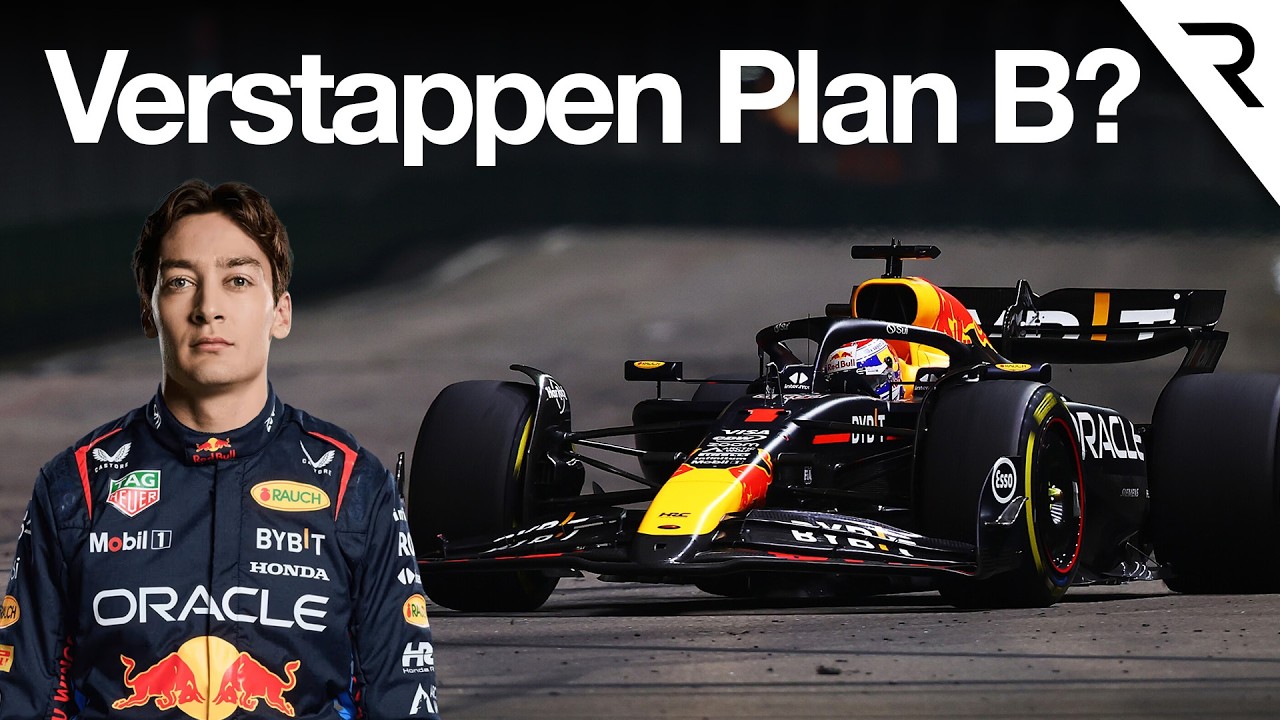
Max Verstappen even accused "Drve to Survive" of being an excessive drama, bringing lies in order to generate more appealing content. He's not wrong. Netflix used a strategy in which it identifies stories for the entire season.
It amplifies the drama and then it has the profit. The result is absurd. Since the launch of Drve to Survive in 2019 Formula 1 has essentially seen a 40% increase in views in the US.
7 of the 10 most watched races in history. And also record after record in attendance during the US Grand Prix in Austin. In 2022, the United States had two Formula 1 races and next year will have three races with the addition of Las Vegas.
Success obviously translates into dollars. From the 8 billion market value it had before "Drve to Survive", formula 1 now has 13 billion market value in just three years of existence. As a bonus, the teams are closing their biggest contracts in history, Red Bull for example, closed a 500 million contract with Oracle, something unimaginable a few years ago.
Another important point about "Drve to Survive" is that only 20% or even less of that is about the race itself. In a sport where your heroes are wearing helmets, seeing their faces and personalities generates a greater affinity among fans. That's why behind the scenes are so important to the story of the series.
Formula 1 estimates that 73 million new fans have joined the sport through "Drve to Survive". Perhaps this information will leave you a little surprised, however, the most interesting thing is at the end: Formula 1 is paid to have the best commercial ever made. Netflix pays license rights to stream "Drve to Survive", Formula 1 doesn't spend to have your name on it, your show being released worldwide on one of the world's leading platforms and making billions off of it.
Whether you like the series or not, the fact is that Netflix has changed the way Formula 1 reaches the final consumer, attracting new, younger fans, generating much more engagement, which generates much more sponsorship, much more money coming in and with that a monumental appreciation. I would like to thank Nathan Baugh who made this article exceptionally and the link will be in the description for you to read. We have a playlist with mini documentaries, statistics and curiosities so stay tuned here on the channel so you don't miss anything.
A big hug, thanks and spoke.