Guys, how to train to failure. "Ah Leandrão, you just have to train, until you don't go up none more ". More or less, we have some types of failure, perfect?
I'll quote here, the four types of failure, and then you you'll find out, if you're training right or wrong. Training to failure is very good, but if you train to failure, way i'm going to explain here, you can overload your system central nervous system, and this can limit your results, for example, by release too much cortisol, by lowering the testosterone, among other factors, that for a natural it is very important. So start this video by clicking on like, and makes us very happy that you subscribe here on the channel, this is very cool for those who generate content, you they have no idea.
Yeah, and here we are going to discuss a little bit, about training to failure. What we watch from bodybuilders, it’s that each of them has some specificities. So you take Ronnie Coleman, he liked to work in the style of powerbuilder, repetitions lower, higher weight, trained to strength and for hypertrophy.
You take other guys, like Tom Platz, for example, the lord of those giant quadriceps, he trained with pyramids, yes, growing, so it started with super loud repetitions, lower load, and vines, is, decreasing the repetitions. That’s why the pyramid is growing, because precisely it grows from intensity, then the volume decreases. Anyway, we have several training modalities.
Dorian Yates liked to train the same muscle every ten days, others like Arnold Schwarzenegger stimulated every muscle twice a week. Now what none, listen to what i'm telling you, none bodybuilder, yeah, let it go is training until failure. Charles Glass the most, which is a top bodybuilder trainer, okay?
If you don't know Charles Glass, look on he is a bodybuilder trainer from tip, he was a bodybuilder, and he interview, very classic this interview, he was asked: "Charles, why, that bodybuilders train with wrong moves, others train like that? "And he simply replied the following: "They they train hard, and that's what matters ". They train hard, so they will grow, each your way, some with more risk, others with less risk but they will respond and this is cool.
So if you understand these principles, is very important. An thing that I stress to my students, train to failure, don't stop before you achieve failure. Now, we're going to discuss here about it, the four types of failure.
My students will fit into a of these types. So let's go to the part more practical, perfect. Let's take over here a barbell, beauty, an exercise biceps, fantastic.
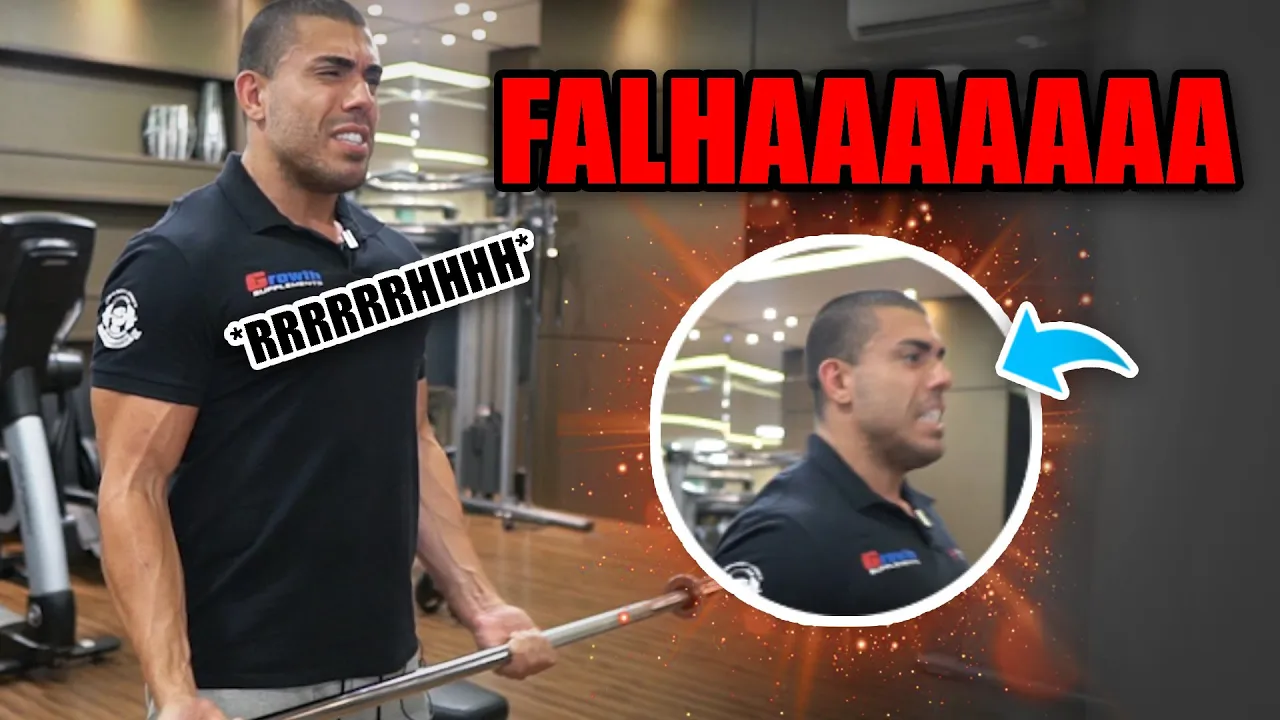
So, I took over the bar, I put a load that I I think it's good, I got into a position fully adequate, and I started to execute my exercise, very well, so I did one, two still calm, 3, etc . . And then there will come a time, that I will, when I bring the bar up, I will strength, strength, strength, and I can't do it anymore ride up.
Then I'll talk, I'll try harder one, because I'm going to make it, and it comes and it doesn't succeeds, at this point I reached the failure? You hit one of the flaws, the concentric failure. So the concentric phase movement, and the eccentric phase of movement, which is the return, but when we speaks of failure, if we seek the failure total, we can go further.
So look, let's assume I went to do the my barbell then, and I went, and not no more goes up, and it's over, I reached the concentric failure, perfect? But let's assume, that this guy who is holding the camera, which at that moment is laughing, and it's beautiful, wonderful, like for him. He put that camera down, and come, pick up the bar here, and play up, for me.
Look how fantastic, that good boy, threw it up, for me, because I I had no strength to climb. Now with the bar up here, I can only hold the eccentric phase, so I'm holding it, I'm doing an eccentric brake. I held, I held it, held it, went down there, then it goes help me again, he threw the bar to up, very good, I will hold, hold, hold, eccentric brake, eccentric brake.
So far, that he will play bar for up, for me, and when I try to do the eccentric brake, the brake is over. So look, he threw the bar up, to me, "hold Leandrão, no, I'm going to play up again ". He threw up, dropped down.
I reached now, our second exercise failure, which is the eccentric failure. Realize that almost nobody uses the eccentric failure, and is correct, because the overuse of the eccentric failure, generates a nervous system wear, absurd. Let's go ahead, for ours, for ours third fault layer so i did the my concentric failure, it helped me, and I I made the eccentric failure.
"The eccentric failure do I always need help? "No necessarily an external aid, I I can help myself, I'll do it here, a concentrated donut, very good. Oh no no more, I can help with my arm, and do only the eccentric, I helped with my other arm, and I make the eccentric failure.
When I'm doing a fixed bar, I I can put a bench underneath, bank, jump up, and secure only the descent of the fixed bar. So I can do it myself, but some exercises i will need helps, for example, a bench press. Yeah, very well, I reached my fault concentric, and my eccentric failure, what is it, the third fault layer therefore?
The third layer of failure, is going to be the isometric failure. So look, when I was here, making my failure eccentric, I was no longer succeeding, is, hold the descent. But if I hold it here, just down here, no here in the middle, not up here, only here in start, this isometry, I don't I'm relaxed, because relaxed is here, I'm resting.
No, my biceps are contracted, are pushing hard, but it's down here, i can achieve concentric failure, he helped me make the eccentric failure, which is now falling, then I go and brake the bar down here, and I'm going to hold it, and I’ll hold it, and then I’ll start shaking, I will start shaking, and it will come back, coming back, coming back, coming back, until it ends, this is the isometric fault. So I can do an exercise, where it will happen, concentric failure, followed by eccentric, and then the isometric failure, this is the complete failure. Very few bodybuilders, train that way, none bodybuilder, trains that way, in all the exercises all year round.
It is not viable, it is not healthy, but it can be used in some cases, some specific training, to extract everything you can. And we have the last failure, which is the fourth failure, which is the failure that many commit, and it is a failure not to if you commit, it is a failure that is not legal, which is the technical flaw. So look at that.
I'm going to do an exercise here, again with a direct donut, perfect, and then, I'll put enough load, because I I intend to become very giant, "and the more weight the better? " Guys, already I talked about it ok? Whenever you have a doubt looking for: Leandro Twin + training hard.
You will understand what it is to train hard, which is not necessarily training with too much weight. And then what am I going to do? I'm going to get it, I got in the position, I prepared myself, right, I stretched, all right, come on, first repetition, well I'm doing with 40 on each side, I'll play here, I almost fell back.
What have I done? Me I made a technical failure, so I didn't I got the move right, and with that, I'm going to injure, I will not recruit the muscles of what I need. Because in this joke to play, look, analyze with me, I will play bar up here, this is the what?
Shoulder flexion, shoulder flexion, shoulder frontal, I'm working frontal shoulder in the biceps exercise, lousy. I did it right, I used my trunk to play the weight up, and I gained nothing from it, Perfect. I took mine, my heel off floor, to help bring it up, I didn't gain anything from it.
Because biceps, elbow, this is biceps, the rest is clowning. So, when you go, do an exercise, if you are, do the technical failure, if you have no technique, if you misses in execution, this sucks. Now concentric failure, it is very important.
"Leandro Twin, we have then, it is training, intensity, volume, perfect, number of series, is, frequency, quite right, and density, perfect, what is density? "Well, guys, I'm going leave you with this video here, which is precisely, about the four variables of training. So you can demand a lot of your muscle, with little load, compensating for other variables, so which is very important, that you know the four training variables.
If you know this theoretical part, the structuring a workout, I guarantee for you, it will be much more simplified. Stay with this video.