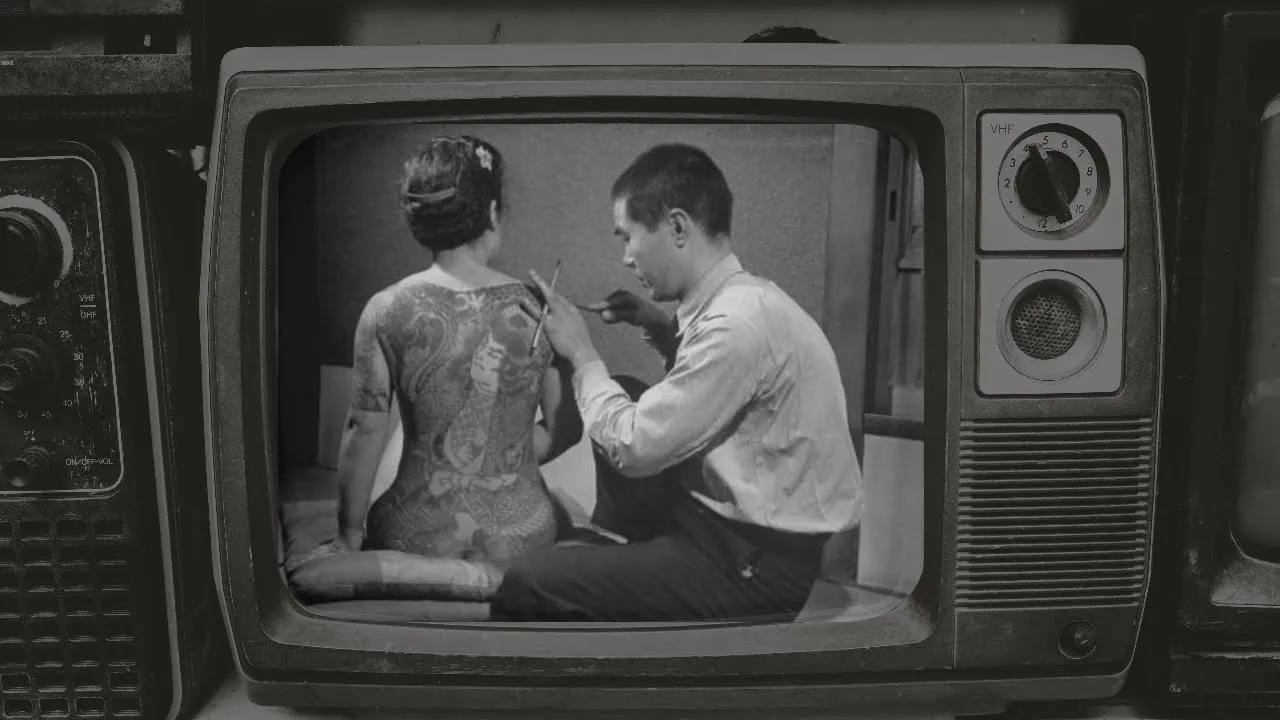
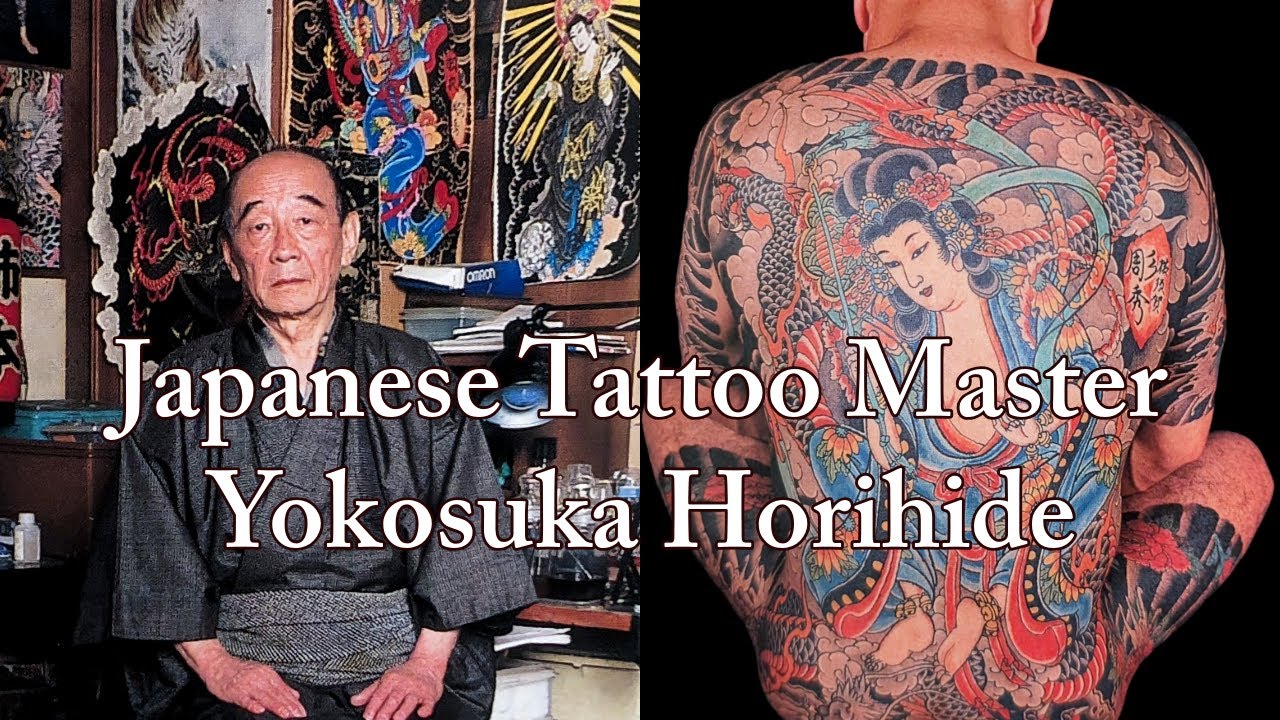
today by popular demand we're going to be talking about the legendary traditional Japanese tatour oroshi the SE we're going to be covering the man what made him legendary we're going to be talking about some of the characteristics of his style and we're going to be walking through five of his works so that being said without any further Ado let's do it or Yoshi thei also know by his real name of kuronuma was born in 1914 to hodi Yoshi the first hosh but first being a legendary traditional Japanese Tater himself he was based in the aabu
region of toio and he became an extremely influential figure in the world of traditional Japanese tattooing he was a skilled painter since childhood in fact his father B Yoshi the first was hoping for him to be a famous painter but of course Boshi II Mr kuronuma had other plans and he wanted to continue the family Legacy continue the family lineage and carry on with the OSI name there are many things that differentiate in Hoshi the second but today I really want to focus on three main areas and one of those areas is in the background
odoshi the second's backgrounds were different from the norm and would come to impact and influence many more toishi taka he used thinner lines in the backgrounds meaning there were more skin breaks you could see more of the skin in the backgrounds that by itself was a differentiator and that differentiator allowed for more dynamism to be shown in the backgrounds because he could use those thinner lines he could use those bigger skin breaks to show movement both in the backgrounds themselves but also in the elements and and the figures employed throughout the tattoo odoshi the second
brought amazing dynamism to traditional Japanese tattoos you could see the movement in the wind in the waves in the clouds the elements within the tattoo and of course the characters and the figures the elements themselves had movement this dynamism and the backgrounds and the figures the thinner lines with the bigger skin breaks would be some of the Hallmarks of his style but they would also be adopted by manishi both in his lifetime and of course ever since in fact manishi nowadays were masters of the style that was initially adopted from some of the elements that
H Yoshi II Incorporated in the traditional Japanese tattooing another differentiator in Hoshi the second's style which was very rare back then and it's actually very rare still now is architecture he would use architecture in his tattooing compositions you would see stuff like branches of of trees you would see roofs you would see Stones you would see Bells you would see just objects in there and architecture to really provide not just more flavor to the tattoos but that actually aided in providing three-dimensionality to the tattoos in fact that thre dimensionality could be another differentiator by itself
where the technique and the sophistication of these 3D elements wasn't so f as to seem like realism but they were sophisticated enough that you could tell oh that looks like it's a 3d figure so it just hit that sweet spot that just right sweet spot that made it that still made it to be a traditional Japanese tattoo but provided that dynamism and that 3D element to it now as I mentioned before Hoshi II was a great inspiration the manishi of the past and many hodish of today both Masters and people still on the up and
up some names that come to mind are hodi Yoshi thei who obviously now has a very distinctive personal style but he was obviously influenced by Hoshi II others include hitoshi the first Hoku the first and of course many many others but that just goes to show the impact that Boshi II had on Masters of today but then also in general you can see what I'm saying just by focusing on the background that many of today's tattooers employ now two additional things that I want to call out and I wouldn't call them differentiators because of course
many hodi do this as well but there's still traits of Hoshi the second's style and those things are that he wouldn't overgrow the tattoo compositions right it wouldn't be just one thing but it wouldn't be 100 things either so he had that great balance to make sure that he didn't overcrowd the tattoos and that gave it a very strong feeling a very strong ele it brought a very strong element to his compositions another thing is actually the use of colors you know in my other video talking about the th versus the showa era you learn
how the use of colors came to be and evolve throughout the course of traditional Japanese tattooing history and of course Boshi II was a very strong force in that adoption and and use of Many Colors now having gained that base high level understanding of B Yoshi II the man his style let's actually look at his Works let's walk through five of legendary bod Yoshi the second's works so the figure we have here isio Sabu wasio Saburo was a hunter who was part of minamoto Yoshi retinue a legendary Samurai and he would guide him through the
mountains in his Quest or Conquest this piece is a great example of some of the elements that I mentioned earlier you can see the dynamism and the movement in the background in the clouds in the leaves you can see the movement in sabo's hair in the bird you can see the employment of various colors you can also see that it's not overcrowded it's there's a very big focus on the subject matter that being of course subo there's a certain three-dimensionality that's brought by that contrast between the background and of course the foreground and this is
of course brought by by the fact that there are thinner lines in the background there are more skin breaks and like I mentioned earlier those skin breaks allow for that perception of movement now moving along here we're looking at yayak and in this composition you can basically see the princess you have holding a helmet which belonged to or thought to be deceased aspa who turns out to actually be alive and he was in Disguise and so this composition here you can see her holding up the helmet returning it and again there's various of those elements
mentioned earlier at play you can see the architecture here you can see that Lantern you can see this sort of bridge in there you can see hod Yoshi II's artistic sensibilities as you can see the Momiji at the top there which really accentuate the whole composition there's also many colors being employed in many details in the robes here of yakim now rather than that dynamism that we saw earlier in the wasio Saburo composition what's really in Focus here are those architectural elements and this is a great example of how you can use several elements not
too many to great effect in providing that story to the composition moving along what we have here is a carp swimming upstream and this actually goes along with the story or or the belief that the carp who swims up a legendary waterfall becomes a dragon and I really like this piece because this carp is huge and yet there's again that dynamism that I've been talking about so much you can see the water in there you can see the movement in the leaves you can see the movement in the carpet itself just swimming Upstream this composition
is a great example of how that Simplicity or or that relative minimalism in the amount of elements employed can bring a lot of power to the composition here in this next picture you have many elements that you actually don't see that much today in traditional Japanese tattoo and you can see the horizon there the mountains this of course what we're looking at isi wakamaru or the young Min Yos training with the tangu as per the legendary tale of the historical character and there's many things happening in here there's many elements yet somehow the composition feels
balanced you see several gasuto there at the bottom sort of training with USI wakamaru and then you see the the tangu I would assume that's SoJO there in the background behind usiak kamaru and then behind them you can see the again the trees the mountains and and the Horizon and this composition is a great example of many of the elements that came to represent or Yoshi II and that for some reason you actually don't see that much of today going even further you can see that the karasu or the kenu there at the bottom are
standing on rocks and then you can see clouds behind USI wakamaru and again I keep repeating and talking about the the mountains and the Horizon because just it's just so different and it really just pops out and makes it really special this is a great composition showcasing many of OD Yoshi the second's signature elements and it's also a great represent of the story of wushi wakamaru training with the thing lastly what we have here is Hakata Koro and Koro is a harlot or a prostitute from Hakata the southern region of of Japan and she was
a central figure in a kabuki play now this composition is very cool because you can see that amazing spider web there in the background it really pops out it's really A Feast for the eyes and you can also see three-dimensionality there with the leaves some of the leaves are in the foreground some of the leaves are in the background or in the background of the background if that makes sense and then of course you have coo there and the foreground with some beautiful robes with chrysanthemum and peonies and it just looks fantastic many colors of
play three dimensionality not that many overwhelming elements it's a great example of relative Simplicity and a great example of or Yoshi the seconds style now to recap we talked about how H Yoshi II became such a legendary and impactful huishi we talked about some of the differentiators of its style the thinner lines the dynamism and the background in the figures the employment of architectural elements and its compositions the threedimensional ity that came from all those elements being together the elements or the compositions not being overcrowded right the power of relative Simplicity and the use of
colors all those elements came together to make of course incredible compositions and as I mentioned Hoshi II has been a very influential figure in the world of traditional Japanese tattooing both at the specific odishi level but then of course in general across the backgrounds and elements being used in traditional Japanese tattoing today now this was a very brief and high level introduction into the world of oroshi the second Mr kuronuma but if you'd like to see coverage of other hshi or other elements or areas of traditional Japanese tattooing just drop me a line drop me
a message and I'll be happy to cover it thank you very much for watching
![Tutti Serra [Traditional Japanese Tattooer Interview]](https://img.youtube.com/vi/j-aK3--8Y4g/maxresdefault.jpg)
![Rico Daruma [Traditional Japanese Tattooer Interview]](https://img.youtube.com/vi/x3TIjiHkiRU/maxresdefault.jpg)
![The Suikoden Outlaw Chojun [History and Traditional Japanese Tattoos]](https://img.youtube.com/vi/FqqBiRKRfhU/maxresdefault.jpg)
![David Ramirez [Traditional Japanese Tattooer Interview]](https://img.youtube.com/vi/-gW4sE2YzRU/maxresdefault.jpg)

![Japanese Tattoo Master - Asakusa Horicho II Interview [ENG/ESP/JPN SUBS]](https://img.youtube.com/vi/LUYH1VXTWWU/maxresdefault.jpg)
![Hugo Hab [Traditional Japanese Tattooer Interview] [ENG/ESP SUBS]](https://img.youtube.com/vi/VMcXq-UVbzk/maxresdefault.jpg)
![Kian Horisumi [Traditional Japanese Tattooer Interview]](https://img.youtube.com/vi/TV5_eHhn9w0/maxresdefault.jpg)
![The Japanese Folk Hero Kintaro [History and Traditional Japanese Tattoos]](https://img.youtube.com/vi/MrUDRu2sF6E/maxresdefault.jpg)
![The Buddhist God of Hell Enma [History and Traditional Japanese Tattoos]](https://img.youtube.com/vi/Fkb5JIMzpj8/maxresdefault.jpg)
![Damien Rodriguez [Traditional Japanese Tattooer Interview]](https://img.youtube.com/vi/R-8UBuWUS8g/maxresdefault.jpg)

![Traditional Japanese Tattooing Method [Tebori #shorts]](https://img.youtube.com/vi/z3XvZRh-YXk/maxresdefault.jpg)