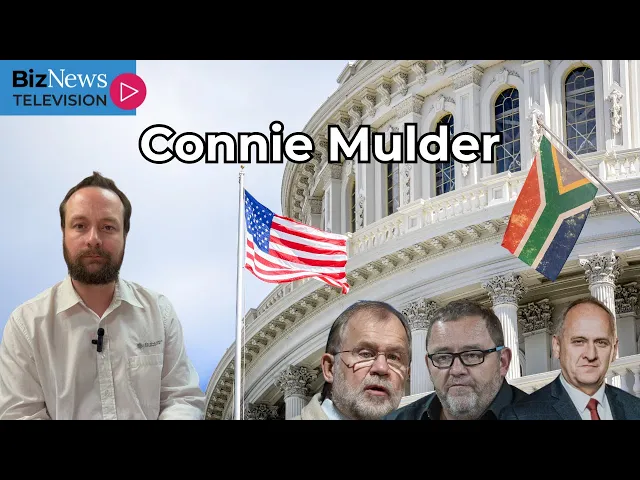
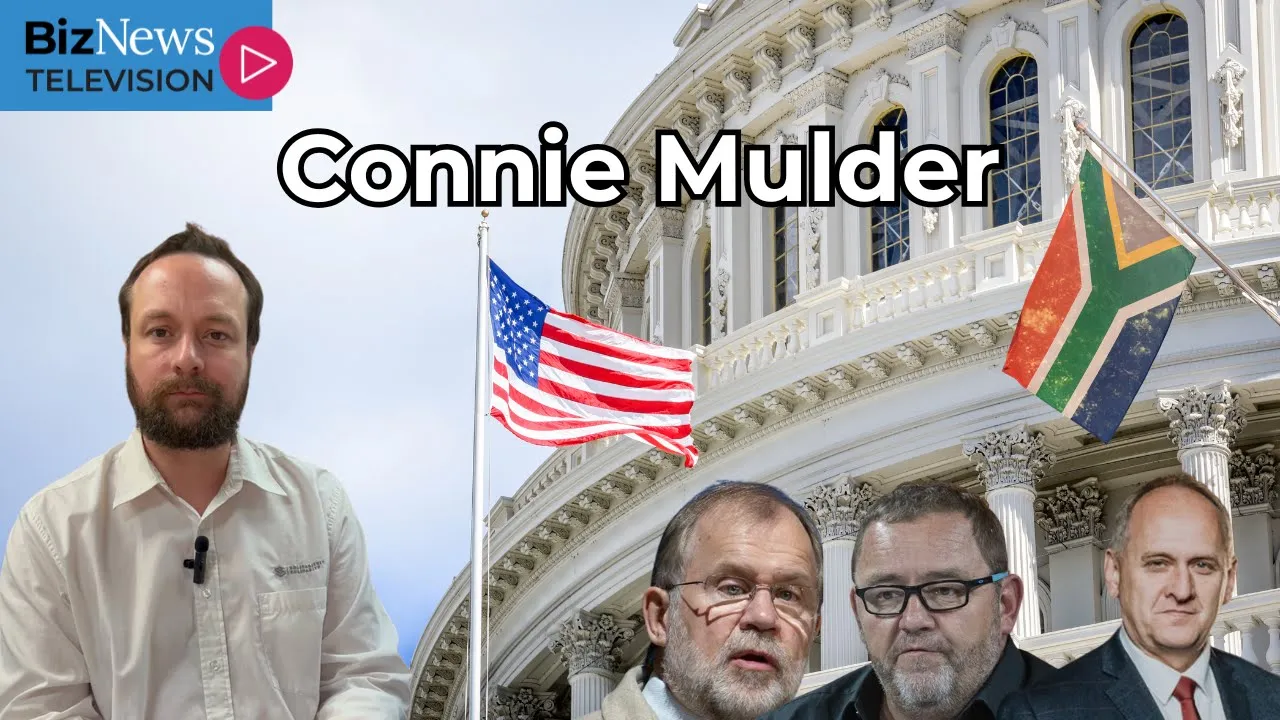
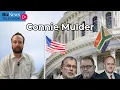
[Music] well the top story in South Africa at the moment is the striving for self-determination by the africano people hasn't been on the agenda for a long long time but a visit to Washington by a delegation that was warmly received by the Trump Administration has sown all kinds of unhappiness here at home if you look at social media well people are wanting a parate back and more we'll find out what the reality is from Connie Moulder who's with solidarity Connie thanks for joining us uh the decision to take the trip in the first place and
the compilation of those who went there won't you just unpack that for us please all right well nice to be here Alec as always um I think that the decision wasn't taken by us but it was taken for us uh by by President Trump quite simply put um by putting South Africa and the African specifically uh in the spotlight um it was imperious that that somebody do something and we cannot stand idly by and watch whils the the country that we live in the country of our birth um is is sabotaged in this terms in
this ter by the ANC who uh seems to have a very weird relationship with America where they they want the money but but they desperately want to also punch them in the face um constantly and that means um from our perspective it was a no-brainer to to automatically uh sign uh if you want a um a delegation and then go to America as quickly as possible to number one try and limit the damage uh done uh through the South African government's Reckless Behavior and try and ensure that the the hammer comes down on on the
corrupt politicians who deserve it and not only the average South African citizen and number two since he mentioned africanas by name as the as the biggest organized institution in African circles it is it is obvious that we need to go and and try and establish relationships and um help him understand who is the africano what do we want what don't we want and how can we help him and how can he possibly help us if if at all so who went so from our perspective it's the it's a very senior delegation it's F Bas who's
the chair person of the solidarity movement and that's a umbrella organization that has all a reform solidarity in then k k the CEO of off Forum DK Aran the CEO of solidarity and then yaku kenos who's are uh head of international lion so he's got lots of contacts internationally and you might know him he's a well-known expert on especially American politics uh so we sent the best people that we could send overseas to try and mitigate the damage to our country but also um properly represent uh africanas and their their strive for more cultural autonomy
and what what was the reception like um well the reception uh in America was was much warmer than I I think the one in South Africa um is it's it it we were actually met with open arms uh from what we can tell we met senior delegations in both the White House as well as in Congress talking to the committee on Foreign Affairs and and the main sentiment that that was received from the delegation is um is almost disbelief that South Africa has not come to the party um sou Africa just does not show up
in in Washington uh the Ambassador as we know is still waiting for for several of those diplomats to call him back um but it was a a weird mixture of welcoming actual information from South Africa um and welcome the fact that a South African delegation actually showed up uh in terms of what the solidarity delegation and then um there's a an understanding look the Americans have a whole intelligence agency they know exactly what's going on in South Africa and they appreciated the the extra perspective and the extra facts that we we gave them in the
form of several reports which were well researched that just shows what has been the impact of these policies and what has been the anc's foreign policy in the in the post years but most of that is it's it's just confirming what they already knew um they they've studied us extensively through a couple of administrations due to the simple fact that the question burning in in all of America's State Machinery at the moment is is South Africa friend or a foe and it has been burning for more than 10 years and I think unfortunately if you
talk to the NC the answer is a foe and it it's refreshing for America to hear from average South Africans who who desperately want to counter that narrative and say no no we're we're we're not near not nearly as anti-western or anti- us as thec specifically is um and that then follows to don't don't punish the country who who likes trading with the US who doesn't have massive problems with the United States for a couple of diplomats who got there well a couple of bureaucrats who got their training in the Soviet Russia and who still
sees the cold war is ongoing um so that means we've moved on the NC is still stuck trying to pH East Berlin to find out what they should do from your perspective what was the intention of of or or what was your goal what when the delegation returned would they have described as being Mission successful I'm to I think we went there with with two goals uh the first is is as stated very simply put um to try and keep South Africa in a Goa amongst others but to try and make sure uh that the
Americans who who are really angry um don't don't go to economic sanctions Etc and hurt the country further for the utterances of a couple of politicians the first goal was to say uh don't punish the country which we've we've said this since 2018 that has been our our point of view from the very start is um we're a great country with a horrible government and that means please don't punish the great country for the horrible government there are better measures and in effect the message would be uh economic sanctions on the country is not going
to affect the change that America wants to see in foreign policy it's it's just not going to work if you want to actually affect change you would need to Target the Inc individually through through whichever means you can um it's it's not going to help to make a several 100 thousand Farm Workers unemployed to picking kicking us out of of Goa when the NC still has well at least the corrupt NC which is most of them uh still has several assets overseas and will um will not feel that that Pinch at all so it's it's
pleading for the country to say look don't punish the country for the actions of a government and the second part would then be to to introduce the Americans uh we we we've had discussions but to say look um you've spoken about africanos but I don't think you know a lot about us um and this is now a delegation that says all right this is who we are uh where most likely the vast majority of africanas are not going to take up your Refugee status we've in Africans the word is AR um we're we're quite stubborn
in terms of this country and we we would like to remain here but we are desperately trying to build uh the infrastructure especially cultural infrastructure that would enable africanas to not only survive in South Africa but to actively contribute to the biggest South African society in much much better ways than we're doing currently and although we don't expect any help um any would be if you want to help this is how you can help um but ultimately the only thing that that I would think would be Mission success is one keeping South African agoa and
two just acknowledging uh that africanas are a are a cultural minority in their own right and that the things that they strive for aren't weird or or illegal that it's it's a a legitimate strive how much of that self um determination or uh when you talk about a a cultural minority in their own right how how strong was that on the agenda that we'd actually like to be to be able to determine our own future rather than having the Dead Hand of a uh of a socialist government over us um I think if you look
at solidarity's viewpoints that that is that is where we're going where we're coming from as as origin is um we would like to decide things and to run things that that at least concern africanas for us elv and that is one of the reasons why we're vly opposed against Bella is we do not want some nameless Diplomat or of Dem bureaucrat somewhere in an office determining the language policy of the school that our children are in it just does not make sense why why would that be necessary now this all flows from uh article 31
in the South African Constitution that explicitly States cultural communities can have cultural institutions and other organs of civil society as necessary to to thrive and to enjoy their their culture so we've we've gone from the space available in the Constitution and we've simply started building the cultural infrastructure necessary and what we talk about is usually cultural autonomy which states um when we look at South Africa we we think of it as as a fruit salad meaning everyone is you're a pineapple you're a mango whatever um but everyone stays what they are but we're one dish
that works well together and when you listen to the ANC talking they're much more in the line of this is going to be a smoothie um where you need to completely lose your pineappl in order to be part of the greatest South African project now we just uh dismiss that out of hand we think there's no reason for different cultur of Africa to have to become one sort of monoculture um in order to to succeed one of the things that makes South Africa great is the fact that we've got this large diversity of cultures and
viewpoints and that we at least at horizontal level we get along quite well we've we've sort of figured out how to get along the politicians are still lagging behind the average person on the street um but but we we we are managing it and that means in order to stay the pineapple in the fruit salad and not be assimilated uh completely um you would require certain cultural uh infrastructure that means education where you can teach your children in the language that you've been taught up in but also make sure that cultural transfer happens where you
you can help your children to be proud of who they are and to remain who they are now this thisen happens automatically for for most of the um kza cultures and Zulu cultur and all black cultures have institutions or the traditional leadership Etc initiation schools where cultural education or cultural transfer would would happen africanas don't have that as such um due to the fact a lot of that was done through through the government when the NP governed and we had to start building that from scratch and we're busy building that to to Simply enable our
cultural Community to survive um in South Africa but also uh to to feel safe enough to participate and to help the rest of the country with a bigger project and um I think that's that's we our goal from the very start is flip Bas always uses the example says if you build a house on a street um you're not building the house in order to exclude the rest of the street you're building the house to be able to partake in activities industry but you need a house somewhere where you can go and say right this
is this is a space where we are safe and this house enables participant and the issue that we faced in South Africa is africanas uh are are constantly marginalized in in in terms of every single mity we're a minority and we're an absolute minority and in international terms it's it's not even that weird for a minority to be marginalized and to need some form of protection as the S African Constitution Envision envisage is in article 31 and I think it's 105 and 235 as well that says minorities would need a form of protection and where
we've gone one step further instead of demand fing this protection from the government do we think it simply isn't able to to do that we're saying we're going to try and build the the things that we need and this is the message um that I think we've taken to America saying look we we appreciate the fact that you've you've seen us you've acknowledged us as a minority um we we're not going to stop anyone who who thinks there's no future for them or any African thinks there's no future for them and they want to resettle
as a refugee but the majority of Afric can't do that and they're not going to do that uh what we do need however is um a pretty standard minority right stuff in the world meaning we need institutions cultural autonomy so that we can at least decide on stuff uh that that pertains to our culture um on bigger things like electricity and National Security obviously there we have we've got a long record of participating in the South African um space saying right this affects everyone but when we're talking about schools and um history Etc that's something
that's that's unique to to each culture itself and there we we would like greater cultural economy to be able to Simply decide what language our children are Tau in I don't think that's that's an unreasonable request um for some reason it's been sketched as well if you read new 24 as aparte or separate development when this is a very standard minority right thing throughout the world it's it's a very weird way of describing article 31 of this African Constitution stating that it envisages Invision separate development when they're just saying a cultural Community has the right
to maintain cultur institutions and other organs of civil Civil Society um that is necessary for them to enjoy and to experience their culture to the fullest let's talk about some of these specific allegations and these have been made by uh people who who generally are well followed in social media uh penwell the black pen I know him well he's he's from my hometown in fact in Newcastle and he's he he he doesn't make things up so what he's saying is perception that he has that others share and uh he gave us a little list a
list today which he published he said this is what afri forum and solidarity's misinformation campaign hopes to achieve uh let's go through each of those if you if you don't mind and we start off with they want their own white Africana only province in South Africa um okay so uh I I I respectful Mr Peno um but I think he's read a lot of things that people said about us but not a lot of things that we say um there is no mention in that Washington memorandum at any point of a Whit's only province in
fact we we do not identify as white primarily we're not going to do the racing we identify on a on a cultural level as afriana specifically what we are asking for is um help in building out further if possible which we've already started building the cultural infrastructure uh that that would enable greater cultural autonomy which is a form of selfdetermination so in in layman's terms it means we would like to decide on ourselves on stuff that that pertains to our culture U that is that is a very standard request and I think it's actually it's
not nearly as radical or separatist as as as people would want to believe um but no that is not that is not one of the things that we're asking at all I have no idea where he would get well I have an idea where he would get that but in the washingt memorandum itself which we which we handed over the express asking well the express request is um we're going to build these things if you help us or not it would be nice if you help us um but what we're not expecting any funds anything
the only thing we're expecting is acknowledging that uh any minority in the world has a right to say we would like more cultural autonomy we'd like to decide um on things pretending to the minority uh ourselves they want special police protection especially for white Africana Farmers um I wouldn't say white Africana Farmers I would say farmers and this is no secret um we've we've repeatedly stated where where you've got a disproportionate Focus uh of crime you need a disproportionate police response now the NC knows this inherently for the simple reason we had a disproportionate focus
on crime on the murder of uh council members in Natal if you remember correctly and they immediately went to a commissioner they got special police forces and task forces for this crime specifically now the total amount of murders is something like it's 40 or 50 it's not a lot in South African terms but the per capita is is massive you did not have a long life expectancy if you became a council members especially in the escort municipality in Natal so it just means when there's disproportionate Focus you need a disproportionate response the same with gangsterism
on the cape Flats is there's a disproportionate amount of young colored men dying due to gangsterism and this requires a disproportionate response by the police the exact same for women and children is we've got a gender-based violence issue and South Africa has inherently said all right that makes sense we're killing women at a much greater rate than than the other citizens therefore we need special programs to protect them but the moment you start mentioning the facts that says look farmers in South Africa are being killed at a much greater rate uh than than your average
policeman even but definitely the over citizen we think this is something that that should be deemed a priority crime and that you should uh really put a focus with rural safety on on protecting the people who who are being foced well focused disproportionately and then we get a response that says no it's not even that we can argue about the numbers it says a response that says no this this does not happen um and that that is I think the part that irks us is saying we're okay with you saying we don't have the resources
to allocate or anything in those lines but the flat out denial almost by political leaders let let be fair the police um have stated the problem but there's no political will and that is why one of the requests is saying just declare it a priority crime or at least step out of the way so that rural safety structures can can start addressing this this this Focus I don't think we've ever mentioned the color of the farmers we where advocating for all Farmers the majority of which would in most cases be white or Africans but I
we're not that bothered about that but um we're bothered about the fact that farmers are being killed at a rate great much greater than your average South African citizen and therefore it needs a police response that that adequately reflects that reality um not not going on political Grand standing or trying to to say this this does not happen which has been unfortunately uh the NC strategy for most of the last decade saying that well it doesn't happen we're making it up when we've got lists of of murdered people who who we most definitely uh aren't
making up and that I think that's the part that that has it says more about how the ANC sees us as a minority than it says about anything regarding misinformation um and and it's one of those flash points in the in the relation ship that we hope desperately to get repaired for the simple reason we want less people to die they want the eff banned and dismantled um okay whilst on a personal level uh I would not be that sad if the EF does dis Bann um I don't think we've ever publicly advocated for any
grouping to be banned um we're not in the business of trying to ban other groupings uh we're much more in the business of saying Market your ideas in in the marketplace uh we think the eff has horrible ideas for the country that is true but we've never lobbied to have them banned we have taken them to court where they've transgressed the law however um which is something that we feel strongly about but they they're more than welcome to continue on their race to the bottom which they were busy with at the moment they want special
trade agreements for white africanas with the West um no no I think we on special trade agreements for South Africa uh with the West quite simply but South Africa has an enormously advant advantageous trade agreement with America and agoa it is one of the things that that really helps our country um now solidarity has I think it's the movement has 600,000 members um but a minuscule portion of that actually works in industries that that would benefit from agoa I know there's this idea that we only started lobbying because AGA would affect the farmers and um
and that would affect our members but Goa would affect much much more more than simply agriculture it's vehicle manufacturing Etc where we we don't have massive amounts of members and the reason we're lobbying for this is because according to our research we would lose uh at least 300,000 jobs as a country uh closer to 600,000 now that is something that that creates a a massive socioeconomic crisis if we as a country who's not growing lose another 600,000 jobs and although we're africanas we're also South African and that means we we want the country to grow
we've been on record repeatedly uh slamming governments policies that inhibit growth and and the reason for that is without economic growth South Africa does not go forward we're going to stagnate and and try and redistribute a crumbling pie whilst there's no reason for this we we can easily lift people out of poverty if we just follow a couple of certain economic principles that has been proven to work in other countries and that this is much more out of that point point of view that says look if you're going to kick us out of a Goa
you're going to massively harm average working South Africans um the majority of which aren't our members uh but they are our countrymen and that means we obviously do not want more socioeconomic distress coming into this country than than ANC has already brought here so please consider punishing the fat cats who who are doing this and much rather than your average Farm worker factory worker who are going to Bear the brunt if if America comes down brings down the Hammer with sanctions and kicking us out there's a report from the Hudson Institute and we will be
getting onto that uh with the authors in a while but uh this comes back to what Peno was saying uh or alleging about afro forum and solidarity says they want all top black politicians to be sanctioned by the West um I think the the list that we gave the Americans or we said this is a good start um is a list not compiled by us but compiled by judge zondo it's the zondo commission report which ISS um let's let's try and sort out the corrupt politicians it's it's a a shame that nothing has been done
we have extensive evidence of of these guys plundering the state quite simply put and the ANC has has dragged their feet on acting against it now you might uh wonder why um I I would argue you tend to not move with urgency when you're Prosecuting friends uh which is what we've seen and um that is the list that we've supplied we've said look this is the guy this is a report by an independent commission appointed by the South African government and they've done nothing if you want to uh send a message to the ANC that
you need to start at some point putting the country first um we not not the Soviet Union first uh then this is a good start to send a clear message that as America if you want to sanction something we're we're serious about South Africans and their welfare whilst at the same time um uh serious about your government's foreign policy or your government officials foreign policy changing to no longer threaten America's national interests which is which is the way they see it they literally see South Africa as a threat to their National Security which I I
think is something that the South African government needs to need to handle with much more urgency and and seriousness uh than we're doing at the moment rather emotive one here he says they want South Africans to forget about fixing the legacies of a paret um no no uh Mr Mr pel unfortunately I think doesn't read a lot of the things that we've said uh he reads a lot of things said about us once again um our our point of view regarding this is um we we had a horrible racial discriminatory past we we've never tried
to dismiss that at any point um but when we're trying to redress the past we need to be very careful to to not recreate it and that means you can't redress up part but you can redress the effects of a partment of which one was political exclusion now I would argue that has been completely redressed for the simple reason we've got the franchise for everyone full full suffrage and the NC uh well at least black people are in in control of every single lb of power in government so you've got political redress that happen the
other one was economic redress so meaning blacks were excluded from the economy forart what you need to address is the effects of economic exclusion and this would manifest as such in reducing black poverty reducing inequality and reducing unemployment for the simple reason that the biggest economic exclusion is being unemployed and our problem lies in two two frong the first is we've started redressing but but there's no indication when will we be finished there's no Finish Line um when you look at the Department of Labor's regulations uh once you've reached a labor force that is 80%
black 9% white 9% colored and 2% Indian you may never go back they will continue in perpetuity from what we can see in enforcing that this labor this is the way your labor force should look now then then we're not talking about a redress affirmative action internationally redress measures are by definition temporary it's a a temporary measure after which we go back to a non-racial situation where we're not using race anymore um what the NC envisions with this is a permanent system of racial preference now that's it's not something that that we think South Africa
should be doing but worse than that when we look at the outcomes of this policy and it's important to judge policies by their outcomes not by their intentions when we look at the outcome on on the three things it should have addressed it has moved the needle in the opposite direction in all three uh poverty is up South Africa is a poorer country according to the World Bank itself our GDP per capita is the same as it was in 2017 so we've not moved forward at all we've become poorer uh unemployment is is significant ly
up with black unemployment specifically being at almost 46% extended definition now so that is that means whatever policy was meant to include black people in the economy has dismally failed in doing it and inequality is up with with a unique thing inequality is no longer primarily between racial groups it's now within groups so that means a black inequality is driving South Africa's inequality so what this policy has done and that's the key is it has created a small Elite who have become extremely rich at the expense of everyone else and this Elite is obviously fighting
hard to become richer and that's why you have absurd policies like Creer 100 black industrialists or their transformation funs whose goal is to change black millionaires into black multimillionaires whilst the rest of the country languishes in poverty and unemployment and we're simply stating one uh we need to know what the Finish Line looks like when will when will looks like when will we be redressed when when at what point do we now say all right we've done this for the for the reason africanas and white people are a minority in the country so the idea
that you can redistribute yourself to wealth is not going to work when you're taking from 8% and trying to give to 80% it's it's just never going to manage the only way is growth and secondly would be we're not saying do nothing we're saying do something else we've now tried this for 30 years it has not in any measurable metric worked um continuing down this road would be Madness uh it would enrich an elite even further we're stating let's let's try something else let's try income as a measure and let's try policies that lead to
growth because ultimately growth uh leads to less unemployment and once we get unemployment down then we can start addressing meaningful inequality and actually get your average South African citizen into the middle class which is which is what I think the goal should be um to to read address the effects of the P so it's not that we're dismissing the effects we're saying uh if you if well if you bake a cake and it fails consistently with this same recipe for 30 years at some point you need to you need to think it doesn't help that
I'm trying harder on this recipe I need to try something else and that is where South Africa is now um we need to try something else to get these problems under control that is what we've been advocating for well for 10 15 years if we've stated these bullets won't work they're going to lead to budha Service delivery and what they did lead to unfortunately is on these three didn't move the needle um but then if you read the Z report as well it led to massive endemic corruption due to the fact that they created loopholes
for uh tenders and for cter enterpreneurs to come through and for C deployment um to to Really enrich a small Elite and that is our that is our main criticism on this so uh no we've we've not stated that the past did not happen Etc we're saying I don't think we're dealing with it well in the in the present the two of the issues that he raises which I'm sure we don't really need to go in they want the expropriation act scrapped I don't think there's any question there that anybody with a half a brain
once it's scrapped and that they want the Kill The Bu song band again uh that's that's quite obvious but let's get on to the uh final one which is they want be scrap now I had a chat yesterday with Gabriel cross and for many years uh Gabriel cr's organization Institute for race relations was an opponent of the Old Government the Old apartate Government so take it from whence it comes but he says that with the analysis that he's done be is costing South Africa 150 billion Rand a year were it to be scrapped we would
be able to take vat down to 11 a half% this is incidentally just the cost as far as the uh procurement is done by the state let alone the costs of uh lost investment and in the private sector from your side from afri Forum um movement site uh do you want be scrapped I think we as we said what will we uh view this policy and review this policy it simply has not worked it has created a massive premium now we've done extensive research on the cost of be in escom for example and in escom
it increased all costs by at minimum 30% energy is is a primary input for the whole economy so you can you can imagine that filtered through to every single business and it it is called comfort for your minimum wage earner uh that their protein St are more expensive by by a certain degree because energy to keep the fridge going is more expensive due to the fact that that some connected ANC cater somewhere and needs to buy a new merer um this this is this is the effect of of this policy has been to enrich a
few at the cost for for millions of South African citizens so uh scrapping it in to totality is something that we think should be seriously considered our proposals to the government which we've stated repeatedly is the firstly is at least exempt International investors from from be if you're stating you need to redress the past there's no reason why a company like stalling should subsidize that which I've stated expressly and what you're doing is you're keeping International Investment or foreign investment investment out of the country um for for this for rent seeking and that is what
this has become it's become a racial rent seeking exercise it's become nothing else uh in South Africa itself if you if you really want to buy patronage um then then we need to do that with growth which means viewing some International examples that have these policy there's a hard ceiling that says below a certain percentage preferential procurement does not happen anymore then the government can't afford to be inefficient South Africa has grown at 0.6 and 0.8 and we've it's been lacad isical at best but we've insisted on redistributing the shrinkage to Connected people to the
political connected people from our perspective scrapping it in total in totality would do much more uh for empowering poor black people economically than anything else but we can understand if you say right we need we need to at some point in pragmatist put terms we can't just scrap the system tomorrow we need to phase it out and that's why the the thing that we're pushing for is saying all of these measures are meant to be temporary they're meant to be a temporary redress uh we want to know when will we be redressed at what point
um what does it need to look like because you can't start a measure if you're not saying okay this is what success looks like so what would success look like and we've got the the inkling feeling that from the government's point of view at least uh success is keeping the system in perpetuity in which case this flies against all International norms and standards regarding this these measures it flies against the US Supreme Court decision that said you can't have a a constant Target at when it has been reached you need to then relax these measures
to once again move back to a merit based society and I think that's the that's the pity of South Africa is it you look at the polling amongst every sou Africans um the people want a merit by Society they want a government that works they don't want a government that redistributes to Connected people they they want a government that that simply works and they they have no problem with saying let's let's do this on a merit based situation it's the NC and the connected craters that have a massive problem because this is their Lifeline uh
they're the ones who are profiting of this uh where of the opinion if we can scrap racial rent seeking tomorrow let's do it but pragmatically speaking let's get an end date let's say all right this is the point at which as a country um or the point or the target where we've we've now had enough or we've we've redressed and then we can give effect to the definition that the Department of Labor itself states which is affirmative action is a temporary set of measures so let's talk about the temporary at what point does it stop
Cony Moulder is the head of solidarity Institute thanks for uh giving us your time and going through these questions in such detail it is is a issue that has arisen uh and at the moment seems to be dominated by headlines or the shortest uh and most uh emotive tweet uh hopefully those who really do want to know where you stand will uh take the time to unpack and to reflect on what you've just said and I'm sure pen will be amongst those I'm Alec hog from bus news.com