As a dentist, I've been quite hesitant to discuss this topic, because folk remedies are not used in our treatments. This is not how we usually treat patients. But you may ask, are these folk remedies and natural therapies really not effective at all?
Today I'd like to talk about this. Hello! It's been quite some time since I was last in this room.
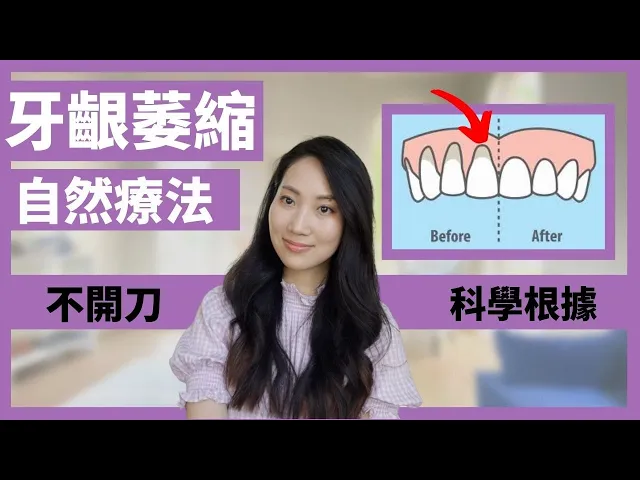
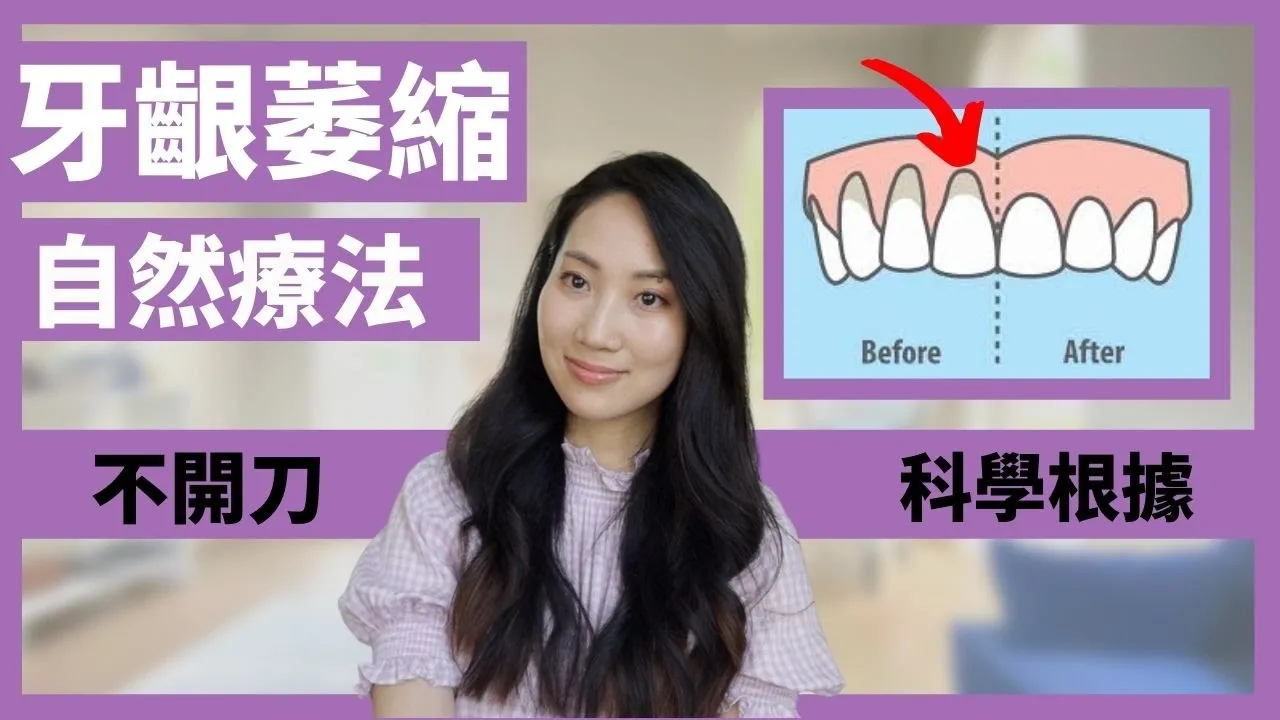
I'm glad to have the chance to chat with you again. After my last video on gum recession, a lot of people have asked me this: Is there any way to treat gum recession without surgery? This year, I've been wanting to continue this topic.
I've seen a lot of YouTubers saying that these folk remedies can really cure gum recession. So exactly which of the folk remedies circulating online are backed by science? Let me preface this with something important.
You see a lot of people using the term "gum recession" online. But actually, "gum recession" is just a broad umbrella term. And gum recessions can have many different causes.
It could be due to gum inflammation, brushing too hard, or teeth grinding. The most important thing is to determine its cause, because only then can it be treated accordingly. It's only really effective when you tackle the root of the problem.
Today I'll share with you natural therapies that are backed by science. And I'm going to talk about gum recession caused by inflammation. The first one is vitamin C.
Vitamin C has long been discussed for its effectiveness in treating gum recession. Studies have found a link between vitamin C deficiency and periodontal diseases. We know periodontal diseases cause gum recession.
But why is vitamin C linked to gum recession? That's actually because vitamin C. .
. Just think about its function. It's essential for our connective tissues.
Think of vitamin C as lego bricks. Lego bricks are fit together to slowly form shapes, right? So it plays an important role in maintaining our body's supportive structures.
Our gums, too, need to be supported. Another important function of vitamin C is. .
. As you all know, vitamin C is an antioxidant. Periodontal diseases are caused by gum inflammation, and when that happens, our immune systems produce something called ROS.
This reaction causes bone atrophy, as well as gum recession. It is the ROS produced by our own immune systems that go on to damage our gums and bones. Vitamin C behaves as an ROS scavenger.
It specifically combats and eliminates ROS. If today someone asks me whether they should take vitamin C, then my answer is, you should be taking vitamin C anyway, because it is not just good for your gums, but also your entire body, including your immune system. So getting enough vitamin C should be implemented daily If you eat just one medium-sized orange like this every day, that would be almost the minimum daily requirement.
That’s the bare minimum daily intake. If you like to eat bell peppers like I do, I mean bell peppers that are red, orange or yellow, that’s even better, because besides vitamin C, they are also rich in vitamin A. If you eat one of these, it contains even more vitamin C than an orange Apart from this, many other fruits, such as strawberries, kiwis, and grapefruits, are also rich in vitamin C.
Vegetables too. As I mentioned, bell peppers. Also, broccolis and cauliflowers.
They are all very rich in vitamin C. So vitamin C is definitely very beneficial to your gum health. There's no doubt about that.
But if you’re really trying to treat gum recession, vitamin C alone is not enough. There are of course other things to consider, such as making sure your gum is clean. This is more important.
This, and vitamin C. Next, let’s talk about two natural therapies. They are mouthwash ingredients.
Actually, let me tell you what mouthwash does. It helps reduce the building up of plaque on your gums. It’s different from the mouthwashes I talked about before in that its main ingredient is tea tree oil.
Tea tree oil is plant-based, and plants naturally have antibacterial properties. A study has been conducted in which researchers compared this tea tree oil with medical mouthwashes that require prescription. Surprisingly, they found no difference in their effects.
In fact, on the contrary, prescription mouthwash (chlorhexidine), can cause yellow stains on some patients' teeth if used for a long time. It may also affect their sense of taste. So doctors don’t usually prescribe this for a period of over 2 weeks.
But tea tree oil can be used long-term. Since patients won’t have such concerns, they can use it for a longer period of time. Of course, this contains no alcohol.
I would never use mouthwashes containing alcohol. Besides tea tree oil, it also contains vitamin C and aloe vera. Aloe vera is also an excellent natural antibacterial ingredient.
But I must say that I like its taste quite a lot. After using this, my breath smells very fresh. And I also noticed that plaque doesn’t build up as easily.
I mean on my gums. So how should you use it? Just like regular mouthwash, you rinse it in your mouth for about 30 seconds, and then spit it out.
If possible, after spitting it out, refrain from eating or drinking anything within the next 5-10 minutes. If you can wait for 30 minutes, that’s even better. So mouthwash helps improve your gum health.
Most importantly, it prevents plaques from building up on your gums, causing inflammation, and then gum recession. Next, after talking about tea tree oil, let's talk about aloe vera. It’ antibacterial properties come mainly from its aloe vera.
A study on aloe vera has also found that it has similar effects to chlorhexidine. This neither stains your teeth nor affects your sense of taste. It contains 20% aloe vera.
After using this, my breath stays fresh for the entire day. It has some mint in it, but of course, no alcohol. This is also a natural remedy to reduce the risk of gum recession.
Finally, I must talk about oil pulling. A year ago, after I talked about gum recession, a lot of you asked me how to do oil pulling, so I feel obliged to talk about oil pulling. Does oil pulling actually work?
Oil pulling is an ancient natural therapy which originated from India thousands of years ago. I found a study in which coconut oil was used. 60 people did oil pulling for 30 days.
After 30 days, they found that their plaque decreased by 50%. Surprisingly, this study had the same results as the prescription mouthwash (chlorhexidine) study. This is really quite surprising.
A 50% decrease is quite a lot. They used coconut oil. To be honest, coconut oil makes the experience more comfortable because it tastes much better than some other oils, such as sesame oil.
So if you'd like to try oil pulling, I suggest you buy one like this. Like this. They come in small individual packets.
Just cut it open, and you can use it. This is much more convenient to use. This is 100% virgin coconut oil.
You should be using 100% virgin coconut oil. It's best if you rinse it for 15-20 minutes, for maximum effectiveness. But of course, I've tried it before.
15-20 minutes is quite a long time. If you have joint problems, you may feel tired after a while. I think you should start with 5-10 minutes, and then work it up from there.
In this study, they rinsed it for 15-20 minutes. One flaw of coconut oil is, it becomes hard when the temperature falls below 76°F. Below 76°F, it becomes solid.
You can warm it up like this. You can cover it up for a while to heat it up, so that it becomes liquid. If you'd like to try coconut oil, I think this is an excellent choice, because of how convenient it is.
And it tastes good as well. The remedies I've talked about today are all backed by science. But I must say, I hope to see more scientific research in the future, because now there is really a lack of research on this topic.
Of course, you'll still have to brush your teeth and floss normally. I've talked about this before. You have to do these things.
Then if you can add in vitamin C, and a mouthwash to reduce plaque, that will lower your risk of gum recession, or stop your gum recession from getting worse. OK. After one year, I've finally managed to talk about these natural therapies.
If you found today's video helpful, please remember to subscribe, hit the notification bell, and give a thumbs up. See you in the next one. Bye!