Today we will talk about a difficult story from the book of Genesis. It is the account of when Pharaoh, the king of Egypt. Took Abraham's wife, Sarah into his palace.
This happened during a famine in Canaan. When Abraham and Sarah travelled to Egypt seeking food. This story is packed with nuance and detail.
That we often glance over. But when we take a deeper look. It contains profound lessons for us as followers of Christ.
Lessons about the complexity of trusting God in a fallen world. Lessons about taking matters into our own hands when we feel afraid. Lessons about God's faithfulness through ups and downs of life.
To begin, let's set the stage. Abram, later named Abraham. Was a man of great faith.
When God called him to leave his homeland and family. Abram obeyed God led him to Canaan. With the promise that his offspring would become a great nation inhabiting that land.
The problem was that Abram's wife, Sarai. Later named Sarah. Had been unable to bear children here.
They were already elderly, still without an heir. Yet God promised them a biological child. And scripture says Abram believed the Lord.
And God counted it to him as righteousness. Abram's faith pleased God. Now fast forward several years.
Abram and Saria are still childless. A severe famine strikes Canaan. Making it difficult to even find food.
Abram hears that Egypt has food. So he decides to take his family there for a while. But before they enter Egypt, Abram becomes afraid.
He worries that the Egyptians will notice his beautiful wife. And kill him in order to take her. So he hatches a plan.
He asks Sarai to lie and say she is only his sister, not his wife. That way, he hoped the Egyptians would not kill him. If they wanted her for themselves.
Sarai agrees to the plan. And does lie about their marital status. When they enter Egypt.
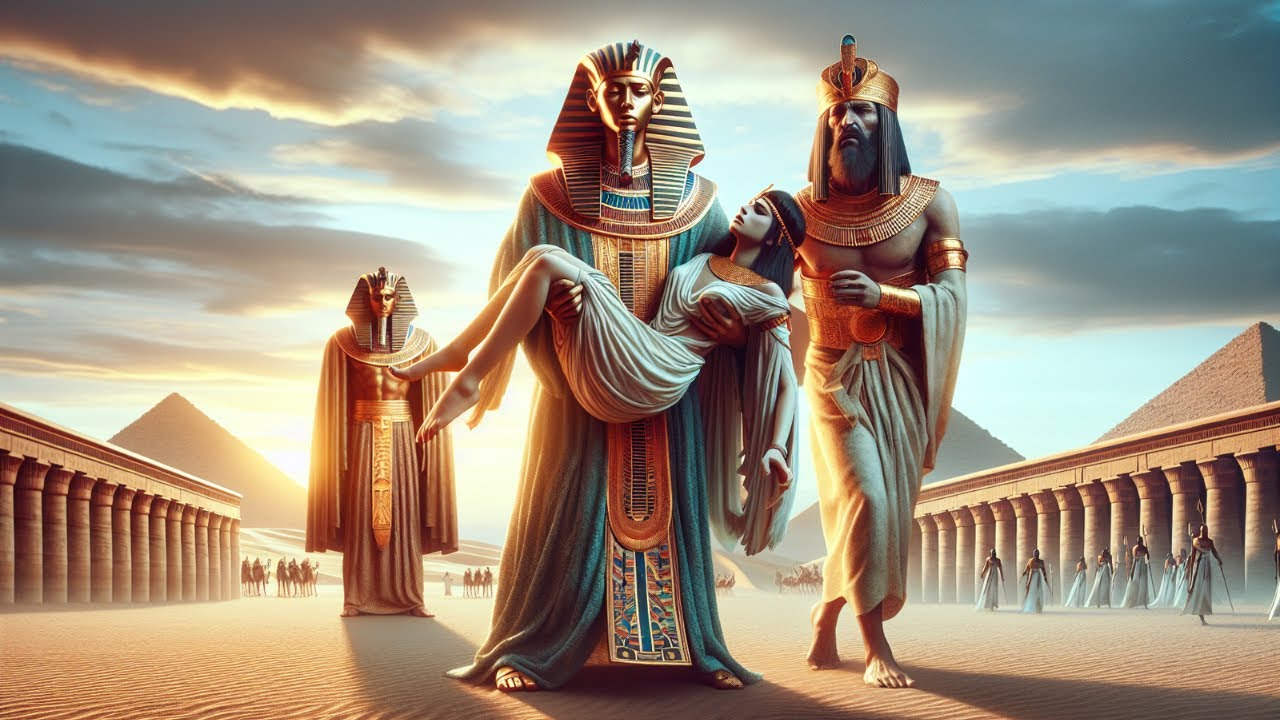
Just as Abram predicted. The princes of Pharaoh notice Sarai's beauty. And before long, they take her into Pharaoh's palace.
Pharaoh intends to take her as a wife, oblivious to the lie. So here is the plot twist. The king actually commits adultery.
Having taken another man's wife. But he doesn't know it's wrong. Because Abram and Sarai deceived him.
Meanwhile, Abram prospers. During his time in Egypt, scripture says he acquired sheep, oxen, donkeys. Male and female servants.
Female donkeys and camels. Even as his wife lives in Pharaoh's harem. Abram becomes a wealthy man.
But the Lord is not pleased with this situation. So he afflicts Pharaoh and his household with great plagues. The deception must be exposed.
Pharaoh summons Abram and demands to know why he lied about his marital status. Abram has little choice but to come clean. He confesses that Sarai actually is his wife.
Pharaoh is outraged. He castigates Abram for misleading him and putting him in this compromised position. In his rebuke, Pharaoh reveals a moral sensibility we might not expect.
As a pagan king, we'd assume he'd have no qualms about adultery. But clearly he did. By deceiving him, Abram and Sarai caused this royal man of God to violate his conscience.
Pharaoh orders Abram to take his wife and leave Egypt immediately. He permits Abram to keep all the wealth he had accumulated. Then he sends men to ensure Abram departs safely.
This story is so layered and complex. But I believe the holy spirit wants us to glean several lessons for our lives today. First, we see that even pillars of faith like Abraham.
Sometimes struggle to fully trust God. As believers, we often waver and doubt. When circumstances appear dangerous or uncertain.
Fear kicks in, and we start relying on our own conniving rather than trusting God's faithfulness. Like Abram, we must resist that urge. We should never compromise our integrity or put others in moral jeopardy in order to secure our own interests.
God honors righteousness above all else. When, like Abram, we scheme out of fear. We can inadvertently cause innocent people to stumble.
That grieves the Lord's heart. Another lesson is that God hates injustice, deceit, and the exploitation of people. Although Abram's motives were to protect his family, the impact was immoral.
Sarai was taken advantage of, and Pharaoh was deceived. This reveals God's character as a champion of righteousness. He defends the vulnerable and stands against those who abuse power.
Even the highest leaders are accountable to God. Also, this story reminds us that God's plans cannot be thwarted. Not even by the doubting and deception of his followers.
God kept his covenant with Abram despite his wavering faith in Egypt. He brought a promised child into the world through Abram and Sarai. In God's timing, friends, God remains faithful to us even when we falter and stumble.
He is gracious and patient with us in our weakness. As we walk with him, we must resist fear, refuse to compromise our values. And rest in the fact that God will accomplish his purposes in our lives in his way and time.
Now, some details in this story can make us uncomfortable. For example, why did God allow Sarai to be taken into Pharaoh's palace to begin with? Why did he later afflict Pharaoh with plagues when Pharaoh was deceived?
First, we must remember that God did not cause Pharaoh to take Sarai. The king's own lust and Abram's deception accomplished that also. God did not directly afflict Pharaoh.
Scripture says he allowed plagues to strike his household in his sovereignty. God sometimes permits situations to run their course. In order to ultimately expose truth and injustice.
His heart is to redeem these circumstances to accomplish his will. Although he permitted Sarai to be taken. He also protected her there and brought her out safely.
In the end, we may not always understand why God allows certain trials. But we can trust his heart is good. And that he works all things for our good in the end.
Now, another unusual detail in this passage. Is that Pharaoh rebuked Abram severely for his deception. But then also allowed him to keep all the wealth he had accumulated while in Egypt.
Why would he do this? Well, wealth in Abraham's day had more to do with livestock and servants than money, as we think of it. Remember, Abram had acquired many animals and servants during his time in Egypt.
By allowing him to keep these possessions. Pharaoh ensured Abram had the resources to travel back to Canaan safely. He gave Abram provisions for the journey.
Even while expelling him from the land. This reflects the ancient eastern custom of providing hospitality. Pharaoh was understandably angry.
But he supplied what Abram needed to get home unharmed. This prevented Abram from perishing in the wilderness. Pharaoh's actions remind us that blessing those who wrong us is better than vengeance.
As Christ followers, we are called to take the high road. Even when people mistreat us. We leave justice in God's hands.
Pharaoh modeled this by refusing to take back everything Abram gained in Egypt. He released Abram in peace. Instead of making the journey home impossible.
What generosity and strength of character. As we wrap up this passage, I want to highlight one final detail. We're simply told that Pharaoh sent men with Abram.
To ensure his safe departure from Egypt. But what an interesting posse this must have been. Imagine the caravan emerging from the city.
Out front are the flocks, herds and servants Abram had acquired. Next comes Abram's household. With Sarai safely among them.
And flanking them on all sides are the royal guards Pharaoh ordered to guarantee their secure exit. What a sight that procession must have been. This parting scene captures the overall tone of the story.
While Pharaoh certainly had reason to punish Abram for deceiving him. He chose restraint. Like God himself, Pharaoh extended mercy.
He focused on setting things right rather than exacting vengeance. What a profound example for us. The Lord calls us to lead justly, love, mercy and walk humbly before him in every situation.
As we strive to live out our faith, may we hold these timeless truths close to our hearts. My friends, the account of Abraham, Sarah and Pharaoh is complex and unsettling at times, but it offers us depth of meaning for our walk with Christ today. Let's recall that even great heroes of scripture had moments of doubt and failure, yet God, in his faithfulness, kept his promises to them.
The Lord opposes deception and abuse of every kind, but he also extends mercy, redeeming even our mistakes for his glory. As believers, may we cling to God's promises rather than giving way to fear. May we deal justly and speak truthfully to all people, regardless of status.
Let's close in a spirit of prayer. Gracious God, we praise you for your steadfast love and faithfulness towards us. Forgive us for the times when we rely on our own scheming rather than resting in your good plans.
Help us to walk in integrity before you and others. Remind us of your heart for justice and mercy. Give us wisdom to understand your ways and fill us afresh with trust in your sovereignty over every circumstance.
We long to bring honor to your name through our lives. We pray all this in the powerful name of Jesus Christ, our Lord and savior. Amen.