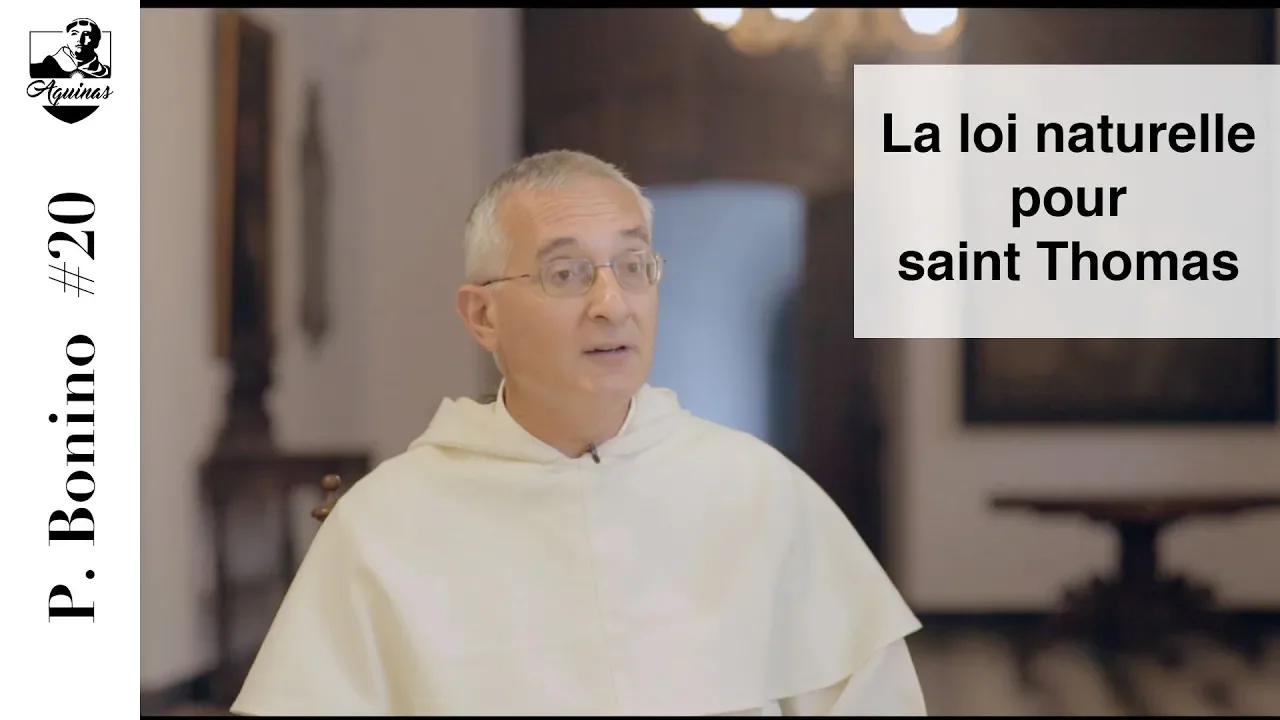
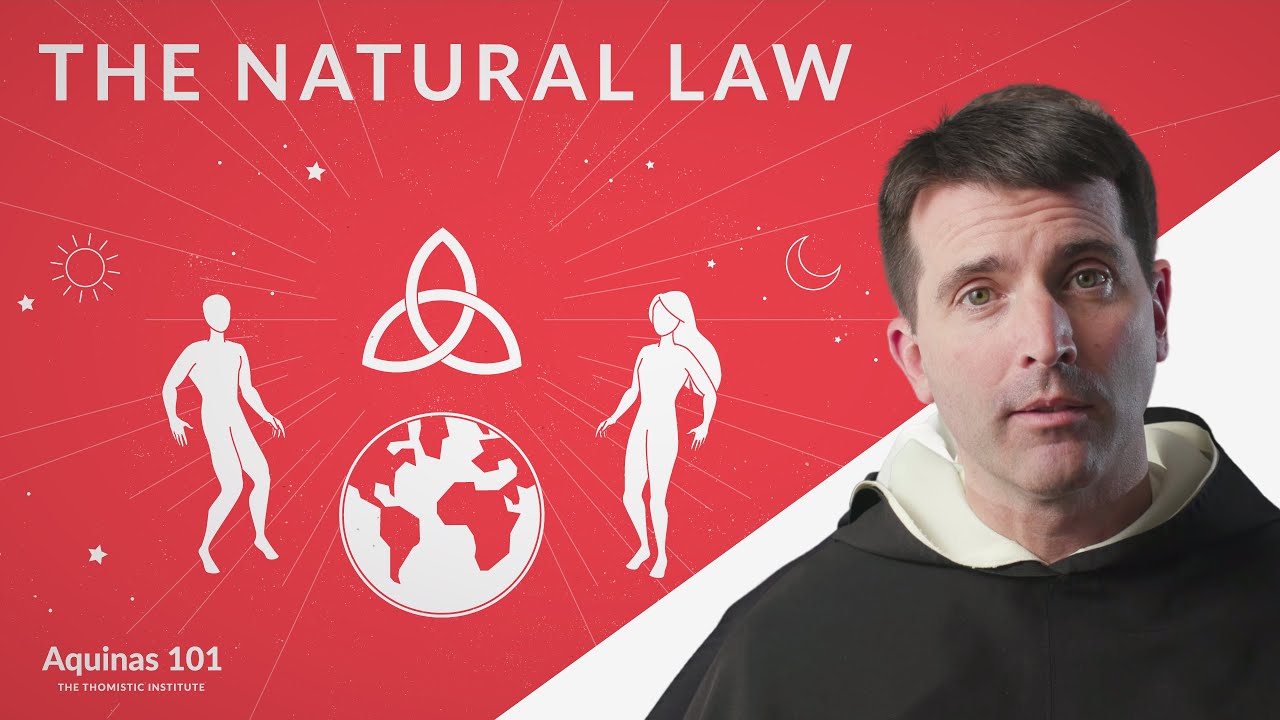
What is the Natural Law for Aquinas? To understand what the natural law is according to Aquinas, we must avoid reducing it to a legal concept, or even to an ethical or moral concept. The natural law according to Aquinas must be understood in a much broader context, a context of wisdom, and especially the context of divine government.
What is it about? When God creates, He is not content with just giving creatures their existence, rather, he leads them to their perfection, which consists precisely in union with God; a union that is differentiated according to the different types of beings. But this action of divine government which aims to bring creatures to their end, is the implementation of God's providence, of God's wisdom.
How does God lead creatures? He leads creatures not from the outside, if I may say so, as a football player who handles the ball until it reaches the net of the opponent, rather, he acts from within. God is the creator, and therefore he inscribes in the innermost part of every creature an ensemble of dynamisms that bring this creature to its fulfillment according to the plan of God.
So, it is an interior action. And this ensemble of dynamisms is what is called nature. A being's nature is the ensemble of inclinations, of dynamisms that bring it to its fulfillment [which is attained] in its end.
So, in every being created by God, there is an ensemble of dynamisms of nature. For example, the fundamental dynamism that impels each being to preserve its existence, and not only to its own conservation, but also to flourish, to develop; or, in living beings, the dynamism that impels them to transmit life, to communicate life, to somehow perpetuate themselves, in this manner. Now, spiritual creatures hold an absolutely unique place in divine government.
Not only are they created, willed and governed for themselves, since they are the only ones who can somehow bring up the whole universe to God through knowledge and love. And these creatures will be governed in a particular way, on account of what they are, on account of their proper ends. Indeed, they have the capacity to know the dynamisms that define them, to know them, to assimilate them and to use them as orientations so that they may build up their own lives.
There is a kind of interiorization of the wisdom that God has placed in beings. Spiritual beings are able to interiorize this wisdom, to formulate it to themselves as rules of life, according to the great principle that comes from ancient philosophy: become what you are. And so these creatures are somehow capable of knowing what they are, and to tell themselves what they must do to attain their perfect fulfillment.
This is what we call "natural law". The natural law is this ensemble of commands, that spiritual creatures formulate in themselves, based on the knowledge of the inclinations that are found in them. One could say, if you will --to use the Scholastic parlance-- that natural inclinations constitute natural law's matter, but that the formulation made by reason, by practical reason, that dictates the norms of behaviour, this is natural law's form.
Thus, there is a kind of twofold participation of man in the wisdom of God. First of all, the wisdom of God is present in all nature, and in his own nature, i. e.
, man's nature. However, the wisdom of God, the divine "λóγος" ("logos") is also present in human intelligence. So human intelligence is able to decipher the message of wisdom that God has inscribed in nature, that God has inscribed in his own nature, i.
e. , that of a human being. And he then formulates it as a law.
The notion of law is an absolutely fundamental notion in Aquinas' thought. For Aquinas the law is in no way a commandment of the will that addresses the will. Rather, it is a dictate of the intelligence which is addressed to the intelligence.
That is the way in which God governs us, by making us understand what our end is, and making us understand what we need to do to attain our perfect fulfillment.




![S.-Th. Bonino #28: Conservation in Being: First Effect of God's government (Subtitles) [I, 103-104]](https://img.youtube.com/vi/pV9Cyl2TRYE/maxresdefault.jpg)