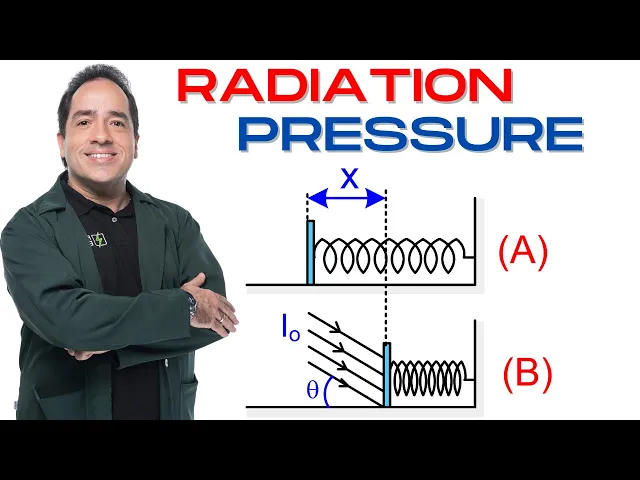
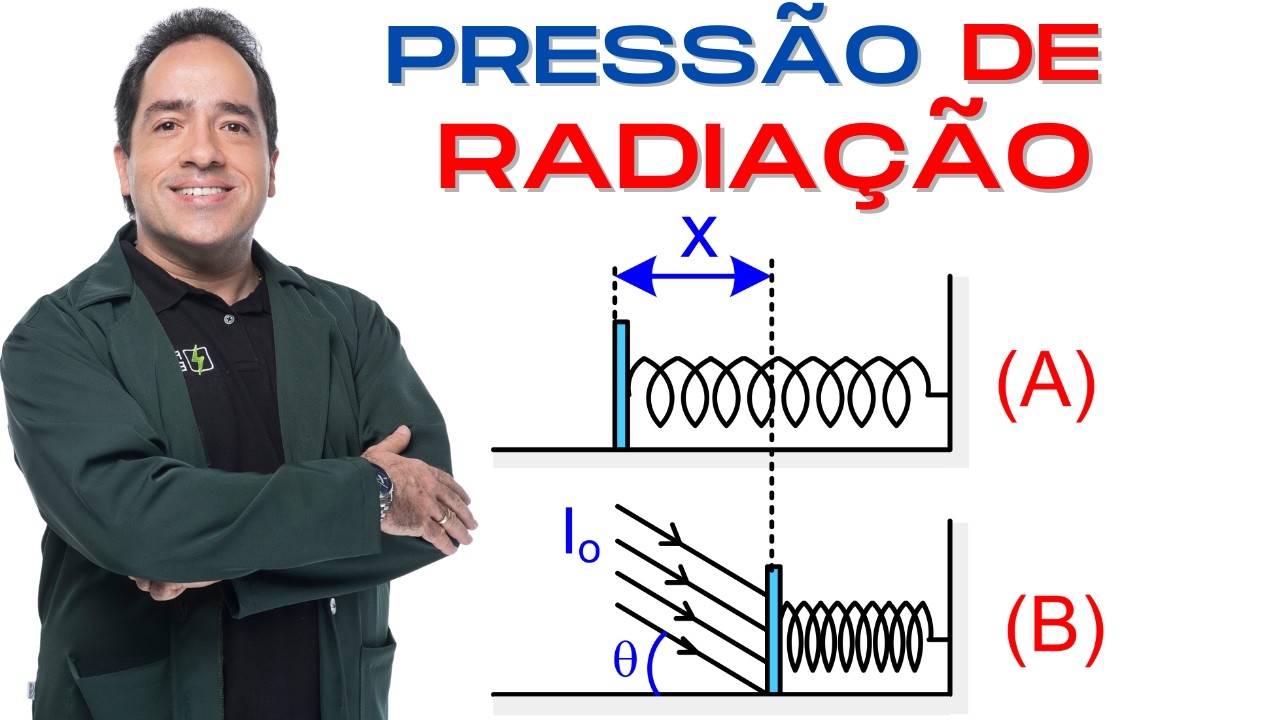
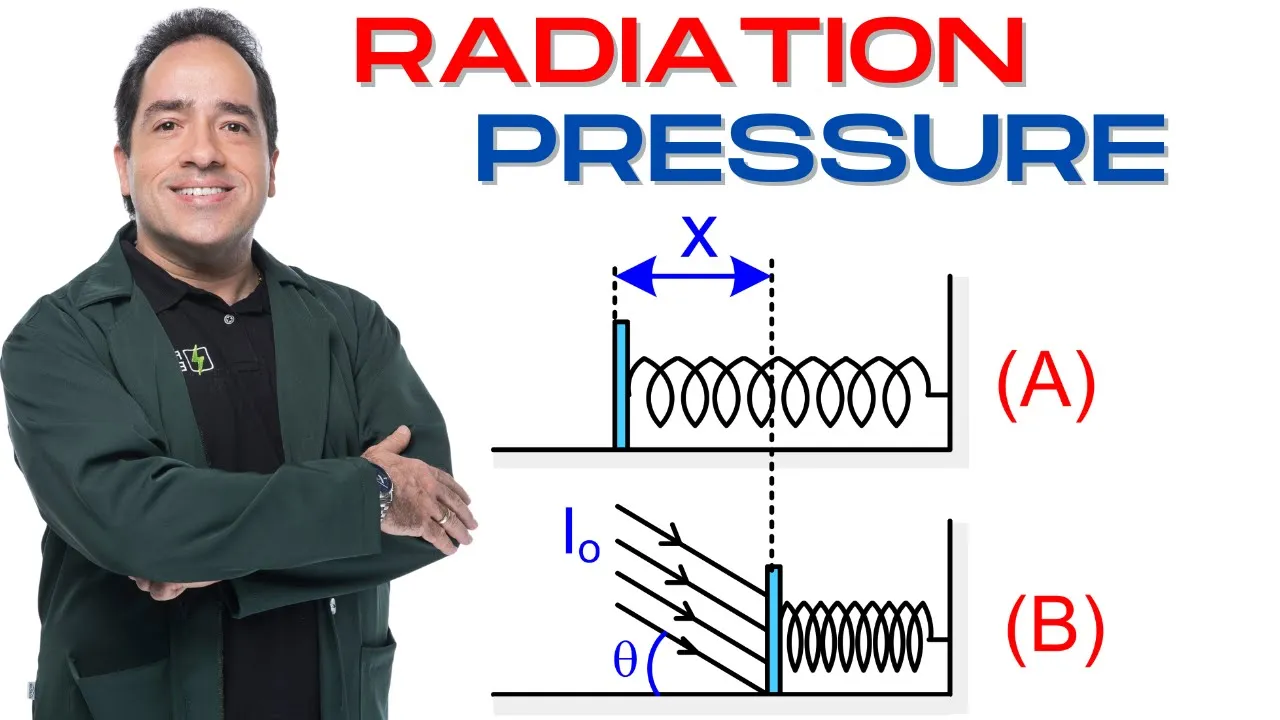
a metal plate reflects 80% of the light that falls on it the plate is attached to a sprink with an elastic constant K initially relaxed with an initial length x0 light with intensity i0 begins to fall on the plate at an angle Theta with the horizontal what will be the final length reached by the spring in the final position of static equilibrium now see this question makes use of the concept of radiation pressure so let's review this concept imagine a beam of light that is a beam of photons which will strike a wall and then
end up applying a force F on this wall due to the collisions of the photons so the concept of pressure even in this context is still the force that the photons will apply to that surface divided by the area and this force will still be given by the rate of change of the momentum of these photons that is Delta Q over delta T when the photon beam collides with the wall it strikes with a quantity of motion a linear momentum the linear momentum of a photon WID energy is divided by the speed of light which
is C so it will hit with this momentum and be reflected therefore the magnitude of the Chang in momentum of the photon from this Collision what will it be given by well here you will work only with the horizontal components of the momentum and you notice that the photon was moving to the right before and after the impact it's moving to the left so let's take only the horizontal component divided by the speed of light cine of alpha so may when I calculate the final amount of momentum minus the initial notice that reversing the direction
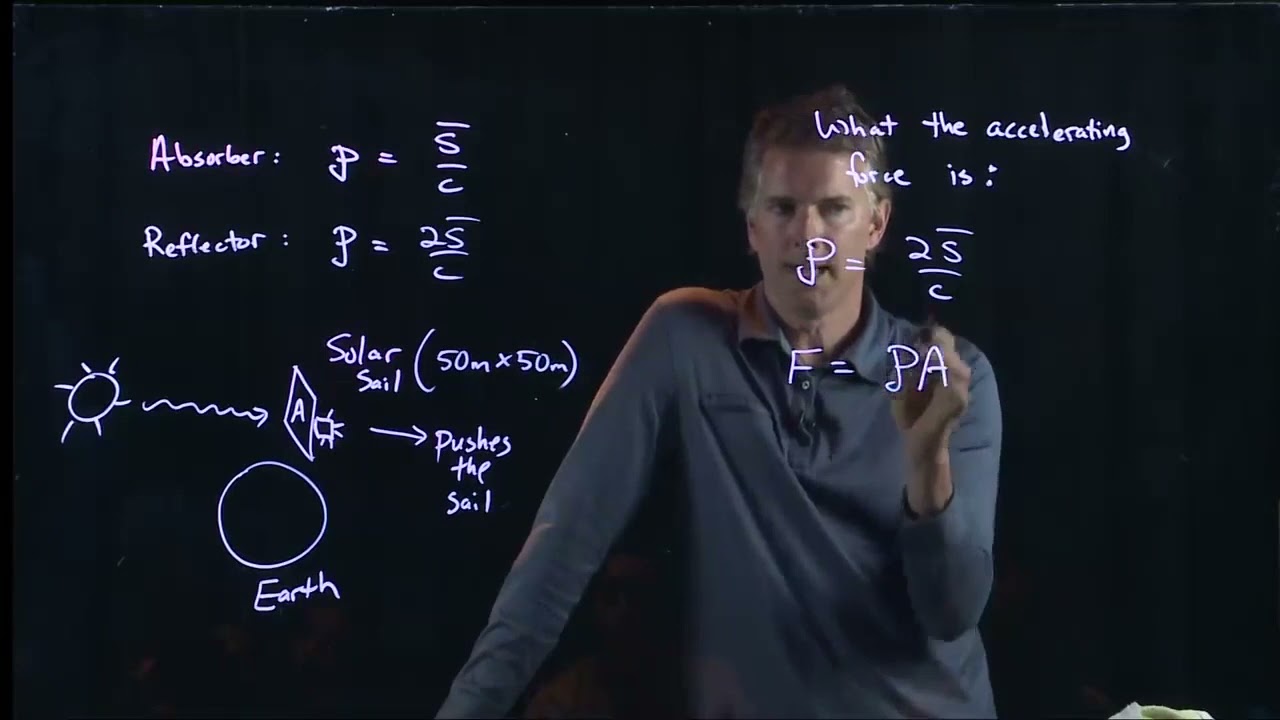
causes an inversion of the algebraic sign here and you can't fall into that trap so this would be the change in momentum assuming an elastic Collision where it hits and reflects with the same energy let's go let's move on now to the calculation of radiation pressure you will find that this pressure will be one over a * DQ over DT this ratio energy divided by time I will call power and this ratio power over area is also known as the intensity of this beam and therefore the radiation pressure as a function of the incident radiation
intensity will be given by this expression and remembering that pressure force is the pressure times the area let's find this Force well from now on let's calculate the force that this radiation applies when it strikes this plate Rito but haven't you already found this expression well this expression assumes that 100% of the light is reflected but in this case only 80% of the light will be reflected so the force due to this 80% reflection will be 80% of that value now remember that uh 20% of this radiation is incident and not reflected it will be
absorbed by this metal so we will have an inelastic collision in the inelastic cision you have this incoming beam but you won't have this beam reflected therefore when calculating the change in momentum this term here is now zero so the change in momentum in this situation will not result in EOS Alpha it will no longer include these two you see by now move on so in this case where the Collision is in elastic meaning the radiation is absorbed by the metal that two will not appear the expression for the force will then be the same
expression here just without that too this would be the expression for the Collision initially it was 100% radiation absorbed by the metal but in this case only 20% will be absorbed by the metal so uh the force due to this absorption will be 20% of that result just to recap this first term refers to the 80% that was reflected by the metal and this other term refers to the 20% of radiation that was absorbed by the metal so the total Force ends up being 1.6 + 0.2 which is 1.8 and therefore in the final equilibrium
situation the force due to radiation will have to match the elastic force acting on this plate so let's write this equilibrium equation so here I will find the expression for the Springs deformation just take that Force expression and divide it by the spring constant K so finally folks what is the final length of the spring well it's its initial length minus the deformation which means will be x0 minus this Delta X and that's the desired expression for the Spring's final length are you enjoying the explanation so you don't forget leave a like for Renato Brito
now and let's move on to the correct answer if you pay attention you'll notice that this 1.8 appearing here it's exactly that 9 fifths which is hidden in option C so that's why the correct answer to this question is option C warm regards and see you next time