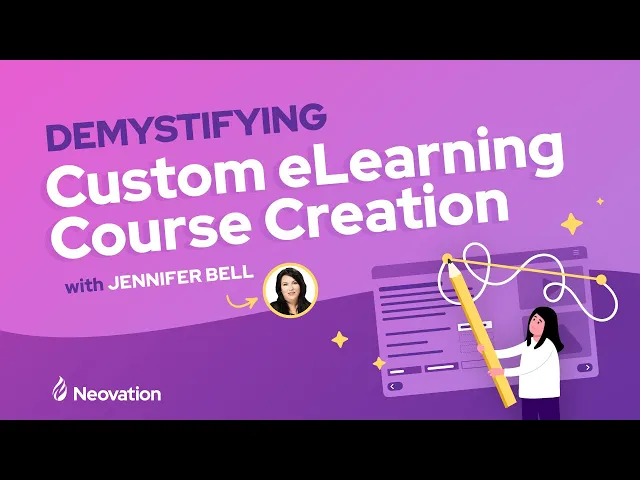
well it is the top of the hour uh so we're going to get officially started thank you everybody for having a little chat with us uh as uh as we were waiting to uh to hit the start Mark so uh welcome I'd like to thank everyone for making time out of your day today everyone that's in the room and to everyone that's going to be getting the recording we appreciate your time and your curiosity about custom learning we're going to have a great webinar today um Jen Bell is the leader of our custom learning team
and she is going to be sharing some deep insights and an exploration of when and why you might want to build custom learning courses and all of the different components that you need to consider uh so as people are still coming in I want to do a little bit of housekeeping um this is the the first in a series of what will be monthly webinars uh that we're going to be offering on topics like content libraries ai's role in online training leadership that improves engagement and a lot more uh so watch for more emails coming
from me to invite you to those sessions and also we'd love to know if there are any topics that you would like to have webinars on and we' be happy to consider those and put them in the queue so we're going to have time at the end for questions uh many of you sent questions in and Jen has worked those into her presentation there'll be a few that we're going to um answer at the end of the presentation but you can put your questions into the chat or the Q&A box I've got both open and
we'll make sure they get answered um if there's anything that's super technical we might uh reach out to you after the webinar to get into the meat of those more technical questions um but we'll we'll do a QA at the very end and also at the very end of the webinar when you go to leave there will be a survey just asking you for some feedback on our lovely presenter on the webinar content and uh what other topics or feedback you might like to provide for us so uh I think that's it for me I'd
like to introduce you to one of my favorite neov vites Jen Bell uh she is a dynamic leader she is involved in every aspect of the custom learning team as their leader she is involved in meeting with our clients and our prospects to help them understand the value that that course creation brings to the table and how we can help so uh Jen I will turn it over to you and I'm going to mute my mic because I have dogs who just love to join the conversation Jen it's all yours beauty of working from home
thank you Susan for such a lovely introduction I'm really excited to have the opportunity to virtually meet everybody that um took some time out of their day to join this call and talk a little bit about custom course creation and hopefully demystifying some of that and providing you with some um tools and things that you can take away from this to help and support you within your own efforts however it is that you want to approach that so in the chat we've just been chatting and sharing a little bit about experiences that everyone has in
creating um custom courses but we're going to take some time to chat about what an actual custom course is what is custom and what some of your options are um I know that with the folks on the call today that you've probably spent a lot of time in evaluating exactly what's going to be the right solution for your learners based off of knowing who they are where they are what it is that you um are targeting for the goals for the learning outcomes and what's going to be the right fit and that doesn't necessarily have
to be a completely custom course build there's a lot of libraries that are out there with content that is ready to go and completely off the shelf that you can leverage for projects and for your training initiatives it's just a matter of spending some time to figure out what's out there and what is going to be the best value for your organization and for your needs um one nice thing about off-the-shelf content is that it's ready to go it's already velop so there's no work going into actually creating creating anything from scratch um but you
need to weigh the benefits of that against customization look and feel um or even the special content that you need to present from an organization standpoint so it's not going to be the fit for everything when it comes to creating something from scratch for yourself internally you've also got a lot of options so you could do something inhouse where if you have the team and the skills and the knowledge and the time to be able to develop courses completely inhouse and internally then that's an option for you as well and um you also have the
option of working with an offshore vendor so that is something that clients do work with where they reach out and find a lowcost resource that is available there are some challenges with time zones and communication that you should keep in mind if that is an option that you want to explore and we've also heard from other clients who have come to us for projects or even rework and rebuild on projects that there were challenges with quality so make sure that you're really clear on the expectations of what you want to get out of those experiences
and that your clear for yourself on what your expectation should be from the end result of course you can work with a freelancer someone that is probably going to be about two times the cost of your kind of most experienced uh Team Member internal to the organization um and these folks tend to be generalists that are going to have deep skills and either the writing and instructional design or they're going to be people that are are really gifted at the graphic design it's kind of the unicorn um and if you've got those skills and hats
off to you to be able to do the the beautiful design and the technical ability of the tools that are needed to you be used to create the learning experiences as well as the Deep skills in writing and adult theory for example um something else to keep in mind with a freelancer is that they are they have limited bandwidth so if you're working with a single freelancer then they may have other clients and other projects that could have an impact on your timelines so depending on what your needs are and what you need to achieve
that's something that you might want to consider and then of course you can work with an organization like neov and the custom learning team um that is an opportunity to work with a large team with a depth and breadth of expertise and knowledge as well as bandwidth to work and support you on your projects it's certainly not going to be the least expensive of all the options that you have but is something that you can consider um and you're you're going to be working with an organization that also has a lot of deep embedded processes
to make sure that the project itself goes as smoothly as possible and provide you with that support so that you really want to love the experience of working with someone as much as you love the end results of what's being produced so yes lots of discussion as well about um and see that comment in the in the chat from Bob about not all clients can use online training and while I'm going to be talking a lot about this through the lens of e-learning itself there's um a very strong use case still for in-person lead training
or for virtual training that is done through a zoom link or other tools um that can help affect those more collaborative group sessions Learning and Development isn't just about e-learning so you have an idea of what it is that you want to create for your learners and if you're going to be developing something inhouse and I'm going to be sharing a tool with you at the end of this webinar as well that we have available on our site that can actually um you can have as a takeaway to walk you through a full needs analysis
of determining who your learners are um what's the learning Gap what's the knowledge how should it be presented should you work with this and develop something in-house or should it be something that you take away and work with an external partner on regardless of which one that is so we'll make sure that we share that at the end of this so that you have it as a resource to go through but when you are looking at the um project you do want to consider not only how it is that you're creating something and what supports
you're going to need from a technical or resource standpoint but also what's your starting point for the content itself are you doing something from what we kind of lovingly call a shoe box of sticky notes where you have an idea of the topic and the content that you're going to be um presenting to Learners and you have an idea of what you want them to get out of that time invested in a 30 minute training or a 4-Hour instructor Le or even a um resource or work guide that you can provide to them as a
quick job aid but is that straight from scratch are you going to need to involve subject matter experts and get their knowledge and expertise in order to be able to download that um or are you working from something that is really already wellde find where you already know exactly what that starting point is on the path from A to B of the project it may be also that you just need to update some existing courses so they're already there but they just need some tweaks in order to ensure that they're up to date with the
latest information with any um feedback that you've receive from Learners that have gone through the training experience previously changes in policy or maybe you've discovered that there's actually a gap in the information that's being provided and you need to add a new section it could be as well that you've got an existing course and that for some reason you need to rebuild the whole thing we actually got a question from raphaelo prior to the webinar that was sent in so thank you for that and the question was um scorm packages can be confusing if they
have something that's been created with a tool and they have the scorm package for it but want to add a video and an interactive quiz how is that possible so talking to that question specifically if what you have is only the scorm package then you're really looking at needing to rebuild the entire course a package is um for scorm is a is a zipped file that includes everything that was created using the tool that was used to author and build the course but it's not something that's going to be editable the most that you would
be able to do with that would be take the 2 minute and 47 second video file that's currently within that package and replace it with a new video file that is exactly the same duration so you're really limited on what you can do if what you have is that squirm package but if you have access and the source file for how however it was created so in the case of storyline it would be a file that has the extension of do story and you've got the software and the knowledge and skill to be able to
make edits to it then you would be able to take that work within the authoring tool and actually complete the edits we got another question as well from Jennifer um that was asking about best outcomes with updating materials look in de or sector-based topics and that is definitely something that you want to consider when you're looking at an existing course and what updates might be needed it isn't just about content sometimes you need to have a look at what the experiences maybe content in some sections is completely stable but it's time to mix it up
a little bit or swap out the knowledge checks so that the questions that are being asked of the Learners is something new new and fresh maybe looking at it from a language standpoint and determining if we need to simplify the language to make it easier or look at specific areas of the content where you can add some engagement and punch it up a little bit in this next version to add a bit more Pizzazz and draw Learners in so when looking at these and looking at the content it's really doing that instructional design analysis around
the narrative and the FL flow of the story and making sure that all of the content is in service of the learning outcomes and objectives that you want the learner to walk away with so if you've said to the learner at the beginning of the course by the time you complete this you will be able to explain this understand that have awareness of this other thing and be able to execute on a fourth item then all the content within that course and within what's being presented should be in service of those objec Ives so talking
a little bit about learner engagement there's lots of things that you can do to impact learner engagement and creating something custom doesn't necessarily mean mean that it needs to be something completely complex either so you can take something that is fairly straightforward like the fruit salad if you read the comments from prior to joining the call in an articulate rise course that can be pretty straightforward but add a bit of storyline element to it to bring in a custom scenario or do something with a video or an animation um look at opportunities to be able
to offer your learners something that's more than just watching a long video or reading a lot of text break it up a little bit give them interactions and things that they can play with and engage with don't forget to support their engagement in a meaningful way though you don't want to add clicks for the sake of clicks you want to have the opportunity for them to engage with the content in a meaningful way and of course those learning objectives that we talked about just a moment ago make sure that you're doing interactions that are meaningful
and are going to impact retention so if you present the learner with information and then ask a knowledge check about that same content and then reinforce it again in the final quiz at the end you've touched upon that one item three times so it must be important and something that is really a focus for that learner retention and a takeaway let's look at a couple examples so there's a lot of different common interactions that Learners can engage with to bump up content for example a click to reveal experience so something like this which again we'll
give you the link for so that you can explore these on your own um you can include them in different ways and at different levels of complexity and customization but what they do is they allow you to introduce Concepts from a contextual standpoint of how they relate to one another so here is the total of how these three things belong together in a category and then click to explore to understand in more depth the details of those so you're zooming in and zooming out on the material as you're introducing it to Learners and you can
affect different experiences with that exact same interaction depending on how custom you want to go with the design so starting from something that was you know graphically quite simple to something that's got a lot of animations and really beautiful design with a lot of custom images and even some videos to engage them with speaking of videos explainer videos are also something that can really help to pump up content you can use these to introduce the beginning of a segment and provide them with some information wel to our Qui guide going to mute this you can't
hear it but there's music and narration that's happening in the background I prefer to do all the talking so I had the sound turned off um but you can use them to introduce um the beginning of segments to imagine um a quick little overview of what they're going to learn that's in a video rather than text that they're reading or you can use it to present them with um a scenario between a couple different characters and maybe in something that's related to soft skills and again you can do things at different levels of customization like
I'm showing you here where it's the exact same content that's being displayed it's just being shown at different levels of that customization that are possible with this one being highly customized with really Dynamic and quick moving varied animations that are happening with narration and then punching up the key points of that message with some onslide text and lastly of course in the samples that I'm going to show you you can have things with knowledge checks where Learners go through and practice what they've learned in a safe environment where they're not scored on um how they
do within it but get some immediate feedback which is really important for Learners to give them that immediate touch point on how they did so that they can learn right away oops there's some things I pack in my kit that I shouldn't have brought with me and then take that with them as you continue to reinforce those key things and of course some different options that you have for the level of design customization and complexity so we'll send you the link so that you can explore all of those on your own after the call today
and um hopefully you'll get a little bit of inspiration so you're getting a little bit of inspiration and now you actually need to produce something so we wanted to chat a little bit about um the work that goes into actually developing custom Training part of the effort that is done is in what we call instructional design so this is all of the writing that happens within the content and depending on where you're at with the project it could be that you've already got a complete storyboard that's already been developed and you just need somebody to
go through it as a Content editor and provide you with some feedback on it make sure that you got all those eyes dotted and te's crossed as they say but it could be that you're working from something where a subject matter expert has provided you with a PowerPoint presentation and they've got all of their speakers notes so it's a single source of Truth for all of the content that needs to be lever Ed but it's not presented in a way and it needs to be fine-tuned so that it's going to be appropriate to present as
an instructor-led training or an e-learning or converted into a resource guide whatever it is that you're producing so that's going to take a little bit more work in order to create it and then of course you've got your um we're not quite ready yet this can really range from I have a single policy document all the content is there but it's in a document single source of truth but it is not yet set up or appropriate to be developed into e-learning it needs to have all the interactions that are added to it all of the
knowledge checks the the content needs to be massaged for the language and how it's being presented to Learners and it could also be that blank page that sticky note thing in which case then you're going to want to do some curriculum Consulting upfront maybe interview some subject matter experts and curriculum Consulting can really go broad from a full needs analysis in who are my Learners what are their knowledge gaps how are they going to be accessing the training what's the right way to present it what are the tools that we're going to need to the
outlines for here's all the objectives the topics the sections content that's being revealed and how it is that we're doing that whether it be an interaction or Media or even a a breakout activity in an instructor-led um environment so lots of different options that you have for um the work and the varied work that's going to be required in order to get that story here's a sample of what a storyboard might look like so this one obviously is super simple we're focusing today on pineapples and an introduction to pineapples but what this does is it
gives you that black and gray representation of what a learner is going to see what they're going to read what they're going to hear in the narration and then some specific items that are identified that can be used by the the yourself or whoever it is that's actually building the course on what should be happening within here how am I programming this from an interactive standpoint what media asset should I be pulling in order to create this and it details step by step so that when you have in this case a flip card interaction it
shows what the learner's going to see when they first land on that slide what happens when they click the first button what happens when they click the second button and what happens when they click the third button but getting to this level of detail really helps you to um get um a final story together for that narrative flow and exactly what that learner experience is going to be similar to instructional design design also has levels which you've already seen in some of the samples that I've shown to you um this is not just with regards
to the customization of the interactions themselves but the overall learner experience has levels level one is going to be something where it's a bit more straightforward it's more um content next content next and less interactive but it's a really good option for content that is quite straightforward for Learners and especially for courses where you're developing them and they're short they're short Snappy little experiences where a lot of complex navigation simply isn't going to be a good fit remember we don't want clicks for the sake of clicks level two is a lot more interactive now you're
looking at something that is maybe 40% interactive where they've got click to explore click to reveal maybe even some decisions that they're making that's going to impact the specific content that they see all the way up to something that can be completely custom completely gamified have lots of options in what it is that they're being presented with let me show you some examples of what that might look like so for folks on the call that have already developed things in rise this is going to look really familiar where um we have cont content images that
really spice things up interactions with click to reveals and things but remember that fruit salad I'm going to steal that expression by the way thank you for mentioning that um that we talked about earlier where you can take little bits of different design levels and put them together this is a really good example of that so I've just clicked over to a different tab but it's the exact same course that I was just showing and this is where we've taken a rise course but now we've added a completely custom activity to this right within the
rise course so instead of just reading about mechanical advantage and saying about how it works from a theory standpoint I get to play a little game as a learner and if I did it right and I click on the Hoist button it's going to lift all the loads because I've applied mechanical advantage and now I'm going to continue on with my learning learning it's a real nice way to be able to mix things up a little bit for your learner audience okay let's have a look at something that's closer to a level two so this
one here was created for a client that was looking to develop content specifically for safety training for youth on riding ATVs so got some nice animations that really draw you into the experience some stock videos that we're using as well and a nice punchy design that really speaks to the Target learner audience within the demo itself we are giving some basic information about navigation and my laptop's in the way so I can't see where the button is apologies there we go but we've also done things within here like instead of just having a plain menu
of what it is that you're going to go over within the content we've got a little visual representation that ties back to the content itself and a little bit of gamification so as the Learners going through the content they're actually going to earn badges on their passport so diving into that content and into some of the interactions that the learner has available what you can't hear is the narration so the narration itself the timeline is showing you what is actually happening within this transcript as they talk through things and everything that's happening on the slide
is timed so that the content is revealed at the same time that the narration talks about it and that's really important it's not just a design element it's about supporting the learner along the way so they don't have to figure out how do I navigate this what should I be looking at what am I trying to make sense here and having those interactions and elements that are really there to support the learner along the way so that they can spend their mental effort on what they need to know and then our last quick little sample
is one that we did for um lgca so anybody that serves alcohol within the province of Manitoba has required training that they need need to complete and um it's all for compliance-based training but we still wanted to tie it back and make it really impactful for the learner audience and draw them in so within here we've got some music playing and it's kind of got that Lounge vibe to it and really Custom Design so everything within here is highly custom including buttons and navigation using AI avatars to um introduce information throughout the content and also
using elements like 360 degree images in this case using it to present the learner with the different sections of content that they can explore and letting them pick where they want to go first so they don't have to follow the exact same learning path as everybody else did lots of visuals lots of animations and even things like cool little sound effects so that as the glasses slide across the bar top they make a little sound effect that really draws you in and makes the experience feel that more real so tons of options that you have
and um there are so many possibilities that are out there I really encourage you to go out and explore and get inspired and when you're going through these think of it like looking at a house where maybe not all of the house is going to fit your particular style but there should be takeaways and best pieces and elements that are really going to resonate with you and what you want to create for your learners so a question um for the group have you worked with an external vendor on custom course creation before is that something
that you've done I'm just going to post that into the chat not yet lots of nose yeah and that's really common so we work with a lot of clients who have never worked with an external vendor and they really don't know what to expect um what I can tell you is that there are challenges that you're likely to face and we want you to be aware of these so that you can be empowered by them because challenges are most times something that can be mitigated but only if you can see them coming and have a
plan for them the biggest problem that arises is when there's a challenge that presents when it's too late to do anything about it so let's talk about challenges a little bit you built this amazing Vision um and imagination has no limits but budgets do so so you're going to have to make critical decisions on your project for what to include and what not to include based off of the investment that you have available without putting your budget at risk and ending up with overruns another thing to consider is going to be design in some cases
the design or the technical elements that are required mean that certain things aren't possible but you want to find a way to be able to find the yes and opportunity within projects instead of it simply being uh no we can't include that or that's not possible have the ability to have those collaborative discussions for creative ways that you can overcome some of those challenges another thing is learner resistance so you might have a Content or a course where you have a really broad set of Learners and somehow you need to have a single course that
speaks to everybody so how are you going to position that from a lang standpoint in order to meet the needs of your broadest audience possible without completely tuning out those um outlying 10 or 20 perents complex content is another thing so your experts on your material and a benefit to working with a third party can be actually having that lens and helping to identify rabbit holes that you might be going down that aren't in service of those learning outcomes or understanding and identifying those gaps that might be missing how the content needs to be structured
and making sure that you've got a um a real narrative flow in being able to support and work with subject matter experts in order to make that happen you also need to plan and be aware of projects and their evolution so projects are going to start off with the idea of one particular plan for what's going to be created but I can tell you that that's rarely exactly the thing that is delivered in the end so you want to work with someone that's got a plan and the ability to Pivot where they need to speaking
of pivoting that also comes down to revisions so understanding the impact of multiple smmes or other stakeholders within the project and how those are going to impact reviews and ability to give feedback so that everyone is delighted with the end result timelines of course are another thing can't take forever to complete these projects so what is that schedule going to look like and what are the mitigation plans if things are delayed because life happens when you're making other plans we've all been there so that is absolutely something that is very likely to come up during
your project and then errors so making sure that the quality is there so that the work and the project is identifying everything and um your learners are the ones that are pointing out all those little grammatical misses that were overlooked during the process so now I'm going to Pivot a little bit we've talked a lot about Theory and ideas and and getting a vision I'm going to chat a little bit now about what it's like to work with us first off from our first step we really invest a lot of time in identifying what your
needs are so talking about that blue sky vision for what it is that's possible even getting content and information from you that we can comb through in order to um have that second meeting to have the clarification of the vision so talking about different ways that we would recommend approaching a specific project what your options are on that from a timeline and budget standpoint what are some of the elements that we could include and making sure that we can all be on the same page for what that vision is and speaking of being on the
same page we want you to be aware um that there's three main factors that are going to impact the cost and the timeline for your project and Jeff you posted a question prior to the webinar that asked about price guidelines or industry standards so I'm hoping that this will help provide a bit of guidance as well as some of our resources that we have one thing that is going to impact that cost is that content Readiness so that previous slide that we had that had the instructional design with the bar graphs of storyboard that's ready
needs a little bit more lift total from scratch to sticky note situation um we um that's going to have an impact on the workload for the project and then that level of customization so what's that design level with all the different examples that we looked at today and more that you can explore on the website and then of course the size so are we developing a 15 minute little micro module a two-hour instructor Le training uh five one our e-learning asynchronous training Series yeah and great question about um partnering with with teams externally as well
we work with a lot of clients that um have deep experience in knowledge and instructional design even deep experience and knowledge in authoring tools and building courses and can support from an overflow standpoint and we can also um work with clients that have no experience that have the subject matter expertise so we can really meet you where you need us depending on the things that you're looking for and I'll talk about that a little bit more the other thing that our team does is support you from start to finish so everything that's discovered during those
initial conversations we pass them internally so that we're not starting from scratch and then revisit them again during a kickoff call to make sure that we're all completely on the same page because things change all the time and during that call we're also going to do some work to identify potential risks within the project and what the mitigation strategies are going to be in order to get ahead of those we want to keep our eye out on them pretending that they're not there isn't going to mean that they don't happen we also want to work
with you and provide you with a timeline that clearly shows exactly where you're going to need to do some work and you're going to be waiting for us to do some work and that could include a timeline that includes multiple module development so here's a quick little graphic that shows you if we were working on a five module course how we would stagger the start of each of them in what we call a waterfall effect and then we've always got multiple courses on the go but they're at different stages all of the Orange is that
instructional design storyboarding and all of the blue is the design and the course build with the dark colors being us and the lighter colors being you so you can see that we're working not only to stagger it and have multiple things on the go at one time but also so that you can plan when you're going to need to do your pieces in reviewing material so Milestones I just showed you that quick little graphic but just talking about that a little bit deeper we've got some major Milestones within projects where we're going to do some
of that curriculum Consulting if it's needed storyboarding review and revisions and at the same time we're also going to be working on an initial course design because we want you to see the look and feel using the tool that's going to be used to create your courses for what that's going to look like whether that be a PowerPoint storyline rise animated video whatever it is that's being created so that when we get the approval after your review of those we can bring them together and actually start jumping in and getting going on the build we
also use tools like AI someone mentioned murf earlier so that's a well-known tool for text to speech AI um of course we will be transparent with you if AI is a tool that we would like to use for your project and if you're not comfortable with it then we will avoid them but we use chat gbt to help with um content we use um Mid journey to create things like custom images and Graphics that are a fit within the project as well as other text to speech tools and also external vendors so maybe that's translation
for localized versions or maybe text to speech isn't your thing and you really want a professional narrator we can support with that as well and then of course wrapping up it's just as important as the kickoff we want to make sure that we take some time at the end to celebrate um and also to check in and make sure did we meet all of the objectives for what we said we wanted to accomplish at the outset of the project is there anything that you could provide us for feedback I can tell you with my almost
eight years of experience at the Ovation that we've evolved our processes and it has been based off of introspection evaluation and looking back at projects and really great feedback and conversations with clients about how we can continue to improve and make it easier for you to love the process so we are ready to assist as I said if you need just a little bit of collaboration with an instructional designer that can help brainstorm ideas or review a storyboard or maybe you've got a course that's built and you need someone to go through a deep technical
review of it to make sure that it's functioning correctly we can do that if you need Hands-On support with creating an animation that you're going to use within a project or building out an entire course or you did the storyboard and you just need it brought to life um a built course that needs revisions or updates we're really here to help you wherever it is that you need us and Cindy asked the question of how our agreements work with projects and if we do um a small one-off projects or engage with team members over a
long period of time um and I can tell you that with our team of experts that we have we work with clients on short quick projects as well as long engagements where they simply purchase an allocation of scope which we call points um we if you're interested in learning more we'll have a call with you to chat about that in more detail that you can leverage for any of the services that we provide it's part of how our project management allows you to be able to Pivot for your needs as they evolve within a project
and we've got a beautiful web page that can um provide you with some more insights information it includes um some how why these things would be beneficial information about what the projects would look like what you would get and even include some information about range of costs and expectations depending on the the different design levels and and the work that you might want to select so we'd love to spend some time to um chat with you a little bit about what your specific needs are so we can understand that deeper but this is a great
resource for you to be able to explore things a little bit more on your own and get a sense of what might be a fit for you in your organization so as promised we will have all of these resources that we've looked at today shared as well um afterward so Susan will support and take care of that but um in the meantime we've got a little bit of time left to be able to take some questions thank you Jen that was a great overview and explanation of of what's involved in a custom learning project um
Hassan had a question in the chat uh do you create themes for example so I can have consistent themes across all of my courses I guess it's similar to a branding package I said yes in the chat but maybe you want to talk about that a little bit more yeah absolutely so what we did for one client is they didn't need us to build any courses they wanted to build the all themselves and we're using articulate storyline to do so so our job was to come up with a series of layouts using their corporate branding
and create um storyline files that had placeholder text and images but it had all of the design elements that were added so all of the animations the what is the button look like when I haven't touched it what does it change to when I hover over it what does it change to when I've selected it how about after I viewed it all those little details have been completely set up within that project so that they now have all of these different interactions and activities that they can create within their within their storyline courses and that
design demo that we do for all of our projects really is that experience of creating this is the look and feel for what you can expect from the courses um we've done them as well for resource documents where we create a design for in design or word depending on how your team wants to leverage those um and which tools are going to be appropriate for um creating a resource guide and we set it up so that it's applied for your branding and looks beautiful but your team can then take it away and actually add all
the words and and um and the details to it as well great answer thanks Jen uh Abby has asked a question uh in the Q&A box as opposed to the chat box so I just moved it over but thank you Abby for your question so when you create a course for a customer how do future updates to that course work yeah great question um it's really your choice so when we work with clients we'll always provide you with that source file that story we talked about at the beginning where a client has a scorm package
but not the source material um or ability to be able to get in and do their own updates we don't want that to happen so we will always provide you with that source file so in a storyline um build it would be the dot story file as long as you've got the software to be able to open it and interact with it then you can make the update but we also work with a lot of clients where we support them on regular updates for example we have one bank that has a series of I think
they're up to 10 now compliance training courses and every year we go through a Cadence where their team of subject matter experts reviews the courses in a special published format that we give them to make it easier their compliance team reviews those edits to make sure that they're valid and then they pass them over to us and we just have an ongoing project with them where we take take care of those revisions so they don't have to worry about it so it's really your choice on how you want to do that great answer Jen thank
you so what I'm hearing you say is that we meet our our clients where they are and we meet their needs with what they express to us that they need us to do everything from a very simple piece to a full-on course build that's extremely complex and I just wanted to say one of my favorite slides in in your deck is the one of the challenges because I know that you could tell us a story of a client interaction for each of those challenges and how your team has overcome them to bring those projects to
a successful conclusion so if you reach out to Jen to talk about a possible custom learning project ask her about some of those challenges because they're all a really great stories individually about ways that we work with our clients to overcome all of the issues so she's going to try to get back to that slide excellent um we have a couple minutes left so any other questions before we wrap up you can type those in I'm just going to keep talking so we will be sending out a recording of the webinar and we will also
um be sending you out just a PDF of the slide deck that will have links to all of the resources that Jen has referenced and um hi Cindy yeah we have a checklist to help you prepare for the initial call it's actually more robust than a checklist it's the guide to custom learning um and it will take you through all of the things that you need to consider consider we're going to give you lots of resources that will help you prepare for your first call with with Jen oh Jen's computer did some fun stuff that's
good um but you know we'll make sure that we do everything we can to help you prepare for that initial call we'll be sending you out some resources so you can look forward to receiving those um any other questions so you'll be getting the recording you'll be getting a link to all the resources including the guide to custom learning and a few other articles and things that Jen presented and referenced in her talk to uh to help you prepare for uh your call uh you can email Jen jennifer. Bell NE evation or you can email
me hello ne.com and uh we'd be happy to follow up you'll be getting an email from me um in the next 24 hours as soon as we get the video rendered so last chance for questions Cindy I just wanted to um point you as well if you were looking for resources I really wanted to highlight the Learning Hub and I think I I missed this earlier um so on the neov website neo.com if you go to the learninghub there's a ton of resources and articles um that are completely free and available to you for answering
many many questions that you likely have about training and development or LMS or other needs so just looking at the e-learning section authoring tools portion there's information about different authoring tools what is scorm compliance so if that is something that you want to look into a little bit more um so many many resources and articles that are completely free and available to you to explore yeah I'll make sure I include a link to the Learning Hub Thanks Jen for the shout out on that um you and I are some of the primary authors for for
that as well so um there's a lot of really good wisdom in there uh remember that when uh we stop the webinar there's going to be a survey that pops up we really appreciate your feedback uh our next webinar will be on content libraries that Jen referenced at the very beginning of her presentation where we'll be doing a deep dive explaining how those work and how they are sometimes the right option for you depending on what you need so you'll be getting an email from me in a week or so to register for that uh
again hello at ne.com if you have any questions and I will be in touch in the next day or so with the recording so thank you so much for your time for joining us today for the people watching the recording thank you as well for your time we appreciate your interest and your curiosity and your great questions and I'd like to just thank Jen for her time in putting this presentation together as well so we look forward to speaking with each of you in the future and we thank you again for for coming up today
thanks everybody you're great host Susan I really appreciate the support um but everyone taking their time and um um I hope you all have a wonderful day if we can help in any way just let us know we're here great excellent I'm going to be ending the webinar make sure you do the survey thank you so much