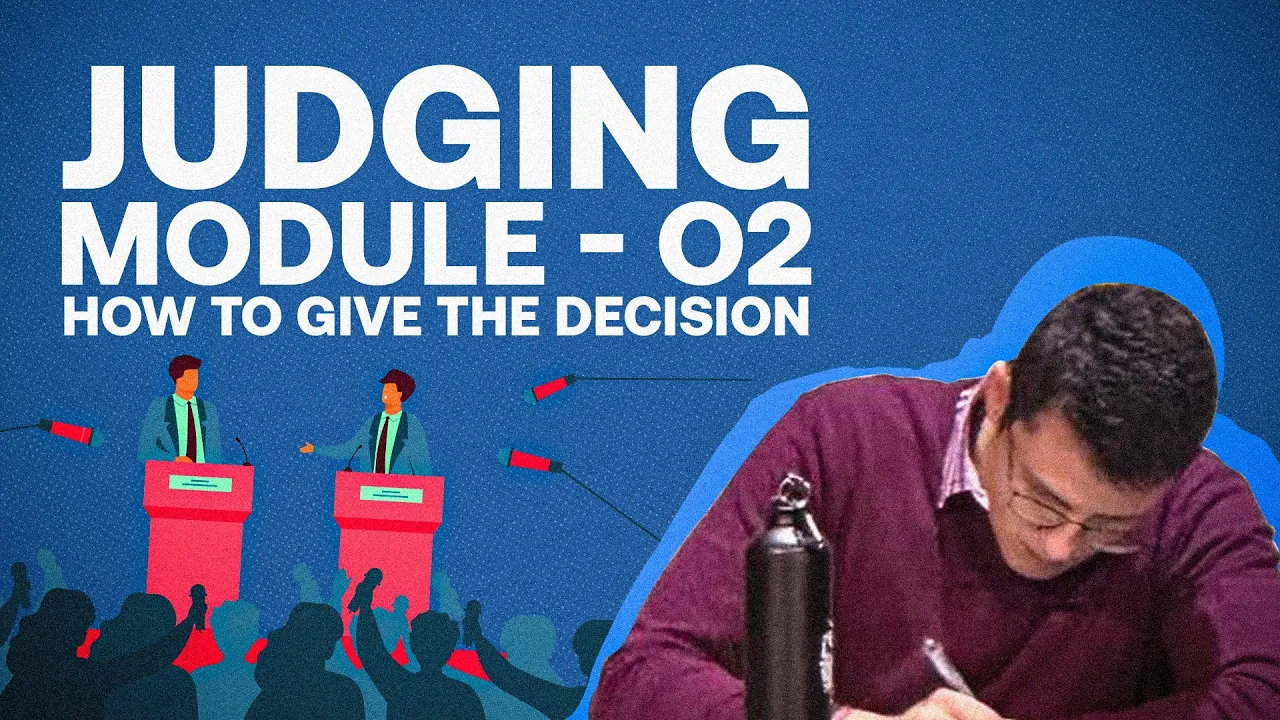
okay so welcome to module tool of uh judging which is how to give an oral OA oral adjudication or the verdict um in the previous one we covered how to judge or how to arrive to the right call here we're going to cover how to uh best explain the the right call and what are the best practices associated with that uh there's going to be a separate separate video on personal feedback which um you can give elements of personal feedback when you are explaining the oral judication but keep in mind the idea of the oral
judication is just to give an uh an explanation of the of the debate and why the ranking of the debate is the way it is you should in theory be able to do it in uh 15 minutes or less uh or or less time so that the tournament can still keep on going uh it's okay if you go to 20 although most of my oral adjudications are below 15 for example I try to keep them as time optimized as possible uh and after that only I would explain give personal feedback and explain to people here's
how you can improve so there will be a separate video to this uh this solely on or indications cool like the previous uh video what are the goals that we need to have when we're doing this the first is to clearly communicate the decision so this is different from reaching the decision which we covered previously and the ways that we do it this is just making sure that our clients or like The Debaters themselves clearly understand why the ranking is the way it is and can uh piece it together logically holistically whatever word you have
to do it secondly to do it in less than 15 minutes so it like I said it's good to be able to uh be able to explain the call in less than 15 minutes obviously it's fine if you go to 20 but there are some judges that take like 30 minutes to explain the decision this is just plain absurd uh you have to be able to do it in less than 15 and finally you have to try to show some kind of empathy to teams ultimately we are human beings doing human activities it's always pretty
bad when you like receive the fourth or the third or something like that it can be pretty demoralizing especially if it's a room that's like a break a bubble room or something like that uh so trying to be uh empathetic to people is uh a good thing obviously we need to at the end of the day we're Arbiters we're trying to give uh what is like the correct uh decision and the decision is what it is finally but you can still be human towards uh one another what you should not be and this is very
crucial uh firstly you should not be a people pleaser you are there to give uh the verdict and to give that verdict as closest to the truth as possible you are not there to make sure that everyone uh like feels happy or make sure that there are no winners and losers inherently when people go into debating they consent that they may become a loser uh and they consent that they become a winner it's it's not your idea to uh like uh try to make sure that everyone's is happy and singing Kumbaya or something like that
um like ultimately there is a there is a ranking to this stuff like that doesn't mean you have to be an you can still show empathy to them but you shouldn't be there uh but the second thing is you shouldn't be scared about getting tanked in the score and this is super super CR crucial I think this is the number one problem with judging where people care about their score care about breaking High care about sharing uh I don't know a final chering a semi-final or something like that and that's like wrong ultimately the incentive
to perform well uh perform well when you're judging should come internally you should try to reach the right call you should try to reach the best version of the call but not because you are accountable in a sense to what the public opinion of of you is and uh like breaking doing these type of things no you should just do it because For the Love of the Game and the game itself um honestly this is very bad because it creates a pernicious incentives in in many judges to for example do things like R calls uh
to to teams because you know they're scared of being tanked then they provide a bad uh feedback for you and then you don't break because you know they're buddies with the ca or something like that this is a horrible mechanism and it shouldn't be uh like within people's heads at Worlds never there's a moment that I think oh my God this team is going to tank me now in the feedback and I'm not going to break as a judge I didn't care about that uh and you could say okay fine bro uh you are like
you have the speaker CV for it I don't I didn't care even before this I never in one singular moment cared uh about like being broken and cared about this I always split when I thought it was when I had to split I always thought team that uh they didn't do a good job when they didn't do a good job and I never had the problem of giving a Ry team a fourth or a third or whatever like this just should be the case so to reiterate we're not people Pleasers our goal is to clearly
communicate that the discussion uh the decision do it in less than 50 minutes and obviously try to show empathy to the teams without you know like being a people pleaser and uh things like that cool let's dissect each and every one of these goals same way as we did the last video so time management the first thing is obvious but I've seen people not do it is like just have the timer open at all times like to track your to track your time similars to how you would do a debate speech uh it's a very
efficient way for you to follow what your tried to explain uh it's a very efficient way for you to do it plus like even in discussions you can just pull out the timer and say aha but we are we're over time we need to stop we need to call on a vote right now so like just simply doing that really really helps you uh out the second thing is for short or very clear comparisons where basically you know that this team beats the other team with a huge margin or something like that just explain it
faster like just say it the way it is just uh you you shouldn't be scared you shouldn't artificially try to make the debate seem closer than it actually is uh you could just simply say very clearly this team's be that team because uh for example they had a clear argument and clear weighing whereas the other uh Team I don't necessarily buy that they fully explained this argument they have this problem with this burden and even but even if it is explained there is no Wing whereas this team has a wing boom that's done 20 seconds
if I were to actually explain the actual things 1 minute and that's one comparison down and then you move on to the other comparisons whereas where comparisons are closer you can take more time uh to explain these type of things but ultimately you shouldn't be scared of just optimizing for time not all comparisons are made equal and uh that's the best thing and thirdly use disclaimers so just tell the people look I won't mention everything you said I just I will just mention the most important things that are crucial for each Clash because ultimately this
is how we come to this decision uh it is kind of like spending some money uh like not some money some time on this but ultimately it pays you uh it pays back because then you can be a lot faster when you're giving explanations and adjudications and things like that so that's on time managing so just have a timer explain things faster when they're clear and give the give out disclaimers that you won't be talking about absolutely everything that people said cool uh clear communication so the first and most important thing is just do the
good old fashion pawise comparisons uh it's not necessary that you do this but ultimately what you're trying to explain you're trying to explain why you're trying to explain opening government versus opening opposition closing government versus opening government opening uh closing government versus opening opposition closing opposition versus opening opposition closing opposition versus opening government closing opposition versus closing government this is like what 1 2 3 4 five six you need to you need to basically do six uh six comparisons between the between the teams to achieve the the ranking uh with some of this you'll have
repetition so for example if let's say Co and O are are running the exact same case uh but with different analysis and CG gives responses directly to this argument which destroyed this argument then you could say the reason uh closing uh government beats opening opposition is because they have very storm reut to their case and they're in a clear rank this is also the Reason by the way is why they beat closing opposition because closing opposition runs the exact same case as opening opposition and thus they are uh have the same susceptibility towards the responses
in the way given within the round uh so that way you optim so it's not that complex as long as you have these pairwise comparisons within your head and you fastly go through them so that you're able to do this the second thing is just point out the obvious uh I think people have a misconception towards judging because they're scared to just say things are as they are so like if a team uh is able to have clear weighing against one versus another case clear engagement one uh two arguments and one has respon as the
other one does this analytical superiority their argument is just much betterly explained and much better impacted than the other side's argument then those are very obvious and clear reasons as to why one team beats another team on the opposite side of the spectrum you also have other obvious things like you may have analytical Hills in your case which means that I don't uh buy your argument you may have zero responses or zero engagement with the other side whereas the other side has responses towards you you may have zero weighing of your case or explanation why
you should weigh your case higher within the round now optim there's a spectrum here there's super super clear comparisons and not so clear comparisons but in a debate it's unlikely that you'll have majority of debates where all of the comparisons are not clear like obviously those debates exists like that's true but most debates like maybe you'll have one comparison that's very tight and the other parts of the comparisons are more clear than uh they should so just to have a clear communication of the call just communicate what are the basically you're kind of communicating the
advantages and the disadvantages and how those things are interplaying between each other and why one team beats another it's honestly it's not that complex if you just uh uh evaluate it uh evaluate it in this particular uh in this particular way the reason people aren't doing it is because they're afraid of saying like to someone oh you have a hole in your case and that's why I didn't buy your case and things like that but you shouldn't really be afraid to do that you shouldn't be afraid of like comparing the the the power of different
uh contribution within the debate uh the third thing that you can do is to and this something we covered before is to just point out when a clash is clear and point out when a clash is not clear so if you were to say opening opposition clearly beats opening government in uh in this debate the reason for why that's the case is uh because they have clear way clear responses towards their case and because opening government's case is asserted these are clear justifications for why opening opposition should beat opening government and then you could say
but where the line becomes a bit more trickier is when we're comparing the GU bench so in the GV bench let's say this is a theoretical situation although the previous video that I uploaded literally had this closing government runs like very narrow contributions towards opening government uh which are able to slightly Edge out over this so here the uh the the reason closing government beats is less clear so we'll go into more detail and that's how you set up the expectations that you're going to explain this call more in detail and explain it in more
uh uh in more nuances and things like that and that way people understand okay now I have to listen to this uh in order to clearly understand what uh what the call is and here here the the chair will go into more details uh and things and things like that so this like separation it's almost like flagging within your speech if you think about it you flag your case and you flag your framing the same as you would flag in a justification and finally uh have like the separate sheet ready so in the previous video
if you watched it I hope you did uh I explained like having just a separate Treet where you make a cross and you outline the contributions of different teams that you can fill out either as people are speaking or you know uh when the debate is over and people are taking one or two minutes to uh like think what their what their decisions are and stuff like that and you can write it there so that via this separate sheet you can always remind yourself what are the core reasons as to why a uh Team beats
another team again you don't have to explain all the reasons just what are the core reasons or the cor core summary of the debate uh if you have trouble like if you are new and you have trouble with uh like time management like it it just takes more time for you to do this maybe filling out the ballot and then taking another minute or two to make sure that you filled out this this sheet of paper so it's clearly there would be much more worthwhile if uh will be much more worthwhile to you by investing
this one or two minutes to have this sheet so that you can always fall back on it uh rather than you know the trade-off of teams waiting just a bit more longer to you uh so yeah and guys don't worry with experience you'll get better it's just uh trying to do it more like uh trying in order to basically improve yourself with this thing and another thing speaking helps a lot like the more you speak and the more you judge when you do these things in combination the better you're becoming a judging like the better
you are at actually explaining uh comparisons and stuff like that cool so this is how we can clearly communicate the call and clearly communicate the justification for the call uh finally general rules of thumb uh the first is use analysis that's given in the debate don't insert yourself don't uh try to rephrase analysis don't give different examples for the case try to be as non-interventionist as possible uh when you are just evaluating different country uh different contributions by analysis I also mean anything can also be rebuttal it can also be weighing just use things from
the actual debate uh when you are doing close comparisons but also comparisons in general you can also still man the losing teams uh case uh by saying like uh so like that way you achieve it you're taking them at their best as a even if strategy you could say uh okay opening government loses to opening opposition because their case is asserted but even if it's not asserted I don't I'm not particularly sure if the impact is higher than the contributions coming from opening opposition now you have to be careful with this to you know to
not be able to so that you're not going the extra step where you are unnecessarily explaining uh the call more into that direction or unnecessarily uh like uh taking the other side at their best uh because sometimes you can't but as a general rule of thumb when you want to make the reason as to why one team beats another team more clearer you can use this as an uh as an even if uh strategy and finally try to do uh more with less uh and this what we talked about uh in the beginning if a
team is just much better than the other teams and they're clearly winning you can just say this team has clear argumentation clear so they should win win in the debate other teams in this debate have a problem have this and this and that problem so that's why they are through and boom you're ready you're You' did it in like a minute two minutes you don't need all that much time and you've clearly explained uh all of these uh all of these Concepts so yeah so to reiterate our goals are to clearly communicate the decision do
it in less than 50 minutes and try to have empathy to things these are the tools that allow us to be able to uh do this typ do this type of things I hope this was helpful uh and yeah best of luck when you're judging again and see you in the next video