my name is Ola son I'm a professor in Princeton University and this is the second part of the talk in which we're going to see how we transfer memories from one blend together and make my brain links to other parents in the society so in the first part we saw how my brain patterns doing memory are related to what happening before and we saw that by speaking and making your brain responses similar to mine and now we can combine these two together and ask can I take my brain patterns that are related to my memories
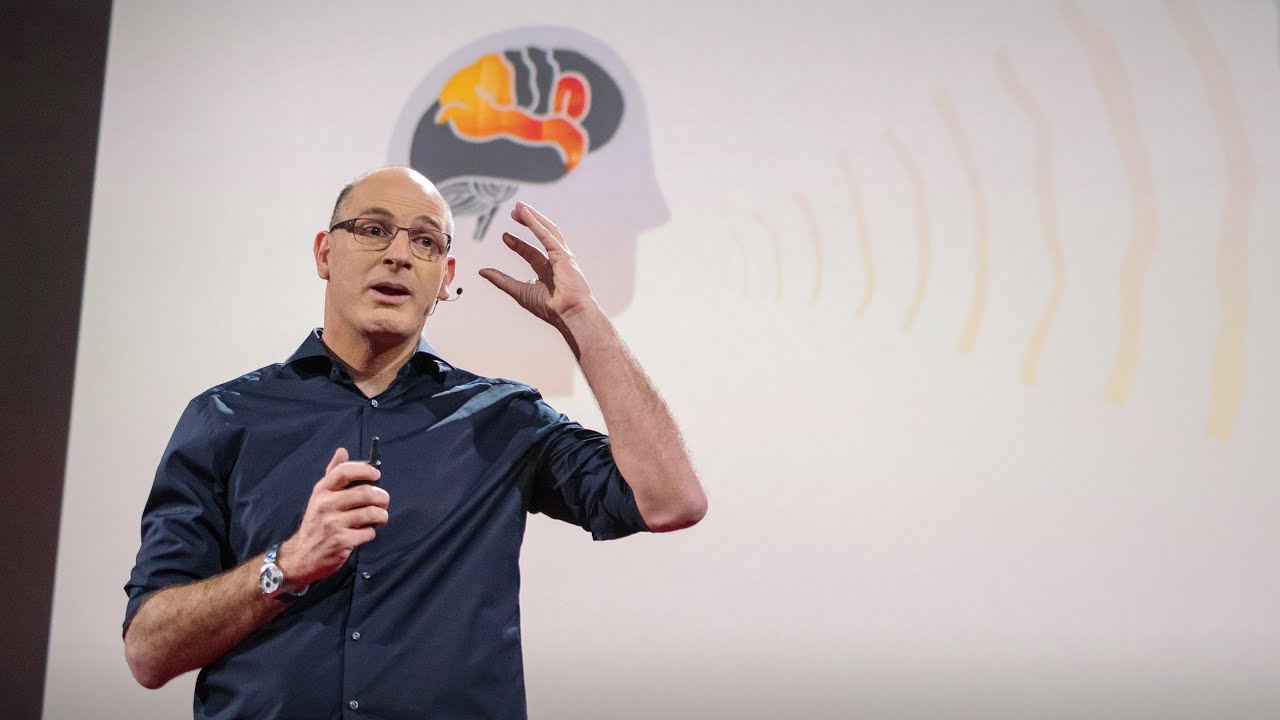
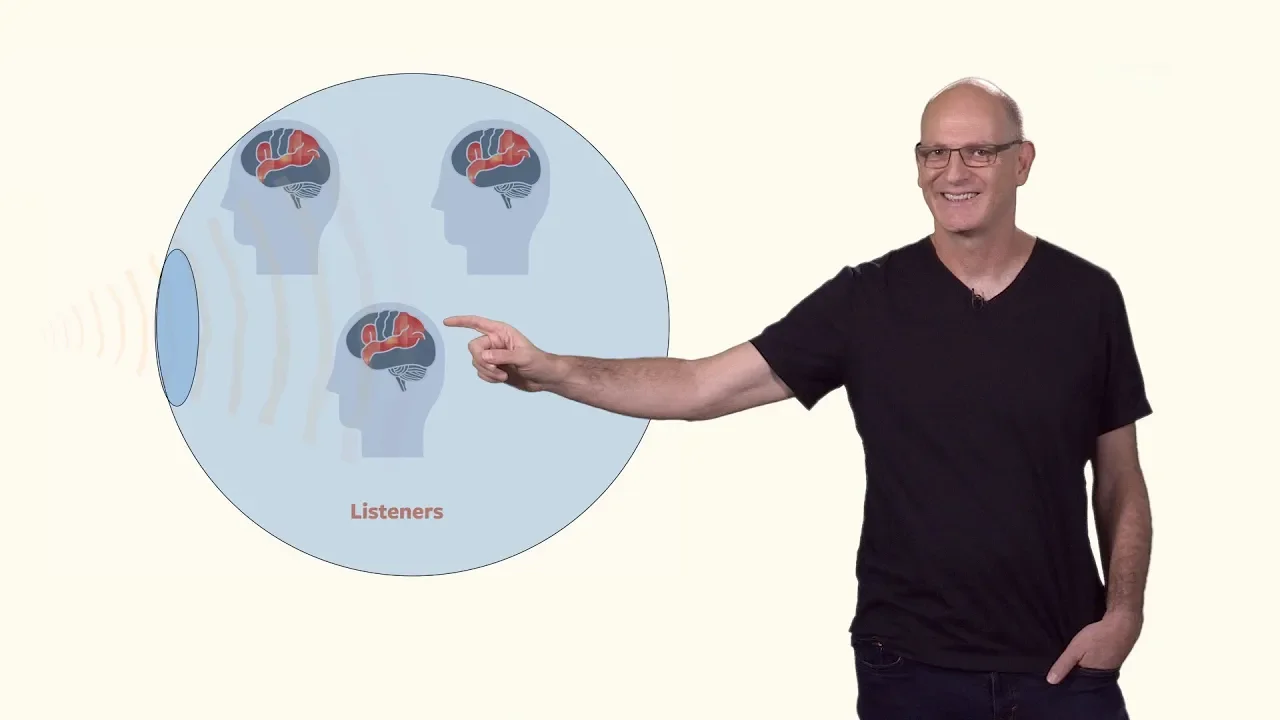
and by speaking plant my memories in your voice so how did we do this experiment think about it that I have a brain patterns in my brain that related what I'm thinking and I'm articulating this evoking my memories an articulator so you are listening and my task is to take the memories from my brain and to make it the consult reconstructed and appeared in your way so how we did it in the lab we took the movie of Sarah lock from the series from the BBC series we took the first episode between the first 50
minutes and we saw two people in the scanner people that never saw it before so basically now they have to encode a new memory to the brain and to get you a feeling of the stimulus I'm going to claim now 22nd from the middle of the episode for your enjoyment these suicides then Sherlock so that'd be right up your street 3 exactly for has been a fourth there's something different this time a fourth we're Brixton Lauriston Gardens what's new about this one you wouldn't come to get me if there wasn't something different you know they
never leave notes yeah this one did you come okay so after people what's the movie in this canal we did the opposite condition what is the opposite from watching a moving the scanner it's when you are lying dark in the scanner there is no input going to your brain we give you a microphone and your task is to retail this toy to another person so now you need to use world to evoke your memories and transmit it to another man and I'm going out to play you again twenty second recording of of a subject describing
the scene that you got seen in the scanner to another person they only got to be a bit noisy because it recorded in the scanner and we do a lot of noise canceling in the scanner to edit recording so we also have the transcript of the murders sure like creepley looks outside a fuse with their cop cars and something that's a bit different so that's whether there and just moments later so as you can see it's a very detailed recording and now we can take this recording of the memories of this toy telling of the
movie and played to another group of listeners but never watch the movie and record awareness functions while they're listening and then we can take the Blandin sponsor and compare it to the brain responses of the people that actually watch the movie in this experimentally in the lab we can look on this transmission of memories from the moment you encoded to the moment you tell it to the moment other people listen to it this is the behavior responses of one of the storytellers delusional as you can see we divided the movies 50 minutes we divided it
into 50 segments it is about like 50 seconds two minutes and as you can see it's took a 22 minutes to tell the 50 minute story so there is some complacency compressing the event right but is mostly telling the events in order from scene to scene in order sometimes the remember is out of order and sometimes rarely is we forget a sphere but you remember in most of it and this is also everything subject that what's the movie in the Equality nice comment as you can see we have really one subject aware that it's took
hell 45 minutes to describe a 50 minutes movie see it's very detailed but even the Saadat are not as detailed and more compressing didn't skip event and they tell all of them in the order and in precise way and four of the one the telling it in a very soft way might be even a better story tellers because they can really compress the movie and tell you only what important in the morning and now that we have this like very detailed behavior we can start to love okay what happened in the wine so how do
we do it we take a given brain area and because there is a difference in the timing right it might take you 40 seconds to see and only 20 seconds to describe in England we can infuse the temporal correlation anymore so we use special correlation we take the activity in this plain area and we average other time within this sort event and now we have a brain pattern in this particular episode in the movie and we see whether this brain pattern call it with the brain pattern of another subject in in another conditions while seeing
the same set okay so for example we can look on subject encoding to the subject recalling in the dark scanner so when you sing the movie this is on the left and in the light is very remembering there when is recalling the movie and you can see whether the burn pattern since 1:00 or call it and we can do it for all the scenes we have 50 of them in this question have to be stronger than the correlation between different non matching screams so I want to have a particular activation that particular to this moment
in the movie in your burner when you're watching an encoding and we can do this analysis across the entire binding and what we see we see areas in which the activation when you remembering reinstate the activation when you are watching and you can see that there is many brain areas that you win state first we can see that the responses is not similar in the visual cortex so it's not that you instead the images of the movie but if you look on other areas we made all that have long timescales and integrate the meaning this
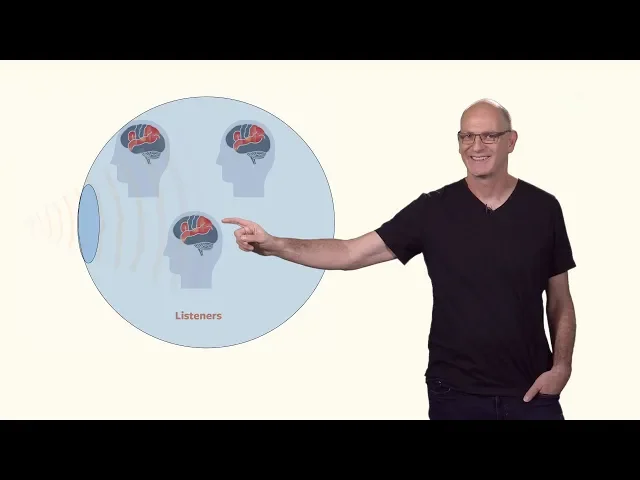
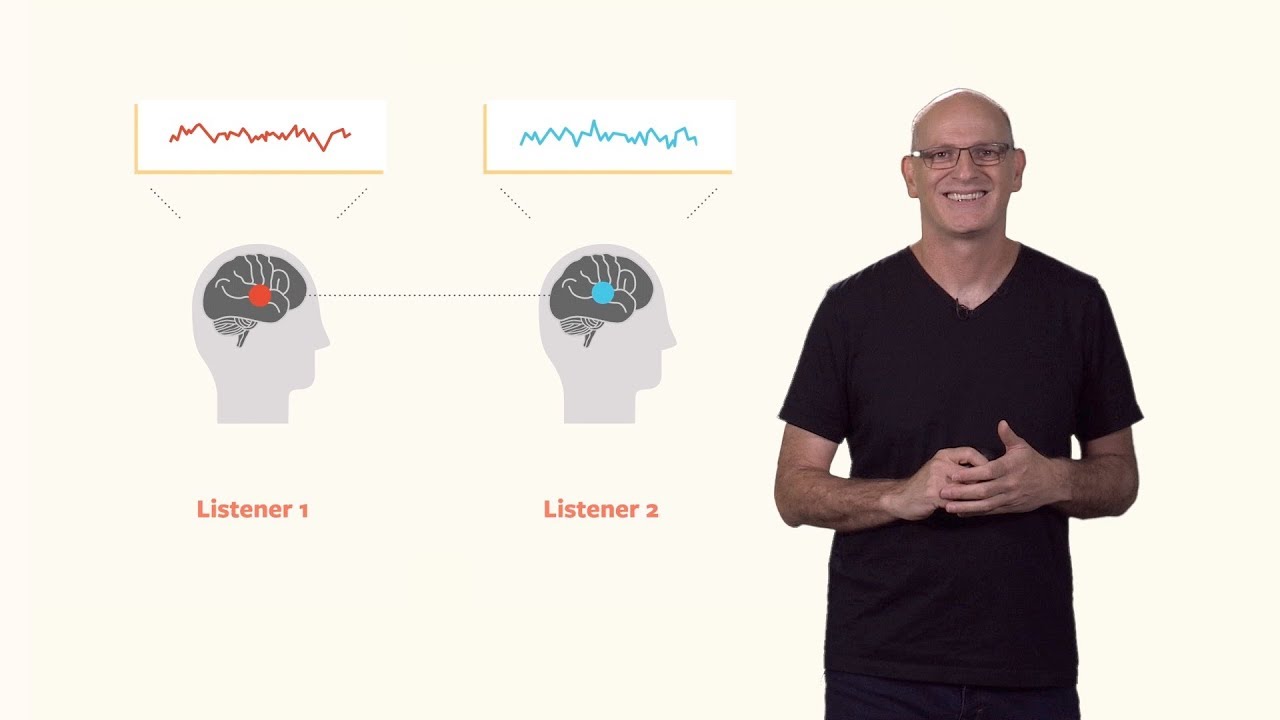
is the area in which you really reinstate your memo is the narrative because this is there that really accumulate the story over time and now we can see what happening between the storyteller when you remember the events and the listeners when they are listening and remember the listeners never watch the movie and again what we see only now it's spatial patterns instead of temporal patterns is that by speaking the balances of the listeners becomes similar to the burner sponsors of the speaker that is remembering the movie in this order areas that integrate information over long
timescales and now we can really close the circuit and ask is the listeners very listening to the storytellers in the scanner other brain responses similar to to the speaker when you actually watch the movie for the first time and encode it to memory and to our supplies this is exactly what we see it is if delete the listeners where in the scene with the speaker when you watch the movie encode it to memory so this is now a nice demonstration now we can see that memo is I can edit as with my memories and bring
you with me to my past to my experiences using language and what is amazing about it is if you think about it I can reinstate my memories I remember who is the detective who is the murderer and what was the context where they meet for example in a taxicab but you didn't see the movie so when I'm saying London cab driver taxi detective you have to combine everything in your brain and you have to imagine right because you didn't see the movie you don't have the memory and now you see something very deep about the
memory system you can see that imagination and remembering are the same in this is another demonstration of the past and the futures melts together because for the brain it's the same to remember stuff and to imagine new stories and this is for us the most interesting is that from this study it was following if I'm seeing how much we understood the story of the movie I this is on the y-axis and a material similar your brain responses the listeners are similar to my brain responses while watching the movie you can see that the most similar
you out to me the better you understand the movie right but we attack 17 people that watch the movie and we used to take only one version of the movie of one subject to play to the listeners and you can see that there you can see all this likes everything subject over rail and you here they are almost similar to the person that you listen to and this mean that you don't get an objective description of the movie you get my viewpoint of the movie you get the way I understood the movie right so it's
very efficient you don't need to spend 50 minutes in the movie now I can you can get the movie in 20 minutes right but you don't get the actual movie you get my perspective of the movie you know can ask wait if this is the case what if you have a very strange perspective of the movie all right so now you can say that the way you remembering depend on the way I'm viewing the world right and now we have to complicate a bit our model for communication right because I want to be coupled to
your very light and I want to make you similar to mine but actually between you and I there are different memories and different perspective so it's not as easy to make your point similar to mine in earlier as it is I can you know I can produce sound and you'll Auto God it's going to go up and down it's very easy to be coupled to your sensory system but if I want you to get me in his eye other areas that indicate information of many many minutes and really depends on all your memo is other
time I need to align the way we understand the world so there is a fetus between you and I and how can we experiment that we test these filters this is the experiment with it we took a story of JD Salinger wait him out green my eyes and in this toy hunter is very smart to keep it ambiguous the back on it is following husband lost track of his wife in a party he's coming on by himself very very anxious where is my wife take a phone got the phone and call to his best friend
and ask him did you see my wife next to the best friend there is a woman that is lying naked in the bed and Salinger is very smart not to tell not to reveal her identity so you're not really so you see and it's a good scientist we decided let's wind ambiguity and simply tell you our identity we're going to give you a memory of a filter on reality for one of the groups we were saying the wound that is lying naked this is the wife so having an affair with the best friend now in
this context with the husband is asking can I come over I'm really feeling only in actions and the best friend say no please don't come I'm very tired you know what to say please don't come properly doesn't want to be caught but in the second context we give for other subject we told the wife is loyal the husband is jealous the naked the woman is the girlfriend of the best friend and in this context when the husband want to come and the front side now you say oh this is an annoying friend it's the mean
of the night you want to go to bed so we have a very different interpretation and now after we tell you this context everyone listening to the exact same story there is no different between them the only difference is the memory of the context what happened before the so it started and you can see that it's memory going to change the way the process the story and now I can see I can train a classifier and say this is the responses from this particular brain areas in other people that believe in the first context that
the wife have an affair these are the responses in this brain area in all the people that believe that the husband is jealous crazy and after you learn the similarity patterns across people I'm giving you a live out subject this is planning sponsors and now you need to guess and if you are guessing 50% you're going to say the right answer right but once we learn the similarity across people we can predict in 90% accuracy whether you believe that the wife in a fair Oh the Osment is crazy jealous only bestie of similarity to other
people in the group so this mean that is memory is going to make you most similar to people that think like you in now basically so this is like a summary of the result are you going to be most similar to people in your goal you know you can ask wait if this memo is also effective in changing my brain if someone tell me the wife have an affair and it's going to change the way I perceive reality then it's really important from where I'm gathering my information because it's going really to change our I'm
thinking I have a different perspective on reality you know you can ask from where do you get stories right because now you can see that your memories are saved by other people the way they are thinking so it's really important trust for where do we get our information anything they remove the most of the information we get from other brands from our finds so tell me who your friends are I will tell you well so look on your family look on your friends or group of people that you're connected to they're going to say how
you think and then of course you have to see who else is influencing your plan for example with TV news you are listening to right which newspaper you're eating and you have to realize that by leading one source of information you get some perspective on the world it's going to be very different from another person right so now it's really important now also to think about what is the common input for us as a society and any way to summarize it is to say that my memories are real stories and your stories are my memories
and we are all connected together to a big web now if you really want to understand human cognition you cannot study individually in the box you need to understand how we connect to other people you know dislike way of connection content is said who we are in move us from what we are now in the present the future so this concept dynamic in our past in our future in our current future is connected to other people and this is how we all like a big web and in a way what we do in our lab
you study this connection because people in our one person influence in other person that'll be another story and so that you need to go and at our other papers that coming out from the lab thank you so much you