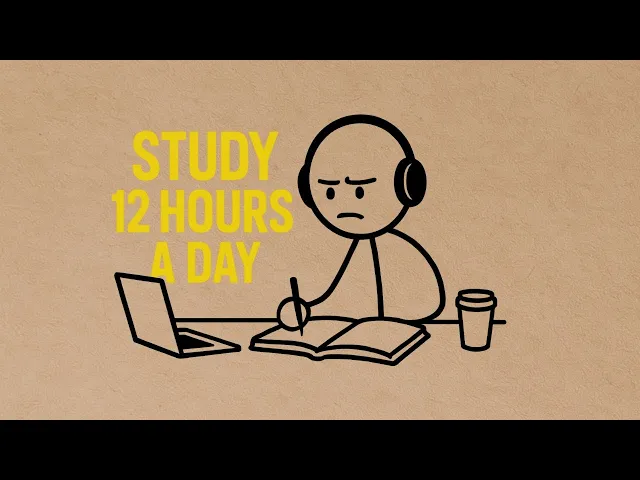
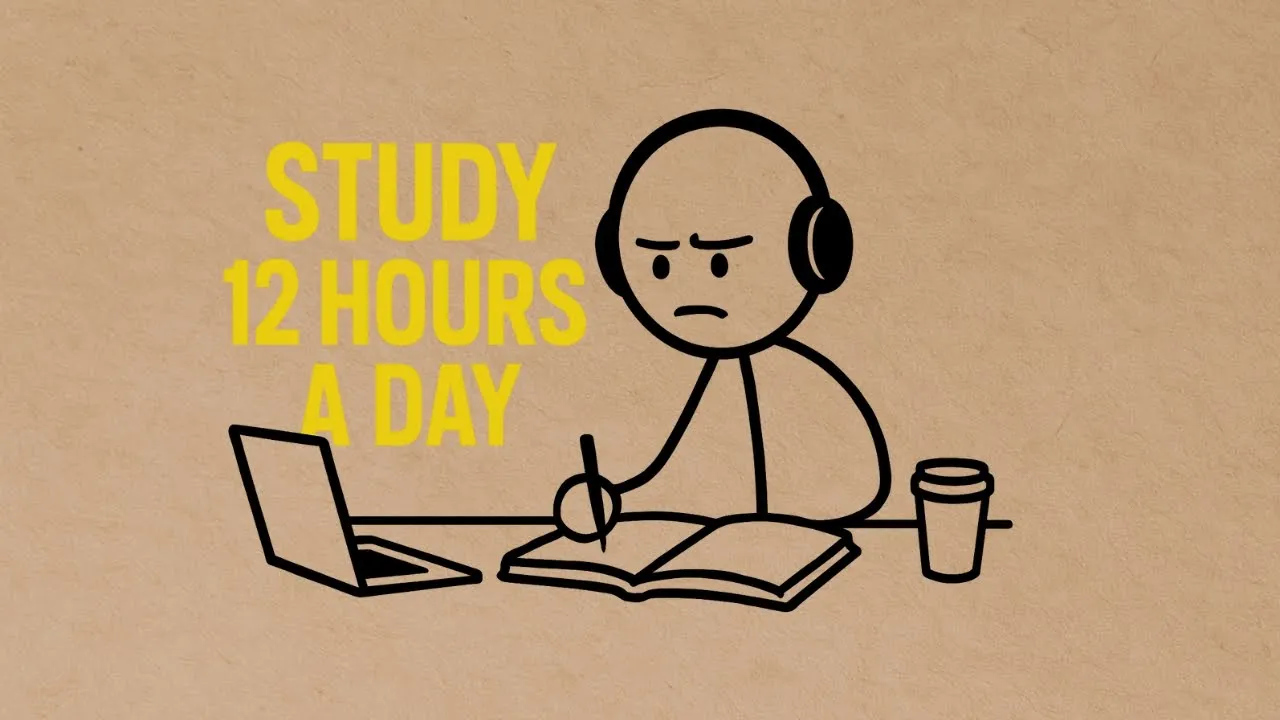
Are you tired of sitting at your desk for hours and feeling like nothing sticks? Ever wondered how some students study 12 hours a day without burning out? Here's a secret nobody seems to know about.
It's not about grinding nonstop. It's about building a system that lets you study longer, remember more, and stay sane. Imagine this.
You wake up, sit down to study, and stay focused for 12 hours in a single day. No scrolling, no zoning out, no endless procrastination. At the end of that day, you close your books knowing you actually learned something.
And the best part, you're not exhausted, you're proud. You know tomorrow you can do it again. That's the result you'll get when you follow the same system I use to study 12 hours a day.
Studying 12 hours a day sounds insane, but here's the truth. Nobody studies for 12 hours straight with perfect focus. What matters is structure, environment, and energy.
If you want to reach 12 hours, here's the formula I use. Plan in blocks of time. Work with your brain's natural rhythm.
Rotate active and passive tasks. Control your environment. Protect your energy with rest and fuel.
These five things make 12 hours possible. Without them, you'll burn out in three. Step one, plan in blocks.
Never sit down saying, "I'll study all day. " That kills motivation. Instead, I break the day into four main study sessions.
Each one lasts about 3 hours. Morning, midday, afternoon, night. That gives me 12 hours total.
Inside those three-hour sessions, I split time into 50 minutes work and 10 minutes break. Four cycles in a row equals 3 hours. Why this works?
You never feel trapped. You're always 50 minutes away from a short break and 3 hours away from a long one. Step two, work with your brain's rhythm.
You need to know when your brain is sharpest. For most people, that's early morning. I use my mornings for the hardest work like problem solving, memorization, or writing essays.
Afternoons are for practice and repetition. Nights are for review. Match task difficulty with energy level.
That way you don't waste high focus time on easy notes and you don't torture yourself with hard tasks when you're already drained. Step three, rotate active and passive tasks. You won't last 12 hours if all you do is one kind of work.
For example, if I'm reading textbooks for hours, my brain dies out. Instead, I switch. One block is problem sets, the next is flashcards, then reading, then teaching myself out loud.
This keeps your brain engaged. It feels fresh instead of repetitive. Step four, control your environment.
If your environment is weak, your focus will collapse. I do four things. Keep my desk clear except for what I'm working on.
Keep my phone in another room. Use noise control. Either silence, white noise, or instrumental music.
Set a visible timer so I can see the 50 minutes countdown. Your brain associates a clean, quiet space with study mode. The less resistance, the easier it is to hit flow.
Step five, protect your energy. 12 hours of study isn't about endurance. It's about energy management.
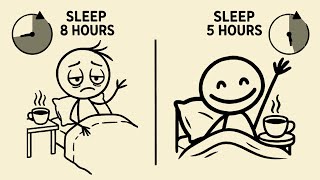
Here's how I do it. Sleep 7 to 8 hours. No exceptions.
Eat light, balanced meals. Heavy meals make you sleepy. Drnk water all day.
Move your body during breaks. Walk, stretch, push-ups. Physical activity refreshes your brain better than scrolling.
When you treat your body like part of the system, studying feels sustainable. Here's exactly how a 12-hour study day looks for me. 7:00 a.
m. wake up, quick workout, light breakfast. 8 to 11:00 a.
m. Study session 1, hardest material, fresh brain. 11 to 12 lunch and rest.
12 to 3:00 p. m. Study session 2 practice problems or structured work.
3 to 4:00 p. m. Break, snack, short walk.
4 to 7:00 p. m. Study session 3 lighter material, reading or review.
7 to 8:00 p. m. Dinner and relax.
8 to 11:00 p. m. Study session 4 review notes, flashcards, active recall.
11:00 p. m. sleep prep, phone off, no screens.
That's 12 hours of focused study with built-in breaks, meals, and recovery. Here are tips for staying consistent. Track your hours.
Write down your study time every day. Numbers don't lie, and seeing progress keeps you motivated. Use active recall.
Don't just read, quiz yourself, ask questions, test memory, and explain concepts out loud. This multiplies the impact of every hour. Batch distractions.
Instead of checking messages every 10 minutes, tell yourself you'll do it only after a 3-hour session. Respect your breaks. Don't trick yourself into just a little more when the timer rings.
Short rests make long study possible. You might think, "Won't I burn out if I push this hard? " Here's the truth.
You only burn out if you ignore your limits. If you follow the structure, you'll see studying feels like a rhythm, not a grind. When you feel mental fatigue, step away.
One skipped session won't ruin progress. The goal isn't perfection, it's sustainability. When you follow this system, here's what happens.
You finish more material than most students do in a week. Your memory improves because you're practicing active recall every day. You build insane focus because distractions are no longer in control.
You gain confidence because you're not behind anymore. I've seen it in my own results. What used to take me weeks now takes days.
And the sense of control over my time changed my mindset completely. Now it's your turn. Don't overthink.
Start small. Plan one three-hour session tomorrow with the 50/10 method. Once you do it, add a second.
Then build up to four. Track your hours, protect your environment, and treat your energy as fuel. If you stick to this, you'll hit 12 hours a day sooner than you think.
And once you do, you'll never look at studying the same way again.