What if I told you that some of the most beautiful air-purifying, mood-boosting plants you could possibly own don't need a single ray of direct sunlight, not a south-facing window, not a grow light, not even a bright room. I'm talking about plants that thrive in the darkest corners of your home. Plants that most people walk right past at the nursery because they assume nothing can survive without sun.
Most people don't know this, but while everyone's killing their fiddle-leaf figs and watching their succulents shrivel on windowsills, there are stunning indoor plants out there that actually prefer low light. Plants that clean your air, reduce your stress, and look incredible doing it. And today, I'm going to show you 10 of them that will change the way you think about indoor gardening forever.
Make sure you hit that subscribe button because we post new videos every week that connect you with the best-kept secrets in natural living and home growing. So, let's get into it. Plant one.
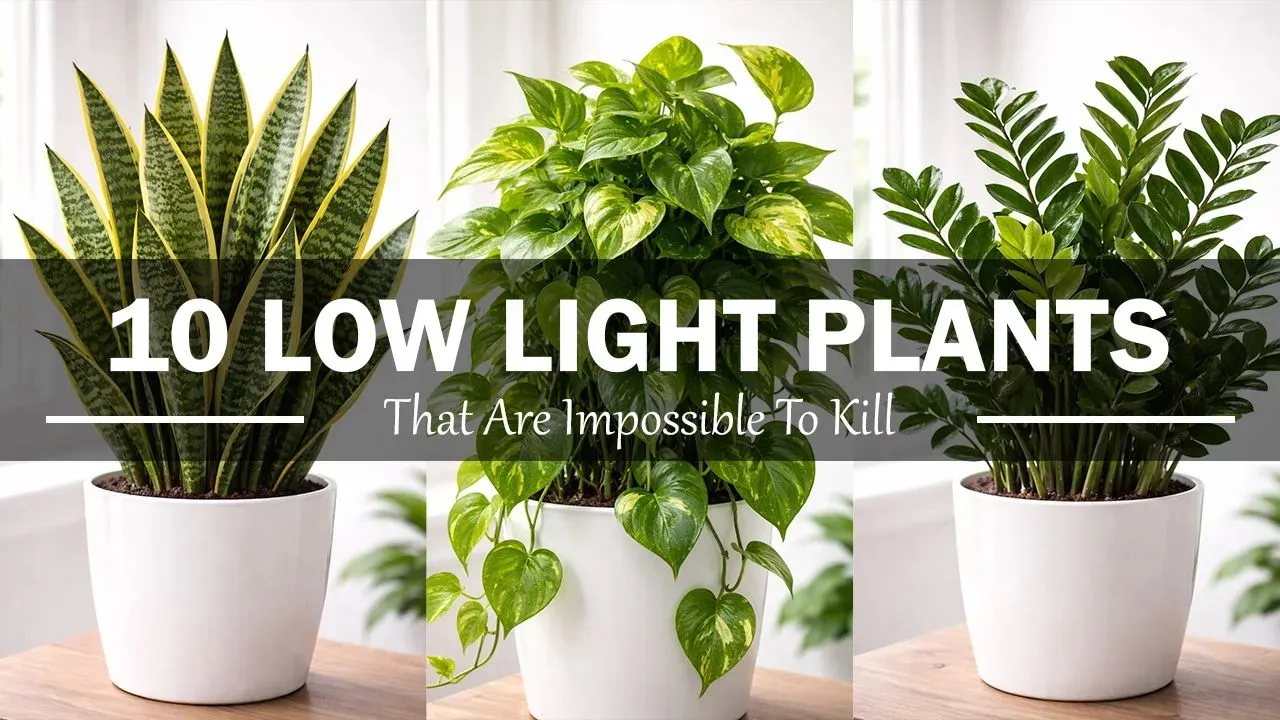
Pothos. The unkillable money vine. Let's start with the plant that has single-handedly saved more beginner gardeners from giving up than any other species on Earth.
Pothos, also called devil's ivy, because it's almost impossible to kill. Epipremnum aureum is native to the forest floors of Southeast Asia, where it grows beneath thick canopy in conditions that get almost no direct light. This plant didn't adapt to low light, it evolved for it.
And here's what most people miss. Pothos isn't just a survivor. Research conducted by NASA in their clean air study showed that pothos removes indoor pollutants like formaldehyde, benzene, and xylene from the air.
You're not just decorating your home, you're detoxifying it. The trailing vines can grow several feet long, cascading from shelves and hanging baskets. It comes in stunning varieties, golden pothos, marble queen, jade, and every single one of them thrives deepest in the shade.
Here's the care secret. Water it when the top inch of soil is dry. That's it.
Pothos is the plant that proves you don't need a green thumb or a sunny apartment to have a thriving indoor jungle. Plant two, ZZ plant, the bulletproof beauty. If pothos is forgiving, the ZZ plant is practically indestructible.
Zamioculcas zamiifolia looks like it belongs in a design magazine with its glossy, dark green leaves arranged in elegant, feather-like fronds. And it does all of this in near darkness. The ZZ plant is native to eastern Africa, where it survives drought, neglect, and deep shade.
It stores water in thick rhizomes underground, which means it can go weeks without watering and still look perfect. Here's what makes it special. It's one of the few plants that actually photosynthesizes efficiently in extremely low light.
We're talking rooms with no windows, hallways with only fluorescent lighting, offices tucked away from any natural light source. There's even a dramatic variety called raven ZZ with leaves so dark they're nearly jet black. Water sparingly every two to three weeks.
Don't overwater. Don't fuss. And the plant rewards you with slow, steady, elegant growth that lasts for years.
Modern interior designers have caught on in a big way. You'll find ZZ plants in hotel lobbies, corporate offices, and minimalist apartments precisely because they look stunning and demand almost nothing. The ZZ plant got overlooked for decades because it grows slowly, but sometimes the most reliable things aren't the flashiest.
Think of it as the plant that proves beauty and resilience aren't mutually exclusive. Plant three, snake plant, the bedroom air purifier. The snake plant might be the single most useful houseplant ever discovered.
Drcaena trifasciata is one of those rare plants that converts carbon dioxide into oxygen at night. Most plants only do this during the day. That's why experts consistently recommended as the ideal bedroom plant.
Snake plants are native to West Africa, where they grow in rocky, dry, shaded conditions. Thick, upright, sword-shaped leaves store water efficiently and shrug off low humidity, temperature swings, and irregular watering like it's nothing. That NASA Clean Air Study, the snake plant was one of the top performers for filtering formaldehyde, which is common in household furniture, carpets, and cleaning products.
You're literally breathing cleaner air because this plant is in your room. The varieties are stunning, too. From the classic dark green with yellow edges to the cylindrical moonshine variety to the compact bird's nest types that fit on a nightstand.
Water every two to four weeks. Let the soil dry completely between waterings. Place it in whatever corner of your home needs life.
Done. The snake plant got underestimated because it doesn't trail or flower or do anything dramatic. But, the plant that quietly purifies your air while you sleep is doing more for your health than the flashiest orchid on your windowsill.
It's the plant that works the night shift so you can breathe easy. If you're enjoying this, subscribe for weekly videos like this. Plant four, cast iron plant, the survivor.
There's a reason this plant is called the cast iron plant, And it's not subtle. Aspidistra elatior is virtually impossible to kill. Victorian households loved it because it survived the dark, drafty, gaslit parlors of 19th century England rooms that killed almost every other house plant.
It's native to the forest floors of Japan and Taiwan, where it grows in deep shade beneath dense tree canopy. It evolved to capture every scrap of available light with remarkable efficiency. That means in your home, it thrives in those impossible spots.
The north-facing room. The interior hallway. The spot under the staircase where nothing else survives.
This plant tolerates temperature fluctuations, low humidity, irregular watering, and dust on its leaves without complaint. Water every week or two, wipe the broad dark leaves occasionally, and it rewards you with quiet, steadfast beauty for years. Modern plant science has confirmed what Victorian gardeners already knew.
This plant tolerates neglect like almost no other species. The cast iron plant disappeared from popularity when trendier tropicals took over, but trends come and go. Durability is forever.
Think of it as the plant that survived the Victorian era and will certainly survive your apartment. Plant five. Peace lily.
The low-light bloomer. Most plants that flower need abundant light. The peace lily breaks that rule entirely.
Spathiphyllum is one of the only flowering house plants that blooms reliably in low-light conditions, producing elegant white spathes in the dim corner of your living room. Peace lilies are native to the tropical rainforests of Central and South America, where they grow on the forest floor in dappled shade. They're adapted to exactly the kind of light most apartments accidentally provide.
Here's what makes the peace lily remarkable. It's another NASA clean air study standout, filtering ammonia, benzene, and formaldehyde. And it tells you when it needs water.
The leaves droop visibly when thirsty, then perk right back up within hours of watering. It's essentially communicating with you. The white blooms appear multiple times a year, even in rooms with only fluorescent lighting.
And the deep green foliage stays lush and full with minimal intervention. Water when the leaves start to droop slightly. That's the whole routine.
No other low-light species gives you flowers, air purification, and visual communication all in one pot. It's the plant that doesn't just survive the shade, it celebrates it with blooms. Plant six, Chinese evergreen.
The quiet powerhouse. Chinese evergreen might be the most underrated houseplant in existence. Aglaonema species have been cultivated in Asia for centuries, prized for stunning patterned foliage and the ability to thrive in conditions that would stress most other plants.
The leaves come in incredible combinations of green, silver, pink, and red. And the darker the variety, the less light it needs. Chinese evergreens are among the most extensively studied houseplants for air purification, filtering formaldehyde and benzene efficiently.
In traditional Chinese culture, they're considered symbols of good fortune. A plant that cleans your air, thrives on neglect, and looks beautiful is about as lucky as it gets. Water when the top couple inches of soil feel dry.
Avoid cold drafts. That's it. Chinese evergreens tolerate low humidity, inconsistent watering, and light levels that would make a fiddle leaf fig weep.
They're also slow growers, which means they maintain their shape without constant pruning or repotting. Chinese evergreen got forgotten in the west because it's not trendy enough for the plant influencer crowd, but the people who know, know. Think of it as the plant that's been quietly outperforming everything on your shelf for centuries.
Plant seven, parlor palm, the Victorian classic. If you want the look of a tropical paradise, but your apartment gets about as much light as a cave, the parlor palm is your answer. Chamaedorea elegans has been beloved since the Victorian era.
And here's why it endured while countless trendy plants came and went. It genuinely thrives in low light. Parlor palms are native to the rainforests of southern Mexico and Guatemala, where they grow in the deep understory beneath towering trees.
They're genetically programmed for shade. In your home, that means beautiful feathery fronds that stay lush even in north-facing rooms. And unlike many palms, it stays manageable, topping out around 3 to 4 ft indoors.
Here's the benefit most people overlook. Parlor palms are non-toxic to cats and dogs. For pet owners who want greenery without the worry, this is one of the safest options available.
Water when the soil is partially dry. Keep it out of direct sun, which can actually scorch the delicate fronds. A little humidity helps, but it's not essential.
The parlor palm got eclipsed by flashier plants, but none match its combination of elegance, low light tolerance, and pet safety. It's the palm that proved you don't need a sunroom to bring the tropics home. Plant eight, calathea, the living artwork.
Calathea is the plant that makes people stop and ask if the leaves are real. Go a Persia species produce some of the most stunningly patterned foliage in the plant kingdom. Intricate geometric patterns, deep purples, silvers, pinks, and greens painted across leaves like brush strokes.
And they do it all in low to medium indirect light. These plants are native to the tropical Americas growing on the forest floor where direct sunlight is non-existent. Their leaf patterns actually evolved as a light capturing strategy.
That's why direct sun bleaches their colors. They're designed for dimness. Here's what makes Calatheas truly fascinating.
They move. Their leaves rise and fold at night and open again in the morning, a phenomenon called nyctinasty. It's like living with a plant that has its own daily rhythm.
The trade-off is Calatheas prefer consistent humidity and filtered water. But for anyone willing to give them a little extra attention, the reward is a living masterpiece that needs no sun whatsoever. Popular varieties include the rattlesnake Calathea with its wavy spotted leaves, the medallion with its deep purple undersides, and the orbifolia with its massive silver striped rounds.
Each one looks like it belongs in an art gallery. Think of Calathea as the plant that proves the most beautiful things don't grow in the spotlight. They grow in the shadows.
Plant nine. Drcaena The sculptural air cleaner. Drcaena fragrans, the corn plant, and Drcaena marginata, the dragon tree, are two of the most popular low light houseplants for good reason.
They look like miniature trees, they clean your air, and they handle shade like professionals. Native to tropical Africa, the corn plant produces wide arching leaves with yellow stripes on thick canes. The dragon tree has slender spiky leaves on thin trunks that give it a sculptural quality.
Both grow tall enough to make a statement without needing a prime window spot. Drcaenas appeared in the NASA clean air study and showed strong results for removing trichloroethylene, formaldehyde, and benzene. A single mature dracaena in a room is doing measurable work filtering your indoor air.
Water when the top half of the soil is dry. Avoid overwatering. They'll reward you with years of low-maintenance beauty.
Drcaenas got passed over by the Monstera and fiddle leaf fig crowd, but those plants demand bright light and careful attention. Drcaenas ask for almost nothing. It's the plant that proves you don't need sunlight to grow something truly impressive.
One plant left. I saved it for last because it's the one that genuinely changes how people think about low-light gardening. Plant 10, Philodendron, the king of the shade.
And here we are at number 10. The plant I saved for last because it represents everything we've talked about today, the Philodendron. With over 400 species, Philodendrons are the largest genus in the araceae family and a remarkable number thrive in low-light conditions.
The heartleaf Philodendron, Philodendron hederaceum, is the classic trailing heart-shaped leaves that cascade from shelves in shades of deep emerald green. It grows fast, roots easily in water, and handles neglect with grace. The Brazil adds splashes of lime variegation.
The Micans has velvety iridescent leaves. The lemon lime practically glows in a dark room. Research confirms philodendrons are efficient air purifiers, particularly effective at absorbing formaldehyde, and their rapid growth rate means they're constantly producing new leaves, which means constantly expanding their air-cleaning capacity.
In the wild, they grow on forest floors in the dense understories of Central and South American rainforests. Direct sunlight actually damages many species. They're genetically wired for your home.
Water when the top inch of soil is dry. Give it something to climb or let it trail. A single heartleaf philodendron can produce vines several feet long in a single season, even with minimal natural light.
The philodendron is the king of the shade, and it's still reigning. If you made it all the way to the end of this video, you've just learned something most people don't know. You don't need a sunny apartment or a grow light setup to fill your home with thriving, beautiful, air-purifying plants.
These 10 plants aren't just surviving in the dark. They're built for it, evolved for it, and they've been proving it for millions of years before we ever put them in a pot. So, here's what I want you to do.
Smash that like button if this video changed the way you think about indoor gardening. Drp a comment below and tell me which low-light plant surprised you the most. Are you team pothos and philodendron?
Team ZZ and snake plant? Or team calathea and peace lily? I read every comment, and I love hearing from you.
And if you haven't subscribed yet, what are you waiting for? Hit that subscribe button and ring that notification bell so you never miss a video. We're building a community of people who understand that growing things isn't about having perfect conditions.
It's about knowing which plants were made for the conditions you already have. Remember, sometimes the most beautiful gardens aren't the ones bathed in sunlight. Sometimes they're the ones growing quietly in the shade, just waiting for you to discover them.