hello So today we're going to start looking at second language acquisition theories and we're not going to make it too technical the idea really is just to have a general overview lots of teachers have a lot of knowledge about second language acquisition theories and some teachers maybe don't have very much explicit knowledge but there are things that they intuitively feel and in the way that they've probably taught and ideas that they've got from colleagues and so on there are probably lots of elements of second language acquisition Theory which they do in fact apply to their
teaching and to their classes so the idea here really is to get a a general overview of some of these theories and to reflect on how they can inform our teaching so first of all we have behaviorism uh and these are based on the ideas of Behavioral psychologists like the famous Russian Juan Pavlov uh and he showed how a dog could be made to associate the ringing of a bell uh with food uh and and Skinner took these ideas and expanded them and applied them to the learning of a a language and he emphasized the
importance of uh reinforcement positive reinforcement or rewards of the desired language Behavior I.E correct language and the kind of punishment of undesirable Behavior Uh um and what he thought was that this uh model uh explained language development uh so he argued for breaking tasks down into small sequential steps and programming learning by providing positive reinforcement lots of positive reinforcement uh and the idea is I mean it has big limitations um because it suggests that language is learned only by imitation um which makes you think well so how did the first people learn language who were
they imitating um it takes the idea that uh a child or a language learner is a tabularasa which is like a blank slate so like an an empty page um and suggest that language is nurture so language is uh conditioning um rather than something that the the learner learns for themselves uh and it's a theory which has limitations but it's very common um around the world still it's had a big influence on the way languages are taught uh in the kind of companies which use language Laboratories you'll see uh a methodology based on this idea
of language learning um also you get lots of repetition um and drilling uh and substitution activities for example for prepositions the pen is on the table everybody repeats the pen is under the table everybody repeats the book is next to the phone the picture is next to the phone and we get this kind of uh substitution um so this is the was kind of the one of the first significant theories about how we acquired language but it's kind of out of fashion and uh it's been decided more or less that this isn't really the way
we learn languages today if we only learn by repetition and imitation how is it that children make very logical mistakes that they've never heard an adult say I've already given you a few little clues about this but this is your first question for reflection the anst perspective is where this starts to get interesting uh it was definitely a reaction against the behaviorist approach uh and it's much more encouraging because the idea is that uh Learners are actually using their brains to find patterns uh they're hypothesizing they're analyzing they're deducing information so their minds are actively
involved in the learning process process um so yeah they have to identify patterns workout rules and and experiments take chances and also making mistakes is something that's considered to be an important part of the learning process uh and there are kind of two schools of thought in uh this entist approach uh the first one and really the big name here is Nome Chomsky uh and he thought that there was a specific part of the brain that was common to all of us that was uh specific speically dedicated to learning languages and we had this uh
language learning ability built into us um and this has had an enormous uh influence on language teaching although really there are no specific teaching methodologies that have been based on this assumption the other school of thought is that really we use our general cognitive functions the ones we use to complete other tasks and learn other things in life and those are the ones that we also apply to learning languages so it is the same skills of looking for patterns and uh arriving at conclusions and so on um so a typical lesson based on this kind
of innatist cognitive approach um the teacher might ask students to analyze a text to analyze some language and to try to try to identify uh which uh language structures are included there and how they're being used so that the students can arrive at their own conclusions and and and use their minds to learn the language um so yeah this is uh starting to get a little bit more interesting than the behaviorist approach uh it's not perfect it's not without critics there have been lots of theory since then but it starts to better explain even if
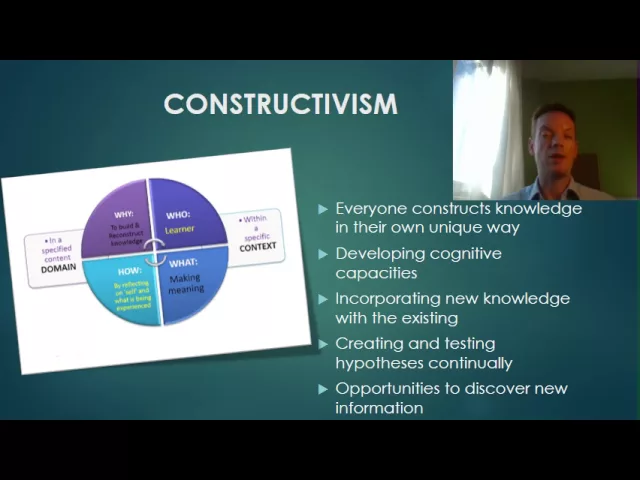
only in a partial way how we actually uh learn languages or at least one of the ways in which we learn languages more than a question here's an interesting little task to do there is a difference between the two lists of words and most people generally find one list easier to remember than the other so try and do the task see how you do and speculate on what happened and why for constructivists uh people are involved throughout their whole lives really in constructing their own knowledge um and and we do this from how we personally
understand experiences and everybody does this in their own unique way um so you've probably experienced this for example if at the end of a lesson you ask your students what they've learned they'll all tell you something which is completely different because they've all experienced it and constructed meaning in their own particular individual way and excuse me the work of pet was particularly influential uh in the development of constructivist ideas um and these ideas have important implications for language teachers um as Learners are exposed to to language to new language they incorporate it this new knowledge
into what they already know into their existing knowledge uh and this means that they modify what they already know um Bruner was another important figure in constructivist ideas and he argued that Learners need to know how to learn and to develop their cognitive capacities uh by being absorbed in challenging and and meaningful problems so they need to make guesses speculate use intuition take risks um have curiosity but they also need to feel confident in their ability to solve problems um an extension of this idea is that we are continually creating and testing hypotheses and this
is how we learn um we we either refute our hypotheses or we arrive at the conclusion that we're right based on our experience and the knowledge that we've constructed so a teacher who follows a kind of constructivist line might start a lesson by eliciting personal or emotional responses from Learners um and also you know things that they maybe already know about a topic and this might be organized in a in a visual way and then they'll be provided with opportunities to uh to create new knowledge uh with the with the foundation of what they already
know um so that basically is constructivism the idea that through experience we construct our own reality again um using our our brains um but in in a specific context in which we find ourselves here's something else for you to think about does this kind of learning suit everybody and do you have any experience of this humanistic approaches emphasize the importance of considering the whole person uh when learning um so their individuality and and the important role that their feelings and emotions play uh and maslo uh formed this hierarchy and what He suggests is what he
argues is that uh it's very difficult to fulfill the higher order needs if we don't have the lower order needs fulfilled so if we start at the very bottom obviously if your students don't have the physiological needs the the food the water warmth the rest then they're probably not even going to be in class so they're the basic kind of survival needs and then after that the need to feel uh to feel secure and then beyond that uh the needs are not necessarily essential for survival but uh if we're looking for uh developing the students
self-esteem and then actually getting them to F fill their potential and to be able to to learn um then we obviously need a very strong uh basic and psychological foundation so teachers really need to taking this into account they need to create a safe secure productive happy learning environment so a humanistic teacher might uh start a class by getting Learners to focus on a partner and imagining how that partner feels or by closing their eyes and visualizing something or by taking a very a effective and emotional routine and asking them to explore their own feelings
or doing some kind of activity to get them into a positive frame of mind so it goes well beyond just the cognitive here um humanism looks at the whole person and focuses holistically on the on the whole person takes the whole individual into account what do you think about this is the effective side uh in opposition to the cognitive side are they mutually complimentary is one more important than the other what do you think it's easy to see how this is an extension of earlier theories of language acquisition thing is here that sociocultural perspectives do
not separate the individual from the context in which they're learning um it sees learning as essentially a social process uh in which the there is a double Direction really um the social context has an impact on the individual uh but the individual by participating also influences the social context so you can imagine in the situation of a class you might have 12 people in a class and one very dominant personality or somebody with very uh particular characteristics and on the day that that student doesn't come to class maybe the whole dynamic of the class changes
um I'm sure you've experienced this um so big name here voty um was one of the most influential psychologists in the area um and other writers have applied his ideas specifically to language learning to um to the learning of a a foreign language um and and indeed the mother tongue um learning happens when the individual when the student the learner is faced with something that's a little bit beyond their current level of Mastery a little bit beyond what they can do so here it's important to take into account peers um and teachers and parents who
are a little bit or a lot above the current level of the learner and they can use scaffolding to help the learner get to the next level uh this space between what the student or the learner can do at the moment uh and what they're able to do with some help is called the zone of proximal development and this is quite famous in um in educational circles um so students are often uh working in groups discussing uh negotiating and while they're doing cognitive tasks they're interacting with other people um and verbalizing what they're doing so
there's a metacognitive element here um and they're using mental processes such as memory decision making uh problem solving and things like this so in a class which has been informed by sociocultural Theory teachers will be scaffolding Learners to reach the next level of ability um and they'll tend to encourage Learners to work in groups and communicate with each other with each other as they conducting tasks and they'll always also be pushed to discuss how they are learning in order that they can become uh more conscious of this and now there's another question for your consideration
again think a little bit about your personal experience so now we've come to the time for you to really do some work um you have here four different classroom scenarios and what you have to do is to analyze the activities which are described and to try and decide what the key characteristics of each of those classrooms is um and also identify the psychological perspectives the second language acquisition Theory perspective Ives that we've been talking about in this video uh and see how they are reflected in these activities and in some of them there is something
of an overlap so it's not necessarily just one and finally when you've done that what you need to do now is to imagine that you're the teacher of the class carrying out these activities now some of them you maybe feel have pedagogical or teaching value and some of them perhaps not so much and some of them you might like and some of them you might not like now this is not exactly the same thing because some activities that we might think are good teaching activities are ones that we ourselves are not comfortable with doing because
of our own personality and the things that we like to do or don't like to do in the classroom I often find myself that I ask my students to do things that I wouldn't enjoy doing myself but I do them because I think maybe they would enjoy them and also maybe that they are effective learning strategies even though the way I learn might be quite different from the way that they do so that really is a nice way to finish this video um I'm not suggesting that any of the explanations of how we would learn
languages is perfect in fact there is currently no agreement on really how we learn languages but it seems that there are elements we can take from each of these methodologies which contribute towards effective language teaching so the idea really here was for you to learn a little bit more about these perspectives and reflect and think about how they can inform you and your teaching in the future