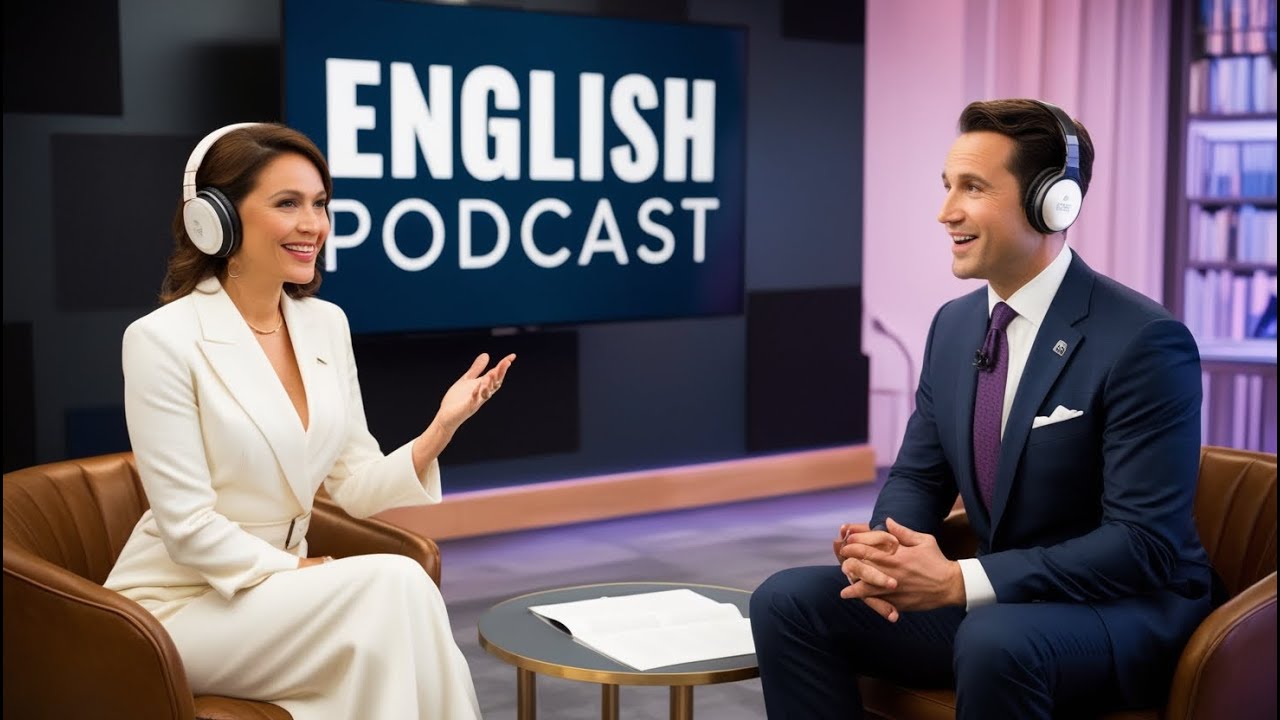
welcome back to our Channel hello listeners the podcast where we break down the English language into easy to understand pieces I'm Lisa and I'm Eric whether you're learning English as a second language or just brushing up on your skills we're here to help you grasp English simply and effectively in each episode we'll explore a new word phrase or common English expression making sure you can understand and use them confidently in your daily conversations so grab your notebooks and let's get started with today's words okay what are the words today Eric the first word today is
mad then we will continue with obvious and to offer then to grow up the final one is pull someone's leg can you explain what mad means Eric mad is an objective when someone is mad they are very angry but in informal English especially in American English mad can also mean crazy or very enthusiastic about something that's right Eric for example you can say are you still mad at me or Mark got really mad at Richard for not washing up maybe you have noticed that if we use somebody after mad we use at like at me
or at Richard in your example yes I have but in this sentence we don't have to use at because we won't use somebody after mad for example he was mad when he found out that someone hit his car absolutely Lisa mad means very angry in those sentences but the meaning of mad in this sentence is different she is mad about the new superhero movies in this sentence mad means she really loves them she's very enthusiastic yes and it's important to note that when you use madabout it usually means being enthusiastic now let's listen to a
sample dialogue using the word mad why is Kevin not coming to the cinema oh he's mad because he lost his phone today that's too bad he's also mad about Sci-Fi movies he'll miss a great one tonight yes he told me last week how excited he was for this movie in this dialogue the first mad means Kevin is angry and and the second Mad shows that he really likes Sci-Fi movies it's a good example of how versatile the word mad can be in English Lisa have you ever been mad about something oh absolutely I was mad
about ballet when I was younger I used to dance every day after school how about you Eric I've definitely been mad in both senses as a kid I was mad about video games and I was mad at my favorite team when they lost a match oh you use mad mad in two different meanings Eric yes Lisa in the first sentence what I meant was that I liked video games very much and in the second I was very angry when my team lost it sounds like mad can describe a lot of our feelings and interests remember
listeners mad can show strong emotions like anger or excitement that's right and I think we have explained mad fair enough Lisa okay Eric let's move on to our next word what's the next word the next word is obvious obvious obvious obvious is an adjective when something is obvious it means it's very clear or easy to understand or see if you say the answer is obvious it means the answer is very easy to find or understand another example is it was obvious he didn't study for the test because he couldn't answer any questions this means it
was very clear he didn't study because of his wrong answers those are good examples you know sometimes we use obviously as an adverb like saying obviously she's the best player on the team meaning it's very clear she's the best or we obviously need more help meaning it's very clear we need more help useful examples Lisa now let's use obvious in a sample dialogue to understand it better did you notice anything unusual about the suspect's beh Behavior it was obvious that he was nervous he was sweating and couldn't look Us in the eye you're right it's
obvious he's hiding something we need to investigate more that's a great example Lisa it shows how we can use obvious to describe something that is clear to understand definitely hey Eric have you ever been in a situation where something was obvious to you but not to others yes I have when I was playing a video game with my friends the solution to puzzle was obvious to me but they couldn't find it out it took them a while to see what I saw that must have been frustrating for you I've had similar experiences where I noticed
something obvious but others didn't sometimes it can be hard to explain something absolutely it's like trying to describe the color blue to someone who has never seen it it's just so obvious to you but not to them that's a great analogy Eric something might be obvious to one person but it may not be obvious to another that's so true Lisa we all have different perspectives and experiences well said Eric that's all for the word obvious let's continue with the next word the next word is to offer to offer to offer it's a verb when you
offer something it means you give or propose something to someone which they can accept or refuse that's a helpful explanation Eric for example you can say she offered me a cup of tea it means she proposed to give me a cup of tea and I could say yes or no exactly Lisa and another example is he offered to help me with my homework this shows he proposed his help which I could accept or not great example and notice listeners if you use a verb after offer you should use the infinitive form like in the second
example where Eric used offer to help now let's look at a sample dialogue using the word offer did you hear about the new job opening at the library yes I did I'm thinking about applying that's great I can offer to prepare your application before you send it that would be fantastic thanks for offering it is a useful dialogue it shows how to use offer in a dialogue that's right Lisa offering something can be a kind way to show support or friendship speaking of which Lisa have you ever offered something unusual or unexpected to someone oh
yes once I offered to do a painting for my friend's class I'm not a professional but I wanted to help her space what about you Eric I once offered to cook dinner for my family it was a surprise because I rarely cook but it went well that sounds lovely Eric it shows how offering can also be a way to share new experiences with others remember listeners you can offer help a gift or even an experience just like in our examples I think we have explained to offer fair enough let's move on to the next word
the next word is to grow up to grow up to grow up it means to become older and more mature both physically and mentally that's right Eric when you grow up you change from being a child to an adult for example when I grow up I want to be a teacher here's another example my parents always tell me to act more responsibly now because I'm growing up sometimes people also use it to tell someone to act more maturely like saying stop being silly and grow up good examples Lisa now let's have a sample dialogue to
show how we can use grow up in a conversation look at you Sarah you've grown up so much since I last saw you thanks Grandpa I'm not a little girl anymore I'm growing up and learning new things every day I can see that you're becoming a lovely young woman always remember no matter how much you grow up you'll always be my little girl what a sweet example Eric as we get older our bodies and Minds change this example shows that grow up can be used to describe these changes definitely it's a process everyone experiences hey
Lisa what did you want to be when you were growing up when I was growing up I wanted to be a veterinarian because I loved animals how about you Eric I wanted to be an astronaut and explore space obviously that didn't happen but it was fun to dream about it as a child it's amazing how our dreams and wants change as we grow up it's all part of the journey absolutely growing up is not always easy but it's a necessary part of life we learn so much along the way that's so true Eric well that's
all for the phrase to grow up and it is time to explain our last word today what is the last word today Eric the last word is pull someone's leg pull someone's leg pull someone's leg it's an idiom that means to joke with someone in a playful way if you are trying to convince them that something is true as a joke you can use the informal phrase pull someone's leg that's right Eric when you pull someone's leg you're not being serious you're just trying to make them believe something that isn't true usually for fun for
example don't believe him when he says he can speak 10 languages he's just pulling your leg here's another example I told my little brother that the moon was made of cheese I was just pulling his leg but he believed me great examples Eric it's important to remember that pull someone's leg is an idiom so it doesn't literally mean to pull on someone's leg physically thanks for clarifying that Lisa now let's have a sample dialogue to show how we can use pull someone's leg in a conversation hey Mary did you hear that our boss is going
to give everyone a huge raise really that's amazing no I'm just pulling your leg April fools oh John you really had me going there for a second I should have known you were pulling my leg especially on April Fool's Day that's a great example of how pull someone's leg can be used in a playful way especially on a day like April Fool's Day definitely it's a fun way to joke around with friends and family hey Lisa has anyone ever pulled your leg oh yes my older sister used to pull my leg all the time when
we were kids she once convinced me that I could fly if I rode a carpet that's hilarious did did you actually try it yes I did but the carpet did not fly but that I learned not to believe everything my sister told me that's a good lesson it's important to know when someone is pulling your leg and when they're serious absolutely it's all about understanding the context and the person's tone of voice well said Lisa and that wraps up another episode of Simply explained English thanks for joining us today we hope you found our explanations
helpful and clear don't forget to subscribe to our channel so you never miss an episode we love helping you improve your English one podcast at a time if you have any questions or topics you'd like us to cover please send them our way we're here to help you learn until next time keep practicing and remember we're just an episode away if you need help understanding English simply and effectively bye everyone see you in the next podcast I am Eric and I am Lisa whether you're just starting your English Journey or looking to enhance your language
skills you're in the right place we'll provide sample dialogues to show you how these words are used in everyday conversations making learning English easy so if you're ready to simplify your English learning experience let's get started okay Eric what are the words today the first word today is whole then we will continue with to convince and to refuse then to get over and the final one is to cut the chase okay let's start with our first word Eric the first word is whole whole whole it's an adjective that means all of something the full amount
or all part of something that's right Eric for example you can say I ate the whole pizza by myself this means you ate all parts of the pizza nothing was left exactly Lisa another example is she spent the whole day reading her favorite book this means she read all day not just part of the day good examples Eric sometimes we also use whole withth to talk about something specific like saying the whole city celebrated the festival it means everybody in the city joined the celebration now let's use whole in a sample dialogue to understand it
better did you manage to finish the project yes I worked the whole weekend on it now it's done the whole weekend that sounds exhausting it was a bit tiring but seeing the whole project completed was very rewarding this dialogue shows how the word hole describes the entire amount of time a person spends on an activity it really does Lisa have you ever worked on something for the whole day Lisa yes I have once I spent the whole day organizing a charity event it was a lot of work but the result was good enough what about
you Eric I've spent the whole night working on a painting before when I'm focused on my art time just flies that's true dedication it's amazing that you can give your full attention to something you love so much absolutely Lisa and for our listeners remember that the word whole is used to describ something as complete it's a simple word but it adds a lot of meaning to our sentences well said Eric we hope this explanation helps our listeners understand how to use whole properly I hope so Lisa okay the next word is to convince to convince
to convince it's a verb and it means to make someone believe something or agree to do something by giving them good reasons that's right Eric we use it like to convince someone to do something or convince somebody that exactly let's look at some examples first she managed to convince her boss to give her a day off it means she gave her boss good reasons for a day off here's another one I tried to convince my brother that we should go to the new restaurant good examples now let's move to a sample dialogue imagine two friends
Tom and Jerry talking in a park I'm not sure whether to join the music club or not I don't really have much time but think about it it's a great chance to meet new people and learn guitar that's how sounds interesting but I'm still not convinced you'll also get to perform at the club events doesn't that sound exciting H okay you've convinced me let's sign up together great dialogue Tom managed to convince Jerry by talking about the advantages of joining the club yes and he used the word convince effectively twice now Eric have you ever
had to convince someone about something oh all the time I had to convince my sister to watch the latest superhero movie with me I told her all about the special effects and the exciting plot that sounds like a good strategy when we want to convince someone we usually explain the good points clearly definitely what about you Lisa have you ever convinced someone recently yes I convinced my friend to start a fitness plan with me I told her how it could improve our health and even our mood those are some convincing reasons indeed so we can
see how important it is to give good reasons when we want to convince someone absolutely and that's our word to convince try using it when you need someone to believe you or agree with your ideas okay Lisa I think we have explained convince fair enough let's move on to our next word the next word is to refuse to refuse to refuse it's a verb that means to say no to something or someone not to accept something that's a good explanation for example you can say he refused to go to the party because he was tired
this means he decided not to go because of his tiredness and another example is she refused the offer to work on Sunday this means she said no to the offer because maybe she has other plans or wants to rest those are great examples it's important to remember that to refuse is followed by to and the infinitive of another verb like to refuse to go or to refuse to accept now let's listen to a sample dialogue using to refuse would you like to take on the new project it's a great opportunity I appreciate it but I
have to refuse I am already busy with current projects I understand but don't forget it's rare for such opportunities to come by I know that but I must refuse to overwork perhaps in the future I'll be more available this dialogue shows a respectful way of using to refuse in a professional setting it's about knowing your limits and setting them exactly Eric it's also about communication and making clear decisions have you ever had to refuse something because you were too busy Eric yes I once had to refuse an invitation to a concert because I had an
important meeting early the next day what about you Lisa I had to refuse to help organize a community event last month because I was moving to another place it was tough but sometimes you know you have to choose it's not always easy but sometimes we have to put ourselves first and refuse things that aren't good for us that's so true Eric the important point is to learn how to refuse things politely and firmly for our listeners remember that it's okay to ref refuse things sometimes especially if they are not good for you or make you
feel uncomfortable well said Lisa to refuse is a powerful word that allows you to express your decisions clearly we hope our listeners have understood what it means agreed Eric let's continue with the next word the next word is get over get over get over it is a phrasal verb and has two meanings first it can mean to recover from something like an illness or a difficult situation second it can mean to overcome or fix a problem or a task so for the first meaning you could say he finally got over his cold that means he
was sick but now he is okay the second meaning might be something like she managed to overcome her fear of heights she has a fear of heights but now she does not exactly Lisa now let's dive into a sample dialogue imagine two students Lucy and Ben talking on a college campus Ben are you still upset about the game last night yeah I'm trying to get over it but it's hard we were so close to winning I know it's tough but you'll get over this disappointment there's always the next game you're right Lucy I need to
focus on that in this dialogue Ben uses get over to express his effort to recover from the disappointment of losing the game it shows the first meaning that's a great great example Ben shows that getting over emotional challenges can take time now Eric have you had to get over something recently actually yes I had to get over my fear of public speaking I practiced a lot and gradually got over it that's impressive it really shows how we can use get over to overcome problems or tasks so you got rid of your fear right yes Lisa
I don't have a fear of heights now how about you have you had to get over anything lately well I recently got over the flu it took a while but I feel much better now it's good to hear you've recovered whether it's illness or other problems get over means that you manage to get rid of past difficulties or illnesses remember get over can be used to talk about recovering from something or overcoming something try to use it in both senses according to your needs we hope you quickly get over any challenges you face well said
Eric let's continue with our last word the last word is cut to the chase it's a phrase that means to get to the point without wasting time on unnecessary details that's right Eric it's often used when someone wants to hear the main part of the story or the key information without delay exactly Lisa for example you might say we don't have much time so let's cut to the chase we need to decide now and another example could be I know you have a lot to tell me but can you cut to the chase please great
examples now let's move on to a sample dialogue imagine two colleagues Tom and Sarah in a business meeting so I've been thinking about how to improve our project and Jake can you cut to the chase please what's your main idea right sorry uh to cut to the chase I think we should use solar power that's a great idea cutting to the chase really helps focus our discussion that was a perfect use of Cut to the chase in a professional setting Jake got directly to the important points yes it really shows how this phrase can be
effective in Saving Time Lisa have you ever had to tell someone to cut to the chase actually yes just last week my friend was telling me a long story and I was running late so I asked her to cut to the chase that makes sense it's a useful phrase when you're short on time I often use it during meetings to keep discussions focused and efficient it's useful in many situations it certainly is and that's our phrase for today cut to the chase use it when you need information quickly or when you want to focus on
the most important points remember it's a great way to communicate efficiently and respectfully okay listeners we have reached the end of our podcast today thanks for tuning in to Simply explained English we hope you found today's episode helpful and easy to understand remember to practice what you've learned and join us next time for more simple explanations to boost your English skills until then keep practicing and stay curious goodbye bye everyone see you in the next episode [Music]