And he'll always begin anything i do with nietzsche on nietzsche with a reading of this passage it's a very important passage it's from the gay science it's passage 125. it's probably the most famous passage from nature it's often uh referred to as the death of god passage and you'll see why okay it's called the madman and that's Very interesting in a way because he's making this great announcement this very fantastic announcement and yet it's a madman who's doing it and what makes it doubly ironic is some years later nietzsche himself went mad so it's interesting
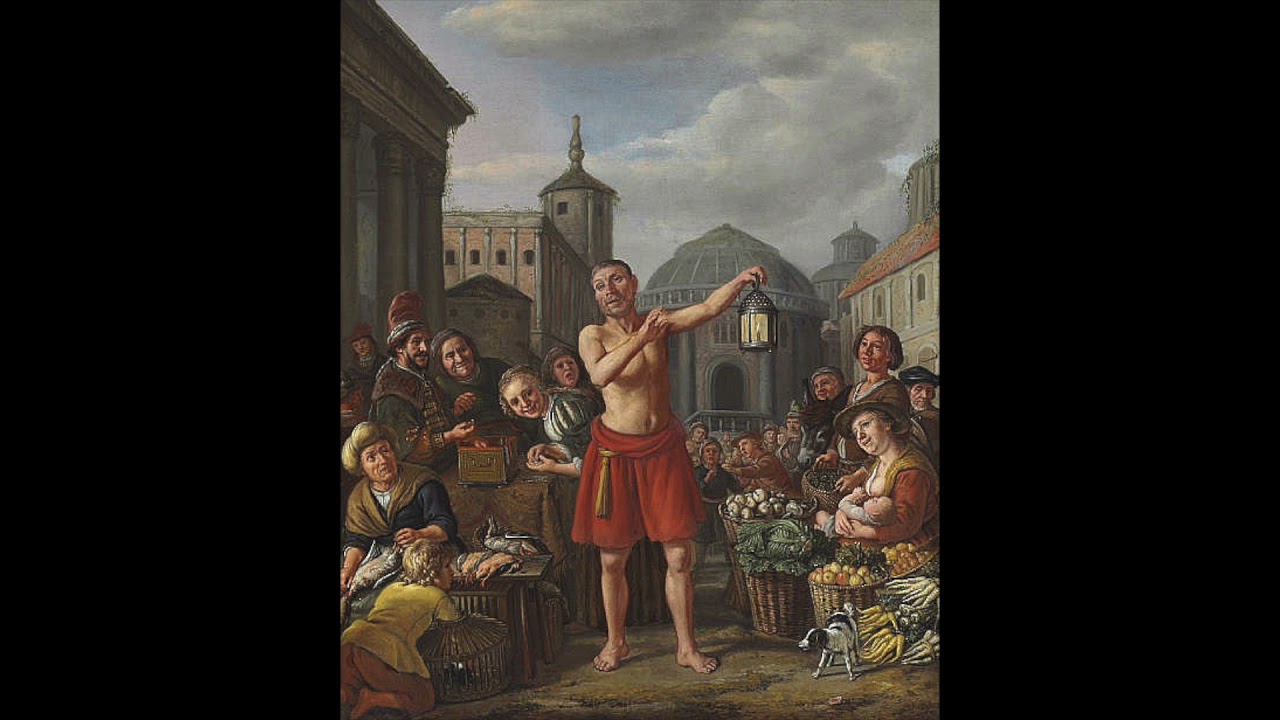
that nietzsche has a madman make this great announcement and you wonder how much nature identifies with this character okay have you not heard of that madman Who little lantern in the light in the bright morning hours ran to the marketplace and cried incessantly i seek god i seek god as many of those who did not believe in god were standing around just then he provoked much laughter has he got lost questioned one did he lose his way like a child question another or is he hiding is he afraid of us has he gone on a
voyage Emigrated thus they yelled and laughed the madman jumped into their midst and pierced them with his eyes wither is god he cried i will tell you we have killed him you and i all of us are his murderers but how did we do this how could we drink up the sea who gave us the sponge to wipe away the entire horizon what are we doing when we unchain this earth from its sun Whither is it moving now whither are we moving away from all suns are we not plunging continually backward sideward forward in all
directions is there still any up or down are we not straying is through an infinite nothing do we not feel the breath of empty space has it not become colder is not night continually closing in on us Do we not need to light lands in the morning do we hear nothing as yet of the noise of the grave diggers who are burying god do we smell nothing as yet of the divine decomposition gods to decompose god is dead god remains dead and we have killed him how shall we comfort ourselves the murderers of all murderers
what was holiest and mightiest of all that the world has yet owned Has bled to death under our knives who will wipe this blood off us what water is there for us to clean ourselves what festivals of atonement what sacred games shall we have to invent is not the greatness of this deed too great for us must we ourselves not become god simply to appear worthy of it there has never been a greater deed and who is ever born after us For the sake of this deed he will belong to a higher history than all
his hitherto history here the madmen fell silent and looked again at his listeners and they too were silent and stared at him in astonishment at last he threw his lantern on the ground and it broke into pieces and went out i have come too early he said and then my time is not yet this tremendous event Is still on its way still wandering it has not yet reached the ease of men lightning and thunder require time the light of stars requires time deeds though done still require time to be seen and heard this deed is
still more distant from them than the most distant stars and yet they have done it themselves by the way i haven't introduced myself my name is ken james i'm a professor of Philosophy at birkbeck college and also professor at the new school new college of the humanities okay so nietzsche is very uh famous for being the plotter of the death of god and it's very important to understand what he means by the death of god the death of god isn't just um he's not arguing here against the existence of god he thinks that job has
already been done You know there are still people who believe in god but he's not addressing those he's if you like addressing those who are already secular maybe humanist who've given up religious belief at least belief in the entity god right but he's trying to tell them you don't really understand what it means for god to be dead see what he thinks is that these people are these secularists or humanists They've given up in the belief of a benevolent father figure in the sky but they've kept all those judeo-christian values based on that existence and
to really appreciate the death of god is to understand that those values now have absolutely no basis and that's the point of those people in that audience they're like the village atheists and they're laughing you know has god emigrated they've gone on a Holiday it's all a big joke to them and he's trying to bring this message to them that you have no idea what this means and by the way there's a very deep thought here about what's the what is at the heart of religion because you think we naturally think oh what is at
the heart of religion is a set of metaphysical presuppositions belief as i said in a benevolent father figure But nature really is a different take on what is at the center of religion what is it the center of religion and what is most important for nietzsche is a set of values i think in some sense in his view it's kind of condescending the father figure story is just a just so story we give to kind of rationalize a set of values to make them look credible but the real point for nietzsche the Real point behind
any set of uh religions is a set of values a set of normative commitments not just commitments about belief but commitments about practices and what he's really saying with the death of god passages he says look a lot of you who have given up in the belief of god keep those same normative evaluative moral commitments really what he calls it is in also in Reference to his great teacher schopenhauer is the morality of compassion schopenhauer himself was a card-carrying atheist but chopin howard endorsed the morality of compassion and nietzsche admired schopenhauer because he had the
strength to realize there is no god but then he said but you two schopenhauer are still ensnared in Christianity or judeo-christian values because the core of judeo-christian values is really a morality of compassion what do i mean by morality of compassion a malady of compassion is something that treats the suffering of one's fellow humans as one of the most important facts to be addressed that is it's our mission to try to ameliorate the suffering of our fellow humans So what nietzsche is saying is he's saying okay you've some of you have given up on god
but you still have that morality and that is really the core of the judeo-christian world so when you see certain kind of secular movements typically atheist secular movements 19th century movements like socialism or particularly communism or john john stuart mill with his Utilitarianism you know what counts as the greatest happiness of the greatest number for for um for nietzsche it's just christianity and drag or if you like i like to say christianity without the drag mainly because it's taken off the costume of the trapping of god but it still has those essential core values and
what nietzsche says is bit by bit as people come to understand and appreciate The death of god they're going to see that those core values the the value of compassion in particular it has nothing to underlie it that is before why why did we have to be compassionate to our fellow man why do we have to love our neighbor well that was one of the ten commandments it was god's law but if we don't have god What holds up that law it's not that nature says we have to chuck out that law but we actually
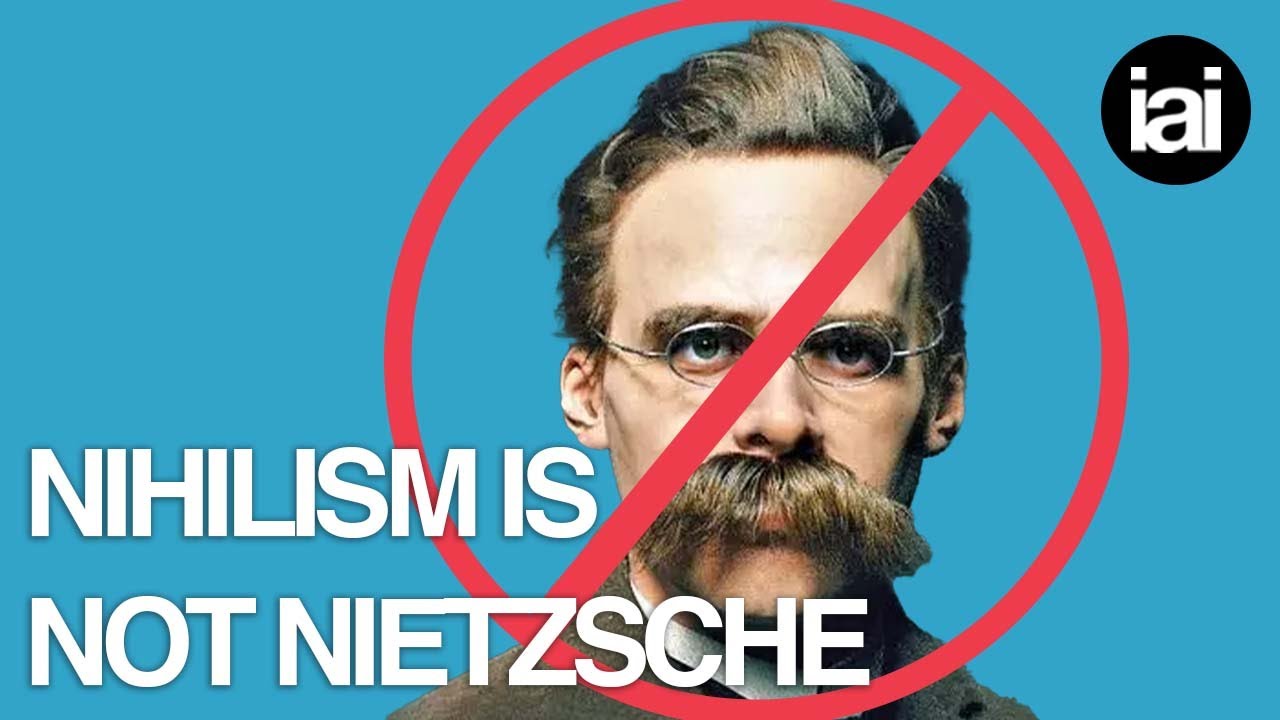
have to either rethink it or find new foundations for it okay and what he predicts is he says a lot of people as the death of god dawns on them they'll find that they can't find a new basis for these values and they'll be less and less wedded to those values and then we'll come a period and that's the Center point of this talk nihilism okay so nihilism is when you lose that external grounding for your values and you find that your values have no grounding in particular right and you lose all hold on values
okay and actually he's very prescient nietzsche he called nihilism the history of europe for the next 200 years that's what he was predicting he said Bit by bit the message remember those people the ones who are don't get it at first the village atheist he says light from the distant stars takes time so he's saying okay there are these people who have given up in the belief of god but they've kept those values but bit by bit they're going to realize there's nothing undergirding those values and those Values themselves have now been brought into question
he said that's going to be the history of you for the next 200 years that we're going to question those basic values okay so let's take a first stab at what nihilism is uh there's a very good book by a nature scholar called bernard reginster i think it's called nihilism and the affirmation of life And bernard introduces two forms of nihilism the first form of nihilism is the most obvious form it's what we call what he calls quite rightly i think the nihilism of disorientation and you can see why our disorientation oh we've lost all
values so we're disoriented i have to make a little digression here to say it's important that nietzsche Doesn't really believe we lose all values okay because he thinks what we are what life is is life is nothing but a series of drives you know bodily drives drives for hunger drives to knowledge sexual drives whatever drives this he kind of inherited from schopenhauer schaefenhauer tended to talk about the will where shopping how it talks about the will Nietzsche talks about drives and he chopin house will was often meant in some kind of transcendental way nietzsche's is
very naturalistic the drives are totally embodied but anyhow we're a series of drives that's what life is i mean consciousness is just an offshoot from the drive very much like chopinary says consciousness is in the service of the drives Now as long as you have drives you're valuing okay so right now my thirst drives as i always use the example makes me value this coke it doesn't make me value this text in front of me right but my drive to be a good lecturer makes me value the text and not think that much of the
coke so nietzsche can't say that nihilism is the absence of draw the absence of values as long as you have drives you have values What nihilism is is the absence of overriding or totalizing values that is values that give meaning to all of life all of existence right when you can when you think about it well christianity clearly does that right all of life all the world is valuable because it's god's creation it's part of his providential um plan which will end with the second coming and the Ascension or whatever version of christianity you might
have um but uh the utilitarian values the world because the world is a means towards man's happiness a sun and bonham okay it gives a meaning to all of existence okay so nietzsche can allow that even in the um absence of god we can still have if you like piecemeal values the values that Are drives assign things but what we lack is overriding values values and a value of structure that gives meaning to all of existence and actually nietzsche makes a wonderful point in the third essay of what is now his most popular book at
university courses that's the genealogy of morals in the third essay in section 28 he says kind of contra Schopenhauer he says people have thought that the problem is the problem of suffering but prop the problem of suffering is not man's great problem he says man will even take on suffering he will even seek it out the real problem that faces man is the meaninglessness of suffering so contra schopener said look the big problem is suffering nietzsche says no no It's humans don't mind suffering as he says they'll even seek it out the real problem is
that we as humans desperately need to find meaning in the world and that's what religion gives us religion gives us meaning that's what a utilitarianism that's what communism they give meaning to our lives and that's what we really search for but so what nihilism is is nihilism is the absence of those values That give meaning to existence and give meaning to our lives okay so that's our first stab at it that's the nihilism of disorientation that is there are no ultimate values ultimate values that can give meaning to all of existence okay now actually reginster
in that book i mentioned um nihilism in the affirmation of life probably not the right title I'm not great at remembering titles um he actually has a master argument to say there must be more denialism than merely disorientation and here's his argument his argument is that nietzsche continually says that schopenhauer his predecessor was fundamentally a nihilist okay but schopenhauer is a very very pessimistic philosopher i'm not going to go the full story of Chopin health pessimism because it's rather complicated but the short version is that schopenhauer said we're all humans are always going to be
suffering because we're always at the behest of the will what nietzsche would later on characterize in terms of drives and we're always willing something and when we will something when we will i'll will a coffee right now i could do With it to perk me up a bit um if we will something like a coffee that means we lack a coffee and if we lack it that's kind of in some sense painful it's something we don't have something we'd like to have we feel regret we feel if you like um some kind of sorrow pain
or whatever depending on the object that we're uh specifying is the lack okay and what nietzsche What chopin is look we're always lacking something that's uh when we have a desire or a will towards it and that causes some degree of suffering small or great and what happens is when we satisfy that will all that happens is we no longer have that desire for that object and it's completely negative there's no place there's no positive pleasure in it it's just the Ceasing of that will and then the next will comes and then we feel displeasure
because we haven't satisfied that will so it's an endless cycle of you know willing and then satisfying the will and then finding the next will so we're on this endless treadmill of suffering according to um chopin i'm not saying i buy into that all i want to put on the board is that this notion of schopenhauers Um that life is irredeemably suffering and then schopenhauer makes the value judgment he says and he endorses what famously is called the wisdom of celaena celanus was a um a roman orator i think of the second century a.d celana
said yes elena said um you know i'm getting salinas mixed up it's probably celsius who said this no it's helena sorry Selena said um um when he was asked what is the good life for man he said are wretched mortals the best is for you never to have been born uh the second best is to die as soon as possible yeah i know a cheery happy-go-lucky kind of guy anyhow schopenhauer endorsed that right um but if chopin even if we grab that life is suffering that doesn't say the world should not be you need an
Evaluative perspective so what a lot of philosophers have said is schopenhauer has a hidden premise that what justifies life is happiness but since there can be no happiness life ought not to be but that means he can't have disorientation because remember disorientation was the belief that there are no ultimate values but chopin has an ultimate value happiness or the the predominance of Pleasure over pain or something of that calculus effect um so schopenhauer is not disoriented he's just if you like pessimistic so reginstar introduces a new form of nihilism he says look there is disorientation
that is a nihilism that says there are no ultimate values but there's also something called the nihilism of despair despair is the belief that there are Ultimate values but they cannot be realized which is exactly chopin howe's position okay so now we've got two nihilisms on board and i think it's fair enough to say that nietzsche does co uh characterize schopenhauer's nihilist and he does have this other form of nihilism that is despair okay but we've got a couple of i've got a couple of questions First of all the first question is look at disorientation
and despair disorientation is the claim there are no ultimate values right despair is to claim there are ultimate values but they cannot be realized okay well they say opposite things one says there are ultimate values one says there are no ultimate values how can these two opposites be the same thing So reginster has a problem there here's some other problems that i want to cut to the chase i want to get to the really really big problem the really big problem for reginsta's take of of of nihilisms both his nihilism is the following nietzsche says
again and again that christianity or judeo-christian values are intrinsically nihilistic i'll give you a quotation from the antichrist Section 18-20 the christian conception of god a declaration of hostility towards life nature will to life that's important for me that it's a declaration of hostility towards life i'll come back to that they that is buddhism and christianity belong together as nihilistic religions and then later on um from his notebooks of the same period He says christianity is a nihilistic religion it denies nature and the will to life okay so here we have a huge problem christianity
he says is intrinsically nihilistic okay but you'll notice the christian has neither disorientation the christian clearly has ultimate values the ultimate value is god's providential plan for the whole of existence right and he doesn't have despair Because even if he thinks his values can't be realized in this world they're going to be realized in the next world okay so the christian has neither disorientation nor despair so now we have a huge question why does he call christianity intrinsically nihilistic okay there is one little defense you could make you could say oh that nietzsche thinks christianity
is Going to lead to nihilism the argument would be and nietzsche does say this he says look christianity enshrines a very strong will to truth because truth is god's word and we have to respect god's word we have to respect the truth in the next lecture i'll be telling talking a lot more about what nietzsche have to say about the christian and the secular wilted truth but anyhow the argument would be of Christianity en enshrines the will to truth and it's the wilted truth that eventually comes to get us to see that um god does
not exist and that's what leads us to nihilism so that would be a story about how christianity leads to nihilism but that is not what the text says the text says christianity at its core is nihilistic and regina can't answer that By with either despair or dis or disorientation because the christian as i said is neither disoriented he has ultimate values and he doesn't have despair okay so what i think is really going on to cut to the chase is that nietzsche actually has a deeper form of nihilism okay and to put some pieces on
the board i'll mention the third argument i have Against both those forms of nihilism both those forms of nihilism are belief one is the belief that there are no ultimate values the other one is their belief that there are ultimate values that can't be realized now one of the really important things about nature and what makes them different from a lot of the other philosophers you studied is nietzsche doesn't care that much about what we believe in this sense he's A follower of schopenhauer and a precursor of freud they had more like the um the
the pyramid view of what our mental life is like and just the top of the pyramid is floating above water that's consciousness basically they thought what you consciously believe is really reflection of what's going on much deeper than consciousness some philosophers have Gone so far as to say that nietzsche thinks what you consciously believe is epiphenomenal meaning it's caused but it doesn't have any causes it has no causal impact i think that's going way too far what i do think is that nietzsche thinks what you consciously believe isn't is more like it's to be read
more as a symptom it's not that it doesn't cause anything But it's more interesting as a symptom of deeper things that are going at the level of unconscious or as i think as nietzsche would like to put it at the level of drives well if that is so then let's go back uh to disorientation and despair those the way reginstar puts them are beliefs but according to the picture i've just given nietzsche thinks beliefs aren't all that important so if nihilism is the most important Thing that he's come to expose and that's how he often
presents himself then why why how can that be that their conscious beliefs and yet what we believe isn't all that important i think there's a deeper lying under a deeper lying nihilism underlying both disorient disorientation and despair and here i'll move back a bit and say nietzsche says in um in ek homo a book he wrote about His his life and his writings and obviously ekko hum was a reference to jesus you can see there's a certain element of self grandeur there um here is man um he said um he who reads me well reads
me first and foremost as a psychologist and i think that's absolutely right nietzsche is not a philosophy you go to to get your metaphysics Your theory of truth your theory of what is or your epistemology he's there as a kind of a what we call in german called a culture critical a cultural critic and a kind of a moral psychologist okay so i want to claim there's a deeper level of nihilism and it's not a matter of conscious belief and that is the nihilism and i'll just quote from nietzsche he talks about in the Preface
of the genealogy of morals section 5 the will turned against life so what i think is a deeper form of nihilism is what i call effective nihilism because it affects us at the level of our drives and our affects expression of those drives effective nihilism is when the will is turned against itself And nietzsche has a basic story this is the story of the first episode of the genealogy of morals when he talks about certain he talks about christianity as the invention of a certain slave caste and the basic story which i won't give you
fully now is that there are these people who had wills like everyone else like their masters they wanted to be strong they wanted to be beautiful they wanted to be dominant they wanted To be conquering but because they were slaves they weren't allowed to express those wills and so those wills or those drives because they couldn't get outward expressions were turned against themselves so then they told themselves it's wrong to want to be strong it's wrong wrong to want to be beautiful and you can see how that metamorphosizes into you should turn the other cheek
you Should be meek in other words the beginnings of judeo-christian values okay so this deeper nihilism what i call effective nihilism is when the drives are turned against themselves and for nietzsche that is really life turned against life because life is nothing but the drives so he says look there are certain people who because of a lack of power in certain situations can't express their drives in a healthy Way outwardly in action so they turn those drives against themselves life turned against life but that is life turned against life in a sense because to eliminate
the drives is to become nothing hence nihilism knee hill in latin meaning nothing okay so that i think is the fundamental nihilism for nature when Life is turned against itself when drives instead of seeking outward expression in a healthy way turn against themselves he often uses a wonderful phrase which a lot of psychoanalysts have taken up and i often read nietzsche as a precursor of freud in particular he talks about internalization the idea is to oppose externalization drives acting in action like the nobles he's thinking Of the greeks or the romans perhaps when they have
a desire they act it out when achilles is is mad about the death of petroculus he goes and kills hector he expresses his anger very directly but slaves can't do that if they're angry at their master they can't express their anger on the pain of death so they repress it they turn those drives inwards And the drives turn against themselves so that the christian moralizes it's one thing i have to it helps to put on board two different notions there's repression and suppression you can suppress a drive by telling yourself look like right now i'm
suppressing my drive to a cup of coffee i mean i'll answer to that drive when the break comes but i'm saying look i've got to be responsible finish here And um do my lecture i'm perfectly aware of my drive to have a cup of coffee i don't say it's a bad drive i just say i'm just not going to act on it now that is suppressing it right but repression is something different repression is when you in a sense and moralize nietzsche's a wonderful phrase moral muralic acid it's when you moralize yourself You don't just
say i'm not going to act on this drive you say i'm wrong to have this drive humans shouldn't have this kind of drive this drive is an affront to god well that's what a lot of judeo-christian values do like we have various aggressive drives as nature we're very sexual drives and uh religions tell us those drives are an affront to god those drives are wrong We shouldn't even have those drives in the first place so that finishes the beginnings of a pathology that is the beginnings where you disown life and here's a wonderful phrase in
the genealogy of morals where he says we become strangers to ourselves and the meaning of that and i think that's the real meaning of nietzsche's genealogy of morals is that we disown certain Parts of parts of ourselves certain drives so that they become split off split off to the point that we consciously don't even recognize we have them we lie to ourselves and say no i want to love my neighbor i have no aggressive impulses. nietzsche thinks we're actually confused he thinks both of that is part of us yes there's a part of you that
wants to love your neighbor the conscious part that's Been indoctrinated but there's another part of you that wants to be aggressive to your neighbor and then she becomes split and in that beautiful phrase um strangers to ourselves okay so if we've got on board this notion of nihilism the basic form of nihilism what i call effective nihilism as you turned against yourself or your drives turned against yourself but you is good enough because i think Nietzsche identifies you the eye not with your conscious thought but with your drives but that's a matter for another talk
um with your drives turned against yourself that's the fundamental aspect of nihilism that nietzsche is really interested in now if we think like that we answer a few of the objections i had to reginstar first of all nihilism is not a doctrine it's not a Belief you hold right like the christian doesn't consciously hold nihilism but it's it's something about your very psychological makeup so it explains it has a form of nihilism that doesn't have it as a conscious belief which fits our criticism that nietzsche wouldn't say a fundamental problem is at the level of
belief belief a more reflection of Symptoms of deeper down problems um okay now we have an explanation of why christianity is fundamentally nihilistic because on nietzsche's take at least what christianity demands is a severe repression of the drives as i said of these aggressive sexual and other drives okay and finally we have an explanation of what those two nihilisms that register mentions have in Common remember there's a nihilism of disorientation there are no ultimate values values that give meaning to all of existence and despair there are ultimate values but they cannot be realized the version
that schopenhauer ascribe to we can say what those two nihilisms are is they're modern expressions of this fundamental effective nihilism So i think nietzsche's view is this christianity or judeo-christian values in particular in the west introduced this not suppression of drives but severe self-chastising moralized repression of drives and this has made us sick and to a certain extent pathological in each of the eyes and hence we become split and become strangers to ourselves and what Disorientation and despair are it's the modern they come in the modern world they come with a kind of nihilism becoming
self-conscious that is nihilism is finally making its way up from our bodily state of drive turned against drives into consciousness so we give conscious expression to our effective nihilism with either disorientation there are no Ultimate values or despair remember i said why are those both nylons they say opposite things they're both nihilisms not because of their content but because of the causal genesis and because what they really mean and what they really reflect they reflect their effective nihilism it's just that now in the modern age when a lot of us have become secular and given
up god we've now expressed those nihilisms in Quite conscious forms okay i want to make a couple of last points and then i'll open the floor to questions it's important to see that nietzsche is not in favor of nihilism right and you remember in that passage that god is dead passage he says what must we do to become worthy of the deed this deed the deed of killing god must we not become god Okay so what is it to become god well and here he's often he aims the um um language of khan he says
it in other places he says it's to become autonomous to become law givers so the idea is for nietzsche is that before we have this external authority giving us a law and those of us who are strong enough to live through nihilism get beyond it and nietzsche said of himself i'm the first person to live through nihilism And get beyond it they'll be able to give themselves their own values they'll become their own authorities they won't need an external authority and here nature is in something that's a precursor of the existentialists people like satra who
hammered on this point that you have to become your own authority okay so so nietzsche on the descriptive side Is just saying that nihilism is what is going to be the history of the europe for the next 200 years he's not endorsing it he's just saying it's a historical inevitability now there are a whole series of nature interpreters namely the post-modernist who think in some sense nietzsche is endorsing it they agree with nature on the descriptive side they say look we moderns we've lost the idea of external authority Leotard a very famous postmodernist philosopher who
wrote this famous book called the post-modern condition says um post-modernism is an incredulity towards all meta-narratives meta-narratives is like a story of what creation is about like the providential story of god's creation or what existence is all about um the utilitarian's idea that what we exist for is to increase the greatest happiness of the greatest Number okay so leotard says we've become completely um skeptical of all those stories right and he says but in response to that he says we should become ironic we don't take any story seriously and we just play and we move
from story to story as it suits us now in fact that is a deep form of nihilism no ultimate values and nietzsche actually in some sense predicted this he Was very prescient he said that's what we what's going to happen with weak people when weak people realize there is no external authority what they're going to do is they're going to become completely ironic they're going to feel like they're epigones this is the end of history whatever and there's no story we need to take seriously and nietzsche did not endorse That that is the difference between
him and the postmodern the postmodern seems kind of happy that there's no ultimate authority and they say we shouldn't give any authority to anything whereas nietzsche says look those people are strong enough and the list is very small and he always he always puts himself on the list um hence ek homo says those people will be Able to create their own values and that's the challenge he puts out to us moderns he says look you once you've realized that there are no external authorities you'll go through this period of nihilism you'll say there are no
ultimate values but those of you are strong enough will be able to create your own ultimate values and on that happy note i think i'll stop And open the floor to questions uh at the back so if um if if everyone's strong and everyone creates their own values autonomously um what what did he predict as the outcome i mean can everybody be struggling create their ultimate values and there not be chaos and and violence and fallout should i repeat that question okay um uh you're absolutely right and in fact one of the things about nature
that i Neglected to say um is nietzsche is extremely elitist and extremely condescending and this is what because it looks like he wants to wipe out christianity but that's not true but he was very condescending the way he put it the most condescending versions let there let the ideas of the herd meaning the common people rule in the herd that is he said for the vast majority of People religions give some meaning to their life it makes life a life of a hard life a life of suffering bearable his worry was that christianity or judeo-christian
values in the west have become too victorious that is they've converted everyone and they're very high again mnemonic and universalistic and they demand that everyone ascribed to these values so he did think That certain people people who he sort of weak need to keep those christian values what he was worried is about is that christian values the morality of compassion is so universalistic and so powerful it kind of sucks everyone into its wake um but there's a second problem you're getting at what if um um people read nietzsche as a license To create their own
values and some of them could create horrible values and it's well known that some people some people in the 20th century who did take up nature i'm thinking particularly the nazis um uh did you know horrible things and had what we would find of horrible horrible values and this is how brilliant nietzsche was nietzsche actually said somewhere and Beyond good and evil one of his main books he said horrible things will be done in my name he saw exactly that point but he was such an elitist and he was so condescending he said basically his
attitude was i don't care what idiots do with my texts let them do what they want um but nietzsche didn't need to wanted people to create their own values That is true and famously says here is zarathustra his prophet says here is my way where is yours but there was this question where does that leave people and a lot of people have a very negative feeling about nietzsche for this reason they say he doesn't give us any politics he doesn't tell us what the ideal society is he doesn't really give us any values he just
kind of and nietzsche often said This i'm dynamite i blast other values away and i leave for you to create your own values now as a matter of fact i have to say nietzsche did have his own values what nietzsche really valued was culture and great individuals great creative um individuals he thought it was the geniuses um as i say the list is the list is uh gert is always on the list beethoven's always on the list uh Nietzsche is always on the list and i like to say wagner is on the list and then
off the list it's these great geniuses that move culture along and what nietzsche really wanted to do with his text is to free up these individuals from the constraints of a morality of a moral religious worldview that he felt constrains them from realizing their True potential so and i always like to say this that nietzsche's ideal readers were not members of the herd including philosophy professors of which he had a very low opinion it was a great creative geniuses but if you look at the history those have been the people who really got the most
out of nature i mean there are tons of brilliant people um authors i Can think of mainly people in the german tradition the poet rilke thomas mundy author herman hesse but also in england d h lawrence they read nature and they felt extremely liberated by him so nietzsche was a project not addressed to everyone but addressed to a few to liberate them and the final thing i'll say is we need to talk for instance about Having power he's often mentioned will to power a book he never wrote a book that he had plans for that
his sister wrote he didn't mean power over others he fundamentally meant power over oneself remember i said we're strangers to ourselves we're split off or going in different directions nietzsche said some individuals need to get in power of themselves so they can give themselves direction That is what he really cared about that's the ultimate exercise of power that he cared about but yes horrible things will be done and have been done in his name um i think there's a question here and then we'll go that way yeah yeah um i'm just so when he so
with the god is dead uh he's projecting annihilation or he's predicting a nihilism that's going to happen for the next two Centuries he says um but isn't that a liberation from the self defeating nihilism that exists in the fear of god um they're too distinct are they two distinct things yes you're right um well first of all there are two distinct things because one can be just um the nihilism um the fundamental nihilism he would like to address is the drives turned against each other Right now he does think um um uh people who have
accepted the death of god like the utilitarians etc who care about happiness who are involved in the morality of compassion can still have that effective nihilism okay but i think uh the really important point you're getting at is that i said nature doesn't endorse nihilism I i really should have said maybe nietzsche doesn't endorse nihilism as an end state but he does see it as kind of a necessary condition we need to get through that is we have to go through his particular disorientation and despair so we can address the underlying nihilism right but it's
really addressing the underlying nihilism that he wants to do That is that effective nihilism and he famously says i think it's in in daybreak or dawn as it's sometimes called we have to think differently in order one day perhaps long in the future to feel differently so the idea is we'll give up maybe we'll create values of our own kind and maybe we'll do that consciously uh but one day if this will uh read we'll get to the deeper level The effective level and painful process what happened is we go through nihilism and we just
end up at post-modernism that would not be a happy result for nature what he wants is people who can create strong values and this is what's really important back those values with their drives that is their drives will be expressed fully in those values and the drives will not be aimed at Merely suppressing themselves that's what he hopes a new and that's why he has a model of the artist because he thinks the artist i'm not saying the artist is always his model artist is more the model in the early work a lot of work
it seems to be the philosopher obviously self-aggrandizement involved here but he has this idea of a philosopher who uses his drives To express him in outward action in creation of great works of art like the books of the texts that he created himself so there were questions up there yeah um reading um reading slav or jesus interpretation of christianity he he seems to argue that christianity is almost like the only method to obtain true atheism that jesus is almost god's way of removing himself as the big other And that's where sort of face what he
calls the precipice freedom in terms of the end of ideology i think you mentioned the end of idea at the end of history yeah um can nature be used to understand now what we might sort of say is capitalism replacement of god so there is no other way to see sort of economic life or An economic ideology outside of capitalism so um god it's a complex question and there's a lot going on here talks about desire so yeah in terms of capitalistic desires we sort of go out and it was played on all these things
sexual desires through advertising and marketing and so god seems to sort of moved out of the way but it's almost now Capitalism is has become the god if you like um okay remember i did briefly mention that nature in some sense agrees with that version that christianity brings its own demise because of christianity really enshrines an incredibly strong will to truth and wilted truth is the one thing that leads us to see there is no god so that party agrees with but on capitalism let's go back to um Um nihilism nihilism is the absence of
of overriding meaning that is meaning that values that give meaning to all of life now there can still be people who say value a good career value their family right in fact nietzsche characterizes these in section five of the preface of zarathustra or zarathustra characterizes them as the last man And nietzsche is extremely and zarathustra extremely despondent in fact it's because of the last man um this is a man who he says famously what is a star and blinks that is he has no great heavenly overarching values he's just got his ordinary little values and
nietzsche is in despair of that in fact zarathustra in the end in that book he can affirm all of existence and nietzsche writes in some of his Letters i'm not as strong as zarathustra when i look at the last man with his petty desires i can't affirm all of existence he saw that distance between himself and if you like his alter ego the thing about capitalism is on nietzsche's view capitalism enshrines the no great metanarrative right it enshrines it's still it's still remember i said nihilism can't be the absence of all of of all values
because Our drives give value well capitalism is like a lowest common denominator of just base answering our basic drive a basic drive drives towards family drives towards korea etc but it doesn't look for an overarching meaning and nietzsche found that an object of extreme despair and some people have argued my colleague simon may have argued Brilliantly to say in the end nietzsche was still a christian because it's fundamental to christianity or it's fundamental to religion to look for a value that gives meaning to all of existence why can't we learn to live without a meaning
to all of existence why can't we just have a petty drive that drives for a family a drive for a career or drive for a better job whatever a bigger car Or whatever well i think nietzsche's real objection is really that he thinks that is not the way forward to really great creative individuals i think at the end his core values are always culture and great individuals that move culture and he saw this effect of capitalism the enshrinement of the most basic drives at the and no no looking for a Meta-narrative that give meaning to
all of existence as enshrinement of the lowest common denominator and something antithetical to great culture and great individuals i'll go here and then there yeah yeah go ahead yeah so one quick question um with regards to these strong people that he referred to um is that called the uber mention and the another one is that does he tell us To follow our drives in order to find that meaning and value okay there are two big questions here are the uber mentions mainly it's mentioned very little in nature it's been mentioned in zarathustra um um the
best way to think of the ubermensch is as a scholar john richardson a nature scholar in his book nature system said he said look um nietzsche when he talks about masters in The genealogy he talks about people have very limited drives um but they're expressed directly into action whereas we moderns who are much more interesting than those masters because we're a collection of drives often conflicting drives hence we're strangers to ourselves we have parts of ourselves that are split off um we have drives going and we're Complex which he admires we make we make man
interesting he says without the slave revolt which is the institution of judea christian values history would be too stupid a thing we have a certain complexity but at the price of being all over the place i think the really the notion of ubermensch is as richardson said and alf hayburn that is he'd like us not to repress our drives But he'd like us to collect them and give them concerted expression and to do that you need what i call sublimation that is you've got a wide range of drives but you've got a master drive that
orders all the other drives and gets them to act in concert with the main drives now you said do we do it well this is a big big question about nature who does this and i think again this is part of nietzsche's story Following schopenhauer as a precursor of freud that he doesn't think it's something we consciously do it's just some of us are lucky enough uh to have a very strong master drive like maybe leonardo da vinci's master drive was to artistic and scientific creation and that makes all the other drives subservient to it
but what nietzsche is hoping to do with His text and that is why he writes in this bombastic incredibly strong rhetorical manner that moves so many of us is he's trying to get us below the level of conscience he's hoping one of these genius or a nascent genius and herman hesse say or d.h lawrence will read his books and something in him will be liberated so that it can now find full expression and become the Active master drive sorry continuing on with drives um early on um you were talking about drives and values um with
regard to it to change that would um would a biologist or a post-darwinian say that drives have values or they say that drives are value free well i think the basic idea here is um I can't answer so much for the post darwinians um um they certainly say the drives functionally impel us towards certain things but the point i'm trying to get it is the drop on schopenhauer and freud and nietzsche's view we have conscious values we even have unconscious values but it's our drives that are the root cause of all these values It's our
drives that make us value things right and i think it's also fair to say more directly up drives value things except the worries that turns them into little homunculi little people because we think of drive valuing is something that a conscious agent does so if you're very much worried about the homuncular problem which i think in the end can be answered but i'm not going to do that here because it takes a long Lecture and say you can think okay maybe the drives don't directly value but they are the cause of us valuing right if
i didn't have the drive to if i didn't have the hunger drive or the first drive i just wouldn't value this coke at all and the point about um i mean the point about nietzsche is he thinks our drives are the seat of all our values and the Seat the cause the cause the ultimate cause of all our actions this is in great country distinction to can't can't talk about if if you're at if you're um if you're merely at the mercy of your drives you're what he called heteronormas you can't be moral he said
to be moral is to overcome your drives to a certain extent it's to become autonomous and just to be be if you like a monster Of pure reason that you do something not because your drives impel you towards it then you're not acting morally um you're only acting morally when you act purely because your reason tells you this is it's your duty to do x but nietzsche and schopenhauer and um freud are all of the view that all your actions are ultimately using can't work language heteronomous driven by your drives Um yeah yeah um i
wonder in the same way that we kind of democrats in the herd disagree about our values and take value from that very disagreement did nietzsche foresee that his geniuses would themselves disagree about their values and and change their values accordingly well nietzsche actually you know he railed against socrates because he thought socrates is one of these people Institutes the reign of reason and um he thought that was reason as opposed to letting it's more of the repression of the drives that socrates is one of these monsters of reason who says all you should use is
your reasons and your drives are something to be aware be scared of uh so that's instituting a regime of repression and at other points he says in truth no one is closer to me than socrates So what nietzsche thinks is these great geniuses kind of are in conversation with each other admittedly it's a one-way conversation because socrates isn't listening to nietzsche but nietzsche is listening to socrates and what nietzsche said this beautifully he said some are born posthumously he was very worried about whether he'd ever have readers his last six books he had to pay
for their printing But he was hoping to be genius in the future who would bounce off him and and what he wanted was he didn't want them to accept him just like he didn't accept socrates he wanted them he wanted himself to be a point of departure from them that is one of the reasons why he finds uh professors of philosophy boring because what does a professor of philosophy do he tries to work out exactly what nature Meant that is not nietzsche didn't mind those readers he realized that will help keep his texts alive but
what really nietzsche was looking for is people who would use nietzsche's text possibly to form it to find their own voices if you're thinking of philosophers think about foucault and heidegger who both read nature and then kind of use nietzsche to create their own ideas So nietzsche nietzsche said this about what he called the masters he said a master values himself not by the slaves who's under his jurisdiction but the other masters who he respects who are worthy of him like achilles doesn't want to fight a mere a foot soldier or slave that's beneath him
they're necessary he's not against them he's not trying to eliminate them we Need them but i get my values as achilles by battling someone worthy of me hector that is exactly how nietzsche says nietzsche says of himself he thinks if you have genuine self-respect you find an enemy worthy of yourself one of his enemies was socrates another one is possibly jesus us and paul because he thinks paul is the brains behind um Brains behind jesus well he can see he's hoping that really the notion is a greek notion of a gonal struggle you make yourself
stronger by struggling against someone worthy of you well he hopes to be a a force a point of force that others in the future worthy ones will struggle against one last question and then i think we should break yeah On denial of life and uh will turn against itself nietzsche especially on the second salvage analogy he goes all about the fact that what we are repressing is our animal instincts our kind of um violence aggressiveness which are natural in us as animals but um later on like freud and psychoanalysts they tend to focus on sex
as the fundamental Uh animal instinct which are pressing what i mean does nietzsche actually talk about sex or how would you combine the two things oh yeah um nietzsche um um talks about repression of the sexual drive in the third essay of the genealogy of morals when he talks about the aesthetic ideal but you look you're fundamentally right that um you know freud was possibly a monomaniac or possibly a duo Maniac um at at first he only seems to have libido as the fundamental drive and then later on he's fantastic death drive and most post
freudians aren't very happy with the death drive in particular the drive to become nothing you'll notice that's an echo of nietzsche the will to nothingness um nietzsche was a prolific in his drives there's some uh Paul katz a anita scholar has found 136 drives mentioned in nietzsche's text so nietzsche seems to think there are a lot of drives and unlike freud he doesn't think they're all hardwired he thinks we can culturally um um we can be encultured into a drive okay uh there are people for instance adler adler was a psychoanalyst who had a Break
with freud and he said actually we need to return to nature um um that we need to not be such a monomaniac you're thinking about you know the psycho early psychoanalyst and not just make um make the sexual drives the be all and end all there's another part to your question can you repeat it just repeat your question in total and i'll figure the part i haven't answered yeah no i was saying how uh nietzsche Seems to focus on our annual instinct defined as aggressiveness right i've got it the sexual part okay it's really interesting
what nietzsche says about the sexual drive um because famously nietzsche is a great opponent of the aesthetic ideal right he thinks it's part of the religious self of um what does it call it 2000 years of self vivisection of us turned against our Drives so it sounds like he's totally against the aesthetic ideal but actually he's not i think it's section 10 of the third essay he actually talks about what do aesthetic ideals mean in the form of philosophers right and remember think about this i mean he he either had zero or very few sexual
liaisons himself Right and he was fairly aesthetic he was you know not impoverished he was on a university pension but he was wandering around in sils maria in the inga dean in switzerland or he was wandering in various watering holes etc he was very lonely he kind of lived an aesthetic existence right so how can he be so against the aesthetic ideals and it's a really important point In nature when i'm talking about the will to truth in nature or the aesthetic ideal nietzsche is not a philosophy he's very unlike most philosophers most philosophers say
oh truth is a good simpliciter or the will to host being hostile is bad simplicity nature is never like that he says what does this will mean in that individual so take the aesthetic ideal he says look There are some people who are aesthetic because basically they hate life they feel weak they feel impoverished so they turn against life he thinks that's the basis of the judeo-christian values right but there are some people who remove themselves in life not out of out of hand hatred of life because they actually love life that is how nietzsche
sees Himself he says look there are certain of us us philosophers and we we are aesthetic not because we disown our drives because we want to remove ourselves from the world as a way of engendering our creation in fact he uses all these metaphors of the philosopher withdrawing himself so he can have his pregnancy and give birth to his real children not literal children but his works so Nietzsche says is aestheticism a bad thing depends why you're aesthetic are you ascetic are you ascetic because you um hate life and you want to turn against your
own drives are you aesthetic to remove yourself from life from the immediate life from your fellow man because that is your way of coming back into life to do your creations your celebration of life so That will come to the part i didn't answer the sexual nietzsche i think what he thinks is he thinks is certain people can sublimate their sexuality that is they can turn their sexuality towards their creativity um a good good example of someone who both sublimated and lived their sexual life is picasso right who had a billion lovers right i Exaggerate
but he had many lovers and what is really interesting as you see from picasso's diary is how he cannibalized his relationships that is he engendered fights in his relationship he had all kinds of fights with his lovers and he actually engendered them because it led to his creativity expressed itself in his artistic work so his primary drive was towards his Artistic work and it's he was not ascetic he didn't renounce sexuality but he redirected his sexuality and used it to enhance his creative work so some people so what's nietzsche's view on the sexual drive he
thinks it can be employed in a certain way mere repression where it gets split off and ends up in pathological symptoms like skin rashes or or psychosis nature just like freud Didn't approve of but what nietzsche thought is some people can re-harness their sexual drives and express it in their creativity and that nature was in favor of actually we do have times does anyone remember when this session's meant to end i wrote times down but i at 11. okay fine let's go to 11. that's fine by me Um are there other questions okay if there
is not i i want to say put one more piece on the table which i didn't in the lecture because i was only had so much time i'll keep talking until there's a question that's my practice um i i do think sublimation is really really important for nature and it explains a lot because there is these huge worries about oh is he just some kind of express my drives out would be Aggressive destroy other people and i've tried to kind of finesse that point by saying no what nietzsche wants is not power over others but
power over your cells okay and in this he's actually um rehearsing something that he got from the romantics the romantics uh i'm thinking of people like novalis um huldell and uh particularly red holderland uh these Were people writing in the late um 18th century early 19th century and they had this um idea that germany doesn't have a genuine culture most of them were i'm talking about the german romantic schlegel's brothers were also very important for this and they said to have a genuine culture is to have unity and they thought what happens in our modern
culture is we become fragmented Because the point about religion is it gives a core it gives common values to everyone it gives a unity but now we're living in a post-religious age and we don't have that unity so everyone just goes whatever direction they want and they had this idea that they thought the same about mythology they thought religion gives unity the greek myth well that was a religion that gave them unity gave them a sense Of what's appropriate to do it's appropriate to act like achilles axe for instance or it's appropriate to act like
agamemnon acts those gave archetypes which gave enshrined norms of of of appropriateness and hence gave a center so the romantic said look we moderns lack unity and nietzsche was very very worried about this lack of unity he thought this Lack of unity is important a for a genuine culture and b for us to be genuine individuals okay but you hear the word unity and you wonder well what the hell does it mean it's repeated endlessly the interesting nature gives a gloss a really interesting gloss on what unity is unity is this notion of sublimation and
sorry for those of you who've heard it before but i always like to use the example of freud's Leonardo because freud wrote an essay on leonardo da vinci and it's his main work on sublimation but freud didn't do a good job of explaining what sublimation is according to freud leonardo was a um a was sexually inactive this is historically wrong we know of records that show that's not true but according to um um freud leonardo was fundamentally asexual but he harnessed all his uh sexual energies Towards artistic and um um scientific creativity okay um but
what freud is really bad at explaining is is how this sublimation occurs but nietzsche has a story to tell about that there are other reasons why freud has problems on sublimation but i can't get into that here um though i've written an essay nature and freud on repression and sublimation you can look it up on the web um Nietzsche's version of leonardo would be the following in fact he actually talks about leonardo on some notes and says roughly the story i'm going to say that is we said leonardo had a master drive his master drive
was towards artistic and scientific creation he had other drives a sexual drive and let's say his main sexual drive was towards um towards uh sexual congress with young Boys okay that's the way freud seems to tell it okay well what happens is um with sublimation with repression you merely repress that drive maybe you're asexual and maybe you come out with weird symptomology skin rashes whatever but if you sublimate what happens is rather than repressing the drive you redirect it so the story the nietzsche story on on Leonardo would be he had this sexual drive the
sexual drive wants him to literally possess male bodies but his master drive his strongest drive is towards artistic and scientific creativity and rather than repressing that drive it's strong enough to deal with it not by repressing when you've got a master drive that's not very strong it deals with other drivers by pushing them down But if it's strong enough if it's self-confident if you like to use that language enough it can harness the drive so that instead of possessing rep the drive slightly gets redirected the sexual drive's primary impetus is towards sexual congress possession of
male bodies right but it gets redirected and as you know leonardo was obsessed with doing perfect representation of male bodies So in a way that's harnessing that sexual drive but it's redirecting it to an aim that is now consonant with the master drive because possessing perfect representation of male bodies he did all these diagrams of perfect male bodies no diagrams of perfect female bodies in fact notoriously often got the female body quite wrong um that is now an expression of the Sexual drive but in a way that's consonant with the master drive that is what
nietzsche's aim is nietzsche's ideals individuals are individuals who've achieved a certain kind of power over themselves self mastery through sublimation and it's through that sublimation that we become genuine individuals and become genuine agents But that again is another story that i can't give here


![Rick Roderick on Nietzsche and the Death of God [full length]](https://img.youtube.com/vi/OisdFRGlK-Y/maxresdefault.jpg)

![Thus Spoke Zarathustra by Friedrich Nietzsche in Modern English with Commentary [Prologue & Part 1]](https://img.youtube.com/vi/H4zRFeMeCX0/maxresdefault.jpg)