Imagine dedicating more than two decades of your life to an organization. Imagine becoming so skilled at defending its doctrines that the worldwide leadership notices your talent. Imagine being called upon to write material that will be read by millions of people around the world.
Now imagine that while researching deeply to fulfill this mission, you discover something that will change your life forever. Something the organization hid for decades. Something that will make you question everything you believed.
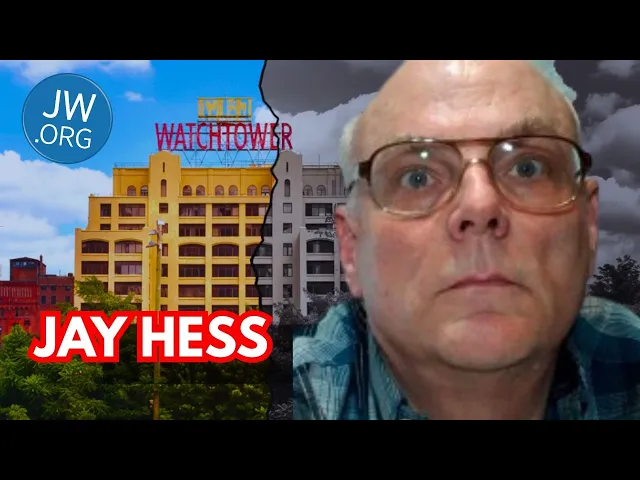
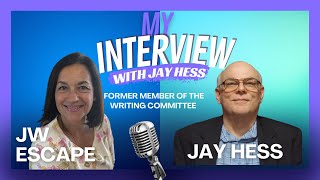
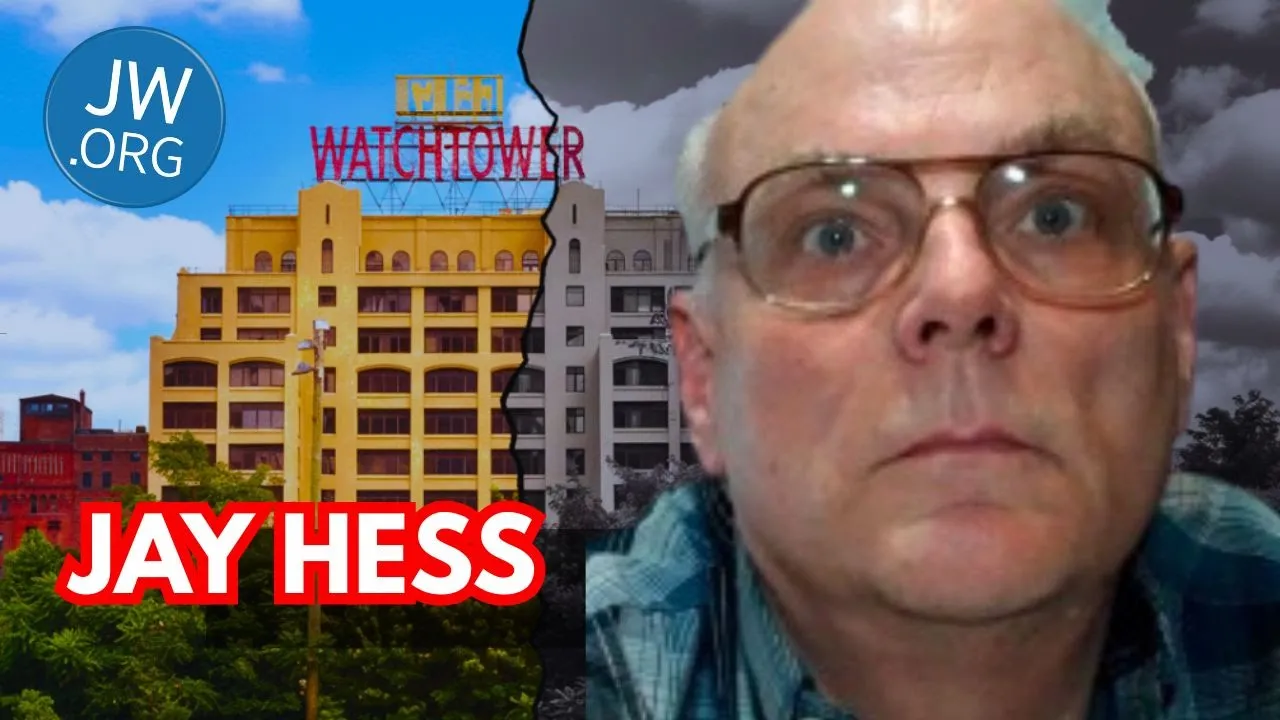
This is the story of Jay Hess, a man who wanted to prove the Watchtower was right and ended up proving the opposite. To understand who Jay Hess was, we need to go back to the 1970s. Long before Greg Stafford wrote his famous book, Jehovah's Witnesses Defended, Jay was already a fervent apologist for Watchtower Doctrines.
He wasn't an ordinary Jehovah's Witness. Jay was an obsessive researcher. While most members were content to read official publications, he dove deep.
He learned coin Greek, the original language of the New Testament. He studied biblical Hebrew. He frequented theological seminary libraries.
He wanted to know the arguments of the opposers so he could refute them with surgical precision. This dedication didn't go unnoticed. Jay wrote newsletters defending the organization.
Eventually, he published a book with a provocative title, Jehovah's Witnesses are not false prophets. Can you imagine the irony? A man who wrote an entire book defending that the organization wasn't a false prophet would be expelled years later for discovering exactly what the organization was trying to hide.
But Jay already carried a scar. The year 1975, he lived through the apocalyptic fervor firsthand. He watched his generation be sacrificed on the altar of a prophecy that never came true.
Young people abandoned scholarships. Couples canled plans to have children. Families sold everything they had.
When 1976 arrived and the world kept spinning, the disappointment was brutal. The Watchtower blamed the members themselves, calling unwise those who had made radical changes in their lives. But Jay didn't leave.
On the contrary, he dove even deeper. His logic was simple. If the organization made a mistake, maybe he could help correct future errors.
Maybe more study, more research, more knowledge were the answer. This obsession with truth put him on the radar of the worldwide leadership. In the early 1980s, Jay Hess received an invitation that very few Jehovah's Witnesses receive to collaborate directly with the Watchtowers writing department.
Being invited to contribute to this department was like being called to Mount Olympus. It was the ultimate recognition. Jay's specific mission to write a series of articles for the Watchtower magazine that would refute once and for all the doctrine of the Trinity.
The organization needed a solid defense against the Trinitarian arguments that were gaining traction in public debates. Jay accepted with enthusiasm. Finally, he could use all his knowledge of Greek and Hebrew to serve the only true organization of God on earth.
To fulfill his mission, Jay did what he always did, researched exhaustively. He frequented theological seminary libraries, reading what the trinitarians said about the divinity of Christ. But he also wanted to deeply understand the history of his own organization.
So, he began leafing through old Watchtower Society documents. And that's when his journey took an unexpected turn. While researching, Jay found something disturbing.
He discovered that the prohibition against worshiping Jesus was not an original doctrine of the organization. On the contrary, it was a very recent new light. Four decades from the founding by Charles TA Russell in 1879 until the 1950s, Jehovah's Witnesses worshiped Jesus openly.
The change only came in 1954. Charles TA Russell openly taught that Jesus should be worshiped. In Zion's Watchtower of July 15th, 1898, when a reader asked if Jesus was really worshiped or if the translation was faulty, Russell replied, "Yes, we believe our Lord Jesus while on earth was really woripped and properly so.
" Joseph Rutherford, who succeeded Russell, maintained this position. And when on October 2nd, 1944 in Pittsburgh, Pennsylvania, the Watchtower Society approved amendments to its charter, the worship of Jesus was explicitly reaffirmed. Jay read with his own eyes what was written.
The document legally registered in the United States declared that the purpose of the organization was for public Christian worship of Almighty God and Christ Jesus to arrange for and hold local and worldwide assemblies for such worship. It wasn't a metaphor. It wasn't symbolic language.
It was in the organization's law. Worship of God and worship of Christ Jesus. The Watchtower of October 15th, 1945 explained, "Jehovah makes him infinitely higher than the godly angels or messengers and accordingly commands all such to worship Jesus Christ.
" So what happened? Why did the worship of Jesus suddenly become prohibited? The answer came in the January 1st, 1954 issue of the Watchtower.
Someone from Ethiopia asked, "Should we worship Jesus? " The answer was a shock. The answer to the above question must be that no distinct worship is to be rendered to Jesus Christ now glorified in heaven.
Our worship is to go to Jehovah God. With a simple question and answer, decades of doctrine were silently abandoned. What was once taught as appropriate and commanded by God became overnight idolatry.
The doctrinal change was accompanied by alterations in the New World Translation. The Greek word procio appears about 60 times in the New Testament. When applied to Jehovah, angels, humans, Satan, or demons, it's translated as worship.
But when applied to Jesus, and only when applied to Jesus, the same word became due obeisance. Of the 17 times procio refers to Jesus, all 17 were translated differently. This isn't translation.
It's theological manipulation. Jay realized the magnitude of the contradiction. The original Bible commanded worshiping Jesus.
The organization's charter commanded worshiping Jesus. Publications until 1954 taught worshiping Jesus. And then silently everything changed and the organization tried to hide it.
In the 1969 yearbook when the charter was quoted the words and Christ Jesus were simply removed and replaced with ellipsus. In the 1971 watchtower the word and was replaced with through in brackets worship of God and Jesus became worship of God through Jesus. The meaning was completely altered.
Confronted with these discoveries, Jay faced a dilemma. He could simply ignore what he had found and write the anti-trinitarian article as requested. But Jay was above all honest.
He believed that truth did not fear questions. If the organization was genuinely interested in biblical truth, it would surely want to know about this historical contradiction. With this naive mindset, admirable but naive, Jay wrote his article.
But instead of attacking the trinity as requested, he presented an internal argument. We used to worship Jesus. The Bible commands worshshiping Jesus.
Our legal charter commands worshiping Jesus. Why did we stop? He genuinely believed that the leadership would be happy to correct what he saw as an error, that the light would get brighter, as the organization liked to say.
He was terribly wrong. Jay's article was not received with gratitude or theological reflection. It was received with alarm.
The leadership immediately understood the danger. If millions of Jehovah's Witnesses discovered that the organization had drastically changed its doctrine on who should be worshiped, the most fundamental question of any religion, the consequences would be catastrophic. How to explain that for more than 60 years, the organization taught something now considered idolatry.
If worshiping Jesus was wrong, all the founders, Russell, Rutherford, No, were idoltors. If it was correct, then the 1954 prohibition was a serious error. The only solution was to silence Jay Hess.
Between 1991 and 1992, Jay Hess was summoned to two special judicial committees. These were not ordinary committees formed by local elders. Due to Jay's access and knowledge, his case was closely supervised by the leadership.
The charge causing divisions, a euphemism for apostasy, the specific reason, advocating the worship of Jesus. Stop and think about the cruel irony. Jay was being accused of apostasy for defending exactly what the organization officially taught until 1954.
He was being expelled for being faithful to his own religion's history. During the interrogations, Jay presented his documentation. He showed the 1944 charter.
He cited the old publications. He demonstrated that the worship of Jesus was not a trinitarian invention, but the historical position of the watchtower itself. None of that mattered.
The decision had already been made. Jay's case wasn't unique. A decade earlier, Raymond Fron, a member of the governing body itself, had been expelled after questioning internal practices.
He later wrote crisis of conscience, exposing how doctrinal decisions were made, not through divine revelation, but through political voting and tradition maintenance. Raymon's case demonstrated that not even governing body members were immune. If you questioned, you would be silenced.
In 1992, the final sentence was delivered. Jay Hess after 23 years as a dedicated Jehovah's Witness was dysfellowshipped. Dysfellowship doesn't just mean losing religious membership.
It means total ostracism. The organization instructs that family members and friends must completely cut contact with the dysfellowshipped person. Parents don't speak to children.
Siblings become strangers. Decades long friendships evaporate overnight. Jay lost almost everything, but he kept something precious, his wife.
In a rare case, his marriage survived despite the religious division. His wife remained an active Jehovah's Witness, a full-time pioneer, even with her husband dysfellowshipped. They stayed together, raising their three children in this extraordinarily complex situation.
Leaving the organization meant rebuilding an entire life. Jay had spent 23 years in a world where every aspect of existence was controlled. Which friends to have, which books to read, which thoughts were acceptable.
But Jay discovered something surprising. There was life out there. A life where questions were allowed, where seeking truth was encouraged, where disagreement didn't mean destruction.
He didn't lose his faith. On the contrary, he refined it. Free from the reading prohibitions imposed by the organization, Jay deepened his original biblical studies.
He continued using his knowledge of Greek and Hebrew. Now to explore the scriptures without organizational filters. Jay Hes became an active voice in the ex Jehovah's Witness community.
He participated in programs like Witnesses for Jesus, sharing his story and helping others understand what he had discovered. He developed a unique method of approaching active Jehovah's Witnesses published in the MCOI journal in 1998. His method wasn't confrontational.
Instead of attacking the organization directly, which would activate members conditioned defenses, he proposed asking questions about God's own standards. Do God's standards of righteousness change? And then gently he would present the organization's own historical documentation.
Today, Jay Hess teaches adult Sunday school at Providence Baptist Church in Raleigh, North Carolina, including apologetic. He coordinates the outreach ministry to people in high control groups. He holds a master's degree in applied mathematics, something he probably wouldn't have achieved if he had followed the organization's advice to avoid careers requiring lengthy periods of study because the end was near.
Jay Hess's story teaches us something profound about the nature of high control organizations. Jay wasn't promoting heretical ideas. He was simply asking why the organization abandoned its own doctrines.
He was punished not for rejecting truth but for discovering it. The change in the worship of Jesus is not a minor detail. It's the most fundamental question of any religion.
Whom do you worship? For more than 60 years, the answer was Jehovah and Jesus. After 1954, it became just Jehovah.
and anyone who remembered the past was silenced. If you're a Jehovah's Witness watching this documentary, you might feel discomfort. The organization has conditioned you to avoid apostate material.
But ask yourself, why does an organization that claims to have the truth fear questions so much? Why are the organization's own historical documents treated as dangerous material? Why do people like Jay Hess, who simply pointed out documented inconsistencies, need to be expelled and isolated?
Jay's final message for those still inside the organization is simple and powerful. Truth does not fear questions. If your faith cannot withstand an honest investigation, perhaps it isn't the truth.