If you know that it's going to take nine nos to get to one yes, at that one yes, you're going to make $100,000, then you know every single handshake is $10,000, regardless of what they say. Hannah Hammonds is a strategic powerhouse who disrupted the real estate industry, transforming a $20,000 investment into multi-million dollar ventures by age 25. Founder of Cashid Lending and HP Capital, Hannah is trusted nationwide For her innovative thinking and remarkable impact. I held an open house. One person showed up to the open house 3 hours into it. That was a guy that
ended up listing a $1.1 million commercial property with me and I sold it for 1.1 million. And you can't hate yourself into change. You can't guilt yourself into loving yourself. You can't shame your way into transformation. It has to come from love. And until you love yourself, you'll never be able to be Happy. Like love is the root of everything in life. So let's say the woman listening to this, they're a big dreamer. They're a hustler. They're ambitious, but for whatever reason, they're either at a standstill and they want to replicate your success. Where do
they start? I'll tell you right now, I've been working on this a lot. And that's been the biggest part of my transformation is you can't You know what I found very, very Interesting that 97.8% of you that listen and view this podcast haven't yet subscribed. Now, if you're looking for the one way that you can actually help us build this show into something that's going to be absolutely incredible and life-changing for you, the one thing you can do is to hit that subscribe button because it takes a lot of time, effort, and money that we
put into this podcast to make it what it is. And we've made it very clear That we never want to run ads or sponsors or anything like that on this show. So, the only way that we can actually grow this channel is by subscribers. And I promise to you that if you hit that subscribe button, you help this show grow, then I'm going to continually keep bringing more bigger and better guests to teach you the skill set and the mindset that you wish you learned earlier in life. So, please, it'll mean the world to me
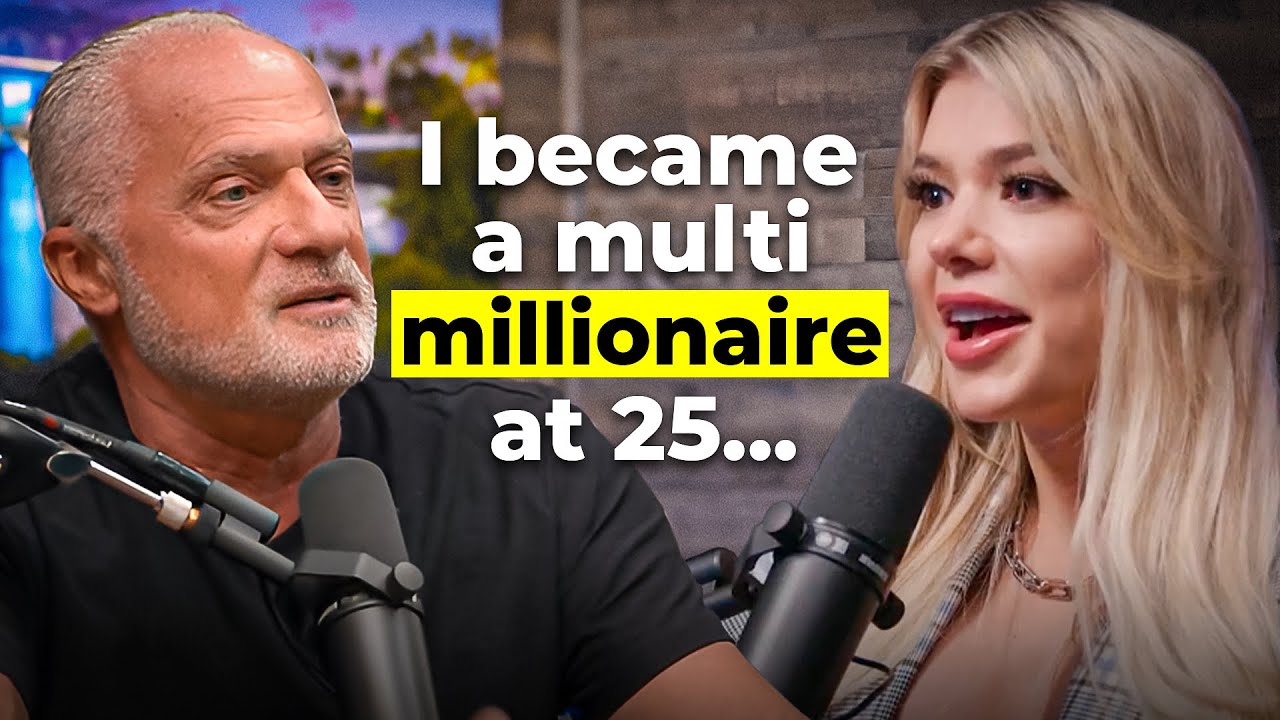
if you hit That subscribe button. Go ahead and do that right now. Now, let's get into this episode. Hannah, so awesome to have you here. When I was putting together all of the research for this show, I was I was getting more and more excited and learning all about you. And I found out that you were a millionaire by 25, multi-millionaire at 27. You're 28 now. You're crushing it. Um, you've done heaps of big deals, multiple companies. For anyone who's not familiar with you Yet, give us a bit of a quick rundown. Give us the
context of your life. How did you get to where you are? Yeah, thank you so much for having me and coming all the way from Australia. So nice to finally meet you in person. And uh you know it was just a journey of transformation and a relentless drive. And there were so many times throughout my life where I just wanted to give up and didn't see a light at the end of the tunnel. Um but I just kept going and I Just kept learning and growing and using resources like books and YouTube University and uh
all these different you know technological things that we have. the information's at our fingertips to just keep inspiring me to to push on. So, um, yeah, I think, you know, coming from a family that wasn't entrepreneurial, didn't have a lot of money, and had a very scarcity mindset and was very much driven from fear, uh, I had it programmed into me that I one, I wanted more, um, but also, you know, I was afraid for a long time. And so I just continued to push myself to have the courage to take action even though I
was terrified of of taking that action. And you know, eventually you just learn from your mistakes. And I made a lot of mistakes and I've lost a lot of money and I've lost um relationships and partnerships and lots of tears. But here we are today and I've been slowly but surely transitioning and creating a life That I'm like super super excited to wake up to every single day. I love that. the loss of relationships, the loss of, you know, the money, things like this. Is was this a a choice by you or is this a
is this the sacrifice that had to be made or like what was the backstory in there? It usually ended up being a choice. Um I think I wanted success so bad and I was so afraid of not having money to take care of myself and I knew that, you know, Prince Charming was coming to save me. Like I needed to I didn't have a a father figure really in my life. So, I knew I had to support myself and take care of myself. Um, but one thing that a mentor told me when he's an energetic
intelligence coach, which people think that's silly, but it's I think it's one of the most important things in the world. Uh, he told me if just strive for 90% of your life to feel good because 10%'s going to suck. you're going to be Miserable, sad, there's going to be loss, there's going to be money loss, uh, you know, family loss, death loss, relationship loss, all these things, health issues. But if you can get a 90% in any class, that's an A. And if you know that you lived your life where 90% of your days were
happy and you felt good, then you know you lived your best life. And so when I heard that, it was such a simple thing, but it really transitioned the way I looked at Everything. And I started to do, he calls them, energy audits on everything that I was doing and the people that I was around and the work that I was involved in. And I started to really pause and be like, am I in flow with this person? like do I feel creative and do I feel energized and joyful and I'm in my zone or
or with what I'm doing in my work or with um my health and what I you know when I look in the mirror and all these types of things or am I in Like the red or the yellow zone which is where most people live where it's a state of stress or anxiety or anger or fear and I started to realize at that time in my life and that was the transformational moment for me I was 25 I believe I was when I had that coach. So it's been a few years and I realized I
wasn't in a good relationship. Every time I was with the person or around the person that I was engaged to, I did not feel good and I Had to leave that relationship and make that hard decision. Um I wasn't doing I was I was building businesses and doing work because I was just chasing the money. I was just like, well, so and so is doing good here or I think I should do this over here. And I wasn't following the intuition inside of me of what actually is my unique gift. What actually brings me joy
and makes me feel energized and what is something that I can do from a place of love and creation Instead of a place of fear and scarcity. So if if somebody wants to do this energy order, I I like this because I think this is probably something I would do just unconsciously like just sort of quickly like if I'm in environments where I'm like I you can feel it internally and I was actually having a conversation yesterday with Andy we Andy Andy Andy Andy I can't last name have a big conversation about this and we're
like um you know like in this space Especially when people are wanting to rise and create their own sort of personal brands there's there's two types of people. There's the people who are like doing it for the wrong reasons and the people who are doing it for just being authentic and genuine want to serve and make an impact. And when you're around people that are got bad intentions, you can feel it internally. You can just be like, there's something up. And one of my mentors, he tells me, He's like, it doesn't matter about the skills
you can learn. He's like, if you're trying to become the best salesperson, he's like, you need do 90% of your training needs to be not on the skills. It needs to actually be on embodying like self-confidence because self-confidence will ripple into another person like your who you are on the inside will show up vibrationally you know and so how do we do like say this energy Audit I really like this so like is there a framework is there something to this where someone listening to this go this is great I got to energy audit my
life how do we do this so when I was first building the habit I set alarms on my phone every hour and it just said how do I feel and it would just go off cuz you know we go a million miles an hour throughout our day. Like I don't even my um I have an eating coach cuz I struggle with binge eating and all that stuff. But anyway, she tells me like to you got to slow down the train. You know, we're on a train going 100 miles an hour and you got to slow
down the train in order for you to have any sort of real conscious control over your actions. Um and so that energy audit framework of setting the alarm every hour and then you just start to think about it. I started to set the alarms more um not so often as I started to do it. But when you set the alarm every hour, you pause, You take one minute and you think, "What am I doing right now? How do I feel on a scale of 1 to 10? How do I feel?" And then you get to
start to track. So 10 would be just like love, peace, gratitude, clear, I'm assuming, in flow. Okay. And one would be angry, stress, sad, any negative negative emotion. Yeah. Yeah. So, it's green zone. You know, 10 is green zone. You're Michael Jordan hitting every basket. You're throwing and it looks easy as heck and Time is flying, time is passing quickly. Um, you feel good, you feel energized, you feel alive, you feel like you're in your your zone. And red, yellow would be that middle ground, like you're kind of maybe bored, you're kind of a little
stressed out, uh, you're a little maybe frustrated, impatient, things like that. And then red would be like, I'm depressed. I'm miserable. I'm having an anxiety attack. I'm extremely angry. I'm completely lost. And so you just kind of Start to gauge where you're at. What are you doing? What activity creates that feeling? Is that what you're sort of looking at? Like sinking like what's creating this and how can I eliminate that? Yep. And you can do that with with work, too. And Dan Martell teaches the time audit where in his book, Buy Back Your Time. This
is different than a little bit different than energy, but you can break it into, you know, what do I love and what am I great at? What do I Love and I'm not great at? What do I what am I great at but I don't love? And what am I not great at and I don't love? And then that's how you start to delegate your tasks throughout your day from a, you know, entrepreneurial perspective, a little bit more tactical. But the energy audit is really just overall in your life. What are you doing and who
are you doing it with that makes you feel good or bad? So I I heard in your story as well that So growing up your family you know they grew up you it sounds like your mom dad did the best they could with everything they had. Dad worked in the porn shop, mom worked at was working in a store couldn't afford air conditioning so you growing up in like super hot um houses and then 25 you're a millionaire. Like I've worked with a lot of people and the the gap from having to I was I
forget who I was telling the other day like you've learned a lot of things like what What it is. I'm like you still be honest for so long my life I was I feel like I was in reverse and I had to just put the car in neutral first before I went forward. And and I think a lot of people out there are trying to learn the next thing that's because they feel stuck or they're like well because of my life I'm like this I haven't learned what I need to learn yet. quite often it's
about unlearning what who we've actually been and getting these weeds out. Um so I Know if you grew up in that kind of household you said before like you know more scarcity living out of fear but then if someone was to look at you be like but how did you go from that to just you know millionaire at 25 freaking crushing it you someone would look at you and think that you've grown up in wealth. So what how does somebody go from this mindset of you know I don't want to say broken but you said
you were struggling at 21 like how does somebody Go from that like emotionally sort of like suffering sometimes to crushing it right 25 like what what is this gap what is this how do we emotionally sort of move through that kind know that I think it's just being relentless in the pursuit of your dreams and I know that's cheesy but it's real And I had this almost uh delusional belief in myself, like Adam Sandler says, a delusional belief in myself that I had the potential to Create whatever life I wanted to create. You've always had
that. Mhm. I was afraid. I always had doubt and fear. It wasn't like, oh yeah, I'm for sure going to, you know, do this and do that. I was always afraid and I came from a place of fear. But the fear and the pain served as a gift for me for so many years. And I believe that people always try to run from their pain. But I think that we should really pay attention to the pain and really accept it and analyze it Because in your pain lies a gift. And like your pain is always
trying to tell you a message. And I'm really grateful for everything that happened in my life. And and I I don't like, you know, trauma comparison because there's a million people that have it way way worse than I could have ever had it. And I didn't have, you know, I had a pretty normal life. We had lower income and and it wasn't um you know, a super healthy marriage and and relationship and stuff Like that, but it wasn't like I was without food and water and you know, how a lot of people have it in
the world. But I I uh I just never gave up. And I knew that there was no other option but to just keep going and to figure it out. And so I just kept going and tried to figure it out because I didn't have a plan B. And um you know I I was very very I I think I had a chip on my shoulder. I definitely had a chip on my Shoulder. Most most successful people do. I remember I was I used to do Muay Thai fighting. So, I kind of grew up in a
boxing gym. And I remember one of my, you know, I I kind of call him my mentor, even though he told me all the wrong things, but he said to me one time, he's like, "Morgan, some of the most successful people in the planet and some of the most successful fighters actually have a chip on their shoulder." So, he's like, "If you're pissed off at Someone or something," he's like, "Use it. Bring it into the ring." Y and um I think my my early years was definitely sort of prove something. For sure. Yeah. Same. I
felt so worthless and so unworthy and so unlovable and such a burden for so long that I had to prove to myself that I wasn't. And because I felt so worthless, I created the strategy of overachievement and success to try to make myself feel worthy of life or love. Were you doing it for yourself or someone else? I was doing it for myself because I wanted to take care of myself. I wanted to have a I wanted to have a life that I actually was excited to wake up to. And fortunately in um you know
high school I had a couple very wealthy friends and I got to see the other side. I got to see healthy marriage. I got to see yachts and boats and money and like there's no scarcity mindset about money and I got to see beautiful uh family Environments and healthy people and beautiful phys physically healthy people and um immense wealth and so I was so inspired by that that I just was like I I can do that. I can do this and I got to go get that. and you know re researching that's kind of how
I got into real estate is I would research how to build wealth and it was like 90% of the world's millionaires get there through real estate and entrepreneurship. So I'm like all right I'm getting my real estate license on my 18th birthday and I'm going to be an entrepreneur and you know I went into corporate America for a little bit because that fear was still there and that's what everyone else was telling you to do is go get a degree, get a job, save your money and as Robert Kiosaki says that's just not the formula
for success. That's the formula for slavery and freedom was all I ever wanted. Yeah. Okay. So, let's say the woman Listening to this or watching this who is inspired by your story and wants to replicate something like yours. They're a big dreamer, they're a hustler, they're ambitious, uh but for whatever reason they're either at a standstill, they can't see the next 100 feet in front of them and they want to replicate your success. Where do they start? I mean, I always say that if you're at a job, then start a side hustle. If you already
have a job and you have some Sort of payroll or, you know, salary or W2, whatever, start a side hustle and start to learn sales and learn communication and learn public speaking. I think those are the I mean sales is the number one trait that anybody could possibly learn because then you will always be able to make money for yourself because there's always products to be sold and especially in a world of technology where even engineering and you know information is cheap now where It used to be valuable now communication sales and um th those
soft skills emotional intelligence and those types of things are the most important. So, um, educate yourself, read books, get your emotional intelligence in check. Make sure you heal like the trauma that's within within us and really understand you are not your thoughts and you are not your feelings and these things kind of run through you, but you you aren't them and don't let those Control you because those are just bricks on your head that are holding you down and it's really hard to get anywhere if you have all those limiting beliefs. And I think, you
know, everything is up here in our mind. Yeah. And if you can master the mind and you can master your emotions and your thoughts, not controlling them, but master how to how to live with them inside of you and not be them, then everything will open up to you and your Potential be unlimited. Um, because the resources are out there and the knowledge is out there. So, I think it really just comes down to the internal roadblocks that we have. What usually happens I I see people, we don't live in a world of lack of
information at the moment. Like there's every man and his dog has a podcast. There's podcasts everywhere. There's books everywhere. YouTube University you called it. Like there's so much information out there That we've got access to in the last decade. Uh and I think it's only getting more and more. But what I see there's a lack of implementation. Like people can know it all and they can know the information but they don't do it. And I think the main reason is fears. Obviously there's, you know, six major actually rooted fears that we all try to avoid.
We all have at least one of them. And I want to sort of try to understand how you developed the strategy to push Through that because there I know there would definitely be something that was either frightening you to some degree to get out there in the bad world and speak to especially to real estate. one of the most kind of cutthroat industries. Like I know in Australia it's quite it's got a pretty bad rap. The thing like if people in real estate I don't know what it's like out here but if you're a real
estate agent in Australia um most people don't like them. It's very like we don't Like agents. I I personally I don't care but people who have had to deal with them it's like they've got that that rap. Uh and it's probably like I'm just making this number up but I would say probably at least about a 90% dominated industry by men as well. So, it sounds like you picked something that was probably on paper probably one of the tougher industries for you to get into. Here you are, a young woman getting into it, ambitious, surrounded
by Is it Mostly men out here as well? Yeah. Well, and I'm in commercial real estate mostly. So, is it all? Yeah. Mostly all. So, how did you I want to I want to understand this. So, how did you sort of what were the biggest challenges you went through once you started in your career going out there when most people are meant to be they're expecting a man to come and sell to them and then now here you are. Did you I'm imagining did you face kickback, rejection? Did you Have to try to prove yourself
more or was it easier and and how did you sort of move through that and and handle the thoughts in your head that might have been creeping in saying like well who are you to do there sir? Yeah, I think all of our greatest strengths are also our greatest weaknesses and it can be you can you can use your weakness as your strength and so that's what I did when I went into it. I was in engineering school all men. I went into Commercial real estate all men and not only all men all older men
like over 50 who have been in the game for decades. And um but I knew that like I I'm not a man and I'm also not old. So, I'm just going to be who I am and I'm going to be authentic and true to myself and I'm going to work harder and better and with more integrity and service and communication than anybody else. And I did that. And so, at 18 years old, I got my license. I held an open house that a Old man broker had uh you know, he had the listing and I
asked if I could do an open house at at the listing. And one person showed up to the open house 3 hours into it. And I was sitting there in the middle of summer in Arizona and 120° outside. So, nobody was out looking for houses. And that was a guy that ended up listing a $1.1 million commercial property with me the first week I had my license. That was your first win. Yeah. Wow. Yeah. And so, and Of you know, and the rejection and the push back was my broker said I didn't know what I
was doing. I was a brand new lency. I couldn't do commercial real estate. They're telling you this before you had had the winner or after. No, I told them. I was like, "Hey, I met somebody that has a commercial listing and I want to see if I can help them sell it." And they were like, "No, no, no, no, no." And I was me and I was like, "Okay, how about yes, and how About I listed anyway and how about you can go kick rocks, basically." And so, um, you know, not I did it in
a nice nice way, but ultimately I got the listing and they said it wasn't worth a penny over 400,000 and I was like, I know I'm not going to go tell this client that I'm not listing it for more than 400,000 and he wants 1.1 million. So, I told him I'm going to list it for 1.1 million and I sold it for 1.1 million and I had it on contract in two Weeks. And so just pushing back like be relentless and go after what you really want and don't just be a pushover and don't take
rejection or don't take a no and just like okay like life is always going to push against you. It's the law of physics. Any any uh action there's an equal and opposite reaction. So if you want to go for something you're going to get an equal amount of push back for as hard as you're going after it. And You're just not going to get very far if you take I mean honestly the more push back I get and the more people tell me I can't and the more rejection I have the more it just makes
me want to do it. This is really fascinating. I've never thought about it like that in the laws of you know physics. So okay. So if I understand that correctly. So what you're saying is let's say Sally who's watching this and she's like okay Hannah I get I I need to get out of there. I Get into sales get into communication. Maybe I could start in real estate cuz I would also agree. If I was to start again and I had to work, I would do real estate cuz it's it's hustle. It's and it's it's
the closest thing to your own business. You build it like your own business, right? It's like you go, market yourself, sell, communicate. Um, so you're saying so once we go out there and we're pursuing something hard, we're going to be met with the equal level of Desire we're giving it in kickback. So in other words, your desire when you're going out there, this is what this is why the people are saying to you, you can't do this. Is that what you're referring to? Yeah. This is so fascinating because most people see that and then they
go, "Oh, well shit." You know, maybe they're right. Yeah. If you just know that the resistance is part of the equation of success, then it doesn't become so stressful and it doesn't Become so annoying because it's just if I push this microphone, it's going to push me back. I know that when I push it. And so if you know if I go the bigger my dreams are and the bigger I want to build and the more I want to create, the more resistance I'm going to have. That's just part of the process. That's just physics.
I push the table, the the table pushes me. Yeah. And so when I I sold time share in Hawaii when I had a midlife crisis at 21 and sold Everything and moved to Hawaii, that's a whole another story. But um anyway, and I did that was the only sales training I've ever had in my life. It was like a It's quite cutthroat, isn't it? Is it kind of like lock the doors? Leave is pretty wild. It was horrible. Yeah. Yeah. And but the sales training was a few weeks and of actual like sales training. I
was just kind of a natural I'm just a natural sales person, I Guess, just because I I don't know. I I'm energetic and I like people and I'm honest and I do what I say I'm going to do and you know I don't think sales is that hard. But um they said that the hardest thing in time share is that even if you're a top producer, it's like a 90% rejection rate even at the top producers, right? So you're dealing with rejection for your job. It's no, no, no, no, no, no, no, no. when you're
putting all your time and energy knowing that Nine out of 10, and that statistic isn't accurate, but a high percentage, let's just say nine out of 10, is going to be that that person's going to tell you no. But you still have to show up your best and you still have to put on, you know, whatever your your your best show and your best shot and spend 90 minutes with these people even though, you know, the odds are that they're going to say no. So, where does the confidence come from? Because I I really want
the person who's Cuz I remember when I first got into sales and you get your first few nos and it's it's like the best time to make another sale is right after you just close somebody because you've got that recency bias of like confidence, excited, but it can also play against you if you just had a no no all day. But you've got to like shake it up cuz this next one could be a yes, but you're so you're feeling so defeated. How can we like confidently actually Like hack our mind and like how do
you get into that zone and not let your past failures actually control how you're feeling in the current state? I'll tell you right now and this is what they shared. So if you know that not let's say if you know that it's going to take nine nos to get to one yes. Then at that one yes you're going to make $100,000. Then you know every single handshake is $10,000. Yeah, regardless Of what they say. So, if you just know that that resistance is part of the equation and that every handshake is $10,000, whether they say
yes or no, then you can show up without being afraid of the rejection because, you know, the rejection is just a statistic to get to the yes. And so, that's how I showed up every day. And then I wasn't I didn't care if they said no because I just knew I was one closer to the yes. And then I could look at my stats. I'm Like, okay, well now every 10 yet 10 people I tour, two say yes. So now every handshake is worth a little bit more. And then you just start to get a
little bit better. But even if you're the best and you still get all these nos and you're doing well and you know that's part of the process, then you don't take it personally. It doesn't affect your energy. It's so funny because that's exactly what I did. Um I started in network marketing which is a similar Horrible industry to start in. Yeah. Those are who are are frowned upon here. Yeah. Right. Yeah. And um so it it was similar. It was like 9 out of 10. And in the beginning it was so hard. I think in
my first year I enrolled maybe like like eight people and one my one of them was my girlfriend at the time. Wow. Like seven people. Your mom and your girlfriend? Yeah. I know. It took me three years to enroll my mom. Oh god. And I had to pay half of her back. Right. Like that's how bad I was at this. I couldn't even convince my family. And but I remember when I started to play the game on it and I worked out I forget the exact number now but I worked out as okay if one
person's worth x amount of dollars and and I worked out that every no was like say 50 bucks and I literally started to play a game with it and I would focus on instead of the outcome because sometimes we can't actually control the outcome But we can always control our output and I knew that every single day I might not get a yes today but I can control how many people I talk to today and just by law of numbers it's it's going to figure itself out And so what I start to do was this.
If I would say if someone was like, "No, I'm not into it." I'd say, "Hey, thanks anyway. I just made 50 bucks." And sometimes it's like ghosted after that. Uh but I turned a few people around from that because I like what do You mean? I'm like, "Well, I get paid 50 bucks every time actually someone says no." And I was able to turn people around into it to go, whoa, so tell me more. So you'll get paid when someone says no. Yeah. Essentially. and I would be able to turn people in and reframe because
a lot of people didn't get into it because they were like why I don't want to get rejected and that's what I found that people were saying no as a fear-based rejection because they were Afraid and I'm like no no I helped them reframe it immediately and enrolled them into the business. So that was my little hack. Love it. Um but I I want to touch on this resistance thing more cuz this is so good cuz I was going to ask you like where's the confidence like really come from? I think sort of understanding just
the nature of the game would create confidence because confidence usually comes from lack of knowing. Yeah. Yeah. Well, and also I think a big thing with Confidence is we don't rise to the level of our expectations, we fall to the level of our training. And so if you are trained and you're prepared and you are, you know, like if you are ready to play the game, then you're going to be confident because you know what you're talking about and you know how to play and you know how to show up. Like back to Michael Jordan,
he was confident because he knew how to play the game. He was he was trained. He was prepared. He Trained he outtrained everybody else in the world. And so I think that's a big piece of it as well. And then also the mental piece of rejection or embarrassment. And I think there's a statistic that shows not a statistic somebody shared that they say that um uh the fear of failure is everybody's greatest fear. He challenged that to say it's not actually the fear of failure. It's the fear of because uh it's not the fear of
failure because If you go try to get something that you already don't have, it's not changing your life because you already don't have it. You know, like if you go to a bar and you're with all your guy friends and and one of the guys is like, "Oh, I like that girl. That girl's hot over there." And you're like, "Oh, go, you know, ask her out." Well, if he was afraid of failure, it wouldn't matter because he he's already doing great at not having her, right? It's the fear of Embarrassment. That is people's greatest fear.
Yeah. And so that's what holds people back because they don't want to be embarrassed in front of the public or their parents or their family or their friends or their spouse. They don't want to be embarrassed. It's not that they're afraid to fail. And so when you can let go of that like fear of embarrassment and work on on that, that's when you can really start to break through because Who cares? Okay, if you mess up, okay, if you if someone thinks you're stupid or someone talks bad about you or someone thinks you're who cares?
like focus on your life and what you want and what makes you feel good and and you're going to make mistakes along the way. You're going to fail. You I've I've lost millions of dollars on stupid mistakes. But that's wisdom that you never lose. And if you are authentic about it and you're open about it, then it loses its Power because it's only becomes shameful when you believe you are bad or you are dumb or you are incapable and usually you feel that way because you're pretending to be something else to other people. Yeah. So,
you'd sort of just have like a neutral approach to going out to going like, "Well, I've got nothing to lose, everything to gain." And even if I got embarrassed myself, then I don't care cuz at least I'm trying. Yeah. And I just say I'm Embarrassed. Yeah. Like that was stupid. I feel really embarrassed. Like I feel like an idiot. And when you I like I I got a nose job when I was 18 years old. I was so insecure my whole childhood. I was so insecure. My brother would throw me to the ground saying tip
a cow. He would grab my fat and leave bruises on my body. I would you get drowned in the pool like all the the I don't I wouldn't say this is all the big brother stuff but I got all that big brother stuff. I Have a younger sister. Yeah. And you know for me I was they were six and eight years older than me and so I was like thinking I was going to die every day. I was terrified for my life and they were laughing their asses off and uh I was so insecure. So
I thought from a child I was a fat cow and I was not wanted and I was unworthy and I was ugly as and I was stupid and I was not going to be my brother told me I would Never amount to anything and um you know I remember screaming at him I'm going to be a millionaire I'll show you and he was like you're never going to be anything and uh anyway so I remember all these memories but those all drove me to do something great and uh um not rely on other people to
make that greatness happen. But I was so insecure. And so as soon as I turned 18, I had saved up some money um and I went and got a nose job like as soon as I graduated high school. And I was so insec I was so embarrassed or like ashamed that I did that. But I was more ashamed before because I wouldn't be on photos and I felt like I was so ugly and I didn't want to socialize and all these things. But um it held so much power over me because I wasn't open about
the fact that I got a nose job. If if I met anybody new, I would never tell them, you know, like I would never think I Would have been on a podcast be like, "Oh yeah, I got a nose job when I was 18." But it it held so much power over me because I was ashamed of it. I was embarrassed by it and I felt like deep down I was still an ugly person that that wasn't a beautiful person that was worthy or whatnot. But as soon as I let go of that and as
soon as I openly said, "Yeah, I got a nose job when I was 18." All of a sudden, like all the pressure and all the shame and all the Embarrassment and all the guilt and all these feelings that I was feeling just went away because it didn't have power over me anymore. You're like not afraid of someone finding out something you're keeping secret. Yeah. Yeah. Um like I think the most freeing way to live life is having no secrets. Uh because I you know I I kind of took this from you if you've ever seen
eight Mile you know the last rap scene where he comes out and he has to go first and he's like I am a Bum. I am white. I do live in a trailer with my mom. I do have this all these things about me. He's like cool now go and tell them something they don't know about me. And and he's like That was it. And he won it right. And I was like I love that so much that scene because it's it's literally facing off with any of your crap. Yeah. And actually accepting that because
it's what I've found is it doesn't matter what we think. It doesn't matter what Other people think of us. It matters what we think other people think of us. And that's a complete controlled internal perception of oursel, our own self-esteem. Um that book psychocybernetics if you ever read that. So he was a he was a plastic surgeon in LA and he would have all these people come to him and want uh plastic surgery done and they would do things like teeny incremental changes 1 to 2 millimeter changes and and then later go out and Become
successful and he's like like we barely did anything to you. How does that create your you know success in the world? So he wrote this whole, you know, sort of book based off it's because it changes how we view ourself and then how we view oursel is how we're going to show up in the world. Um, but one of the things that sort of I guess helped me put to put to bed the the naysayers and all this, I'd always just ask myself if they're playing the game or not. Um, Because you can if you're
on the game of life, like if you watch any Super Bowls this weekend, there's going to be people on the sidelines yelling saying, "You should have done this. you should have done that. Oh, I would do this. I would. And they tell all their friends. Meanwhile, they're sitting in the seats observing the game, but there's the players actually on the field doing it all. And they're the ones that people are talking about. And if people at the Absolute top in the pinnacle can still go out there and have people who never actually made it, tell
them how they should live their life, like if if they're getting it, then you're going to expect it as well. Um, so I would always just sort of ask myself that question. is like who's whose advice am I actually listening to because that's that's usually the ones that like we need to be careful like if I had a mentor say to me Morgan this this is this I'm going to Listen but also I've even got to the point now where I have my own self internal check to be like well if someone says something about
me I can check in enough myself to be like is that actually real or is that their own projection limiting me yep that's so true and I always say never take advice from someone you won't you wouldn't trade trade places with Yeah. broke unhappy people. Yep. Take a broken unhappy people. Yeah. So, it's it's True. And it's so true cuz I know, you know, I could have never um gotten to where I am today and could never get to where I'm going if I didn't do the things that made me feel more confident about myself.
And so, people like, I'm not hiding any of this. I wasn't born like this. I'm a natural brunette. I got my nose done. I have my teeth done. Like, I wear fake eyelashes. is like I do all the things not to try to be something that I'm not but because it Makes me feel safe safer to show up my best and it has nothing to do with like other people can judge me for for it or not for it or whatever because everybody's different. Everybody's going to judge you either way. They're either going to say
you're a fake or you're ugly like whatever, you know? It's like who cares? But it makes me feel better. Yeah. And it allows me to have a podcast and to to go on stage and to do these other things. And it's Not to encourage it or say it's right or wrong or to say that this is one standard. It's just what makes me feel better about myself and my own skin. And if you don't feel good about yourself and you don't respect yourself and you don't look up to yourself and you don't love yourself, you're
never going to achieve anything in your life. That's great. Like you're never you're not going to live up to your highest potential. How can how can someone start To love themselves more? Like cuz I I think women are very hard on themselves. Men are not so much Well, it's different what I've seen actually. Women are quite hard on themselves, but they're more open about it. Men are also very hard on themselves, but it's so suppressed where they think they're not hard on themselves. Um, but if I work with a guy for a while and we
unpack the onion layer, it the comes out where it's like, "Oh, actually, yeah, I feel like I'm I'm worthless. I'm not good. I'm this. I'm embarrassed." but it's so suppressed by the the male ego or the work ethic or or whatever and they sort of push it down more. So, I would say they're both sort of somewhat struggle, but it seems like more women are harder on themselves because I think they're just they talk about it more. So, how how can someone start to improve their own self-esteem or their self- loveve and as they're going
through this Journey? Oh my gosh, you have 10 years to go go down this rabbit hole. Um, I've been working on this a lot and that's been the biggest part of my transformation is you can't force your you can't hate yourself into change. You can't guilt yourself into loving yourself. You can't shame your way into transformation. It has to come from love. And until you love yourself, you will never be able to you'll never be able to be happy and Fulfilled and have a life of connection and love and have healthy relationships and have immense
wealth and freedom and all and all these things because it all is love. Like love is the root of everything in life. And for me, a lot of the practice started with I am not my thoughts and I am not my feelings. So I had all these programmed thoughts in my head that I've been hearing and thinking and telling myself for as long as I can remember. You're ugly. You're fat. You're stupid. You're worthless. You're not capable. You can't do it. Nobody cares about you. All these things, right? And so I believed like my nervous
system believed all of those things were to be true because these thoughts were coming through my brain. When I was able to start shifting that and starting to come from a place of compassion was when I learned I am not my thoughts. It's not I think therefore I am. It's I am Therefore I think. And you can't be something that you can observe. And so when I started the meditation practice, I realized that I could observe my thoughts. I could watch these thoughts kind of flutter through my brain. And so I I am is the
observer. Like that's your soul. Yeah. Okay. Right. The lizard brain, which is a survival brain that's been wired and programmed to survive for millions of years, is the thoughts. That's not you. That's just your fight orflight survival brain. And it's been programmed from generations and generations and generations um to put thoughts in your head to survive. And your body has been programmed to put feelings in your gut because your gut's a second brain to survive like I'm hungry or I'm horny or I'm tired or all these things. Your brain and your gut and your body
work together to survive. It doesn't think about love or compassion or growth or Living to your highest potential. That's you as the I am. And so when I started realizing like, okay, I've hated myself my whole life. And it's not I'm not I'm realizing I'm not able to hate my way into the person that I want to be. So I have to I have to flip the script. I have to learn how to love myself. And so that was the first part is really understanding I am not these thoughts. I can observe the thoughts, but
I don't need to let them turn into an emotion And then let that emotion turn into an action. Because if you can stop it at the thought, then you don't let it it doesn't become you. It doesn't turn into the emotion and then the emot emotion doesn't turn into an action. And so I started to wake up in the morning and when I would look in the mirror, I be like, "You're ugly." I would hear that thought. I would recognize the thought like, "Oh, I just had that thought." And then I would say, "I'm so
sorry. I love you. Thank you. Please forgive me. Thank you for getting me here to where I am today. And I'm so grateful for you and I love you so much." And so the nice thing with the body, it with the brain is it'll always go down these rabbit holes of thinking, but as soon as you observe it, you can redirect it instantly. Think of an elephant. Yeah. To what you want it to think about. And so then it just becomes a practice Of how often are you able to observe the thought and not become
the thought, right? Because if you're just your brain's thinking and you're just in in your, you know, daydreaming in this school of thought, then those turn into emotions and those start to manifest into your your nervous system. But if you can immediately be like, "Oh, I just thought this thing. I'm redirecting it to a thought that's in alignment and in Integrity with what I want." then you can redirect your brain more often and you're not judging the thoughts and you're not trying to force them to stop because they'll never stop, but you're recognizing them and
you're redirecting more often into the direction of where you want to go. I love this. So, I I'm This is why I teach everything I teach because even some of my most highest level clients that we work with that make millions of dollars, we still work On mindset and psychology. Um because it's, you know, every new level is a new devil. every every new version of us is going to require a whole sorry every new level we haven't got to yet it's going to require a whole other version of us that we haven't faced off
yet. So, we're going to find new challenges, you know. So, it's it's super important. And we also can't just sit and meditate and think happy thoughts all day, contrary to what a lot of people think out there. I watched The Secret one time, I can manifest, and now I'm a millionaire, right? It doesn't happen. So, you got to marry that up with insane work ethic like you have. So, what are the what's your sort of strategy or philosophy or the angle you took to really stand out like when you really got started, you've become like
you're doing a lot. Like I actually can't even remember all the businesses you have. We was talking about before You started. Like you're in so many things now and you're really taking over. Like what's your sort of strategy to really making sure that people you get people's attention and really standing out and say a crowd crowded marketplace cuz I know people are already thinking that okay but that's all good but coaching saturated but real estate saturated but this industry they create another excuse right? So, how can we get started into this industry or any Industry
and make sure that we're really people know us and we're standing out? Yeah. Uh, the first thing is just outwork other people. Do what you say you're going to do. Answer your phone. Respond to your messages. Follow up. Do the basics. Do the basic You know, it's really not that. So many people, they don't respond. They don't email back. They don't follow up. they don't like, you know, be a good person and uh be honest and be authentic. That Always served me well is I was never I never had commission breath because I was so
insecure. I was such a people pleaser. I sought all my validation from pleasing other people that I was just like I was there to serve. I wasn't trying to get from my clients. I was just there to make my people happy. And then the money came into my banking account. But I wasn't I didn't look at a client like, "Oh, how much can I make out of you?" or "How do I get this Commission check right away?" It was, "How can I solve your problem?" And if you can solve problems that lots of people have
or solve a problem that lots of people have, then the money is infinite there. It's always going to be there if the problems are there. And so solution-based selling is always kind of been my thing. Um, and then the next thing is what is your edge? in a marketplace. So like your unique talking point of the difference. Yeah. And so that was the thing is like what makes me different than my competition? What what made you different? Well, it depends on which business it is. And so okay, let's say let's say in the beginning when
you were crushing it in the early days selling real estate, making a name for yourself. Yeah. What was your difference? So the difference when I first started in commercial real estate when all my competition was, you know, 60-year-old males was that I was Hungry, I was energetic, I was excited, I was positive tone of voice, I was immensely accurate and fast on my follow-up and my follow-through. I was outworking everybody. Everybody was lazy and tired and old and had all their, you know, things. So they they got um complacent and I was the opposite of
that. And so, sure, yeah, some clients I would lose because they thought I didn't know what I was doing or I was too young to know how to manage money or real Estate or I didn't have enough experience or whatever. Some people were like, "Oh my gosh, I actually get to work with a a, you know, a pretty young, energized, hungry, motivated person who's like dedicated to solving my problems. That's a win for me. I I'm excited about this." And so, I leaned in to that and that was my edge. And again, greatest strength is
your greatest weakness, but most people want you to do a good job and have good follow-up. And Um that was enough to be able to set me apart. You know what's funny? So, it's funny that you say that because I often joke with people that I always use this example. So, when we run events, obviously, we know the show up rate average percentages based off if it's a free event or if it's a paid event, how much they had to pay to get in there, all these things. I can I have it down to a
science and I'm usually accurate between 1 to 2%. Wow. It's crazy of show Up to the point where I can go interstate, run an event. So, we literally did it in Sydney uh early this year. I said I'm like, "Okay, I want to put 100 people in the room. So, get a room to fit 100 people." I said, "Great." Cuz I that's the goal I want. Now, I go, "Okay, to get 100 people, I know that only about 25 people, this is crazy, one in four actually do the thing they said they're going to do."
So, I we actually registered over 400 people. Mhm. Now that's psychotic because like what if all 400 people I'm like I've been doing this long enough I know that people actually the average person sucks. Yeah. Like it's crazy. The average this is what you're up against. You want to be successful just show up. And it's like how I started nearly every event. I'm like you guys are incredible because you're part of about the one in four to one in five who actually do the thing that you said you were going to do When you had
a great idea said hey I'm going to go to that event. and you registered. And then the second idea has to come where you go, okay, I'm going to follow through on my original commitment. Most people don't. And it's like, if you want to be successful in this world, really all you need to do is be a little bit better than and you've got a really good fighting chance already. Yeah. Like you're like follow up, make calls, isn't that what, you Know, isn't that what you do? Yeah. But most people just don't do it right.
And it's just mental. You can really just get ahead by just doing a little bit better than what the average person does because the average person is actually doing all. Mhm. Yeah. It's just like here 80,000 people have their real estate license or some crazy number like that. But you know 10% sell any real estate. 10% of that if that and I again I don't know the statistics but it's High. A lot of people have the real estate license and so people like oh it's oversaturated. or same thing. I have a lending company and I
have a real estate brokerage and I sell real estate and I invest in real estate. All of which are highly saturated um markets, but that doesn't that doesn't scare me because I know I'm really good at what I do. There's always room for the best. Yeah. And then you come in like, okay, I actually just had this conversation. one Of my mentors, he's he's, you know, sent a millionaire almost billionaire. And we were having this conversation because I'm, you know, just launching my debt fund right now and I want to scale my lending company nationally,
but I also have my brokerage and I also have my podcast and I also have my own real estate business and I also have my portfolio. So focus is my struggle, right? Like what do I put my energy in and do I let go of this? Do I split my Energy? Who should I hire first? What should my model be? like these are the things that keep me up at night. Um, and it's all super exciting to me, but I'm a textbook visionary and when it comes down to operations and like really putting the strategy
in place, I'm like boring. Next, next idea, you know, ideas person. Yeah. And so, um, but then we were talking about that, what's your edge? And one of the ideas, which I this was just an idea that came up yesterday, But just an example of an edge is, you know, there's people out there that wholesale real estate. They help find the deal, right? And then you pay them a fee for finding the deal. Then there's people out there that do the rehab, the construction company. You you have to hire them and get with them and
find a good crew and all that stuff. Then there's a brokerage that will sell the deal on the retail market on the back end. That's a whole separate company. Then there's the lending to finance the deal. That's a whole separate company. So there's four different companies that is required to buy an asset, renovate the asset, sell the asset. So what if you are the one company? So you're doing all of them that does it all. Yeah. And you're the one-stop shop and you serve real estate investing on a silver platter and you make it something
so complicated and so scary and so difficult easy for people because nobody Does that. And so that's some that's an idea of an edge. It's not revolutionizing any sort of industry or coming up with a new solving a problem. It's solving a problem. Yeah. So that's actually one thing I did want to ask you. So you've got all these companies uh and now you got the podcast world which I know this is a business like creating a successful podcast is like a business. Like we we literally have more of my staff I employ work in
The podcast and media only. Um but this doesn't bring us in money. Like we don't run sponsors. um we've been hit up. I just don't do it. I just want to just straight fire to create the show that I wish I had when I was in school. And so we literally I take money out of profits, invest into this to make it happen. Yeah. Um so I know that like it's it's another business in itself. So you've got so much on your plate. How do you manage your time? Like what is your Productivity secret? Like
how do you manage your life, your time to make sure that you're focusing on the real needle movers? Who, not how. Okay, another Dan Martell. Dan Sullivan. Um, oh, is that Dan Sullivan? Sorry. Yeah, Dan Sullivan. You know how um is buy back your time. Dan Sullivan, too. I think I Dan Martell. Okay. I get them mixed up. Two great D. Um I know I'm joining Dan Sullivan, strategic coach, and I'm so excited. But uh again, another find more Time. Uh but yeah, I you know, when you're when you're just scrappy and you're trying to
build and you're a founder and you're trying to build with very little resources from the ground up, it can be difficult to obviously buy back your time and things like that because when you're getting started, all you have is time and not money. And so you work uh you trade your time for money. you make some money and then that's when you do the audit of your Time energy audit and then you hire the first person that you can to take the things that you don't love and aren't good at off your plate and so
it buys back your time to then go do the things that are your unique gift and abilities. And so I just continue to do that and level up and you know as I grow and scale and my time my calendar is completely filled then I'm like okay let me do another audit. who do I need to hire now to buy back my time? Because I Know when I buy back my time and I focus on my unique gift, more money will come in, but I'm going to hit a plateau if I don't hire that person
and I just keep doing, you know, this calendar that I have built. And so, you just you just keep moving up the levels of the game and you keep hiring the right team members to be able to buy back time for you so you can do what you do best. Yeah. And that uh that very successful mentor of mine that I was talking about Yesterday, we we talked and he said, "What part of the arrow kills the animal?" The end. Yeah. The the spear, the point, the very point. So he goes, "As an entrepreneur, you
have this whole arrow." And when you first start, you're the whole arrow. But over time, you want to move closer and closer and closer and closer until you're only doing activities that are the very very very very tip of the spear. That's a great analogy. Yeah. Okay. And I'm assuming you're you don't really take me for someone who has like all this free time. Like you take me for something that when you do have white space on your calendar, you fill it with something. Is there because I were talking last night with friends about this
actually because they were like we just been working so hard and on Sundays we just like to veg out and watch you know watch movies and I said I get that. I went through a period of seven years Where I didn't have a day off. Um even on my my travel days and you know days I was playing I'd still do some work. I'd do at least two hours you know. Um and then I realized I hit a plateau wasn't getting anywhere. And a mentor said to me he's like why don't you try to take
two days off a week? I'm like what the you talking about? I said, "I need an eighth day in my week. You don't hear me." He's like, "Yeah, but you're not getting eighth day, right? So, get that Out. You've been doing seven days for for 7 years. So, I ain't working. So, why don't we do the exact opposite?" I started taking two days off a week guiltfree and my income started growing. Mhm. And so, I started to create a better relationship now with so my lifestyle is very So, I was saying to Dean Graiozi this
morning, we're having a meeting, right? And he was saying that he he's like if it's not a 10 in my life. So he goes my family my business Family business. I think that's the main things. He's like he goes they're my tens. He's like our businesses is a 10. Family time is a 10. Yeah. My wife my kids is a 10. Anything else? I don't say no. I I don't say yes. I don't play He's like I don't play golf. I don't go to parties. I don't go to the dinner to meet that next person.
He's like none of that None of that matters. I focus on my tens. And I'm like that's funny. I'm Like cuz I I play a lot still. I'm like obviously you're you know 40 years ahead of the game than me or sorry not that long 25 years or so ahead of the game than me. I'm like I still there's different values. So I I will even when I'm over here traveling I've still got play involved and I'm I'm going you know you know so I I make sure that I'm enjoying my day. So I want
to understand like what are your days kind of like? Are you are you like back to back where You're like trying to when you wake up go to sleep trying to get as much done as possible or have you found some sort of other secret to like flow and tap into your inner genius or Yeah. Uh for many many many years most my life it was no days off, no rest for the weary. Yeah. Working as many hours as I possibly can to function every single day and sacrificing all the social life, all the friends,
all the relationships, everything like that. which is one of my Biggest regrets is not building relationships and having fun and things like that. But I don't really regret anything because it led me here today. Moving forward, that's not sustainable for life. Nor is that a life that anybody would want to live. And there is uh there is a sacrifice when you are just getting started out that you got to do because you don't have money to to help with that and you got to you got to grind. But once you're able to start Buying back
your time, you can start really constructing a life that is one that you want to live. And so I just thought, for me, it's family, health, and wealth, relationships, health, and wealth. And so, um, I started prioritizing my health because I realized me being a workaholic and being fat and sick and tired is not conducive to the life I want to live. And so, I started prioritizing I exercise every single day, no matter what. I do one Rest day where I don't do anything except walk outside and stuff like that, but 6 days a week
I exercise and that's in my calendar. So, my schedule now 6:00 to 10:00 a.m. is me time. I'm the exact same. Is it? Nothing's in my diary before 10:00. Yep. Um Yeah. I'm just like it's me time. I I'm slow in the morning. I like to just chill, relax, do my stuff, and then but I can go to like 1:00 a.m. if I want. Yeah. Uh like like nights. Oh, yeah. Well, I can't do five Hours of sleep. No. Yeah. I'll I I like 6:00 to 10. I wake up usually 6. I do my little
morning thing. Journal, meditate, um uh get ready, you know, wake up, make my drink with my lemon water, and take my vitamins. And then I go to the gym, come home, I get ready, listen to my audio book because, you know, it takes me an hour to get ready. And then first meeting starts at 10:00 at earliest. Um but yeah, then I do my day. And then usually I have like a happy hour cuz Relationships is what I love. That's my play. I love dinners and happy hours and they're all usually business related. Um, like
people coming on the show or people I'm doing deals with or whatever just because those are who my friends are. Um, but I usually do that a lot. Probably a little too much. Probably why I'm a little not so lean these days, but um, I do that and then usually I come back home and I I work a little bit more. Um, so and it it es and flows like As you know when I make that next key higher it and get them trained and onboarded usually it'll it'll bring a little bit more free time
on my plate but then it starts to build up again and you got to move closer down that sphere and then you got to make another higher. So there's these times where I'm like a little bit overworked and a little bit of adrenal burnout. But Sundays are my day. Yeah. every Sunday unless I'm traveling and doing Something weird. Um like for a podcast or whatever or on vacation, which I don't really do vacations that don't involve work, but um yeah, Sunday's my day where I don't like to see anybody. I don't like to talk to
anybody. I do get massage day. Yeah. Yeah. And the same thing, my growth started going way higher when I started prioritizing those four hours in the morning for me and for health. Um and then Sundays are really for me. Yeah. And then um you know a Evenings are really like my relationship time and so I just time block for my tens in my life. Yeah, I love it. Okay, so to kind of bring this home, uh let's say to the ladies watching this and any ambitious men as well, we won't leave them out. Um, but
specifically to the women, like the reason why I was really excited to bring you on is because like I was saying to you before we started, it's I've found it harder to find really awesome women crushing it. Um, just cuz In this space there's so much more men. I'm like I want to really bring more women cuz there's so many women just like I think our generation we're definitely in the rise of female entrepreneurs which is just so badass. So, for the ambitious woman who's watching this or listening to this that is still on the
fence and maybe doubts herself or doesn't know her full potential just yet, what's your message to Her? Just get started and take action. And I think uh begin with the end in mind. create the vision of the life you want to live and then slowly put the pieces in place that are going to lead you in that direction of that life and just take action. I love it. Hannah, where can everybody find you, hang out with you, check out your podcast? Where where are you? Yeah, so my show is the Hannah Hammond Show. It's on
uh YouTube, Spotify, Apple, and Then my Instagram is Hannah Bammond. And pretty much all my channels are that same handle. Amazing. All right, so to wrap this up, I got a final question I ask everybody. So, if you were to go back to your 18-year-old self and give her 30 seconds of advice, what would it be? I asked that question, too. It's a good one. It's the best. Um, it's all going to be okay. And no matter how dark things seem and no matter how lost you feel or how Impossible it all seems, it's all
going to be okay. And we're floating on a space rock in the middle of expanding nothingness. And if you just zoom out a little bit, like it's going to work out. And so, uh, just be relentless in the pursuit of your dreams and never give up.