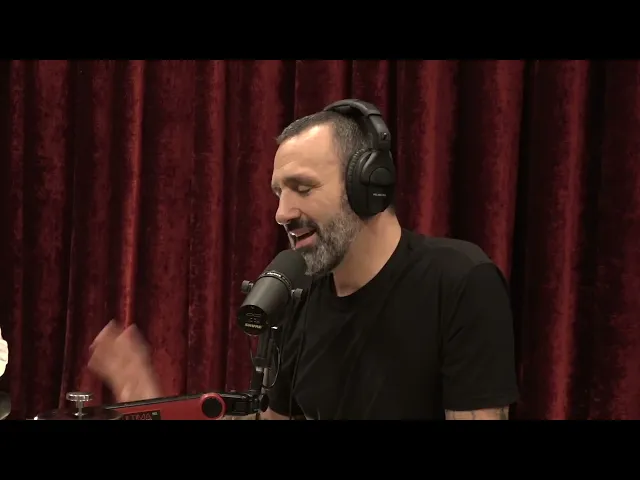
Joe Rogan podcast check it out The Joe Rogan Experience Train by day Joe Rogan podcast by night all day okay Mr dubben good to see you again sir Mr Rogan always always a pleasure introduce your friend this is my uh my friend my client my brother Sheldon Johnson uh I figured we'd do something a little bit different um typically the person sitting to my right is someone that was wrongfully Convicted so I don't want to bury the headline Sheldon is guilty um and I thought it would be a real interesting conversation to learn his um
background learn about his upbringing learned about the crime that he committed and hear the sentence he got which I don't want to to shade it and uh inject my opinion I have a strong one But it's uh pretty astounding how he was treated by the system I think that there's a real interesting twist that happens at his sentencing and um I know I've said this before and it probably sounds repetitive but another miracle sitting to my right just like a a marvelous human being who was basically told by a judge um by an African-American judge
that you don't matter you don't count and I'm going to Throw your life away for a crime in which the victim received two stitches and um on a second offense his first offense being a gun possession charge so I will say this that he received a sentence that far eclipses a sentence um that would be commonly doled out for murder or manslaughter so with that here's Sheldon Sheldon how long you been out for um going on nine months I got out uh May 4th and you were in for 25 25 years and 5 months for
two two stitches Jesus but one one of the things that always struck me about Sheldon um was I didn't know him and I got a call from these two remarkable Attorneys at uh organization called the center for appell litigation Barbara zolot and Allison HT who had been working on his case for a Long time and they called uh me and Derek Hamilton and and said you know we know you're working on some stuff with the Manhattan District Attorney's office we have this case that is sort of hit a snag I want you to take a
look at it and um see if you could help us and I called Barbara back and said I think I think that there's a mistake here because it says that he was sentenced to 50 years um I mean that's no [ __ ] I Could not believe what I was reading and then I read about what Sheldon had accomplished while in prison um and then his earliest date of release was I think 2049 49 and he had already served 25 years so um I was just blown away by the level of accomplishment and the mental
wherewithal that he possess to accomplish what he did while incarcerated and then the path he's Taken in the 8 months since he's been out is um it's it's uh we talk about on these episodes how do you make change happen he's living it and making it happen so I thought it would be just fascinating to go through um like I said his life um how he got to where he was why he got this what his thoughts are and our thoughts are on the sentence he received why that happens too often to people of color
um and I know there's one thing I want to say and then I'm Going to shut up and really let Sheldon talk and you talk um I get I get this a lot why you always bringing up race when you talk about the system and um my my response to that is if you don't talk about how it impacts the system even for people that have been found guilty um it's like um it's like having a conversation about President Biden and ignoring ing the very Obvious apparent cognitive deficiencies he has it would be like talking
about Donald Trump and not recognizing that he seems like an unhinged lunatic it would be like talking about KLA Harris and ignoring that she you know didn't do much to advance Criminal Justice Reform you have to confront it it's just it's there um is it that all people that get wrongfully convicted are people of color no but most of them is it that all people of color get Disperate sentences oh absolutely um so that's why I thought that this is an important conversation to have and getting to know sheld then just thought he uh he
has a remarkable story to tell and a perspective on on his circumstances the system and he's someone that's taken responsibility for what he did and I think is a living example of what Canen happen if we think long and hard about um if someone's life is worth just throwing away and putting Behind uh bars so that they can rot in a dank cell because he would have been 70 years old when he got out way past his life expectancy you know one of the things that's happened through all of our conversations that we've had on
the show is it it highlights how insanely broken the criminal justice system is and how little oversight there is and how few people are looking at these Individual cases and that you can have one judge who does what they did to you and no one's looking no one cares no one pays attention and until someone like you goes in and starts combing over this and then coming up with a strategy for you know to actually apply real Justice or at least get someone out I mean the only way to apply real Justice is to have
a [ __ ] time machine right But it's broken I mean it's it's so broken and it seems so overwhelmed and the root cause of it is never addressed the root cause of I mean I I've said it ad nauseum but I'll say it again where the [ __ ] did we come up with aund and whatever billion dollars to send to Ukraine and we don't have any money to to try to do something about these insanely impoverished crime ridden gang ridden drug ridden Communities we don't do anything we have nothing I mean this is
my my take on this whole make America great again thing you want to make America great again make it so there's less losers make it so that more people have a [ __ ] chance the idea that everyone starts on the same line I I mean I'm not talking about equality of outcome that's not possible but equality of opportunity is possible that's a possible goal at least we could advance that at least we Could do something to you know just just change the course of who knows how many people's lives and we don't do a
[ __ ] thing about it I mean we're looking at each other because we just had we just like had lunch before we came it's like the precise conversation that we had um I told you this is a [ __ ] that gets it oh I know it just makes no sense to me it makes no sense to me and it's not a subject of any presidential debates it's not a subject of anybody Who's running for congress or running for Senate we have to fix this this is a problem that's been going on for decades
and decades back through Jim Crow back all the way to slavery the same same communities and we don't do anything it pull that a little lining everything pull that mic up a little bit yeah just just that's good that's good yeah yeah it's good I mean it's it's wild it really is wild and you know and the Race part of it is a major factor It's a major factor and it's a factor that gets ignored when people start talking about racism systemic racism in country talk about sentencing how come that's not talked about yeah well
that's a vesage of that's a vesage of slavery segregation um Jim Crow red everything exercising your right to a jury trial being punished twice yeah um it's it's hard to know where to pick up because we just had this conversation um but you're you know Look well let let's preface the the episode by saying this we are doing something about it I keep telling you that this this forum keeps paying dividends we are we are making progress we are opening people's minds I'm getting letters from prosecutors I'm getting letters from sheriffs I got a letter
from a uh a sheriff in in Oregon last week and he sent me a um a badge and said I want to show you how committed I am to trying to make change Happen and it was from this show so we're doing it we're addressing it we're making it happen why politicians don't um I I you know what drives someone to want to get into politics these days is for a different psychiatrist no [ __ ] I have no clue what the Allure is but you know like there's such a swirl of uh ego and
power struggle and divided loyalties I can't even wrap my head around it but um you know we're doing it we're helping we got To do it uh grain of sand by grain of sand until we have a sand castle so that's what we're doing so I do think we're making a difference but you know it's crazy because sh Sheldon and I are the same exact age um and we didn't know that until we were on our way down one days apart yep and he he flew when we flew down it was the first time he'd
ever been on an airplane wow what was that like [ __ ] weird Right n it was it was I I actually loved it I was I was very excited I'm kind of like an adrenaline I like the adrenaline rush just the the speed of it and just the whole idea of just you know I I uh I had this analogy in my head when I was up in the clouds and I'm looking down and I said to myself I said I just came from the bows of Hell spending 25 years in prison and now
I'm in the sky above the clouds and the heavens headed to a Destination to um talk about change and to talk about all of the things that brought me me to this place today and you know the conditions in which I grew up and you know how social conditions play a role in the decisions that we make or the lack of achievements or opportunities like Joe just said a couple of minutes ago you know um those opportunities are very important and being able to start that line where everybody is not necessarily Equity like Equitable but
you know everybody has that same opportunity you have a chance you have a chance a real chance well so tell us about your uping upbringing so I'm aota my mother's deaf my father's deaf my sister's deaf my aunt is deaf I grew up in a deaf household what's aota aota is a child of deaf adults that's crazy this is the second podcast in a row I'm doing with someone who's like that Mo mosha Casher who was on yesterday his parents Are death he signs and you know he's he's he had to translate for his mother
his his whole life same with me so as a child growing up uh my mother's also white my grandmother came to America in 1918 from a boat from Sicily um my father is Nigerian he's African so there was this always this contrast where you know I wasn't really sure where I belong that you know um kids are cruel so growing up um you know kids would say oh you're mad you're a half breathed and oh You're adopted and for a long time I kind of suffered as a child with an identity crisis not really knowing
where I fell at on either side what my identity was who I was supposed to be um and and my father I'm also a product of intergenerational incarceration my father was incarcerated when I was young at an early age um he did about 15 years um I was incarcerated my grandfather was incarcerated my great-grandfather was a slave and my son um killed somebody when He was 12 years old um so that there there's this cycle of of of incarceration based on the conditions the social conditions and where I come from I grew up in um
New York City Harlem on the border line between the east side and the west side on Fifth Avenue you hit Fifth Avenue like oh wow you live in a nice place okay um crack era Harlem 80s 90s um you know and I grew up you know uh uh protecting my mother interpreting for my Mother my mother could hardly ever keep a job because of her handicap there was always somebody that would replace her um a lot of people saw my mother as a victim she was a white woman in on 112 Street at lanx Avenue
and all black community um so as a child I grew up protecting my mother so I never really I feel like in hindsight I didn't really have an opportunity to be a child I had to grow up and be a man early in my life in Order to be able to protect my and a lot of people didn't even know that my that that I was that I could hear so there were times where I would be standing there with my mother and like people would just be making allp all type of random comments and
just disrespectful you know just hateful stuff and I would sit there as a kid just kind of like looking up like like dude I can like hear you um so you know um I think uh my life Took a significant turn and um when I was in the fifth grade I was always pretty smart but you know as as being smart and growing up in these neighborhoods know the the school systems are not really equipped to handle the the number of children that's coming through so you had one teacher and like 30 kids um and
me just being who I was I was always pretty smart and when I was finished with my work I would kind of just clown around I had this Teacher um in the fifth grade my math teacher and what he would do was he when you acted out in the classroom he would call you to the front of the classroom he had a stack of rulers today he would be arrested um back then but it was back then it was permissible it was was considered as you know just punishing kids and um and he would call
you to the front of the classroom he would make you stick out your hand and he would put salt he had a big salt shaker that he Kept on his desk and he would sprinkle salt in your palm and he would smack the ruler into your hand and the salt would kind of embed itself into your palm and would kind of have like a little burning sensation so um one day I decided that I was tired of it and he called me to the front of the classroom and I put my hand out and when
he swung I moved my hand and he almost fell over he chased me around the classroom I ran out into the hallway um He chased me into the hallway I grabbed the fire sish off the wall and I sprayed him until he fell that was my reaction too I was like he sound He was cursing and oh man um but long story short uh I sat in the back of the police car for three hours as they determined my fate as a 10-year-old put me in handcuffs and everything um and I had a I had
a counselor at that time and I guess she convinced them to send me to a hospital so they sent me to Mount hospital um Psychiatric unit and I remember them sticking me with a needle uh dorine 10y old kid man just you know just Jesus Christ in a straight jacket being escorted to a hospital they stick me with a needle um and so for months from Mount sa I went to Metropolitan um and I attempted to escape from Metropolitan and they sent me to um a more secure area what's Metropolitan Metropolitan um hospital it's also
a psych why did they send you To a psych ward for that I guess they they you know I was considered as a young black kid who's out of control with behavioral issues and you know I'm not sure exactly the gist of the conversation that took place but um from what I've gathered now in the future is that my mother felt that she would rather see me in a hospital than to see me in a jail because it was either that or they told her that they were going to send me to Spford so I
went through that um just being uh subject to just a whole bunch of different medications melel hdor lithium cotin um and then they transferred me to Pleasantville um from Pleasantville I went to hathorne and you know and I'm going be honest this is where I learned how to become a criminal because prior to that I was just a kid they put me in this place where you know I was around older kids and these kids were really Like about that life there was stuff there was really bad stuff happening if you look up hathor CED
the NS to this day it's been closed for allegations of of sex trafficking and child abuse just just so because we know it because we're from New York but those are juvenile deten like group homes yeah they like Juvenile Detention uh facilities um so they consider me as a person uh they put what they called a pin on you and it's a person of interest a person in need of Of assist distance and they put you in these places and they just kind of just leave you there um so I finally got out of there
I went through a lot there um I was molested by a counselor um and I finally escaped from there and I just went back into the streets at 13 years old and I just was offended for myself I was out in the street so it was three years of that three years of that from one instance where guy trying to hit you with a [ __ ] Roar yes wow and you know I always look back and I see that as a trajectory in my life that just changed everything I went from you know it
it changed me as a person I lost my innocence I felt like after after I left that place I was a darker person um because of the things that I saw and the things that I went through um so I come back and we talking about this is 1988 crack era Harlem you know you got kids 13 14 years old making $1,000 every two three days selling drugs looking out on the corners this was like real stuff you see New Jack City New Jack City was for real back then people who grew up after that
do not understand precrack and post crack oh yeah difference it was wild devastated my community it was wild and how the [ __ ] did that happen how the [ __ ] did that happen when you go Through the whole story of it and you go through like I mean come on man like I had Freeway Ricky Ross on here twice go I ain't got to say he said it so last night we were talking about this and we were talking about like what do we want to accomplish today and last night when we were
uh talking he uh he's like well you know the CIA brought crack into I said you might want to stay away from that but here we are the [ __ ] out of staying away from that man my friend Michael rert rest in peace uh he was the guy who stood in front of the city council on television and exposed it he was a former Los Angeles narcotics officer and he said I personally witnessed the CIA selling drugs in the inner cities of Los Angeles and that was the Freeway Ricky Ross situation where they were
using that money to fund the contr versus as send denas in Nicaragua it's it's really not um as crazy because last night Sheldon's telling me about it And uh I spent a long night into the early morning hours reading some of what you told me to read really not it's really not in dispute that it happened not in dispute at all and and what was what what well I'm going to let Sheldon tell what what what blew me away about it was that not only um was it known how addictive it was was it was
also known how easy it was to reproduce the process and how much cheaper it became yeah not only that the difference Is in sentencing the difference is in sent one to five that's the wildest thing one to five is like a one to five ratio yeah and then you had the Nelson uh the Rockefeller drug uh uh laws that came into effect that required mandatory minimums and and etc etc so when we talk about social conditions and we talk about um situations that were created for the purpose of what you know they separated you know
you separated families you had mothers who and really Grandmothers who had to take care of the children because the mothers were in the streets smoking crack and the fathers were either in the streets using drugs selling drugs or in prison with astronomical sentences and removed from the family structure in totality because of these conditions so so now you have the child just kind of left to fend for itself and we're not even talking about the children who were born that were subject to uh mothers who You know the the crack baby right and that's it's
just I mean the list just goes on and on when we talk about social conditions and we talk about the the long-term effects of of these conditions and how it produces Behavior like Ian pavlof one of my favorite psychologists he talks about stimulus and the response right a classical conditioning so you introduce the uh the stimulus and then you have a a response which equals to the condition that we see and um and You're also talking about what we were talking about earlier you're still dealing with these communities that are still suffering from segregation Jim
and then they throw crack in it like just gasoline on a fire it's crazy because we've had this conversation in the abstract we've had this conversation you know about this very subject and then the more I got to know Sheldon in his story I said well here was someone that not only lived it um and and I want to Make clear one thing that um has always struck me about Sheldon is his vulnerability but also his honesty he's like he'll be the first to tell you out of the gate I did it I I could
have made better choices he's not asking for a Pass based on his conditions what he's always said to me was I just want people to consider how it may have impacted me so and to me you just can't ignore it it doesn't say well Poor Sheldon um I I think that because I guess you know I know him the human being so I I like I trip out when people are like anybody that uh uh murders or robs or does it lock them up and throw away the keave I always feel like well look why
don't you explain to me how you have gotten to know somebody that has been brought up in different conditions than you were how long have you sat and listened to them how long have you Considered how that might have impacted them and compared it to the conditions you grew up in how many people like him have you gotten to know so again I'm I'm trying to walk a fine line between sounding preachy and and just saying let's just consider um the circumstances in which he was born we're both 48 um I don't want to get
into you know my my family you know struggled financially but had different Opportunities um my mom was a school teacher my dad was a Knockaround Brooklyn guy that did what he could do to you know provide for his family and wasn't always great at it but he was a wonderful man but I I can't ignore that I had different opportunities um than Sheldon did so when he gets out and then he arrives back on the street you know I don't think anyone's going to argue with the fact that you're Impacted and molded from 10 to
13 and forward 13 to 18 by who are the people you're around what are the conditions you're born in and I never even went back to school after that so I'm talking about after the fifth grade went back to school maybe for a week when I was 17 to um Washington Irving High School I went to school for a week and I just dropped back out I just saw no purpose in going to school um and I really didn't go back to school and really educate myself Until I went to prison today I'm pursuing a
masters in human services before we get to your Masters why why don't you explain to you get back at 13 so I get back into my community at 13 and I'm just kind of not only am I not only am I like kind trying to uh wean myself from all of the narcotics that have been pumped into me for these last three years I'm talking about I I gained so much weight I went from a slim kid to being fat because of The medications that they was giving so what are they giving you um they
were giving me hdor lithium Thorazine Mel um another and another medication called coent those are the ones that I'm aware of and I'm talking about I was just like heavily sedated just and that's what they do to all the kids and that's what they did to most of the kids yeah they just want to keep them calm and quiet keep them calm and Quiet keep them calm and quiet um and are they giving you any counseling when you're in there are they talk it's superficial it's it's not really it's not you know you got a
bunch of kids who sit around in a group and you know they do a feelings check but the counsel is really the counsel as far as I was concerned the counselors didn't really care because there there yeah there was so much going the counselors was just there for a check there was so Much going on that were that was above and beyond what the counselors could control it was just ridiculous you had the kids going down into white planes breaking into the guards stealing getting high going across the campus having sex with the girls it
was just insane what was going on and I and I you know I learned how to become this person I learned how to survive there I learned you know what it meant to go and steal a Benzy box remember the beny boxes where you could snatch them right out the car people used to hide them I learned how to you know break into a car with the older guys and how to take a beny box and sell it so I learned how to survive there I mean I I've always known how to survive superficially but
from from I just feel like at that point I was put into a place where instead of getting real therapy or real help I was just kind of putting into a place and I was I Was like I was malleable you know I was I was young I was impressionable and this is what I was seeing these became my role models these were the guys that that I respected that I looked up to um they you know they were selling drugs they didn't have a care in the world they had all of the girls and
and and you know ironically prison in my community was almost like a wrer passage right in my community when you went to prison and you came back And you didn't you didn't tell on nobody and you were able to hold it down you know and and word got back to the streets that you you didn't get robbed or you know you didn't get pumped people looked at you differently treated you differently I remember when I was 15 years old um I wanted to go to Riker's Island so bad that I lied to the officer I
got arrested for smoking I I got arrested for smoking weed weed is legal now but back then like weed was a thing Like if they saw you smoking weed that gave them justification to get out stop you take you down to the precin run you for warrants and all kind of other stuff you sat in the bullpens for 3 4 days before you even got out um and I remember lying to the officer he said how old are you I said I'm 16 because I wanted to go to Riker's Island so that I could come
back and be around the older guys and tell them Hey listen I went I still got my sneakers You know and and and and and the girls and everybody just treated you different and and it's really sad but that was a reality um that I was faced with it so I come back I'm 13 and I'm going through this stuff my mother's still struggling um she's on SSD which is social security for disability my father's in prison um and it's just I just I started selling drugs guy offered me an opportunity to Be a lookout
he said listen kid I just need you know I'm G give you $75 a day I just need you to stand on that corner and when you see the police car just yell oh [ __ ] oh [ __ ] that was like a little thing and I would just stand there and eventually I just slowly moved up the ranks and I and I became this person that I feel like I was never meant to be but because of the conditions and because of where I was at and because of what I saw what I
was Exposed to um made me into someone else it turned me into into into this person that I was never meant to be and I just you know just when you're in these these these when you're in this Melting Pot of just Insanity you you you you know you lose sense of What's um what's permissible and what's not and what's impermissible right you know I'm committing crimes and it just doesn't even matter no more um I was never the guy you know to hurt any old people in My era you know when you seen old
people come through you help them with their bags and we had respect for our elders that was something that was always taught to us um now these kids it's just that's a whole another story um but yeah I'm just and and I'm committing and I'm getting arrested for little stupid crimes driving without a license um standing on the corner little small Petty drug cases Um and I'm just I'm just kind of just moving through my life with no purpose but I'm providing for my family my mother doesn't you know at the end of the month
we don't have to worry about just eating grits and cheese no more you know we can eat chicken and Vita shells and cheese you know and and for some people that sign ific you know I can buy a couch now I can buy a real couch that that that's comfortable I can buy a TV for my mother I can you know Set up a cable to where she can watch HBO all of these little small things that I wasn't able to do that she couldn't really do for herself after she paid the rent um was
significant and it made me feel like um I had a purpose it made me feel like a man when in all actuality you know many of the values and the morals that I adopted growing up were just so warped and so Mis place like Scarface the movie right you know you have this oh I don't work I don't Break my balls and my word for nobody right you know and I remember one time a friend of mine he came to pick me up and he was on a run from the cops he had a warrant
out for his arrest he had a call full of drugs and a call full of guns and because I gave him my word I felt like I couldn't back out of the situation nothing bad happened but it's just the idea of sometimes growing up and and adopting these values and these morals and You Begin you begin to take Them on as part of your characteristics and you just you just make you end up making really really bad decisions that can cost you for the rest of your life like my son like when my son when
he when he got into uh he got into a fight with a Asian guy they called him the Columbia Law student killer right um he gets into a fight with this Chinese guy and um this is not to take away anything from that Man's family and you know as a man as his Father I felt some type of way um but the guy goes into to the street and gets hit by a car and he dies but this is how fast your life can change from just one simple mistake from one mistake um and I
just feel like you know a lot of times these conditions are are created and and there's really no there's no Alternatives I had never been on a plane like Josh said like I never even thought about going on a Plane um so I'm growing up in this community um my father father's gone my mother's you know she's deaf I ended up having a son my son was born in 1993 and um that just made things that just exacerbated the issue right so now I'm really you know what am I going to do now you know
I have a son I have someone to look at and despite how many times I said that I was never going to be who my father was my actions were actually setting me up to be exactly who My father was and remove me from my son's life um and in 19 I caught the gun charge that uh that that that triggered the felony that allowed them to be able to sentence me the way that they did in 1994 um I also caught another case at that time I was G I was I was what you
call um giving out consignment on drugs um two people in particular I gave Consignment to and I ended up getting arrested for a case um and when I sent someone to go pick up The money from them they kind of just was like you know whatever I'm not paying him so when I came home um one guy in particular I ran into him with his girlfriend he did you get that case got dismissed right the gun charge no the one that you were away for you got arrested for something you're in jail yes these guys
figure since you're in jail [ __ ] it we're not going to pay him yeah I'm not going to pay him and then the case that you were arrested for got Dismissed got dismissed I got so then you come home so I come home and you know I need my money I I need my money I'm just just is just me being honest this is Miss being straight you know I gave you something and we had an understanding that you were going to pay me and when I came home when I finally located this particular
individual he had his girlfriend with him um and this guy owed me $5,000 for some drug that I had gave Him on consignment I gave him a eighth of eighth of a kilo which is 125 gram of cocaine um and when I saw him he had a bunch of jewelry on he was with his girlfriend she had a bunch of jewelry on and I said hey man where's my money at oh yo I was going to pay you as far as I was concerned his jewelry was we was even so I robbed him and I
took his jury and his girlfriend Happened to be there and um unfortunately she got caught up in the situation I had a bunch of young guys with me and they robbed her as well and he got hit in the head with the gun right here on the side of his head and he got two stitches and they gave me 25 years for that case did you hit him in the head no one of the guys that I was with hit him in the head um and he identified me in a photo array Unbeknownst to me
he identified me in a photo array um this guy you know as far as I was concerned he was in the streets just like I was so right I didn't really understand that you know like I said we go back to morals and values and principles and how warped they can be right in my mind at the time this is a guy who I gave something to he's living an illegal life I'm living in illegal life so as far as I was concerned at that time it was fed game and as I as I Moved
on and I became more mature and I began to re-evaluate myself I realized how wrong that was but that was later on at this time I committed the crime and I just kept moving another guy that I ran into he also owed me some money he owed me $7,000 and it kind of went along the same ways he was selling drugs out of an auto part store he was a Spanish guy um I got word that this is where he was at and he was Selling drugs and I was was going to get my money
and the same circumstances kind of ensued saw him hey what's going on you know um reading in between the lines and outside the margins without really going into all of the details I robbed him because he owed me $7,000 did he get physically hurt no he didn't get touched got roughed up a little bit but there was no physical there was no physical harm Nothing um going back to morals and values and principles right in my mind he was fair game he's selling drugs I'm selling drugs you owe me money I came to take what
you have in that world that was considered as permissible these are one of the rules of something that was permissible in that World um long story short um in December 1997 I get arrested for both cases really for one of them for the uh one with the guy and the girl Um and then the other case drops with the autop par store the guy that I said that was selling drugs out of the autop par store um I am in the process of going to court I'm going back and forth to court I'm on Riker
Island at the time it's just crazy on Rikers Island um that's when The Gangs was involved uh prior to that a year before that I had to got involved with the gangs I was I was blood I was a gang member this where the cut come from On my face I have a bunch of stab marks from just being in those environments and being on rers island and just um Waring with other rival gangs U mostly Latin Kings and inas um my final offer before trial was 23 years which kind of blew me away because
my lawyer kept telling me that my maximum sentence was 25 years if I went to trial so my mind I it just didn't make no sense to me why would I forfeit My rights to an appeal if it's only a two-year difference um I told the judge I would take 15 years right now I acknowledged that I had that I had made some mistakes and I had done some things that that were wrong and I said I'll take 15 years right now he refused to uh accept my plea offer and I went to trial and
then I ended up getting 50 years five Zer and um so they give you 25 for each case is that 25 for each case consecutive um so and I remember um I remember like blowing trial and just not really understanding like what was being there but not like it was like almost surreal and I remember when I went and got sentenced and the judge said 50 years now mind you I I had a black lawyer a black judge and a white prosecutor Um and I remember when he said 50 years he said I he went
into all of these um reasons why he was sentencing me the way that he was sentencing me um there was never no post uh there was never no uh uh they're supposed to do a report prior to your sentencing and it's called a post supervision interview um pre-sentencing in investigation it's called the PSI pre-sentencing Investigation there was never no pre-sentencing investigation there was never no mitigating evidence presented on my behalf to you know highlight why I may have made some of the decisions that I made um and he just called me a men society and
he just he gave me 50 years and I remember when I um when I first got the down state which is a processing facility and they give you what they call is a Time computation sheet and on The time computation sheet gives you all of the numbers like the beginning of your bid how much jail time you have um and I just remember 2049 that's all I kept looking at and I was like 2049 are they [ __ ] serious this is 1998 1999 and I'm trying to do the math and I'm just like 2049
I'm like that's 50 years from now now and I remember going to the Lord Library and um I forget how I get the World Almanac and something just says look up the life expectancy and I look up my life expectancy and as an African-American man my life expectancy at that time was 67 years old and I did the math and I said I'm going to die in prison man I just really believed that I was going to die in prison Um one thing I learned really really quickly when I got to prison was that prison
does two things to you it brings out the best or it brings out the worst and what I saw was I saw individuals who were at their worst and I saw guys who were at their best um the guys who were at their best were guys who were involved in education postsecondary education programs they were running the program they was running the violence groups they was Running the substance abuse groups um and I remember saying to myself I want that and I remember just being involved in so much [ __ ] because I was in
a gang and um I was I was I was top of the food chain I had my own Nation I wasn't just like the random gang member I had a whole nation under me um and I was just in and out the box in and out the box solitary confinement which has been considered as constitutional now um and I remember just having these moments of Reflection and just asking myself like what are you going to do can you spend the next 48 years living like this I said I couldn't do it and I um I
had lost all my privileges they took everything from me I was in Southport at the time which is closed now uh it's a solitary confinement facility in New York state and um I was on a loaf which is also unconstitutional now so the loaf is a a dietary Restriction that they give you it's a chunk of bread and it has cabbage and carrots in it and they give you like a quarter of a cabbage and they give you a cup of milk when they can't take any more of your privileges this is what they would
give you six days out the week on the seventh day you would get a hot meal breakfast lunch and dinner and then it would go back for 21 days they would do this six and one six and one six and one and it was at that moment Where I I really said I have to change my life I have to change my life I I just can't do this um I had a wife I had family still my son was growing up um he was hearing stories about my so-called uh notoriety and um I just
didn't want to I just didn't want to be that dad like I really was looking at myself and really evaluating asking myself like yo what the [ __ ] are you doing I was still I was smoking a lot of Weed at the time I was drinking um jail housee Hooch um and I was at my worst and and I had to real I had to figure out how to get to my best so I decided to when I got out of salitary confinement um I did 42 days on a loaf I I went from
two being 210 pounds to like 168 in like a matter of s months deflated me um and when I got out I made a decision that I was going to walk away and I didn't care about what the Consequences was and I said to myself I've been doing bad for so long I'm going to try to do something good if all else fails I could always go back to doing bad but let me try let me give it a shot um and I ended up getting to school program I got my GED um I left
the gangs alone which was a benefit for them because you know I was what you call an authoritarian I was a rule guy I'm I'm still a rule guy I like rules you know I like rules I like structure I Like things to be a certain way um and it was to their advantage to get rid of me anyway plus I knew a lot of the guys who were at the top why was it to their advantage to get rid of you because I was the type of person who would say you doing that for
what reason n you can't do that the rulle says that you can't do this you can't do this this is what the rules say and I was the rules of the prison or the rules of R of the gang the rules of the streets yeah there Was rules give us a for instance okay so for instance uh I could be in a whole another facility let's say I'm in Green Haven and the guy's in Attica and they want to do something to him because they feel like he's not sharing his proceeds of drugs that he's
bringing into the facility the rule say you can't do that that's his property that's his belongings so I was a rule guy and they just you know it was to their advantage To get me out of the way so when I decided to take a step back they were like yes and it was to my advantage as well um and this was in 2005 so there was no resistance none and at that time this is where a lot of the uh what they call set tripping began uh the the the organization began to implode on
itself the gang organization the gang organization there was a lot of Infighting sets against sets and I was just always against that um and it was time for me to go and I I didn't care whatever the consequences was I was fortunate that there weren't any consequences um but I didn't care what the consequences was I just walked away and then that begins your journey this begins my journey I got into school I got my GED um from there I got involved in um Correspondence courses I started interacting with guys who were teaching art aggression
replacement training and I started to begin to understand how these Concepts Works what's positive visualization is um deep breathing how to remove yourself conflict resolution all of these ideas of of change began to take place with me um substance abuse I stopped smoking weed I stopped smoking cigarettes I was smoking like 30 cigarettes a day I I Mean I'm literally having chest pains from smoking cigarettes and I realized that I wanted to live and the only way that I was going to be able to live and walk out of prison was to remove myself from
these substances I seen so many guys get carried out I seen guys dying not just from just being stabbed or with altercations from officers I seen guys dying from one guy I knew he used to Drink so much hoop ho his his liver failed on one night he died in the cell that night the morning when they came to do that count he was frozen he was stiff as a log but these are the things that I was seeing and I and I really I was really in a situation where I had to ask myself
do I want to go out like that and I didn't want to go out like that tell me about jail housee Hooch how are they making that so there a bunch of Ways that can make it um you could use fruit juice or but a lot of guys use tomato paste tomato paste water and sugar you need a kicker which is like a what they call a um like a mash you would call it a mash they call it a kicker get a plastic bag you put it in a plastic bag you let it blow
up it goes through the process the carbon dioxide process I did the whole I did a whole paper on uh ethanol when I was in Cornell so that I could learn how the Process was um and it's pretty good stuff especially if you distill it but it's bad for you because they has it has a component in it called methane and it goes straight to your brain but like you know in the streets when distillation uh places or facilities they distill it they remove that part of that alcohol the methane but in prison guys just
drink it it's just like I don't give a [ __ ] or you make the fruit juice same thing plastic bag sugar um kicker Mash what is the kicker the kicker is to accelerate the process I know but what is it consist of usually like spoiled fruit uh some spoiled bread with mold on it cuz it it begins the process of fermentation it's like a mash shit's got to be super toxic for you oh super [ __ ] toxic dudes is dropping like flies Man like flies here's the uh when when you hear like going
forward what how Sheldon changed his life and um not just the correspondence courses but um all of these various counseling programs Outreach programs um his connections to the outside world which he'll talk about is that the the impossibly sick [ __ ] twisted horrifically sad irony to all of This is that it took prison to save him and why couldn't he be saved as a kid that's what what what um I am really trying to sort of put energy towards now when you asked him earlier wasn't their Counseling in the group home and you know
if you see what this counseling is like obviously I can't cast aspersions On every counselor in a group Across America but you know I've had people on on you know the podcast with me and I'm listening to their anger management classes right I won't mention who it is but I'm listening to like the anger management class that they take and it's [ __ ] it's on Zoom it's run by a guy that can't [ __ ] turn his camera on and it's like it is um it's it's bedum there's just people screaming Hey man I
can't I can't hear you what the [ __ ] did you just say what you hear not just the anger and the frustration but the guy's inability to control the situation to control the technology let alone giving out um you know real advice real advice and constructive feedback on how different people are he's checking a box this guy to do a job is that happening with everyone it's not happening with everyone but but again the the um just The the Paradox here is that this this insane inhumane sentence um actually saved Shelton um but why
AR weren't there those programs that thought that um implementation in his community to save him as a kid right right and um I don't just take cases you know at the peot center um where I'm the executive director the pr senator for legal justice At cardoo Law School we Get a massive amount of mail um and we get a lot of people calling us to help out on cases I want to help as many people as we can but people that I think can succeed or that we could help succeed when they get out and
you know on paper uh um you can see pretty quickly what somebody has done with their time you know I've sat with people in institutions all over the country where I said what programs are you in and I feel like an idiot asking Because I'd be a [ __ ] puddle on the floor if I I asked him many times how often did you cry how did you extract yourself from the Gang how did you sleep at night with the with the noise Sheldon told me about this thing called a human Harpoon that people make
out of magazines and a sharpened toothbrush can you can you [ __ ] the mind [ __ ] on this you they they stiffen um the pages of a magazine with toothpaste soap water let it dry let it dry so that they could basically work it into a rod you keep on working the paper between your hands and then you attach with soap newspaper a sharpened toothbrush handle at the end of it or what or a bone or a bone from a something that they ate in The mes something that you ate in the mess
and then you're walking past their cell and you're all of a sudden you get [ __ ] stabbed with a harpoon so I'm thinking or TH or have feces thrown on you so I'm trying to like process all of that um and to be able to navigate that hell and come out to this half halfway sane and and I'm just I I'm you know I'm so it like it hurts me deep in my [ __ ] guts to hear that I'm hearing You talk and then I'm thinking this is what it it took to save
you um when I I think about you know he was 10 years old my son's 11 and that um it's it's hard to listen to and yeah it's hard to process that you were able to have that wherewithal to sit a day in solitary confinement let alone 42 days um and so your process when you you decide that you're Going to try to do good like what how difficult was the process of trying to establish an education it was lonely uh I had you know on one side I had the guys who I used to
run with saying the [ __ ] is he doing and then I had the guys who were actually doing good just watching me to see if I was going to crumble or fail or or you know you had a handful of guys that that that come ined me and say yo I applaud you you know I got you man if you need some Help I can help you do this I can help you do that but you know I just I felt like everybody the world was watching including my family because they didn't believe it
up until the point to where I graduated from Cornell my cousin told me she said she said you know when you called me and invited me to the graduation she said I didn't believe it I didn't believe nothing you had told me probably for the last 10 years anything that you said you did until I saw you at That graduation so you know I had family I had everybody just kind of just waiting for me to fail um but I just felt like I was just determined to succeed I just had this I just had
this this energy in my spirit and I just and it was the it was the it was the will to live as far as I'm concerned it was the will to live I I had read when I was in Solitary confinement I read Victor frankl's man search for meaning and one of the things that's that that struck me as being so powerful he says if you have a why then you have a reason to to live and this is a guy who was in a concentration camp during a holocaust and he found a reason to
live he found a reason and I and and I'm sitting there in the cell and I'm asking myself do you have a [ __ ] reason to Live um you know and I think about my family and and that was my reason and I and and I wanted to beat the system and that was my way of beating the system I'm not going to let you [ __ ] kill me and that was my spirit and I know it was only one way for me to accomplish that so like I said I started going to
School I did the correspondence courses I got got um involved in the Cornell prison education program I obtained my associates degree and then I went on to obtain my uh my be uh my bachelor's in Behavioral Science for mercy and but you know in this process I'm you know I'm I'm going through I'm mentoring other young men you know now guys are looking at me and saying hold on wait a minute man this this guy is is on to something I got guys on both sides Now saying yo can you help me um I started
working in the law library I I discovered that I had a knack for complicated things case law and I was helping guys and I was actually helping guys get out of prison um and I started running the programs and I think that's what Pro what programs did so I ran aggression replacement training and how many years in or do you start doing this um about nine years in Eight years in I got arrested in 19 1997 and about 2005 I this is when I started to make my transitions about eight years in um and it
felt good it felt good it felt good to be able to call my family and send them pictures and invite them to these events where they can actually see me change they could see Act ual tangible change it felt good to to for the guys That I knew that were coming to me and asking me for help I was helping guys with their geds I was I became a tutor in the program um and the rewards that I felt you know it it didn't even matter anymore about when I was going to get out right
it was just now about how can I help other people not go through what I went through and wait so long because I feel like I wish I had somebody that would have came along at a at a at a Earlier stage and like he said don't wait till I fall catch me before I fall and that's part of my motto now and some of the work that we do um at the Queens Defenders alternatives to incarceration and this is why I'm so passionate about a lot of the work that I do now um I'm
trying to catch these kids before they fall I I don't want to wait till they're falling um and I want to show them the way and I and I feel Like I'm a credible messenger because when they see me they know that I came from the same place they come from like like like Josh was saying earlier right there's a difference between being qualified and certified right you could read a hundred books about drug uh drug abuse but how qualified are you to really tell somebody who's sick on heroin and they're ready to do anything
that they can for a bag of dope of what you went through you you can't and and And this experience is is priceless you said it way better than I did certified versus qualified and that's why you know I'm just sitting back watching um the work that Sheldon is doing now he's uh what What's your official title at the Queen's Defenders client Advocate and um we just created the the the Yelp we titled it Yelp me and two other brothers that I was incarcerated with formerly Bruce Bryant and Rashad ruhani um we're client Advocates we
run the youth emergent leadership program and we work directly with the district attorneys and the judges at the courts um dealing with the alternative to incarceration program a lot of the young kids that catch the gun charges we bring them into our program um we help them with job Readiness training whether it's oosha training we help them get their geds um we direct Them to different programs like we got a a program called Hood coding and this is also a guy who's previous incarcerated and he teach coding he teaches coding to younger kids inside the
inner cities in the projects like coding is in computer coding like computer coding he teaches coding and and we we get them into our program we help them with their resumes because one of the main things we realize is is that outside of everything else a lot of these kids they they They're impoverished they don't have nothing you know so we want to be able to try to help them with some type of employment right that's number one and then we take them through our program we have a 36 we 10-point program it deals with
conflict resolution um it deals with uh knowing your rights how to have a conversation with an officer or one of the things that I that I take pride in while I was incarcerated I was also in the theater Program uh I played MC Beth um on the stage um I also was on the debate team we debated against Stanford Harvard and Yale on the topic of the future of Automation and we crushed them but one of the things I leared in those in those Arenas is critical thinking and critical analysis right how do you critically
think about a situation and also looking back I realized something about myself is that I did not have a term that that I coin call situational cognizance right as a kid for some reason I feel like I was not able to see the long-term consequences of my behavior it was like a wall there and I think I think a lot of these younger kids are also suffering from the same thing they don't and the system sets you up to to to the system tricks you because you you you you catch these cases and what they
do is they slap you on a wrist right you catch this gun Charge and they say oh no we're just gonna give you six months don't worry about it what they don't tell you is that gun charge is is a pretext now to enhance your sentence when you catch another case so it's almost like a form of entament right and a lot of these kids don't understand that they think that these cases that they're catching are just going to disappear they don't realize that there's a paper trail being established that's being created there's A profile
being created against you and when you reach a certain threshold is a term that I like to say they're going to knock your [ __ ] head off and you're going to find yourself a lot of these kids find themselves in situations where they get 25 years for an assault you remember uh Scared Straight yeah all right um I think the effectiveness of scared straight was because of the Messenger so you're seeing the change right now um and this is not meant to to you know blow Sunshine up your ass because you get plenty of
that and you deserve it but it's it's the I I was in like a situation last time I was here where I felt a little bit hopeless and now I'm I'm more I'm trending toward more hopeful because Bruce Bryan who was on the show is a client Advocate at the Queens Defenders and um I don't wear that as a Feather of my cap that was was just me um it was validation that if I get behind this man and give him new life um do my part in it Lord knows there were others Steve zidan
at CUNY law school um you know um and if it wasn't for in all honesty I I I'm I'm I'm adamant about to this day if it wasn't for Josh and Allison hop actually going to uh and Derek as well Derek Hamilton speaking to the district attorney like we were at a plateau where They just didn't they just was like nah but but I don't want it to be about me at all here's what I wanted to say is that you now are seeing the connections um and so you know legal aid was representing Bruce
there was an army of people so that all believed that he could make change happen and do positive things when he got out so now he's a client advocate of the Queen's Defenders doing this kind kind of work um trying to explain to judges this person don't Let them be another Sheldon Johnson don't let them be another me or Derek Hamilton they deserve counseling they deserve a second chance they deserve to help really be rehabilitated um and then Sheldon comes over and starts working at the queen Defender Queen's Defenders which is it's like the um
you know the appointed counsel for people that can't afford an attorney they're criminal defense lawyers so to watch them out There advocating and trying to change you know hearts and Minds about the community you have to be on the ground doing it and getting in front of people and I I know I said it before um look at the you know I'm very thoughtful and who I bring with me look at this beautiful mind and how he articulates himself and educated himself and you want to tell me uh that this couldn't have happened earlier um
he doesn't need anyone's sympathy and he's not asking for it it's Something I admire quite a bit about him whenever anybody you know he doesn't want poor Sheldon you know how how could you have gone through this and he stops him I've seen him do it right in their tracks listen I did what I just don't know that my life was worth throwing away um but to watch them now on the other side of it the change that we talked about that I'm like how do we change it how do we do it it's starting
to happen Could we use um Jeff Bezos to sit down and and think through how we can build a community center in East New York in Harlem yeah we could the the means are out there to do it all it takes is one person listening to this episode um that tells someone that knows someone and then you know progress is starting to happen and we can just do it on the ground but the reason why I mentioned Scared Straight is because sure I could go in there and talk to These kids they're not going to
[ __ ] listen to me they're just not I I might be um certified but I'm not qualified right I didn't I didn't I can't I could sympathize but I can't empathize you know I go through that talking sometimes like you know to Fighters that I manage right I do it with Shakur Stevenson you know he's like a little brother to me I love him sometimes I feel like he you know the message might be better coming From Jay Prince than it is for me because he's more qualified I try to wrap my head around
what Shakur went through as a kid and growing up in Newark and the circum but he you know I think that there is a disconnect and I have to be big enough to recognize that um and say yeah you know maybe I'm not the right person but you know you're telling me he's not going to inspire and they're doing it they're getting judges to change their mind they're getting Prosecutors to think twice we just got one guy he um he shot at his brother without going into the details of his case he has attempted murder
charge and um we now have him in our program they originally were talking about giving him 15 years he's been in our program for a couple of months we we set him up we helped him get his resume he's he's working towards his GED and he's in the hood coding program um we also have him in an Aggression replacement training program and now the district attorney is considering giving him five years probation so they went from 15 years and and this kid is doing amazing like he's just picking up the coding the guy that I
spoke to he he said that this this kid is just is like a sponge he's just soaking it up so fast but this is just one example of how we kind of level the playing field and create opportunities I think that key You spoke that word you spoke about earlier is is so crucial to the context of this conversation opportunities right how do we create the opport unities for these kids to be able to provide living in New York City ain't no joke man the cost of living is is is ridiculous um so how do
we create these opportunities how do we so now also what we're doing we going to the schools we talking to the teachers we're talking to the teachers and the principles and we Asking them we're not even going to wait till you get to the courtroom we're asking the teachers and the principles who in your classroom do you think needs help which kids in your classroom are the most giving you the most trouble and they give us the names and we go and we talk to them and we try we're getting them involved in our program
um but it's all about opportunity well kids sometimes need to See someone not not sometimes always need to see someone who's done something from a similar situation yeah where they realize like there's a path out of this CU if you don't see a path out of this you just see a path towards doing what the other people in your envir are doing and that's how all human beings react if you're in a bad environment with a bad group of human beings the chances of you going down that same path are extraordinary learn Behavior Yes and
from someone like you they can see this is not a given there's a way to do this there's a way to get out of this and there's a guy who's already gone the wrong way who could say you know what I figured it out and I'm going to help you the difference between someone like you saying it versus some uninspired counselor is massive it's massive and it speaks to you and your character that you want to do this that you've dedicated yourself to doing this that's Where real change comes from that's that's where real help
comes from real help comes from someone as you said who's qualified to do it comes from the same place that you came from and that you can identify because I being able to identify is is is is a critical component like you said like you know this this is is this someone who can identify empathize with what I'm going through where I'm at right now my life um like a lot of the young kids they They're they're involved in in in the gangs um and we have this this this reculturing to teach them because in
many of our communities The Gangs have become a part of the culture like you you have parents who are gang members you got the kids who are in communities and and and and it's just it's it's just saturated with gang culture language dress music food everything else so we trying to extract them out of these places and say okay These this is something that you can do differently we taking them to different places we taking them to HBCU so that they can see what people who look like them look like when they're going to college
this can be you this is some of the take them in the classrooms to meet with the professors uh we have a a financial literacy course where Chase Bank actually works with us and we teach them how to establish credit how to open up a Checking account how to open up a savings account and at the end of that particular uh five week program we actually take them to the bank and we give them $25 so that they can open up their own bank account so they can understand the difference between the money that you
obtain from the streets and the money that you get working legitimately is two different kinds of money you can't appreciate the money that you get from the streets but that Money that you've been working all week for eight hours a day 40 hours a week at the end of the week and you can see that direct deposit when it goes into your account you can take that card and you can actually utilize it to to withdraw your money out the bank that's a big difference Civic engagement you know how how how can some of these
kids feel like they have a voice in their communities when they're not making no decisions in their Communities we go into the rallies we take them to the rallies out of albony um yesterday they went to a rally last week we went to a rally about treatment not jails how to uh set up what they call um diversion Courts for people who have substance abuse problems instead of sending them to prison they need treatment and the money that they save is clear it's clear when you you do the math the money that you save the
it costs almost up to $70,000 to incarcerate one person but then there's the issue of privatized prisons oh that's which is insane that's disturbing it's so disturbing they're using human beings as batteries to generate money that's what it's like yeah we're trying to we're trying to um take the charge out of their battery we're trying to pull the plug out of the wall because you know this is these aren't controversial statistics and I'm not going to start Spewing them but we incarcerate at a rate that is um dwarfs any other Western Country um any other
civilized any anywhere in the world really so in any event I was you know doing a relative comparison so how do we put those privatized prisons at a business you know we have to start you know on the ground and for you know it's almost like a a a rallying cry to myself cuz we get a lot of um not a rallying cry to myself but um the way I got from being a little Less intimidated by the mountain to climb was taking a step back really after the last episode and saying well what have
we done and how have we changed things listen I wasn't born a civil rights lawyer that was working on innocence cases I have a a trial strategy company called DRC we do focus groups mock trials on big cases right try to unfold the thinking um of jurors in a jurisdiction where the case is going to be tried then we make Demonstrative AIDS and we are alleged experts in jury selection and that became a plat I said how can we use this as a platform now that I'm operating the peut center as well so just being
in the boxing industry um speaking to the Jay-Z's team at Rock Nation and Jay-Z and his mom how can we do this and we he has something called the Shan Carter Foundation it's a remarkable it flies way under the radar have you ever heard of it yes all right Do you know what it does not exactly all right so it's kind of um it's kind of remarkable that people know it because of his name and they've heard it but no one really knows like what it does they take children from really from the all over
the country a lot of them are in the tri state area that have difficult circumstances a lot of them come from single family households and they they um not they're not just mentoring them From high school um but they are trying to do some of the things that Sheldon talked about out they do a college tour um it's run by a woman named da Diaz um and um really Gloria Carter and a woman named Miss Archer and I I saw what they were doing and I said if we took these kids and created a fellowship
program where we pay their last year of college and five of them do it every summer and work on wrongful conviction cases at my consulting firm at DRC and Also are a resource to my students who are taking an internship for the pearlmutter center and are working on wrongful conviction cases and have them start a social media campaign they spearheaded the free Bruce Bryant social media campaign and watching this program these kids if they're given the opportunity three of them now work for me full-time one of them is the male intake coordinator at the proot
center for legal justice so she is receiving Mail from inmates and helping screen which cases we might want to investigate um her name is Samilia McFarland there's a girl that works at my firm um doing advertising um and uh publicity her name is Jaylen Madre she she made a presentation to me the other day I was [ __ ] blown away that this girl was she was passionate about marketing not advertising marketing um and she works at my consulting firm And she made a presentation to me you know that had a level of detail and
ideas about how we can become you know increase our awareness and I I was just thinking to myself you know all right so this is the change that we're making happen and um it was just an idea that I had I didn't actually think um that Jay-Z and his mom and da would go for it so I was reluctant to pitch them the idea and just being able to say well what do you have to lose by you know Putting it out there and they have been remarkably supportive um so I think that like there's
a lot of people that want to help yeah you know Sheldon and I were talking about it before we came and we all we often think like how can listeners help there is not if you have an idea like I had just try to put the next foot in front of the foot that's behind you and just keep walking forward and don't be afraid to ask there is not a a public defender's office in this Country there is not a Civic engagement organization that if you call them and say I want to volunteer or I'm
interested in helping that will turn you away you just have to say all right I could sit here and talk about it um and you know until it happens to you right you know we talk about not to cut you off right just something you talk about like remember the opio crisis right you know it's been an opioid Crisis in my community since I could remember people were dying off heroin and it didn't become a issue until it was affecting White America right but my thing is had you dealt with it from the beginning it
would have never became a situation later on so it's this idea where people we have a tendency to say okay I'm I'm I'm I'm just going to turn away and I'm not going to pay attention to it I'm going to turn a blind eye I'm going to act like it doesn't exist until It hits home and then sometime when it hits home it's too late yeah like I I think it takes like um something to happen to somebody for them to become an advocate right Michael J fox wasn't a Parkinson's Advocate until it happened for
but that's great that he decided to do that remarkable but I think that Sheldon makes a great point right um we're a society of um we're a society that likes to sit back um and and Complain we want to react instead of responding like one of my favorite things to do is um I like I have severe anxiety about dying and uh but for whatever reason maybe this balances me out at an airport when a flight gets cancelled even if it's hopefully my flight not hopefully but I get a better view of it if it's
my flight to watch people stand up and and you know get frustrated Berate uh raise their voice at at the [ __ ] ticket attendant I I it's it's a remarkable exercise and it's a social experiment I think that if people really like were able to hover over the room and watch themselves they'd be like what why am I yelling at the ticket attendant there's only two real possibilities of of why this plane is not going to fly on time there's either a mechanical problem or weather do you want to fly in either of Those
situations um you know and to watch people um just like you know complain and they get I don't know what they're getting out of it but I I just find myself Le trying to a be a have an awareness about myself not to do that and rather than get intimidated by the problem try to just keep putting one foot in front of another um and then when the flight gets cancelled maybe I could read something interesting and Catch up it's inconvenient or come up with an idea I mean trust me I'm an average guy of
average intelligence that just I think I have like more tenacity so I don't if I can help make some of this stuff happen other people can make it happen and I I Sheldon asked me should I go to law school before we came here and I said I can't I I changed my mind by the way I might have an opinion now but I told them like most of the lawyers that I find that are most Effective aren't the smartest um they're not um the savviest they possess something that most lawyers don't which is common
sense and Street smarts and they marry that with what they learned in school and they're able to sort of that perfect stew I think is what leads to a successful Advocate counselor attorney whatever you are and often times there's so much of an emphasis placed on your grades and what score did you get and How much of that really ends up [ __ ] mattering at the end of the day it matters but does it matter to the agree to the degree we place an emphasis on it in our society I'm not sure but my
my whole thing is rather than like be intimidated by the problem I think it it's recognizing that it exists just decide one discrete thing you want to do to try to help make a change happen and then you know again just try to get Some forward momentum and you'd be surprised at at the buyin that you get um I think that that's why this platform is so important because it it allows people to start sharing ideas reaching out to us and we're taking them up on it I've told you before we've been contacted by you
know a major Law Firm Greenberg TR and you know really awesome attorney that's working on the case of Pierre rushing um this guy Jordan grotzinger who's just a he was a Corporate attorney had nothing to do with this kind of work listen to the podcast he's a passionate passionate Advocate um and and he's going to get Justice one of these days for Peter rushing we've we've tried to help apply pressure through this show by having people reach out to the DA um and and write letters on his behalf and it's it's you know as it
worked yet it's working we're going to get there at some point um so you know That's my objective you know with do with continuing to do these stories because you're right um the the privatization of prisons and the industrial Prison Complex that is that a solvable problem I'm not sure I think it's I I think that it's too much of a giant to slay unless we we start pulling the electrodes not the neuralink electrodes pulling the electrodes out of the Sockets and taking energy out of it as much as we can until they're like well
we don't have any [ __ ] you begin sabotaging pieces of the machine right because you know a lot of these um these these corporations are what you call well oiled machines right and it's like a watch when you open up a watch you see so many intricate pieces right and and if and if you sometimes if you if you break the right piece in the watch the whole M the whole watch ceases To to to keep time um and it's just you know it's just a poor excuse for it's like putting a Band-Aid on
on on a gunshot wound you know for for for for the government to allow these corporations to privatize and say okay okay it's not our problem anymore we're going to pass the buck and and let somebody else deal with it now you have these corporations who they really don't they really don't care about you know rights and humanity and And cruel and unusual punishment and due process they don't care about none of this stuff well to allow it to exist in the first place you have to ignore that people will be incentivized like every other
industry like the pharmaceutical industry like the military-industrial complex like everything else once they start acting as a corporation which all corporations it is in their best interest to try to maximize the amount of profit they make always if they have Shareholders it's their responsibility to those shareholders to maximize profits with each quarter now when that happens with human beings in prisons you can bet your [ __ ] sweet ass they're going to lock as many people up as they can that's a fact and Comm we know for a fact that happen we know for a
fact that prison guard unions they they work hard to make sure that laws are not changed that will incarcerate people for petty drug offenses big business big business Big like for example uh I was supposed to go testify uh at a congressional Senate hearing on um what they call slave wages right so you have this Corporation um called corcraft I don't know how familiar you are with corcraft is that when they use prisoners yes they use prisoners and Auburn they make license plates in Clinton Correctional Facility they make mattresses and t-shirts and underwear each fac
I was just reading an article today about that I was just reading an article today about food manufactures that use prisoners to sell commercial food yeah and they they they essentially work as slaves that's quick chill so you have different you have a whole bunch of different um um entities under this one large umbrella right and I remember I was getting paid 17 Cent an hour at one point in time 19 Cent an hour and um you know for for operating these Big machines and they were producing just like a mass amount of corcraft is
actually a Fortune 500 uh Corporation and they function they they they they regulate out of the prison industrial complex There It Is Us prison is part of a hidden Workforce linked to hundreds of popular food brands yeah [ __ ] Frosted Flakes you know so a lot of times we walk into the supermarket and we see these products and we don't realize like you know What's going into you know making these products like you hear about these slave shops and China and all of this stuff and you know people campaign to say oh well we're
not going to support that but what are you actually supporting here in your own country right unbeknown to you unbeknown to you right yeah and I mean that if you have a label on everything you buy like this may contain harmful substances this may be bad for your health MH GMOs why the [ __ ] don't you Have a label this is made by prisoners this is made by people making 13 cents an hour or whatever it is why how do you not have that CU wouldn't that change the way people would buy things well
and and it you know the most important um look at this including countries that okay uh so the goods are prisoners produced wind up in the supply chains of a dizzying array of products found in most American kitchens from Frosted Flake cereals ballpark hot dogs to gold Metal flour Co caola and rice land rice they're on the shelves of virtually every supermarket in the country including Kroger Target Aldi and Whole Foods some goods are exported including to countries that have had products blocked from entering the US for using forced or prison labor wild 13th Amendment
yep exactly slavery and involuntary Serv toe accept as punishment for a crime and that we go back to Jim Crow that's what they did When m right after the Emancipation Proclamation post antibellum you know they created this this these laws to um convict the freed slaves so that they can continue to force them into Free Labor right and it just continues today like 13 C hour 17 C hour 19 C during the pandemic uh great medals Correctional Facility had these guys working 24 hours a day making hand sanitizers and masks that place is the scariest
[ __ ] place that place traumatized me that place is Like it was one of the first uh prisons that I went to in New York state to visit with a potential client and um I almost peed down my leg I mean it looks like feels like is like what you saw in the Shaw Shank Redemption it's worse than Attica hey hey check this out what what you're seeing on the screen is not some new thing you know speak speaking of the Sha Shank Redemption Stephen King um writes a lot that is rooted I'm not
talking about Kujo I'm not talking about You know his horror writing his short stories most of them are rooted in some sort of Truth Rita Hayworth and the Sha Shank Redemption was a short story that he wrote that ended up getting made I think it was part of Apt pupil or one of his books of short stories and you remember in the Sha Shank Redemption where they had this precise thing where it was they came up with this idea uh you know the warden came up with an idea for a work program where they were
Profiting that that was true back then he was basing that on something that was happening in the Northeast back then so you know the notion that this is still happening um shouldn't be that shocking it's just like what is what does our news cycle pay attention to you know and you know and how do you how do you make sure that this kind of stuff doesn't keep happening my idea is um you need people on the ground that are working on policy and reform so at the peut center Uh for legal justice at Cardoza we
have a policy advisor her name is sarahu who knows forensics she's a scientist and like one of the more respected in my mind the most respected reform Advocate about how we stop using junk science like bite marks and and and um you know blood splatter well blood spatter ballistics even fingerprints to some extent conversation having earlier yeah and lobbying um to make sure that laws get changed and you know it's like at The end of the day the scariest part about all of this is that the politicians that we poke fun at I poke fun
at everybody has a a field day these are the [ __ ] people these are the people people that are sitting in some white [ __ ] building the your state capital and the prosecutors are the worst and well but before you get to the prosecutors these are the people writing the laws these are the people writing the statutes they Need to be influenced by people like sarahu other great people that work in policy and reform Advocate there's a woman named Rebecca Brown um Haren and Sarah Chu both used to be at the Innocence Project
Sarah came to work with me Rebecca Brown is a great one that are working boots on the ground and trying to change and educate really I mean how much does um your your local representative or a state senator really know about how dangerous it could be to Draw conclusions about um the directionality of how blood hits drywall versus how it hits loose sight how um bite marks leave an IND IND a on someone's skin you could I could a qualified certified actually strike qualified a certified odontologist totally total horseshit could take one of these skulls
and make the same case that the bite marks left on someone's leg came from this set of Teeth Sheldon's teeth your teeth or my teeth and convince four juries four times 100% of the time that you're guilty that you're guilty a skilled odontologist could do that so when when bite marks were um you know became subject of a of a report that everybody should read the National Academy of Sciences did a report in 2009 that should have changed our Criminal Justice System it had the most the most qualified certified Scientists from all over the world
study all of these disciplines of forensic um evidence all of these disciplines of forensic science and come to the conclusions that none of them none of them were supported by scientifically uh a scientifically credible body of evidence they weren't there was no repeatability there was no reliability the scientific method that you learn in grade school could you could apply it to any of them and they Would fail the test which are the standards for admissions at trial and it talked about it talks about the standards for admissions at trial the Dow bird standard the fry
standard it's just is it credible in the scientific community and they come to a resounding no on everything except for DNA and DNA is still fraud right now because there are all these new technologies I shake your hand this morning and then I later pick up a knife and you know stab Someone and your DNA ends up on the knife from a sweat on his hand yeah because there is such sensitive what they call low copy or touch DNA that can now be detective that can now be detected and the mixture can be untangled and
they can say well Joe Rogan's DNA is on the knife where was he at this time there's a case of a guy named Emanuel fair in Seattle where he was implicated in a murder because he was at a party on Halloween when this Girl got murdered he ended up getting um you know sitting in in prison for I think seven or eight years before he finally got acquitted so this report should have turned forensic science on its head and no one gives a [ __ ] bitemark evidence until it hits home well bit Mark evidence
is still admissible in all 50 states so I mean you know look we could sit I could sit and bang my head against the wall about it or I could you know Just keep on speaking up when you're in front of of a judge how often Sheldon do you hear from an attorney well I don't want to piss off the judge all the time you're right you're you're absolute obligation when you're defending someone is to is to piss off the judge if they're not doing their job you know to to to protect their rights their
constitutional rights that's what the that's what the Constitution was designed for and it's so interesting When you think about the Constitution right and the founding fathers and and the Bill of Rights and how it has just transferred over hundreds of years into today and how our rights are still uh uh fundamentally protected but you know when we talk about when we talk about rights there's two different worlds like you know his rights and my rights maybe two different kinds of Rights because of where we come from and because the color of our skin Unfortunately um
answer of prevention is worth a pound of cure and you and you constantly keep hitting on the fact that you know why do you wait for a problem to end up at your doorstep before you decide to do something about it you know you have like he said you have people at all of these different organizations Reach Out Google is is very effective i' I've only been home nine months and I've I've pretty much Learned how to how to navigate Google pretty good um better than most um and and I you know it's it's actually
pretty easy to be able to find different organizations like he talks about the people at his organization sarahu and um we have Gina Mitchell at at Queens Defenders who is our policy coordinator and we work on so many different subjects Reach Out Reach Out change is real but it has to it has to begin somewhere you have to Just be willing to take a step forward it doesn't matter where you from how old you are Republican Democrat Rich poor black white it doesn't matter you know we we I I I look like I took a
picture of a guy a homeless guy on a train station a couple of days ago and I posted it on my Instagram page and and and and it just blows me away how and I'm and I'm just going to be straight up I'm kind of I have an issue With the whole immigration thing um because I feel like like he said like Joe said earlier like you have $70 million that you can give to a whole another country yet you know you're not addressing the issues right here at home right now like you know I
worked for Department of homeless shelters like I've worked in there I've seen it with my own two eyes like and then you have citizens you have veterans that come back from Wars and can't even Get the same services that people from other countries come here and get immediately they get housing vouchers they get education vouchers everything like you know make America great again if you're going to make America great again Focus on the people the citizens the people who put you in office it's just I don't know it's like you know what does that even
mean look I've been reading I've been reading this Book called Thinking Fast and Slow have you heard it's a [ __ ] phenomenal but I I highly recommend it it's about how your brain works and and why we believe what we believe and um the the two systems of our brain and one is um the quick judgment and the other is the slow it down and critically think about it and there are all these um you know puzzles in it where he makes the point by saying like consider the following and the studies that have
been Done on someone just repeating the same words over and over again and how that translates into people feeling that it's a credible and B that the person uttering the words has some credibility or are astounding just by keeping make them I mean Trump might be in my opinion a little nuts but he's you know a little crazy he's crazy like a fox though he knows if he keeps on saying those words those those words are going to stick if he keeps saying Witch Hunt people are Going to start repeating it and they do so
you know maybe um think a little like I don't even know what it means uh um I I just know that we need to start like having some individual thought before we it's just like this group think about other people and you know how they're different and lock them up and throw away the key and you know I I just think like we should all slow down and really think yeah and what I what I hope to bring is is these stories where you get To know the person he's no look I'm deeply deeply flawed
Sheldon will be the first to tell you like I did some [ __ ] up things but um when you when you watch what he's doing um you know why can't why can't we make people in these communities um why can't we make them great Again by giving them a better chance um like you said at the outset of the episode let them beit the starting line yeah Well you know what you were saying earlier about building a sand castle one graen of sand at a time we're I think from my perspective the feedback that
I get it's these conversations we've had we've had quite a few of them now they they have changed a lot of people's ideas on how the prison prison system is structured what the problems with it are how many people are wrongfully incarcerated how incredible some of these people are wa Wasted potential locked away forever for something never did and they didn't break instead they got stronger and wiser and more intelligent and more educated and came out better and they're they're they're incredible human beings and how many of them are just being wasted yeah that's my
how much potential I mean this is what you want though right you don't want you don't want somebody to go into the prison system and come out worse right which happens Which happens most and then we hear about these horrific incidences or people getting pushed onto the train tracks because you have a guy who has a mental illness and instead of getting the services that he needs you put him in prison you you SED dated him for three four years five years you sent him to a parole board the parole board let him out two
days later he pushes somebody into the train tracks right this is this is not what you want yeah So how and how do you prevent these things from happening right by being proactive by being responsive instead of being reactive don't wait for something to happen but you said something that Joe said something that um is worth sticking for on for a second these are most of the time these are the Miracles that are coming out right I mean most of the time you're right the the cycle of from the street to prison back to the
street to prison most of the Time reism yeah the yeah I mean I I'm just saying it in plain English most of the time it's churning out um monsters because what else would you expect right I mean you there's a great book um called in the belly of the Beast about a guy that went to prison um and he describes what it did to him psychologically um what it did to him to to every um cell in his body um and then he goes out and he he murders um someone and he writes this book
just explaining I want you to understand what this did to me I read it when I was in college um and uh I should read it again I probably have a different perspective on it now it might hit home even more but you know yeah these are the these are talk about grains of sand on a beach you know if you look at the the population of people that keep getting churned out of Correctional institutions most of them are not getting corrected it Tes you know why do I like to spend my time with These
guys because I hope some of their strength rubs off of me somehow when I came home right in May it took me almost 30 days to get any type of benefits or help and I had to call this lady I called this I put in for the snap the food stamps the benefits the little bit of benefits that I have right um or that I could that I could possibly acquire to help me navigate and and and kind of transition back and reintegrate back into society And I I had a conversation with a lady on
the phone and she told me she said you don't qualify for emergency services and I said what I said Miss I just spent 25 years and five months incarcerated if that is not a qualification then what is oh sir I'm just telling you you don't qualify for it I said I need to speak to your supervisor it took me two days to get to her supervisor but when I finally got to her supervisor her supervisor oh I'm I'm I'm going to look into it and they finally gave me my benefits but I'm saying all of
that to say that there's there's there's these institutions in place that need to change and for the people who are listening to this and you're directly involved in these institutions there has to be a conscientious response to what classifies as an emergency a person should not I should not have had to wait 30 days what if what if I didn't have family resources what if I didn't have anything and how much does that incentivize you to go right back to Crime right you know what I'm saying how much would that have incentivized me to go
out and and and commit a robbery or steal a piece of pizza like a guy out in in in California where they have the three strikes laws and end up giving this guy 20 years for stealing a slice of pizza because he's starving these is This is real stuff this is stuff that's really happening nobody offered me anything I had to actually go out do they give you any sort of guidelines of what you can do to reintegrate the society or do they just release you they just release you they gave me $40 um and
a bus ticket and I had a little uh I had a little JPay uh a debit card because I Had a couple of dollars in my account that they gave me with with a little bit extra money on it they have some programs that you're supposed to um be entitled to prior to release um but it's but it's a joke because the programs don't teach you any real skills right like one of the one of the most one of the most significant hurdles I had upon my re integration is was technology right I hadn't I've
never I've never had a cell phone in my life I Sent out my first email in 2019 from a tablet that they gave me an allburn Correctional Facility I don't know what a a PDF did I went online and they said I had to convert my application into a PDF before I could submit it excuse my language I didn't know what a PDF what the [ __ ] is that you know so these are some of the things that when we when we talk about uh uh opportunities right and leveling the Playing field and and
and recidivism right someone being able to get out and not have to be in these situations where they feel like the whole world is against them and they really don't know what to do they can't get the services that they need they don't know how to navigate the basics of Technology uh Microsoft Excel I was fortunate I was in the computer program while I was incarcerated and I was able to you know as my role in the Cornell prison education program I put myself into a position to where I was I was I knew what
the EXL spreadsheet was I knew what a word document was but a lot of these guys that's coming out they don't know what that is but you ski the PDF course yeah there's no PDF sry I don't even know how to convert something to a PDF yeah like you know pretty simple I'm sure but I don't know how to do it yeah if I saw that in an email I'd be like [ __ ] [ __ ] well you know you know What's crazy you know there's a there's a great program in New York called
Hudson link um where they I think it's it's a college program and they do a lot of great reintegration um they they provide a lot of great reintegration services and they're right like a few blocks from Sing Sing prison and you're were a part of H shout out to Hudson Lake um so I I obtained my degree and mercy from Hudson link Shawn Pica uh runs the organization Amongst many other formly incarcerated individuals Shawn Pica is also formally incarcerated um they have a postsecondary education program on the side and they also have a postsecondary they're
actually paying for my Ms right now to go back to school they have a a housing reentry program called New Beginnings amazing that's where I went when I first got released but you know going back had it not been for these these forly incarcerated Individuals like I I I don't know where I would have been at had I had to depend on my my elected representatives uh you know my elected assembly and Senators like I would be you know I would probably be trying to steal a loaf of bread out the grocery store um you
know what's crazy there's um this was a Trippy moment man [ __ ] trippy moment the warden at sing sing a guy named Mike cpra MH all Right and uh when you conjure up in your mind what a warden looks like I mean he's right out of Central Casting big Burly dude um you know you looking at him you think he's Boy watch out you know he's Doling out punishment this guy was so inspired by what he saw at sing sing with formerly incarcerated with with formerly incarcerated Individuals that got out and started programs um
JJ Velasquez's uh voices from within voices from then started this this organization when he was incarcerated where they bring people in the community into the prison just to talk to inmates and to establish that there's some Humanity there cpra the warden of Sing Sing prison they call him the superintendent in New York that's what they call wardens um now Works for JJ he retired and now he works for JJ going around trying to he's like a a missionary but um for the work we're doing Frederick Douglas program we were at the uh ujc uh couple
of months ago United Justice Coalition out in um what was that the no that was the Jacob javitz it was at the Javit Center at the Javit Center he was there he spoke uh Derek spoke huge huge event but Michael kaer was there that was what I was Saying it was a Trippy moment I see him there this guy was the warden of the prison and now he's there at a booth for jjj's organization speaking on behalf of incarcerated individuals W so right did you talk to him how did he make that oh did I
talk to him when I saw him he told when Bruce got out he came to Hudson link they have like a it looks like a um like a thrift shop and it and it kind of is but it's only for people getting out So you could go in and get some clothes um you could go get that was Kiki Kiki Hon's that was her Thrift Shop she created that so I so when Bruce gets out he had needed clo we said we'll bring you some clothes he said no Hudson link has this great little spot
by so while while he was still the warden he came while Bruce was picking out things to congratulate him and and wish him well and I said so yeah I mean I not only did I talk to him is he told me When I retire I'm gonna come work with these guys so yeah when I saw him at this event called the United Justice coalition um he's at a booth working for JJ on the Frederick Douglas project side by side with us and I saw him and he looked at me and he goes I told
you Josh and I just walked up I gave him a big hug he like recoiled I was like come on baby hug me and and he C he came in he's like man It's like he go he's like it's lifechanging you know it really is and and we had a great talk about it he was telling me how you know just being on the outside with these guys that I saw in in you know not only in prison uniforms but in a construct that I was the head of and now they're the ones inspiring me
we need more micher speaking of Michael kapper right so um prior to my release we uh me and Bruce Bruce Bryant uh were working so we Created a number of programs one of them was a Civic engagement in New York where we actually teach incarcerated individuals on their rights to vote how they vote how do you go to a booth how do you register to vote etc etc um and Michael kapra was pivotal in allowing us to be able to create these programs and have a platform in the school building one of them imp particular
that we are trying to work on now is dyslexia right um and this might this blew me away and It may it may you may according to the Department of Correctional education 47 % of the incarcerated population all across the United States have some type of Dyslexia or reading disability right that's almost half of the individuals that are in the the Department of Corrections that have um some type of reading disability right so when you look at and and that's the tip of the iceberg right so when you look at the bottom of the iceberg
right and you go And you delve even deeper into that right what are the key factors that played in and this person actually you know what are the what's the correlation between incarceration and illiteracy right and and there are there are currently no programs in any Department of Corrections throughout the United States that's actually screening men for dyslexia or to determine who can read and who can't read so so how do you Wow oh my God however a study of Texas prison inmates by the University of Texas Medical branch estimated that Approximately 80% of prisoners
in a sample group struggled with their literacy skills and that half were likely to be dislexic so half of them dyslexic 80% of them struggle to read so so when we talk about when we talk about recidivism and we talk about preparing someone to be reintegrated back into society right um um the Department of Corrections has failed how can you say you're going to rehabilitate somebody reading for me me right I believe that reading is a fundamental right my grandmother used to read to me when I was a kid I would lay in her lap
and she would read to me and it wasn't even about what she read to me but it was the connection that she and I had together and just being there with her and and it and it and it made me respect the idea of what it means to read right but when We talk about like going going back to the PDF thing right a guy comes home and and and he's he's supposed to go online and fill out an application but he can't even read how is he supposed to follow basic instructions during transportation and
trying to get on to the train and and and and and and navigate through all of the basic uh uh Necessities in life and he can't even read there there's even There's an even more startling picture to that right what about due process right a guy's in a courtroom and a lawyer is giving him paperwork and he can't even read so there's there's there's no system in place um and I think that that's something that needs to be that needs to be addressed I want to get to what were the circumstances that got your sentence
reduced and how'd that come about okay So um I can't even count how many motions I filed throughout my incarceration 4410s with his emotions to vacate um R Eric Comm nois which is an appeal to a judge to the appell division to overturn your appeal your right to appeal um I filed a a motion called the domestic violence Justice survivors act and I knew that the motion was going to get denied because I didn't qualify for The motion for the motion um but my spirit told me to do it my intuition told just f f
it um and I filed it and in the process of filing that motion that's when I met Allison HW and Barbara zolof at the center for appell of litigation and they have what they call is the years program youth IM mergent assisted resentencing program and what they do is they look for individuals who meet a certain age bracket when they were Sentenced uh a crime and the sentence that's attached usually disparaging sentences and so um the motion got denied but in the process I connected with Allison and they reached out to me and they said
Hey listen um we think you qualify for the program we think you you're the poster child for this program based on the circumstances um and it that began the process of my release um I think what P what played a significant ific role was what I had Done while I was in prison because that's one of the major things that the District Attorney's Office had looked at that's one of the major things that Josh and Allison and everybody had brought to the attention of these people say okay you know you have a guy who has
these set of circumstances but look at what he has done while he was incarcerated look what he has been able to accomplish and he did all of this under the pretenses that He was never going to get out um so we were going back and forth we filed a bunch of paperwork um we had to get a bunch of documents I sent out a whole bunch of documents and they put together what they call is a mitigation packet um and a mitigation package just outlines everything my circumstances my sentence my crime um accountability and a
whole bunch of other factors um and they submitted it It was a 4420 in New York state which is a motion to resentence or motion to vacate the sentence um and initially the ball was rolling um the District Attorney's Office had initially conceeded to the motion saying we're not going to oppose the motion um and then something happened I'm not exactly sure what happened but maybe Josh he has more of a background insight and um At that time me and Bruce were working I didn't know Josh and Bruce said yo listen man I'mma talk to
my man Josh dup he knows some people that know some people and and I didn't know that he was working with Derek Hamilton Derrik Hamilton and I had worked in the LA Library together so I think when he mentioned to Derek he said you know my nickname was superb that was that was my nickname in prison um and he said you know a guy named Superb he said yeah I know superb so him and Derek got together along with Allison hop and Barbara oloff and they went to back to the District Attorney's Office in full
force they had all kind of meay Josh you could probably I mean I don't you know the details more than I do well I mean listen I don't want to get too much into the details because I I don't think they matter and I think I want to make sure that the credit is given where it belongs which is probably To Sheldon first for transform forming his life um and to Barbara and Allison because these are two um amazing attorneys that saw potential and and the Injustice in what was done to Sheldon and who he
had become and they got to know him uh you know and I'm on the phone with Bruce and these prison calls if they're not a legal call these prison calls are like sometimes they just end real abruptly you know it's like oh [ __ ] oh [ __ ] oh [ __ ] I got to go bye you know Or oh they're they're giving me a hard time they're doing a count now I got to go by or sometimes it'll just click off so Bruce is you know about to get out he's got his clemencies
granted he had he had um gone to the parole board with a claim of Innocence which is so rare and got granted the parole pending his the reinvestigation of his case but he's has clemency with no strings attached other than being on probation until um they make a final decision on his um Innocence and um he's on the phone with me going yo yo you gotta I got this guy Sheldon Johnson right here and he wants to talk to you he's his his lawyer knows your cousin and I was like what the [ __ ]
is this guy talking about and I was like Bruce man I got to worry about getting you out and this was going on for like a a full month and you know he's right here he's right here he wants to talk to you I Said I'm not talking to anyone else I'm I'm dealing with your case I got to get you out he's like please talk to Allison she's been at your house before no you got something you got your lines crossed somewhere so I finally like paid attention to it I had a million other
cases going on and Bruce was our first client at the pr mot Center and we were like you know really lining things up for his release and I I speak to Sheldon's lawyer and she said You know I'm actually friends with your cousin and when um she organized a baby shower for your first um for your daughter was my oldest Lyla she said I was at your house for your baby shower I remember your wife Jillian real well she's like tells me I remember your house and I'm like this come on you can't make this
[ __ ] up the connections connection and uh I mean in New York City it was just too wild so I said send me send me um the mitigation submission And that was when I read about Sheldon and I uh went to Derek Hamilton who is a oneman cyclone of Justice you know he's been on the show he's just he is doing he he just does so much for so many people he's like I know him he's an amazing guy we got to we're going to get him out so right in the middle of um
it's there's so many Trump things where there's cameras all outside I fored to show up in court I forget what it pushing it back they said oh it's too Much going on in the what was it though it was him being indicted or no it was him being indicted and then they were saying that it was too much police activity there that they just kept trying they just kept pushing it back so what happened was there was like we we were at the District Attorney's office on a different case that we're working on and we
asked to speak to the district attorney um of New York and let him know that we were now representing Sheldon Along with the senat for Appel litigation and made a a passionate plea on Sheldon's behalf and you know I don't want to go too much into the details but we were ended up um you know kudos to the Manhattan District Attorney's office for for actually you know paying attention and um and seeing that Sheldon was worthy of a second chance and really the that the the sentence did not fit the crime um and the Twist
on Sheldon story that I I it's like a head Scratcher to me that I asked him about was the judge that sentenced him as a as a black man and you know I said to Sheldon did that ever strike you as um I mean here's a African-American judge that looks at this young um young black kid and should understand his circumstances and have a better understanding of it and not want to throw away his life uh and I said so what what do you do with that fact um And Sheldon Sheldon said well I'll let
you respond to it because he said something to me that I didn't really I mean this judge now you know sits as a federal judge and the southern District of New York um I I um I don't know what to make of that I don't know I I it just seems so uh strange to me that that is who you know said this guy's not worthy of redemption um one of the things that I expressed to Josh when we had this Conversation was that just in my just in my experiences dealing with uh judges and
uh prosecutors and correction officers in particular who are black right they struggle with this idea that they feel that they have to be harder on their own people for one to make an example and so that their colleagues don't think that they're being weak or showing favoritism because oh this guy Is black so you showing him favoritism um but the idea of like what Josh is saying like you would think that someone who's in this position as a judge he's an arbitrator right he is supposed to be someone who is in a position of power
and authority should be able to look down and I mean maybe maybe maybe he saw something I don't know what his experiences was I I I can't speak to that um you know maybe he saw me as as a Menace you know um but I I do honestly believe that you know we need these people to be able to look at things from an objective right because when you when when as a person of color and in a position of power like a lot of times it's it's a subjective reality it's a reality that's attached
to uh personal feelings and experiences and a person who's in that position should be in a position to to be more Objective right when we talk about objectivity and I think that's what it boils down to you know subjectivity versus objectivity right um I think what you're talking about too is expressed by I know a lot of guys that have been uh that have had dealings with black cops black guys having dealings with black cops and they will tell you man they will go out of their way often times to show that they're not showing
any favoritism yeah mhm like they have To show because they're a minority in their Precinct and they they go out of the way to show that they fit in with that culture and so so so you know and and you know showing just to speak to what he said right like when I was in Upstate New York uh Auburn and and and Clinton and and Atta you you had a Sprinkle of maybe one or two black cops um and the black cops were always the worst right because like he just said you know they Are
a minority and they don't want to be ostracized by their co-workers or made to seem as if they're showing favoritism towards the prisoners so they go out of their way to just be extra that's what we used to say he's just being extra he wants to enforce all of the rules where a white cop might say ah this guy got a pot and a uh a eye so you know it in prison you know we have like you know we have pot guys cook and you have a eye it's usually uh like a coil that's
Detached from a hot pot and you use it to make food um there's been times when you know you'll have a white cop that'll come in the cell and it's Contraband you're not supposed to have it but you'll have a white cop that'll come in the cell and he'll see a pot and they just be like he's just using that to cook but then you have a black cop that'll come and be like no he can't have that you know and it's and it's just it's just it's just it's just Interesting um and I think
it goes and I think it goes back even farther than that right when you go back all the way into slavery you know you had um the house [ __ ] and the field [ __ ] excuse my language for using those words right you could use them we can't yeah right you know what I'm saying and that the idea of the person the guy who was in the house he was harder on his own people his fellow slaves than some of the some Of the overseers may have been or the slave masters so it's
this this transferred psychological state where you know a person feels like they have to just go above and beyond to like like Jo just said to show that oh I'm not showing favoritism yeah or I'm not speaking you know this whole uh talking white God it's such a [ __ ] up system it's crazy it's so [ __ ] up and every time we have one of these conversations I I leave and I just drive and I think when I'm driving home I'm just like what the [ __ ] [ __ ] like the just
the Sea of human beings that are entrapped in the system what is the number of incarcerated individuals in the United States right now two million so that's more than the population of Austin it's actually 1.92 we round it off as 2 million roughly Austin and the surrounding areas so interesting I was Looking at Austin right Texas Texas taxpayers Pay 3.5 million in taxes towards prisons $3.5 million how much of that could be saved if it's invested I mean it would be a fascinating study if one state would Implement what we're talking about like community outreach
programs starting at a a Grassroots level how much money would be saved by the state by investing that money so for example Right um uh on the 17th of this month we went to I told you we went to the rally treatment not jails right so the idea of the treatment not jails is to have a diversion court that deals with substance abuse and give the judges the discretion to send people who clearly have substance abuse issues into a program as opposed to incarceration right and for every dollar that is spent in this program you
save $221 I mean there are studies we could Go through uh you know incarceration in the federal prisons and the state prisons um and and at the risk of sounding like stat machines you obviously see Sheldon is very well-versed I am as well but the point is is uh the short answer is we would save a ton of money um and be able to invest in people and things to make people happy not sad um to engage in enjoyment not suffering so productive ity not dependence wouldn't it just take One Governor to implement something like
this that would show that there's a benefit financially for the state but look who they're beholding to you mentioned it earlier then they have to worry about how will that impact my electability right because is are the Corrections Officers Union the police Union are they going to get behind me in the next election you know it takes I think when you take a step back from a governor like we have a guy um who is a The da in Brooklyn his name is um um district attorney Gonzalez and you know we have an amazing relationship
with him the Pearl mutter Center um Derek Hamilton especially where we're able to go to him and his and the people that work with him and say look and we have a client right now that's in prison for I think 30 years on a 30-year sentence for a $6 robbery at a at a drug house and the diversion programs the drug diversion programs That are available now weren't available back then he's 69 years old so you know we're really hoping I think we're very close to the finish line of getting him released so um you
know I think that the short answer is yeah it would take a governor to implement a program to be able to um Point funds in the right direction and I fam you talked about just one second you talked about HB BCU FAMU in Florida um the only land grant HBCU in the state is the disparity and funding of that school versus other schools in the state is is um not a matter of you know it's it's a matter of fact I was recently arguing on behalf of these students um that just want um to be
funded the same way Florida State University of Florida and all the other public universities are like two weeks before my argument on the state's motion to dismiss the United States government The United States Department of Education sent a letter to the governor in Florida and said here are the statistics um this is all traceable to what they call dour segregation um there there was the you know and and please fund the school appropriately well the judge just dismissed the case a few days ago and I would I would invite people to go online and read
the decision because we're going to appeal it to the 11th circuit In Atlanta but it wasn't it wasn't a it's not a matter of of um there's no controversy there's no argument that no we are funding it appropriately FAMU was found on a slave plantation um a former slave plantation and you know when I brought that up at the oral argument the judge went nuts on me what no you're saying it's a slate plant no I'm saying that's where it started and if you take a thread and Pull It Forward through time the United States
office of civil rights in the 1970s in the 1990s went to the State of Florida and said you are not funding FAMU or appropriately and they entered into these consent decrees with them where they had to what do what's called destroy vestiges of theour segregation because since Brown versus Board of Education there was another Supreme Court decision called foris which talked about how do you establish that a Pattern or practice is traceable to segregation and the State of Florida just has ignored it um so does Governor DeSantis have the ability to make sure that FAMU
is funded appropriately or is Governor Des santz going to worry more about Florida State University being um somehow short changed in the national championship and and earmark funds to to challenge the college football folks to make sure I mean are you [ __ ] kidding me I went to Florida State I think it's [ __ ] it's lunacy so the answer to your question is yes but he's not going to do it for whatever political reasons he has why not fund the school so that there is um some you know a Level Playing Field you
know and it's a controversial subject amongst ignorant voters and and it's it's a controversial subject amongst ignorant voters because all all um Governor Des santz has to say is took a page out of Trump's book because he Knows it works is all he has to say is woke woke woke woke woke woke woke what does that mean what does it mean it means different things to different people all I'm saying is look at the statistics and you cannot come to any conclusion but that FAMU the only HBCU that has a land grant institution in Florida
meaning that they were granted land is is funded disproportionate to any other college in the State and there is no reason for it other than that it Is a vesage of segregation and and you know really the state has the burden to say no there is a Justified reason for it under the law I'm just giving it to you in plain English they don't put anything forth um I mean I had the judge asking me questions in the oral argument on the motion to dismiss questions like this well well couldn't couldn't it be that Florida
State University had better a better Boosters club and that they were able to raise more money and I said You're absolutely right you're making my argument for me when you are struggling to make sure that the uh microscopes work in your science labs which one of my clients will tell you is the case and you have dilapidated buildings are you worrying about starting a a a fundraising organization and boosters well couldn't they have gotten Lobby the legislator yeah they could have who was running the legislature in Florida um you know and so when you start
to run Into arguments like that the writing sort of on the wall and we have to work we have to now take it up with the you know the 11 circuit in Atlanta and try to get that decision overturn this was on a motion to dismiss where the standard is just I have to take all of the facts that the plaintiffs are alleging as true and assume them to be true at this stage so it's you know the the pro the point is the problem would not exist if the governor just said you Know what
I just got these statistics from the Department of Education let's just fund FAMU proportionate to how we fund every other school and they just don't and what they fall back on is well you know there's merit-based funding I mean start peeling the layers of that so you look at the the graduation rates you look at other met I mean I quantifiable yeah I think you see the flaw there right um so yeah it's It can get frustrating at times and what you know like what I have a choice now do I fold up the tent
no you go to the court of appeals and you make your case and you just keep on fighting and trying to get it right so so so to to piggy back off of what you just said right you know um when you say can the governor do these things right yes they can a lot of times these these objectives are longterm um and it takes time to quantify them so When we speak about quantifying like these these examples of what are the circumstances surrounding the lacking of funding um a lot of times these Governors are
more concerned about whether or not this is going to come out during an election year and and people are going to you know whether liberals or or or conservatives are going to go against them and vote against them because they supported uh education of incarcerated Individuals um I remember when I was going to Auburn um and I was in the Cornell prison education program this is in 2014 you had correctional officers families outside the facility protesting as the volunteers were coming into prison with signs saying does my kid have to get convicted in order to
get a free education and the idea was that we were receiving a free education because we Were incarcerated which is not the case the idea is that education has been proven to prevent recidivism individuals who have been shown to acquire Associates degrees and bachelor's degrees are like 91 92% less likely to return back to prison m so so so this is quantifiable uh evidence of of how you take money and you allocate it into one uh a project so over the long run you can save money Yeah so it can be done would you the
resp the response to that is not stop prisoners from being educated it's like make it easier for everybody exactly that's the that's the response I mean I I think the easy answer though to your question of why I don't Focus my attention on Governors is I like am I leaving this in people like Bill Clinton's hands when he was the governor of Arkansas that [ __ ] guy am I leaving it in the hands of Andrew Cuomo Right that [ __ ] guy I mean that guy wouldn't that guy wouldn't answer a [ __ ]
letter wouldn't return you know his clemency um program was to not have a clemency program so he's too busy hugging people he was too busy yeah rubbing shoulders or whatever stealing stealing fields oh my bad I ain't mean you know I would just you know let's just your opinion yeah yeah so I I think that the time Energy and resources are better spent I think the private sector comes up with better Solutions often times at helping like watch how what do they call it the virtuous cycle The Virtuous Cycle Works like this when I saw
the work that Allison hopt and Barbara zopf were doing at the center for Appel litigation I said this is this is like you know God's work this is like beautiful stuff they're doing and they're on a shoest string budget so rather than be like you Know the Civil Rights Community can be interesting it brings out the best than the worst in people a lot of these civil rights organizations you know again you throw human beings into any Endeavor together they're going to [ __ ] it up they like to argue and get like um I
mean egos Egos and look what happened to me by coming on the show and uh the the I would some folks tried to censor me um and I just wouldn't have it so I saw the work that they were doing and I said you Know what do you do you need help and they said we need help we need we have to do these mitigation reports and we have to hire people like in Sheldon's case to assess him a clinical psychologist a social worker whatever it is and we don't have the money to get the
reports done there's just two of us so the peotter center is providing them with the money to do those reports um Steve zidan auni is like he's this guy that I think that he's responsible Singlehandedly for over 50 clemencies in the state of New York amazing phenomenal guy he's coming actually he's coming to Queens Defenders to do a um we're getting ready to start a a clemency initiative at Queens Defenders he's coming to train a bunch of guys he's just this guy yeah he's that doesn't surprise me he's a guy that just he's a letter
writing machine and he keeps the pressure on and he just doesn't give up on people and you know he needs help and We're looking for ways to collaborate so we said what what is it that moves the needle to these clemency units at Governor's offices because the governor is not paying attention they have they have a battery of people that listen to these cases and what they do are videos he does these really great videos that are like a dam the life and to show and to sort of um humanize the client so they're not
just on paper and pictures and they go and interview them and um Have them talk about what it would mean to be free and how they've changed themselves so he needed a little bit of help to get these videos produce so we've agreed to donate some funds there um and I think it just like having this this um more synergistic approach rather than have it be about me um or put my name on the door let me get the credit you know we just all pitch in yeah to wrap this up um if someone's listening
to this and They want to reach out they want to help they want to contribute maybe somebody does want to some Jeff Bezos type character does want to get involved and and see if there is something that they could do in terms of like some sort of a community Outreach Center or something that can help what can they do who who could they reach out too they can go to the Pearl mut center for legal justice At cardoo Law it's like Sheldon can Google anyone can Google it um there it is right there yeah there
it is um and I think Googling it would be faster if you scroll down to the bottom of it um you'll find the Donate button you know there are ways and there's some of my students um there's a give Now button we put it all the way to the bottom um but in any event we um you can reach out to me at joshua. duu at y yu.edu That's my email for the the um Pearl m center and um you know we're we're on the precipice of a Major announcement with uh one of the most
prestigious law firms in the country in a couple of weeks that has agreed to not donate just Financial Resources but woman and manpower to help litigate these cases um that came as a result of the exposure that we're getting here so um as I always do I thank you from deep within my soul for allowing us to have this platform and you know the commitment that you Made to doing this quarterly and telling these stories I'm very thoughtful and who I bring on um I think this was one of the best ones yet it was
they've all been amazing um I just love I love the fact that that Sheldon was able ble to tell his story and this was a different version of um I think an important element of the story that needs to be told so my my deep respect and love for for you and my same to you you know I think what you do is extraordinary it's It's so admirable it's so important and it and it it sets an example to so many people that there's this great work that could be done and real good and Sheldon
thank you very much for being here man thank you for the example that you set and all you've done to to educate people and to just to set an example with your own life that there's a way out of this and and and um you can also find us at Queens defenders.org Um there's also uh my email address is S Johnson Queens defenders.org you can reach out to us we're also on a precipice of an amazing announcement working with Columbia University their youth Justice ambassador program and coordinating with professors and volunteers from columia to work
with our youth emergent leadership program and um you know we can use all of the help that we can get well I'm sure you're going to get some people are listening all right Thank you appreciate you appreciate you being it's an honor to have you on thank you thanks Josh bye [Applause] [Music] everybody [Music]