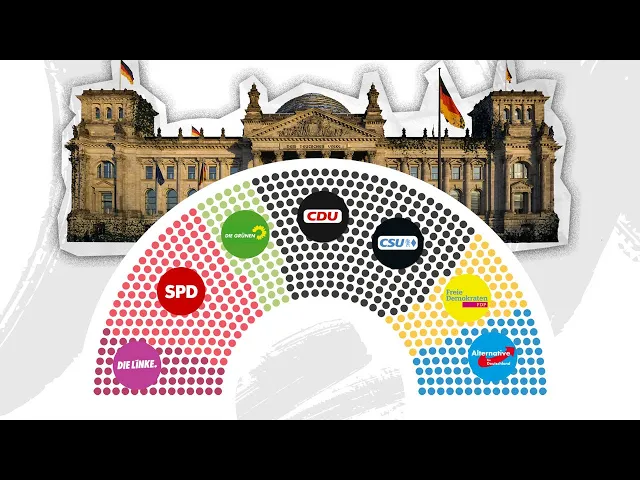
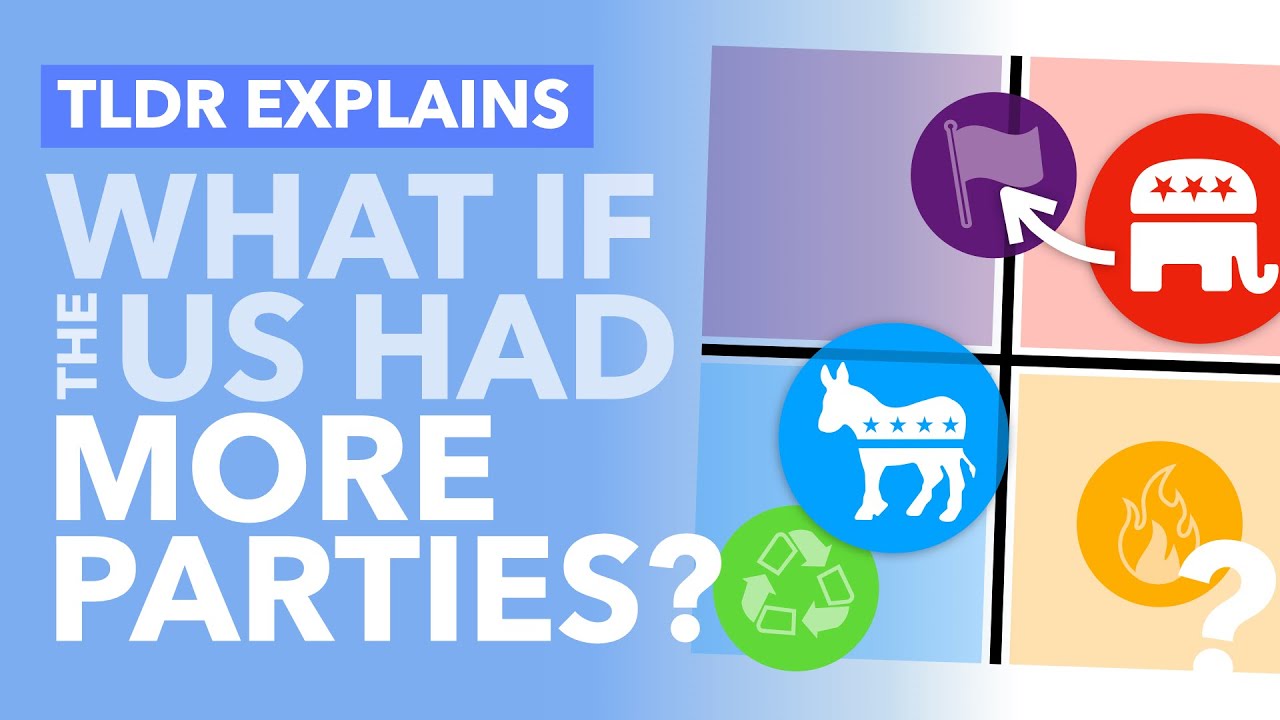
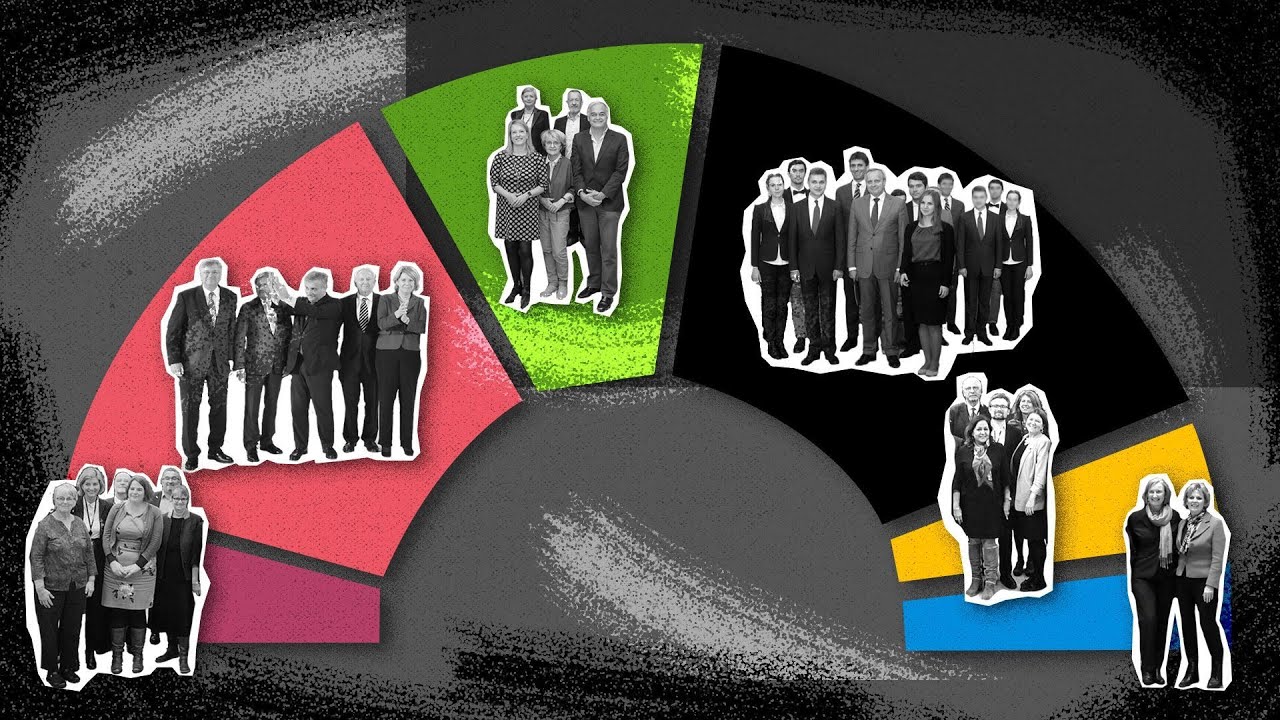
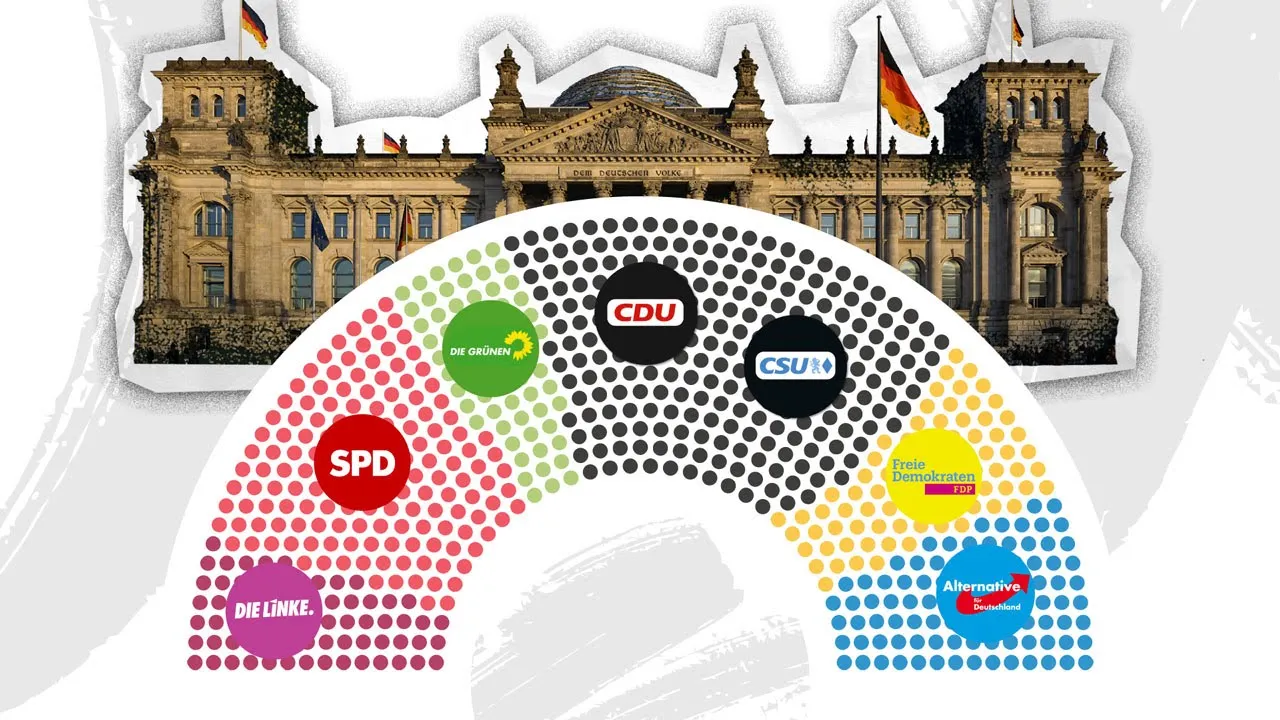
what's the first thing that comes to mind when you think about political parties maybe colors if you're from the united states did your state vote red or blue or maybe it's turning purple maybe you wish you had more colors to choose from well unlike the us2 party system germany's parliamentary democracy is much more colorful in fact around 40 political parties received votes in the 2017 national election over the years many parties have come and gone but in this video we'll focus on the parties currently represented in germany's bundestag the lower house of parliament and talk
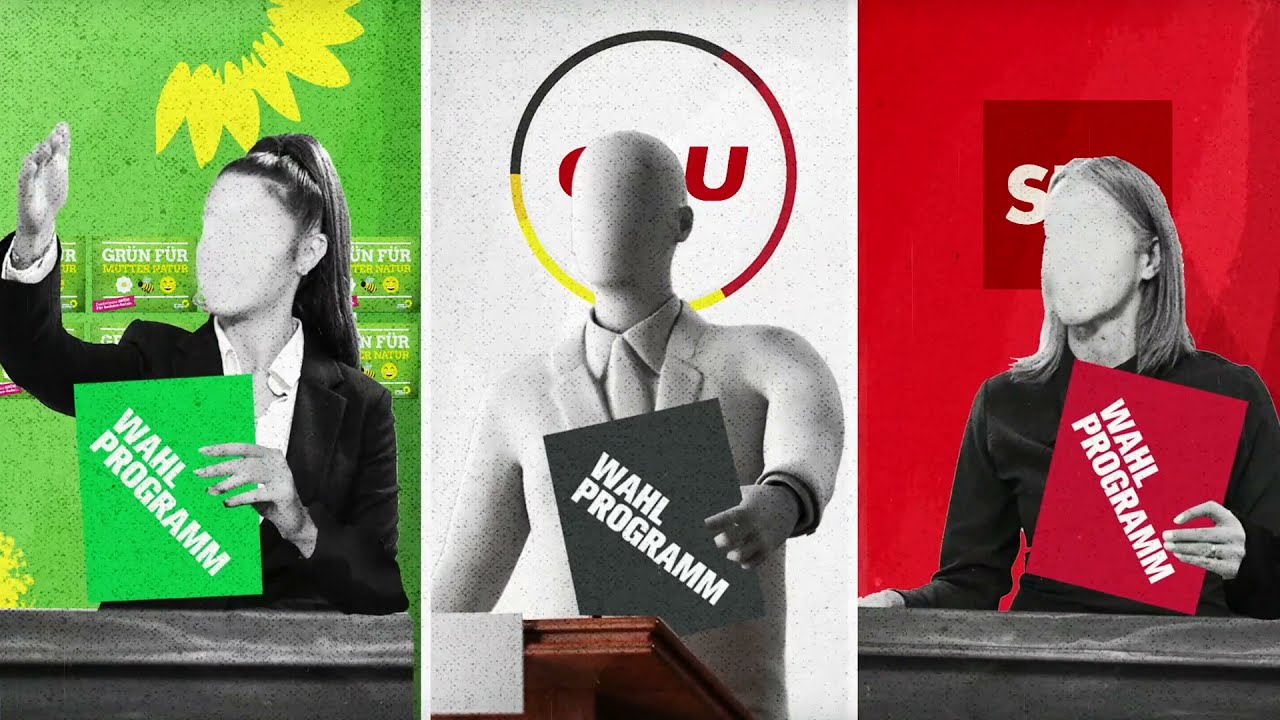
a little bit about how they got there first there's the christian democratic union or cdu and its bavarian sister party the christian social union or csu these two parties traditionally working together represent the center right of germany's modern political spectrum some of germany's most famous leaders have represented the cdu including the country's two longest serving heads of state chancellors helmut kohl and angela merkel cdu and csu voters tend to be more conservative when it comes to both economic and civil liberties issues another main party is the social democratic party or spd historically known to champion
workers rights the spd represents the center left and is the oldest party in germany the sbd enjoyed major success in the 1960s and 70s producing some of germany's most consequential chancellors and policy decisions like billy bronte and his ost politik which improved relations between east and west germany during the cold war in addition to germany's two traditional parties the green party or simply the greens have become a constant fixture in german politics the green party evolved out of environmentalist anti-nuclear and anti-war protest movements in the 1970s the protest movement turned political party still focuses primarily
on combating climate change but has also expanded its platform to become a mainstream center-left party its popularity nationwide has increased exponentially in recent years signaling its continued influence on german politics in the future the free democratic party or fdp has been a constant fixture of post-war german politics commonly referred to as the liberals the fdp can perhaps be best compared with the libertarian party in the united states traditionally it served as a decisive partner of either the cdu or spd to form a majority governing coalition similar to the libertarians across the atlantic the laissez-faire fdp
tends to be center-right aligning itself with the cdu on economic issues but also center left aligning itself with the spd and greens on civil liberties issues [Music] since the reunification of germany in 1990 the east-west divide has narrowed yet remnants of a divided germany remain residual economic and social differences have forced german politics to become more fragmented over the past 30 years the cdu and sbd have lost ground to parties on opposite ends of the political spectrum including the far left dilinka literally meaning the left and the far right alternative for germany or afd the
left's origins are rooted in east germany's former communist party and it enjoys especially strong support in the east where some nostalgia remains for comprehensive cradle to grave support from the state the afd catapulted into the national spotlight in the wake of the european migrant crisis its highly controversial far-right anti-immigration platform has made it a political paria one that is traditionally shunned by all other parties in germany historically the cdu and spd have dominated post-war german politics now other parties from all ends of the political spectrum are challenging the status quo as german politics become more
diverse it's important to know which parties there are what they stand for and how they work together in government [Music] [Applause] [Music] you