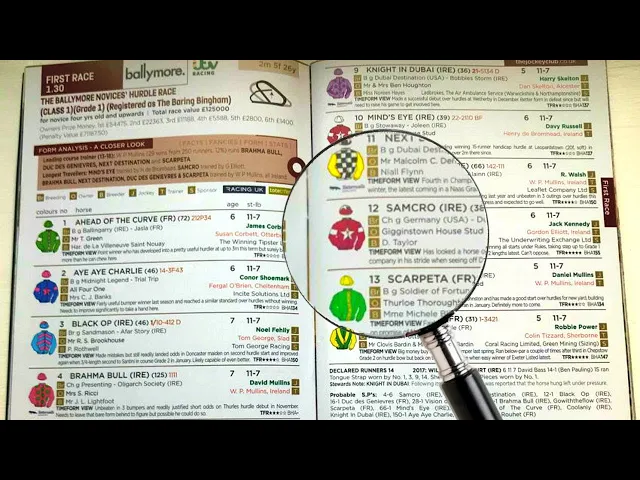
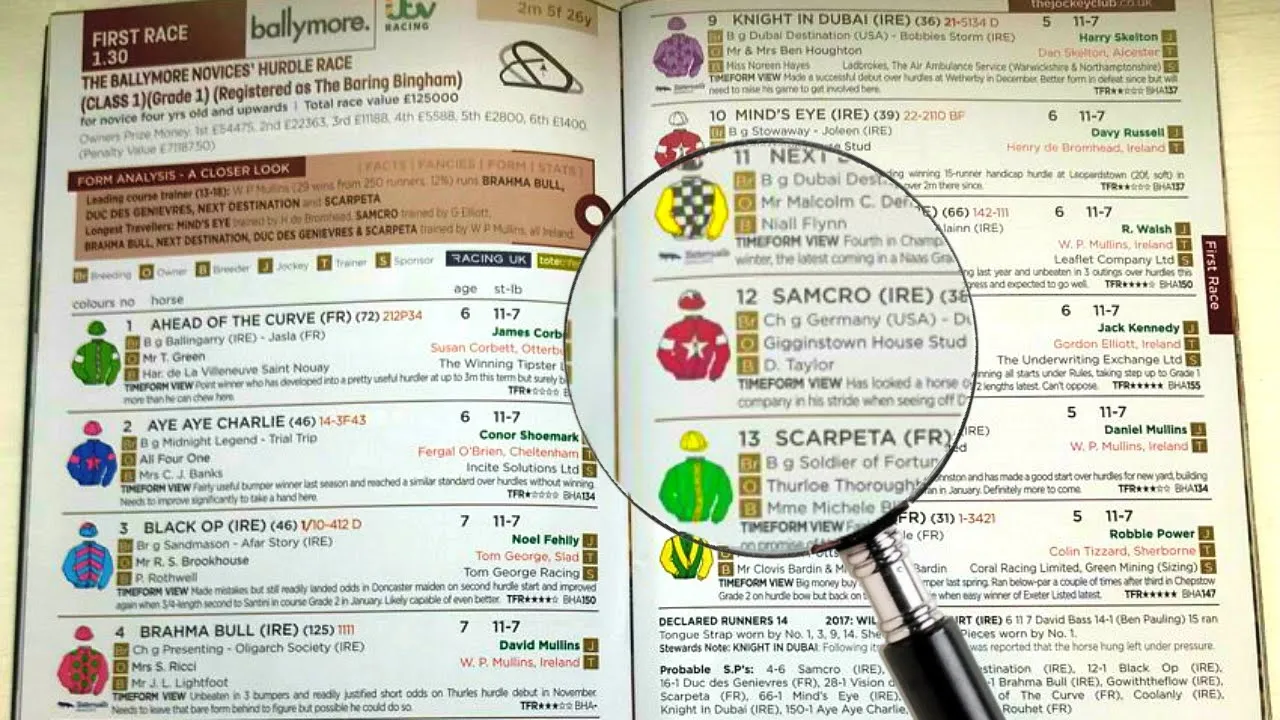
hello everybody and welcome to our video on how to read a race card here at racing central we understand how tricky the sport of horse racing can be to the newcomer the jargon makes no sense and the race car can be very intimidating when you first look at it so we're going to break it down piece by piece letter by letter so next time you're at the course or next time you're trying to pick out a bet you know where to start so the first thing we'll see is the races name and the race is
class this race is called the thanks and good luck Josephine Felice handicap stakes you can guess why I picked it and it's a class-4 race the way the class system works is very simple you've got class seven class six class five these are the usually contested by the worst rated horses although class seven races are very rare you've got class for which is what this is class 3 and class 2 and you'll see these about day to day these are quite common and then you've got class 1 and these are the best races but these
are further split into four categories have listed grade 3 grade 2 grade 1 or group instead of grade if you're on the flat and these are the top level races so Group 1 or grade 1 will be your EPS and Darby's and your gold cups etc the next three bits of information are the easiest to understand it's the horses color or silks the horses number and the horse's name now it's very important you remember the silks and the number especially if they've got those colored silks because you will not be able to pronounce the name
the Ayari next to the name indicates it was bred in Ireland and the 26 next to that indicates how long it was since it last had a run the following bit is probably the most important part of it all and that's the horses form so here we have quicksand who's finished third first four and there was a new year and then third again sometimes you'll see letters in these those letters can either be P for pulled up FFL you thought unseated B for brought down or more rare s for slipped up D for disqualified over
ran out alpha refused to race and V for avoid race the horses age comes next apps very self-explanatory followed by the horses weight in stone and pounds and the horses draw the draw is very important to note if you are betting on the flat as some courses have a draw bias at Beverly for example and Chester which is basically a giant circle and you can see why it make more sense to be drawn here it would be here in the river dee if you're at a jumps meeting or if you haven't a bet on a
jumps meeting you won't see this number as that they don't use stools and jumps racing the next thing you'll see are some little letters underneath the horses number in this case it's a seat in a hae-jin an F the C and the H indicate the horses color here it's a chestnut but if it was a be an hour would be black if it was B would be a bag there's a gene and I'll be a gray and on very rare occasions you might get a white horse which is indicated by a wh the F indicates
the horses sec so in this case it's a filly but if it was a C it would be a colt if it was an M it would be a mare if it was a G it would be a gelding and if it was a stallion it would be indicated by of course H we then see the horses sire and Dam or dad and mum in this case footsteps in the sand was the sire and Miss Bellbird was the dam followed by the jockey and sometimes a photo if you buy the race card on course the
owner and the breeder the trainer and the sponsor they will then usually be a writer of the horse if you are on course and you don't really know what to look for is best just to look at this and have a read and it will point you in the right direction looking at the rest of the race card we can see that miss lutton's jockey is a little v next reasoning what that means is that he is taking five pound off the horses weight you get that if you're an apprentice jockey you get seven pound
in until you've won 20 races five pound until you've 150 and then three pounds until you've won 95 races on the jumps you called a conditional and you get ten pounds if you've read less than five winners and so on so forth this helps to even out the field more as a horses with the less experienced jockeys on will be carrying less weight sometimes you might hear people say things such as their value for their claim they're a steal of three pounds or if you're a Twitter tipster this lad will be the next AP McCoy
you might occasionally see next to the forum line a variation of four different letters these are C and D or C and D together or a B in an F a C and a D means cost and distance winner and a B and F means beaten favorite you will then also see their rating this can either be indicated by a are or B age a here for example defi de SOI was rated 163 coming into this race which he won he then went up to 166 the Clarence house which he would so then went into
the champion chase in March of mark of 170 putting him as one of the highest rated horses in the country if you compare that to this horse from the early 2000s for example this one never achieved a rating higher than 20 having done absolutely nothing useful with its career you might hear these horses referred to as donkeys cart horses hopeless or if you are some unnamed trainers handicap plots you may also see lowercase letters like this P for example but you could also have HB TV or HT these are pacifiers which are used to calm
a horse down and focus them if they're a bit erratic you may also see a little W and this indicates a wind-up which is basically a little operation just to help them breathe a little bit there will be a little one next to it which means it's their first run since having the operation or a little - that's probably when you want to be getting on them that's everything I really hope we covered all the grounds of it we'll be doing more videos such as this covering the basics of rating to try and help people
understand the sport a little more remember to Like comment and subscribe and thanks for watching