You know when you're out with your friends and someone says something that you know is wrong. You're going at each other for five minutes and then you're like all right that's it. Let's just Google it.
Except in the last 3 years this changed from let's Google it to let's ask Chubt. It might seem something small but it's actually one of the biggest and fastest shifts in consumer behavior in history. A mental habit that took Google decades to build just changed like that.
Now JGPT has billions of queries every day. 800 million people use it every week. It became the fastest growing product in history.
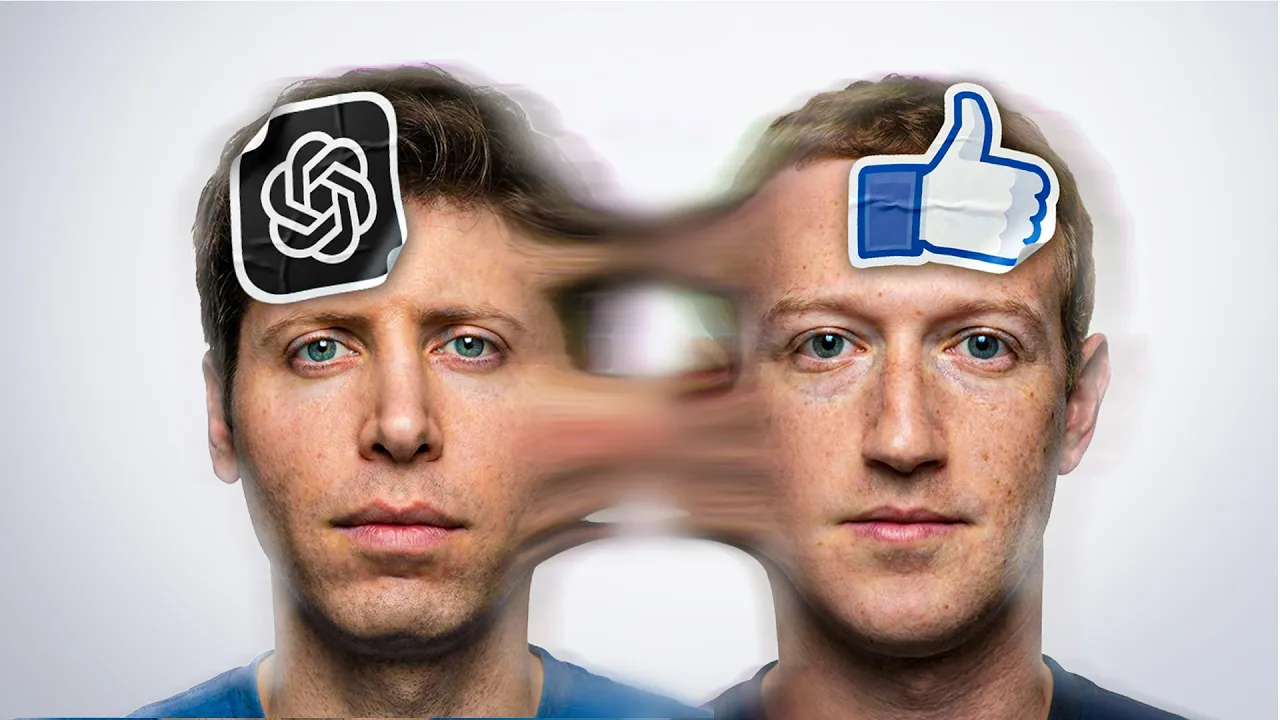
CHPT is becoming the next Google. Except no, it's not because behind the scenes, something completely different is going on that most haven't realized yet. They're not building the next Google.
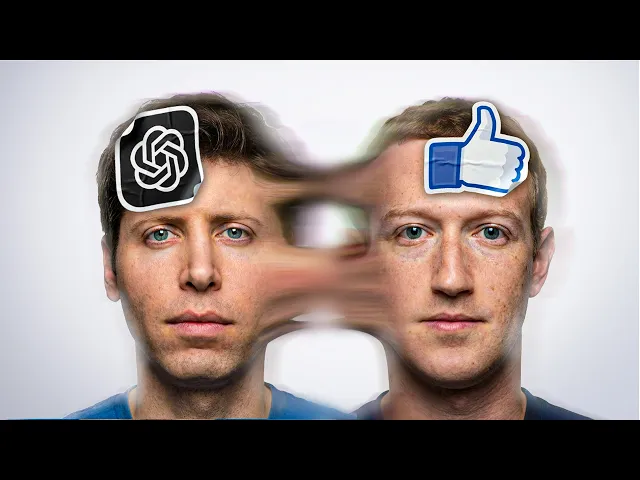
They're building the next Facebook. See, there are three main reasons why the hottest product of the 2020s is starting to look awfully similar to the hottest product of the 2000s. And no, this is not just about blastering JGBT with ads.
It goes much deeper than that. I'm Rico and on this channel we go behind the scenes of the design, engineering and psychology of the tech we use every day. But to start to understand this, we actually need something simple cuz it's literally in the name.
Google, Spotify, Nutella, Netflix, Coca-Cola. These are all names that were designed, written maybe by the founders, maybe by marketing or maybe because you have actual Coke in your product, but to make sense to be consumer products used by billions. And then there's CET [music] GPT which stands for generative pre-trained transformer.
And if it sounds like the name an engineer would give to their internal test project, that's because it was. When Chachbt came out in November 2022, it took the world by storm. It was the fastest product in history to reach 100 million users.
And it started the largest FOMO running tech. All the big companies started to scramble to build their own large language models. Nvidia started selling GPUs to all of them.
The AI gold rush just started. But here's the thing. OpenAI never expected JGBT to be the product, much less a consumer product that would be used by billions of people and become a global brand.
Their business was making the AI model, the thing that sits and runs in the server somewhere that they could sell access to to other companies. Boring enterprise shd was just a demo, a tech showcase. It's a hey, look what our model can do type of thing.
[music] And then out of nowhere, it exploded. OpenAI had lightning in a bottle. Even themselves they were genuinely surprised by this.
So they did what you, me and everyone in their position would have done. They just ran with it. For the first time, Google had a real competitor.
So much that in the few months after Jupit came out, they went into code red alert. To everyone, JPT looked like the next Google. To most people today, it still looks like it's going to be the next Google.
But instead, something weird was going on. Yes, they launched HBT search to search the web. Yeah, they're building a web browser.
all [music] the Google typical moves. But at the same time, they're doing something much more interesting. They rolled out a memory feature that remembers your birthday, your job, or the name of your dog.
They launched a voice mode with laughter that sounds like a friend rather than a search engine. >> Me? [laughter] The announcement is about me.
>> They built a $200 a month pro subscription that they're actually losing money on. They just made a deal for $6. 5 billion, not for better AI or more servers, but on a hardware company with no product run by Johnny IV, the guy who [music] designed the iPhone.
Something's going on here. They're not just talking about adding ads to JBD, but they updated their policy to allow adult content generation for verified users. That's not trying to be the [music] next Google.
That's trying to be something else. for how much a GBT looks like it's in a perfect spot to become the next Google. There's actually three main reasons why [music] they might be forced to become something completely different.
And the first one is this. This is the cost of Google search. How much it actually costs to deliver you, you know, the [music] list of blue links.
And this is the average cost of an interaction with Chad GBT. [music] Chad GBT's economics are broken. And it's not just the fact that it's expensive.
Google handles 8. 5 billion searches a day. If TBT had to handle that volume with V's cost, they would burn for their entire valuation in months.
And that's barely scratching the surface. See, Google became the Google that we know, being able to spend billions to develop self-driving cars with Whimo, mapping the world with Google Maps, because they stumbled upon one of the best business models of all time, selling ads on searches. This is so insanely profitable that you have the resources to fund everything else, all their side quests.
But here's what most people don't realize. And back when they started, what they were doing, creating a super fast search engine that dynamically ranked to hundreds of billions of pages, it was unheard of. So they had to build everything from scratch.
Larry Page and Sergey Brin, the Google co-founders, literally built their first server out of Lego bricks, a 10 4 GB hard drives stacked together in a cabinet made of Legos because it was cheap and easy to modify. If you go to Stanford University, you can actually see it. And that scrapping engineering mindset became their entire philosophy.
Instead of buying expensive enterprise servers like everyone else, Google bought 15,000 cheap PCs instead of expensive supercomputers and they wrote their own software to make it all work. And today, Google has over 2 million custom design servers. They make their own TPUs, their own AI chips.
They own unders cables. They own the whole stack. And OpenAI, well, they don't have any of that.
Just because Microsoft invested in them, they now use Microsoft data centers [music] for the most part. And they're definitely paying for that. You cannot out Google Google when you're paying rent to someone else.
But there's something else that Google did. See, their selling ads on searches didn't just make them rich. It [music] shaped how billions of people think the internet should work.
When I tell my friends that don't work in tech, that I pay $200 a month for Claude Max or $20 a month for Gemini, they look at me like I'm insane. You You really pay for that? Think about it.
How many regular people do you know that use ChatGpt but actually pay for the $20 a month subscription? Google trained an entire generation to expect the internet and [music] internet searching to be free. Email should be free.
Maps should be free. The browser should be free. And all of this was subsidized by the giant money maker which was Google search.
OpenAI is trying to play the same game. Offer it for free, build a habit and convert them later. But this is where it gets interesting because if you look at the actual products, the UI of how these two work and feel like they're completely different.
When you Google something, what do you do? You want to find an answer and leave. Get in and get out.
Google is designed to make you go away to be the fastest. It even tells you how fast it was loading things. They make money from that brief moment that you're there.
And this whole interaction cost to them practically nothing. But Chet PT is built for you to stay. The chatbot UI immediately makes it a conversation.
The main action you can take is not to click link to go somewhere, but to ask something [music] else, type another message, add another file, continue the conversation. The product is optimized to keep you there, to go deeper, to spend more time on the platform. Hm.
A product that wants to keep you as engaged as possible for as long of a time as possible. That's built on other people's content. Yeah.
Yeah, you're right. That's not Google. That's Facebook or Instagram or YouTube.
See, Chacha BT wanted to be Google, but it has accidentally built a product with Facebook's engagement model, but still without Facebook's monetization engine. So, now what do you do? You're bleeding money with billions of people that are not used to paying your subscription and you have to maintain this insanely expensive machine.
So, of course, you start to run ads. JGBT is testing out ads in the responses for a while now. code that's been found in the Android app that hints at this and early testers have been leaked using JGBT ads.
Even though both Google and Meta make money on ads, the way they do it is completely different. [music] And this is why reason number two may be even more problematic than the money. But before we get into that, let me show you a piece of how this video was made.
See, thanks to the sponsor of this video, I created this workflow that automates something that I used to take hours to do before. This automation takes the most important tech news from all kinds of sources like X, Hacker News, blogs, and aggregates it into a digest that gets sent directly to my notion database. This other one lets me instead see all the top videos about tech that are being released [music] and see which titles and thumbnails are working best right now, populating this huge database.
These are the starting points for the articles that made this video possible or the thumbnail and title that you ended up clicking to get here. See, this work used to take me hours and hours every week. But now I can finally automate it.
What you're seeing is any. It's the most popular automation tool out there. And you can use it to automate repetitive and even super complex [music] work.
It's so incredibly powerful, but it has a problem. You need to get and pay for your own server to run it, which gets really expensive really fast. Or instead, you can run it for a fraction of the cost and up to four times cheaper than the cloud version with the sponsor of this video, Hostinger, and their virtual private server.
You can set it up with one click thanks to their pre-installed NAN template. Just [music] pick a plan, click install, and you're ready to run your own automation server. With a KVM2 plan, you get self-hosting.
You get unlimited workflows, unlimited executions running at the same time, and your data stays completely on your own server. Follow the link in the description or doing check out to make sure you use the code Enrico to get an additional discount for all yearly plans. And now back to the video.
Because when you Google something and you click on a link and the article is wrong or the website just doesn't have the info you're looking for, who do you blame? Well, the website, obviously them and their annoying GDPR cookie pop-ups. But when ChatGpt gives you an answer, and that answer is wrong, you blame Chad GBT.
And we all know very well how easy it is for AI to hallucinate weird stuff. It's almost a meme at this point. The design and nature of the product makes them work like this.
Google's like a messenger. They present you the links and you just choose. You literally see the web page.
Even with their new AI overviews, what takes up most of the space is the familiar experience underneath it. JBD feels more like the offer of the information. Look at the design of the response.
This is how much space the sources take and this is how much GBT's response take. It's reversed. You don't try to learn about the world and present the best information, but instead you do something else.
You learn about the user. You become a companion. That's why now Chibbit has memory.
It remembers your past conversations, who you are. It tailors the content to you, [music] to your taste, to your quirks, starts to get to know you, and almost start to be a friend. Again, sound familiar?
Focusing on engagement, getting to hyperpersonalized content, longer sessions, visits textbook social media product strategy. Echo chambers in social media translate to JGBT keeps saying that you're right. You're right at the beginning of every response without ever giving you critical thinking.
While tools like Perplexity try to be more like Google, strictly focusing on search, JBD's product strategy goes much deeper. Facebook built its entire empire on something called the social graph, a map of who you know, your friends, your connections, your network. OpenAI is building something different.
I would call it the context graph. It's not about who you know like Facebook. It's not what you're searching for like Google.
It's who you are, your work history, your writing style, the way you phrase things when you're frustrated, what you told it about your relationship at 2 a. m. when you couldn't sleep.
But the third reason behind why ChatGpt is not becoming the next Google might be well, what you're watching this very video on. Chrome is not just the world's most popular browser. It's the best example of owning your distribution.
See, Google back in the day was not the default search engine for everything. you had to go onto Google first and then search. And as most people were using Internet Explorer back in the day, they were basically at the whims of Microsoft.
So they said, "Hey, what if we built, you know, like a really good browser, not just because it's cool, but because it's literally how we take control of our own distribution, of how people access Google. It's about owning the thing that our product is inside of. " And it's no coincidence that the product manager that had this idea at Google, now he's the CEO.
Similar story with Android. Sure, just like Chrome, they were good products, but they were also a very strategic move to get distribution. This is exactly why right now the browser wars are starting again.
OpenAI launched their browser Atlas. Perplexity launched their Comet browser. The browser company is working on DIA.
It's going back to fight mode because right now CHPT, but really any other AI model is really just an app or website. You have to open it yourself every single [music] time. They're not defaults unless you use a thing like a browser or a device that makes them so.
Changing behavior of the mass of billions of consumers using mainstream technology is literally the hardest thing to do in tech. And this is CHBT's real asset right now. It's not the data centers not having the most breakthrough AI model.
But the fact that CHBD has become what's known as a generized trademark sticky thing that you put on your wounds? No, it's a band-aid. Hazelnut cream?
No, it's it's Nutella AI. Oh, it's Chad GBT. This is literally the biggest asset that Open AI has at the moment.
This mental association that's so hard to build for billions of people and that they got by accident. But they know that this is not going to last forever. They are living on borrowed time here and to win long-term, they need to do what Google did, take control of distribution.
But contrary to Google in 2005, they don't have a decade to do it. They're burning hundreds of millions of dollars a month. And that's why they're doing things that seem weird until you look closer.
Take Sora, an entire app built on AI generated slob videos. Not for searching, but for creating and sharing content. Why video generation?
Well, because it's social, it's sharable. It's an entry point that has nothing to do with search. Right now, they're working on group chat.
the ability for people to chat with Chbdt and their friends in the same group. Just like iMessage or WhatsApp are an entry point today. These are not search engine features.
They are social networking features. Facebook never tried to become your homepage. They became your habit, the thing you check without thinking, the first thing you open when you're bored.
The GPT is doing the same thing. Custom GPTs, the GPT store, group chats, shared experiences. Sure, they are trying to build a browser and or they just spent $6.
5 billion to acquire a hardware company run by Johnny I, the guy who designed the iPhone, the iPod, and the Mac with no real product yet. But building the next breakthrough hardware device is something that's much harder than building an AI model. And if you're old enough, you might remember this.
This is the Facebook phone. Back when Facebook was cool and on top of the world, they tried this as well. Meta today is still trying to do this.
first with the Meta Quest and their dubiously successful attempt with the Metaverse and now with the Raven Meta glasses which are actually seen some success and [music] they're genuinely a good product. Meta is doing all of this. They're worth more than a trillion dollars and they still don't own distribution.
That's how hard this is to do. So on the surface JPT looks like of course it's becoming the next Google. It's so simple.
But the reality is that product strategy is so much more complicated than it seems. You're not just building features. You're fighting economics, psychology, and decades of entrenched distribution all at once.
Opening eye stumbled into lightning in a bottle. They accidentally became the face of AI for billions of people, but now they're at a crossroads. Do they double down on being a research lab and build the best AI?
Or do they chase distribution and try to become the next meta? Well, we still don't know. Just now they went into a code red alert because Google's Gemini model has become really, [music] really good and they're just worried about it.
So, they paused a lot of these side initiatives. The EI wars are still happening and they're in full swing. But, there's something else that's going on that I know most of you will have a very strong opinion about [music] because it's well, your own money.
It's the reason why you get so angry when Netflix increases their price by $2. But at the same time, you're rushing to buy the latest $1600 iPhone every [music] year. And it's the story of how the price of our tech got broken.
And you can find all about it in this video right here.