Amid the grand stories of leadership and Faith the children of Moses remain in the shadows their lives little documented and their legacies forgotten the Forgotten sons of Moses explores the Mysteries and cultural reasons why these important figures were neglected in biblical narratives discover how oral traditions and historical choices shaped Collective memory revealing valuable lessons about invisibility and the Importance of secondary roles in the construction of History Moses an emblematic and central figure in the history of the Hebrew people is recognized not only as an exceptional leader but also as the lawgiver who guided the Israelites
from slavery in Egypt to the promised Freedom his trajectory is marked by epic events that shaped the destiny of a Nation the dramatic escape from Egypt the Monumental crossing of the Red Sea and The receip of the tablets of the law on Mount Si these episodes widely narrated and celebrated reveal the depth of his faith courage and determination do you feel insecure alone and worried about the future as you age don't feel that way anymore because I've made my digital book aging with faith 20 lessons to overcome challenges and live with purpose in Christ available
for you to download right now in the first pinned comment this book will help you find Peace purpose and hope in Christ no matter the challenges you face click on the first pinned comment as we have only a few copies available and it will be taken down soon click now and grab your digital book however behind this imposing figure hides a lesser known facet of his life his fatherhood Moses had children but why do their family stories rarely take center stage in biblical narratives the importance of Moses in the history of Israel is Undeniable he
was the intermediary between God and the people The Liberator who faced pharaoh and led the Israelites through unforgiving deserts his leadership during The Exodus and the subsequent organization of Hebrew society established es him as a fundamental pillar of Jewish identity in addition to his notable achievements Moses is venerated as the author of the Torah the body of laws and teachings that guide Jewish life to this day its Influence transcends centuries shaping not only religion but also the culture and ethics of countless Generations despite its historical and spiritual relevance Moses's personal life especially his family life
remains relatively obscure scripture briefly mentions his wife's por and his sons gersan and Eleazar but little is known about his experiences as a father and husband this Gap in the narrative can be attributed to the main focus of the Biblical texts on their public and spiritual achievements leaving aside the more intimate aspects of their existence however understanding moses' family Dynamics can offer a more complete picture of his character and the challenges he faced on his journey the figure of Moses as a leader is often portrayed as infallible and divine but like any human being he
also faced difficulties and personal responsibilities the coexistence of his Grandiose Mission with his home life presents an interesting tension that is perhaps not fully explored in traditional narratives the presence of his sons Gan and elezar suggest that Moses not only led a people but also nurtured a family in need of guidance protection and love furthermore Moses relationship with his wife Zapora adds an additional Dimension to understanding in his life Zapora daughter of Jethro priest of Midian brings with her a Cultural and religious Heritage that complements Moses's Journey Moses marriage to Zapora is a point of
convergence between different cultures and traditions symbolizing the union of different tribes and peoples under the leadership of Moses this Alliance not only strengthens your position as a leader but also enriches the narrative with elements of diplomacy and Intercultural cooperation the story of Moses Sons although briefly mentioned Raises intriguing questions about the role of family in the life of such a prominent leader gersan and Eleazar the direct descendants of Moses carry with them the responsibility of continuing their father's Legacy however their stories are almost non-existent in the biblical accounts which may reflect the priority given to
the collective Mission over individual achievements this deliberate absence may also suggest that Moses Sons faced challenges of Their Own Perhaps influenced by their father's Shadow or the complexities of desert life raising the question about Moses family life is essential for a deeper understanding of his personality and motivations The Duality between the public leader and the private father can reveal aspects of resilience sacrifice and love that complement his heroic image additionally exploring the lives of your children can illuminate the continuity of your influence and the Perpetuation of your values AC cross Generations the story of Moses
then is not only that of a liberator and lawgiver but also that of a man who like everyone else struggled to balance the demands of his mission with the needs of his family by examining the life of Moses through the prism of his family A New Perspective on his story opens up this approach not only humanizes a great historical figure but also enriches the understanding of the events that shaped Israel's history the intersection between Moses's public and private lives offers a fuller more multifaceted narrative worthy of exploration and appreciation thus as we delve into the
stories of his children and family Dynamics we are invited to ReDiscover Moses not only as a mythical leader but as a complex and multifaceted man the children of Moses at the heart of Moses story in addition to his Monumental achievements lies the intimate Narrative Of his family life little explored in traditional scriptures Moses married to Zapora daughter of Jethro priest of Midian was the father of two sons gersan and elazar the presence of these young men in his life offers an added Dimension to the already complex and influential figure of Moses revealing the challenges and
joys of balancing spiritual leadership with paternal responsibilities gersam the firstborn and Eleazar his brother were born in a Context of constant movement and uncertainty as Moses family moved with the Hebrew people through the desert towards the promised land Gerson whose name means a citizen of the land can be seen as a symbol of Hope and continuity his birth during The Exodus represents the promise of a new generation that would keep his father's faith and teachings alive from an early age gersan was exposed to the principles of Justice leadership and spirituality that Moses Defended shaping his
character and preparing him for possible future responsibilities the figure of Gerson still young reflects the innocence and resilience necessary to grow up in an environment as challenging as the desert where faith and perseverance are constantly tested eleazer the second son of Moses brings with him the meaning of my God is help a name that reflects the family's deep faith in times of adversity unlike his brother Eleazar Demonstrates from an early age an inclination towards leadership and an ability to adapt that predisposes him to follow in his Father's Footsteps his interactions with other members of of
the community and with his own father reveal a personality marked by empathy and determination eleazer becomes a vital link between the traditions of the past and the hopes of the future symbolizing the continuity of leadership and the maintenance of the ideals that Moses held dear Moses family Dynamics are profoundly influenced by the presence of zipora a woman of wisdom and courage who plays a crucial role in balancing the demands of public leadership and the needs of domestic IC life Zapora with her media Heritage brings to the family A Unique perspective that compliments and enriches moses'
vision his ability to mediate conflicts and provide emotional stability to his family allows Moses to Focus on his mission without neglecting his responsibilities as a father and husband the partnership between Moses and Zapora exemplifies the collaboration and mutual strength needed to support a family in times of uncertainty and constant change the births of gersam and AA not only strengthen the union between Moses and Zapora but also symbolize the hope of a brighter future for the Hebrew people amid the adversities of the desert Moses family represents a Microcosm of stability and continuity where the values of
Faith courage and leadership are transmitted from generation to generation the existence of his children ensures that Moses teachings and ideals are not lost but rather are perpetuated through the experiences and actions of the youngest fatherhood therefore is not only a personal Dimension but also a fundamental aspect of Moses Collective Mission as Mo's family grows and Develops the challenges faced by Gerson and elazer reflect the complexities of living in a community in constant transformation the education of Moses children is marked by spiritual discipline and exposure to situations that require courage and resilience these young people learn
to navigate the uncertainties of the desert to keep faith in times of Despair and to Value the importance of community and solidarity his children's journey is in Many ways a reflection of Moses's own Journey where overcoming obstacles and the search for Freedom are Central themes the relationship between Moses and his children is complex and multifaceted revealing both tender moments and the difficulties imposed by the responsibilities imposed by leadership Moses as a father faces the challenge of passing on his values and vision to a new generation while at the same time dealing with the External pressures
of leading a people in search of their identity and Freedom the presence of gersan and elezar serves as a constant reminder that despite the demands of his mission Moses is not exempt from the needs and emotions inherent in Family Life furthermore Moses children represent the continuation of the legacy of leadership and faith that their father established as the story progresses it is plausible to imagine that Gerson and elz Could eventually assume leadership roles contributing to the maintenance and expansion of the ideals that Moses established this perspective not only strengthens the Moses family narrative but also
reinforces the importance of succession and the transmission of values in any lasting Community or leadership Moses children therefore are not merely secondary figures but fundamental pieces in the construction and preservation of their father's Legacy the figure of gersam and elaz even if not widely developed in the scriptures offers a rich tapestry to explore the nuances of Moses life his stories although less known add depth and Humanity to an already complex and influential character the presence of his children allows us to Glimpse the most personal side of Moses where Family Ties intertwine with the responsibilities of
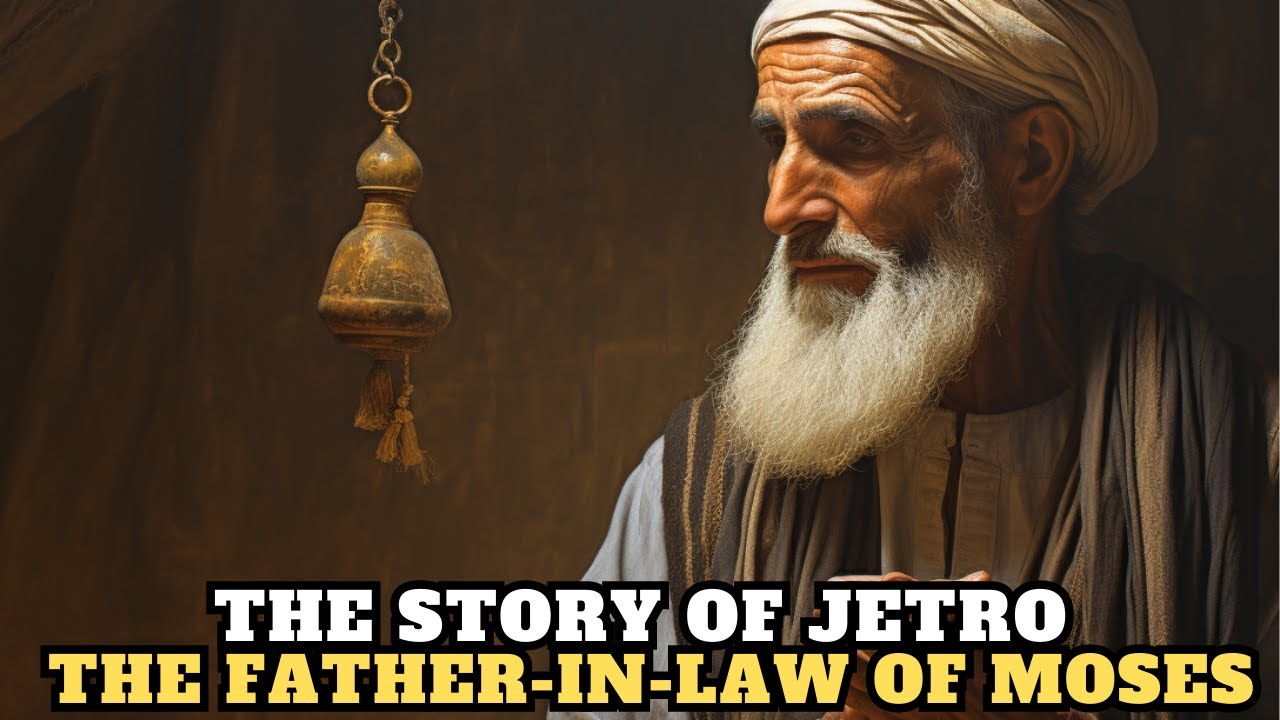
leading a people creating a more complete and engaging Narrative thus the story of Moses Sons not only enriches the understanding of Moses himself but also contributes to a more holistic view of the formation and perpetuation of the people of Israel Moses encounter with Jethro the setting is the Israelites camp where the dust of the desert mixes with the expectation of a people eager for Freedom after the dramatic crossing of the Red Sea Moses leads his people towards a new life facing the Relentless challenges of the Desert it is in this context that the reunion between
Moses and Jethro his father-in-law and priest of Midian takes place whose presence brings a note of familiarity and support amid the desolate vastness Jethro who had sent his daughter Zapora and Moses Sons to Moses in Egypt now returns with his family strengthening the ties that have United their lives since the beginning of the journey the reunion is a Moment full of emotion and meaning Moses often Embroiled in questions of leadership and the demands of the people finds himself face to face with the family he left behind to join his mission the arrival of Jethro Zapora
and Moses's sons gersan and Eleazar is a tangible reminder of the family roots that sustain Moses's public and spiritual figure this meeting not only reinforces the ties of blood and marriage but also symbolizes the union of median Traditions with Hebrew ones a link that Contributes to the cohesion and diversity of the Israeli Community Jethro as a priest of Midian brings with him spiritual and cultural baggage that enriches the isra is ites Camp his wisdom and religious experience provide valuable perspective for Moses especially at a time when people are looking for guidance and structure Jethro's presence
also highlights the importance of intertribal and Intercultural alliances in the formation Of Israelite identity despite their different Origins the collaboration between Moises and Jethro demonstrates a Synergy that strengthens leadership and promotes more effective governance within the community during the reunion it is noticeable that Moses Sons Gerson and elzar carefully observe the interactions between their parents and Jethro this moment is crucial for them as they witness the Dynamics of leadership and the importance of family Alliances garon with his curious gaze absorbs the nuances of the relationship between Moises and his father-in-law while elazer demonstrates precocious maturity
understanding the relevance of strengthening family ties for the stability of the group this episode marks a learning point for young people where the integration of different cultural and spiritual influences becomes a vital lesson for future cohesion the Israelites camp now Enriched by the presence of Jethro and his family Witnesses a new phase of organization and structure Moses with Jethro's help begins to delegate responsibilities recognizing the need for more efficient Administration to deal with the complexities of leading a people in constant motion Jethro advises Moses on delegating tasks and creating a judicial system that eases the
leader's burden allowing for more sustainable and Equitable governance this collaboration Not only improves administrative efficiency but also strengthens trust and unity within the community the importance of Jethro's role at the camp goes beyond simple Administration as a priest he acts as a spiritual pillar guiding the people in religious practices and strengthening Collective Faith its influence is felt in several spheres from conflict resolution to the implementation of rituals that solidify the religious identity of the Israelites Jethro with his wisdom and experience complements moses' leadership creating a Synergy that is essential for the survival and growth of
the people in the desert however despite the relevance of Jethro and his family the stories of Moses's Sons Gerson and eleazer remain on the periphery of historical accounts although their presence is significant especially in the context of the reunion little is known about their specific contributions or how their lives evolved During and after their encounter with Jethro this narrative silence can be seen as an opportunity to explore the lives of these young men and understand how their education and experiences influenced the continuation of Moses Legacy this meeting between Moses and Jethro therefore is a point
of convergence that not only reinforces family and spiritual alliances but also highlights the importance of collaboration and the division of Responsibilities in a growing Community the presence of Jethro and his family offers Moses the necessary support to improve his leadership and to ensure the sustainability of the mission of Liberation and establishment of a new nation at the same time the silent but profound impact that the sons of Moses have on this Dynamic suggests that their stories although little explored are fundamental to fully understanding the collective journey of the Hebrew people Moses leadership overshadows his sons
Moses a central figure in the liberation of Israel emerges as a charismatic and determined leader whose dominant presence guides the people through the adversities of the desert his trajectory is marked by firm decisions and moments of deep spirituality consolidating his position as the main protagonist of biblical narratives Moses leadership however casts a shadow that inadvertently overshadows the more Personal aspects of his life including his relationship with his children from the beginning of his mission Moses demonstrates an unwavering dedication to the cause of Israelite Freedom his interactions with Pharaoh the challenges he faced on his journeys
through the desert and his countless encounters with God shape his Public Image as an infallible leader this Public Image although essential to maintaining the cohesion of the people leaves little Room for the exploration of their family life and the personal experiences of their children biblical accounts Focus intensely on moses' actions and decisions relegating his children to secondary and often almost invisible roles while Moses broker Miracles and leads revolts his sons remain in the shadows without the same detailed narrative or character development this lack of prominence can be interpreted as a direct consequence of the centrality
Of Moses in the history of Liberation the lack of prominence of Moses children in the scriptures suggests a narrative that privileges the collective Mission over family Dynamics the urgency of Liberation and the building of a newly liberated Nation require an almost exclusive focus on Moses's leadership leaving little room for the development of individual stories this narrative Choice reflects the importance attributed to the Divine Mission and the Figure of Moses as mediator between God and the people furthermore Moses leadership imposes a constant Demand on his attention and energy liting the possibility of involving his children in
his public activities the need to maintain order and discipline among Israelis especially in times of Crisis makes family relationships secondary thus Moses children although present do not receive the same treatment or development in the narratives the figure Of Moses being so emblematic and Central creates a natural barrier to the expression of his children's personal lives the focus on the exploits and challenges faced by Moses leaves little room to explore the individual experiences of his descendants this Dynamic highlights how leadership can inadvertently Eclipse intimate aspects of the life of a leader and his or her family
the lack of prominence of Moses children may also reflect a theological Intention to centralize Salvation and leadership in the figure of Moses avoiding dispersions that could divert attention from the divine plan the biblical narrative by focusing on the trajectory of Moses emphasizes is the importance of unified leadership and obedience to Divine directives leaving family issues in the background furthermore the lack of development of the characters of Moses's children in the scriptures can be interpreted as a Choice to maintain the focus on the collective Mission promoting the unity of the people around a strong leader this
Unity is essential to face the challenges of crossing the desert and to establish the foundations of a new nation centering on Moses reinforces the cohes and unified direction of the people gersan and eleazer what does the Bible say or not say about them the sons of Moses gersan and eleazer are mentioned in the scriptures briefly and Without much emphasis leaving many questions about their lives and roles in the history of Israel analysis of biblical text reveals that although they are recognized as descendants of one of the most prominent figures their presence in the narratives is
limited and poorly developed in biblical accounts gersan and El appear succinctly generally in passages that list descendants or describe genealogies this brief mention suggests that unlike their Father they do not play significant roles in the stories of leadership or missions that Define Israel's Liberation the lack of details about their lives and deeds raises questions about why they have little visibility in scripture the scarcity of information about Gerson and elasa may reflect a theological intention to Center leadership and events in the main figures such as Moses and Joshua leaving descendants in the background this narrative Choice
can be Interpreted as a way of emphasizing the importance of the collective Mission and the continuity of leadership through successors who on the contrary gain prominence in future Generations the absence of details about Gerson and elzer also raises speculation about possible historical or social reasons for their little mention in a society where lineage and descent are valued the lack of prominence of moses' sons May indicate that they did not pursue Paths Of leadership or did not play prominent roles in shaping post- Liberation Israelite identity furthermore The scant Mention Of Gerson and eleazer may reflect the
itinerant and often chaotic nature of the Wilderness Journey where survival and adherence to Moses directives were priorities in this context the emphasis on leadership figures and decisive events could have led to the marginalization of their children individual stories that were Not directly linked to the main mission reflecting on the silence surrounding their lives also leads us to consider possible theological implications the centralization on the figure of Moses can be seen as a way of highlighting divine intervention through a chosen leader while Moses descendants such as gersan and eleazer could represent a Less Direct continuity of
this intervention explaining their lesser presence in the narratives furthermore The lack of Det details about Gerson and eleazer may suggest that despite being descendants of Moses they may not have received the same Mission or blessing as their father this does not necessarily diminish its importance but it indicates that each generation has its own challenges and designated leaders reflecting the complexity of identity construction and Leadership within a community in formation the little visibility of Gerson and elezar in the Scriptures also open space for extra biblical interpretations and traditions that try to fill the gaps left by
the sacred texts the absence of detailed narratives about their lives invites Scholars and Believers to explore possibilities about their roles and contributions although such speculations remain outside the scope of canonical scriptures duties of the Levites and the role of gersan the designation of the tribes of Levi and the role of the Levites in the worship and care of the Tabernacle are fundamental aspects of Israel's religious organization the Levites as descendants of Levi have specific responsibilities that distinguish their role within the community focusing on religious service and maintaining the sacred elements of worship this tribal structure
is essential for understanding the social and spiritual organization of the Israelite people within this designation Gerson as the firstborn of Moses would have an important role among the Levites Birthright gave Gerson a prominent position and additional responsibility in spiritual leadership sh and the administration of sacred tasks however despite this expectation gersam does not receive the same prominence in the scriptures leaving his specific contribution as a levite little documented the Levites are charged with a series of Duties that include Transporting the Tabernacle assisting in worship and Performing religious rituals they serve as intermediaries between the people
and God ensuring that religious practices are carried out in accordance with divine guidelines this function is crucial to maintaining the spiritual cohesion and continuity of Israel's religious Traditions the expectation that Gerson would play a significant role among the Levites given his position as firstborn contrasts with the Reality of the biblical narratives where he is not mentioned frequently or in depth this discrepancy May indicate that despite his initial assignment Gerson did not achieve the level of prominence or involvement in the activities of the Levites that would be expected from his status the lack of detailed mention
of gerson's role among the Levites suggests that his contribution may have been more modest or less recorded in scripture this may reflect the possibility that Although appointed to an important role Gerson may not have taken an active leadership role or that his activities were not considered significant enough to be highlighted in sacred texts furthermore the organization of the Levites as a tribe dedicated to religious service implies that that each member including Gerson would have specific responsibilities that would contribute to the functioning of the cult and the Tabernacle even though Gerson is not highlighted in the
biblical narratives his participation in levitical activities would be essential for the maintenance of religious practices and the spiritual support of the community Gams lack of prominence in scripture may also reflect a transition in spiritual leadership where subsequent figures such as Aaron and his descendants assume more prominent roles this transition could have reduced gerson's Visibility relegating him to a more discreet role within the tribe of Levi without the need for detailed narratives about his actions or leadership furthermore the organization of the Levites and the attribution of specific roles to their members including Gerson illustrate the complexity
and specialization of roles within the Israelite Community each levite had a defined role that contributed to the Harmony and efficiency of worship Reflecting a society that valued order and dedication to religious service Eleazar and his Descendants eleazer the second son of Moses emerges in the pages of Biblical history as a figure whose lineage unfolds most visibly through his grandson Phineas while many of Moses's descendants remain in the shadows Finas shines with a light of his own playing a crucial role at decisive moments in Israel's trajectory eleazar's descent although less documented proves Significant when considering the
impact that Phineas has on the nation Finas grandson of eleazer is portrayed as a fervent and zealous leader whose decisive action prevented the spread of idolatry among the Israelites his intervention during the Moab incident where he confronted and punished The transgressors Marked a turning point in Israel's spiritual history this act not only reaffirmed allegiance to the Covenant with God but also solidified Phineas's reputation as a guardian of the people's religious Purity the contrast between Finas and his uncle Gerson is notable while Finas stands out for his leadership and courage gersam remains almost invisible in the
biblical records this disparity can be attributed to different contexts and historical moments in which each one acted fin has lived in a period of transition and consolidation for Israel requiring strong and decisive actions while gersan May have lived in less tumultuous times where his contributions were not as evident FAS importance goes beyond his heroic acts it symbolizes the continuity of eleazar's lineage and the preservation of the values transmitted by Moses through Phineus Eliza's influence endures ensuring that Moses's spiritual and moral Heritage is not lost through the generations this intergenerational link reinforces the idea that leadership
and fundamental Principles are passed from one generation to another maintaining the cohesion and identity of the people of Israel phineas's presence in the story also highlights the importance of elazer descent at critical moments his work in defense of faith and morality served as a pillar for the Israeli Community encouraging others to follow his example phineas's steadfastness in the face of adversity inspired trust and respect cementing his Position as an indispensable leader for the nation on the other hand gersi almost total invisibility raises questions about the distribution of leadership and visibility in Moses lineage while finny
has shines in historical records gersan remains in the shadows perhaps reflecting the different responsibilities and challenges faced by each descendant this Duality suggests that not all members of a leadership lineage are equally outstanding but each Plays a vital role in the context of their time the trajectory of Eleazar and his descendants therefore offers a rich and multi faed vision of the continuity of leadership in Israel FAS as the most visible Heir exemplifies the ability to adapt and respond to the community's emerging needs his decisive action demonstrates how eleazar's lineage was able to adapt and respond
effectively to challenges ensuring the survival and prosperity of the people of Israel Furthermore the story of Finas reinforces the importance of family lineage in maintaining values and traditions through generations asa's descendants carry with them the responsibility of preserving and transmitting the teachings of Moses this family heritage not only strengthens Collective identity but also ensures that fundamental principles are continually applied and respected in short eleazer through his grandson Phineas leaves a lasting Legacy in the history of Israel phineas's visibility and relevance contrast with gon's obscurity highlighting the diversity of roles and influences within the same lineage
eleazar's descendants therefore exemplify the complexity and richness of family Dynamics in the construction of a nation's history and identity silence and Oblivion a question of divine priorities the silence that surrounds Moses family in the biblical scriptures Raises deep theological Reflections on Divine priorities while Moses is exalted as the supreme leader his descendants receive little attention almost falling into Oblivion this apparent neglect can be interpreted as a manifestation of the way God chooses to carry out his plans often oblivious to human expectations of family continuity the Bible frequently highlights the importance of the lineages of leaders
such as Aaron Samuel and David whose stories are detailed and Full of teachings in contrast the sons of Moses although mentioned are not given the same level of narrative development this contrast raises the question of why God would choose to emphasize certain lineages while While others remain less explored suggesting a Divine intention that transcends human conventions of legacy and inheritance one possible theological interpretation is that Moses biological lineage was not Central to the Fulfillment of the divine Plan Moses was chosen for a specific mission of Liberation and Leadership of the people of Israel and his
descendants although important were not essential for the continuity of that mission this reflects the idea that God works in unexpected ways prioritizing spiritual and Community goals over expectations of family continuity furthermore the silence surrounding Moses's family may symbolize the transition of leadership and the spread of power between Different lineages while Moses laid the foundations of the nation other figures emerged to continue the work indicating a distribution of responsibilities that is not limited to a single family this aspect emphasizes the diversity and multiplicity of leaders who contribute to the construction and maintenance of Israeli identity the
Divine choice not to focus on the lineage of Moses can also be seen as a lesson in the importance of obedience and Faith over Biological inheritance through this silence the biblical narrative may be highlighting that the True Legacy lies in Fidelity to Divine teachings and principles and not necessarily in maintaining a specific lineage this reinforces the idea that leadership and influence are determined by dedication and commitment to the Divine Mission furthermore the forgetting of Moses family may reflect the complexities of history and Collective memory over the Centuries certain stories and lineages stand out while others
are less remembered often due to external factors such as political achievements cultural changes or prevailing theological interpretations in this sense the silence surrounding Moses's family can be partially attributed to historical circumstances and the evolution of the biblical narrative Over time however this silence does not diminish the importance of Moses as a central figure On the contrary it highlights the uniqueness of his mission and the depth of his relationship with God the lack of prominence for his descendants can therefore be seen as a reflection of the uniqueness of his calling and the centrality of his actions
in the formation of Israel's identity and Faith reflection on Divine priorities also invites a evaluation of the way we interpret history and scripture perhaps there are lessons hidden in the apparent Neglect of Moses Offspring encouraging Believers to look Beyond surface narratives and seek deeper understandings of the role of family lineage and leadership in God's work parallels with other biblical leaders the analysis of Moses's descent and the little visibility of his children can be enriched by drawing parallels with other biblical leaders whose lineages are more detailed and influential leaders such as Aaron Samuel and David present
stories Of dissent that intertwine deeply with The Narrative of Israel offering a sharp contrast to the situation of Moses children Aaron Moses brother not only plays a crucial role as a priest but also establishes a Priestly lineage that endures for Generations his sons nadab abiu elazar and ithamar are frequently mentioned and their descendants maintain the cont continuity of the priesthood as ordained by God this detail highlights the importance of lineage for Maintaining religious and spiritual functions within the Israelite community in contrast to the descendants of Moses which does not receive the same Focus Samuel another
prominent leader also has descendants that are more visible and significant in the biblical narrative although the main emphasis is on his role as prophet and judge there is mention of his family who continue to influence is Israel's spiritual and political leadership Samuel's lineage Demonstrates how a Leader's descendants can perpetuate his mission and ensure the continuity of the values and principles he established David perhaps one of the best known biblical leaders has a lineage that culminates in the figure of Jesus according to Christian tradition the House of David is continually highlighted throughout scripture symbolizing the Messianic
promise and perpetuation of Royal leadership the clarity and importance Attributed to David's lineage contrasts sharply with the relative obscurity of Moses's descent underlining how different lineages are treated differently in the biblical narrative this contrast between the lineages of Aaron Samuel David and Moses reveals nuances about the role of descendants in the continuity of leadership and the implementation of divine plans while some lineages are clearly delineated to ensure the continuity of specific Functions such as the priesthood or monarchy Moses's lineage appears to be less centralized perhaps indicating a dispersion of responsibilities among various families and leaders
the difference in treatment of descendants may also reflect the different missions and historical contexts of each leader Aaron as a priest has his lineage directly linked to religious functions requiring clear continuity for the maintenance of rituals and sacrifices David as king needs a royal lineage to guarantee political stability and the continuity of the the monarchy aspects that are less directly related to Moses's specific Mission furthermore the way the stories of these lineages are told can influence the perception and importance attributed to each of them the stories of Aaron Samuel and David are often interwined with
significant events and spiritual teachings making their lineages more relevant to the Construction of Israel's identity and history Moses's lineage on the other hand may have been perceived as less directly linked to The crucial events that Define the nation's trajectory reflecting on these parallels also highlights the diversity of ways in which leadership and descent are addressed in the Bible each leader has a unique trajectory and the importance of their lineage is closely linked to their mission and the context in which they Worked this suggests that the Bible values flexibility and adaptability in the leadership structure allowing
different lineages to play varying roles depending on the needs of the moment historical and cultural implications the complex tapestry of Biblical history often reveals layers of meaning that go beyond the apparent narratives in the case of Moses Sons their lack of prominence in historical records can be attributed to a Confluence of cultural And historical factors that shaped the way these figures were remembered or forgotten over the centuries first it is crucial to consider the cultural context of the time in which the stories of Moses were written and transmitted ancient societies often valued the figure of
the supreme leader the one who guided the people through Monumental challenges as Moses did when leading the Israelites across the desert in this environment a Leader's children although Important on a family level might not have been considered essential to the central Narrative of Liberation and formation of the chosen people furthermore oral Traditions played a fundamental role in the preservation and transmission of biblical stories before the consolidation of sacred texts stories were were passed from generation to generation orally which inevitably resulted in adaptations and simplifications in this process details That were not considered crucial to the
main message could have been omitted or minimized thus the children of Moses despite their existence could have been relegated to a secondary role in the stories transmitted orally losing space in the written narratives that were later Consolidated the construction of biblical narratives also reflects the priorities and interests of the communities that preserved them over the centuries different religious groups and Leaders may have emphasized certain aspects of the Moses stories that best served their theological and social purposes the centralization of the figure of Moses as a prophet and lawgiver may have led to the marginalization of
his children who although part of his personal life did not play significant roles in the great epics of leadership and Faith this careful selection of what to include in sacred narratives is a common phenomenon In Many religious traditions where the focus is kept on figures that symbolize larger ideals or fundamental events another factor to consider is the influence of external historical records and their interaction with Biblical texts neighboring civilizations and their documentation could have influenced the way the stories of Moses were preserved and adapted if the traditions of these civilizations emphasize the figure of the
supreme Leader without giving importance to immediate family members this could have been reflected in the biblical narratives that were later codified interculturality and the exchange of ideas between different peoples often result in adaptations that prioritize certain elements over others contributing to the forgetting of secondary characters such as Moses's children in addition to oral traditions and external influences power dynamics Within religious communities also played a role in shaping narratives leaders and scribes who compiled and interpreted biblical texts had their own agendas and perspectives which could influence which stories and characters were preserved the emphasis on Moses
leadership as a Divine and indisputable figure may have led to an underestimation of the importance of his sons who did not share the same status of prophesying or spiritual leadership this centralization Of the leader figure is a common strategy for consolidating Faith and Community cohesion ensuring that the narrative remains focused on elements that strengthen the community's identity and morals the evolution of religious Traditions over time also contributes to the marginalization of Moses's children as the centuries passed new interpretations and doctrines emerged often reorienting the focus of sacred stories to reflect contemporary values And needs in
this process figures who might previously have had a more visible role could have been overshadowed by new doctrinal priorities the adaptability of biblical narrative allowed them to remain relevant for different Generations but also implied a constant selection of what would be maintained or excluded affecting the collective memory of characters such as Moses children in addition to the cultural and historical aspects it is important to consider the Symbolic implications of the absence of Moses's sons in the main narratives in many Traditions the figure of the leader is often idealized representing not only temporal but also spiritual
leadership the ABS of his children may symbolize the idea that Divine leadership transcends Human family Dynamics emphasizing that Moses True Legacy lies in his relationship with the Divine and his ability to guide the people toward a greater Destiny this symbology may have Encouraged Society to focus on the leader as a whole rather than his personal descendants contemporary lessons on invisibility the absence of Moses's sons in historical narratives offers a rich opportunity to reflect on the invisibility of certain roles in contemporary history in a world that often celebrates prominent figures and charismatic leaders the lack of
recognition for the contributions of family members and supporters reveals a Tendency to Value only apparent protagonists this Gap in the historical narrative invites us to reconsider how we value and recognize these secondary roles that are in fact fundamental to the functioning of any significant Society or movement the invisibility of Moses's Sons REM reminds us that behind every great leader is a support network made up of individuals whose stories often remain Untold reflection on the importance of these secondary roles is Particularly relevant in modern contexts where collaboration and teamwork are increasingly recognized as essential for Collective
success in the Contemporary era leaders from different sectors whether political business or cultural depend on dedicated teams and individuals who perform crucial roles yet do not re receive the same level of recognition the absence of Moses sons from historical narratives serves as a mirror to these modern Dynamics Highlighting the need for a more inclusive approach to how we understand and document the contributions of everyone involved in major undertakings furthermore the invisibility of Moses children highlights the importance of recognizing and valuing individual contributions within a larger context too often personal stories are overshadowed by public accomplishments
creating an unbalanced perception of what constitutes a Leader's True Legacy In contemporary times this is reflected in the way in which family stories and individual contributions are often downplayed in favor of broader more impersonal narratives reevaluating how we value these contributions can lead to a deeper richer understanding of history and the power dynamics that shape it reflecting on the absence of Moses children also leads us to consider the implications of such invisibility ility for Collective identity and memory when Important figures are forgotten or marginalized there is a risk of loss of diversity and complexity in
the stories we tell about the past this can result in a simplified and one-sided view of History where only certain aspects are valued While others are neglected in the present this lesson encourages us to take a more holistic approach to preserving history ensuring that multiple perspectives and contributions are recognized and celebrated Another crucial aspect is the influence that invisibility can have on the construction of Future Leaders if the stories of secondary figures are omitted there is less diversity of role models from which Future Leaders can draw inspiration the absence of Moses's Sons for example means
that stories of shared leadership Mutual support and quiet contributions are not passed down as examples for generations to come in contemporary Society where leadership is Often idealized as a solitary attribute recognizing and valuing these contributions can foster a more collaborative and inclusive view of leadership the importance of secondary roles also manifest itself in the way we understand and approach issues of power and influence in many historical narratives the focus is on leaders while supporters remain in the shadows this not only distorts understanding of power dynamics but also devalues the Importance of ongoing support that allows
leaders to Excel learning from the absence of of Moses's children involves recognizing that the strength and resilience of any leadership is built on Collective contributions and that each member of the community plays a vital role in achieving common goals when reflecting on Moses Undisputed role as leader and the subsequent marginalization of his sons in biblical narratives a complex Panorama emerges That intertwines elements of leadership tradition and divine Choice Moses a central figure in religious and culture Natural History is often portrayed as the archetypal supreme leader whose trajectory and deeds are exalted and widely documented this
centralization of his figure created a powerful Legacy but at the same time it contributed to the Eraser of his daughters and sons from the main narratives resulting in a family Legacy that remains little Explored and often invisible analysis of the reasons behind this forgetting reveals a multitude of cultural and historical factors that influenced the way stories were preserved and transmitted from the valorization of absolute leadership figures in ancient societies to the influence of oral traditions and the careful selection of narrative elements by religious leaders and scribes several elements converged to relegate the children of Moses
to a Secondary role this Dynamic not only reflects the priorities of the societies that preserve these stories but also highlights the way in which Collective memory is shaped by specific interests and changing historical contexts the construction of biblical narratives with their focus on events and characters that symbolize larger ideals and fundamental events also played a significant role in the Eraser of the sons of Moses the emphasis on Moses Leadership as prophet and lawgiver rather than his family relationships reflects a tendency to Center The Narrative around figures who represent the direct link between the Divine and
Humanity this Focus not only strengthens the central message of scripture but also reinforces the idea that Moses's True Legacy lies in his spiritual Mission and his role as guide to his chosen people however this centralization comes with a significant Cost the loss of a more human and familiar dimension in the story of Moses the absence of Moses's children from the main narratives creates a gap that prevents a more complete understanding of the leader's personal life and the family dynamics that likely influenced his leadership and decisions this Omission also limits the exploration of themes such as
family heritage the impact of a Leader's Legacy on subsequent generations and the Complexities of interpersonal relationships within a family marked by such a prominent public role reflecting on these questions leads us to consider Divine sovereignty and the Mystery of God's choices which often defy human expectations about inheritance and Legacy the absence of Moses children in the central narratives can be interpreted as a manifestation of divine will where Moses's spiritual and historical importance transcends family And social conventions this perspective suggests that there are aspects of history and Leadership that are Beyond human understanding revealing the complexity
and depth of divine decisions that shape the course of lives and communities furthermore this reflection invites us to recognize that great leaders do not always guarantee a visible or memorable family Legacy history is full of examples in which prominent figures had families that did Not play equally prominent roles whether by Divine Choice historical circumstances or personal decisions this leads us to a more nuanced understanding of the relationship between leadership and family where a Leader's greatness is not necessarily reflected in an equally remarkable family Legacy this understanding broadens our view of how power and influence are
transmitted and perpetuated across Generations in conclusion analysis of the role of Moses And the marginalization of his sons in historical narratives reveals a series of historical and cultural implications that shaped the way these stories were preserved and interpreted by recapping the main points we understand that Moses as an Undisputed leader established a legacy that although powerful and Lasting did not necessarily include the visibility of his family lineage the possible reasons for this erasa are multifaceted involving oral Traditions Cultural influences and narrative choices that prioritized certain aspects of the story over others I'm going to leave
a suggested video here about why Jews and Arabs are always fighting I'll see you in a few seconds